Trade Event Panels For A Cape Town Floor Build
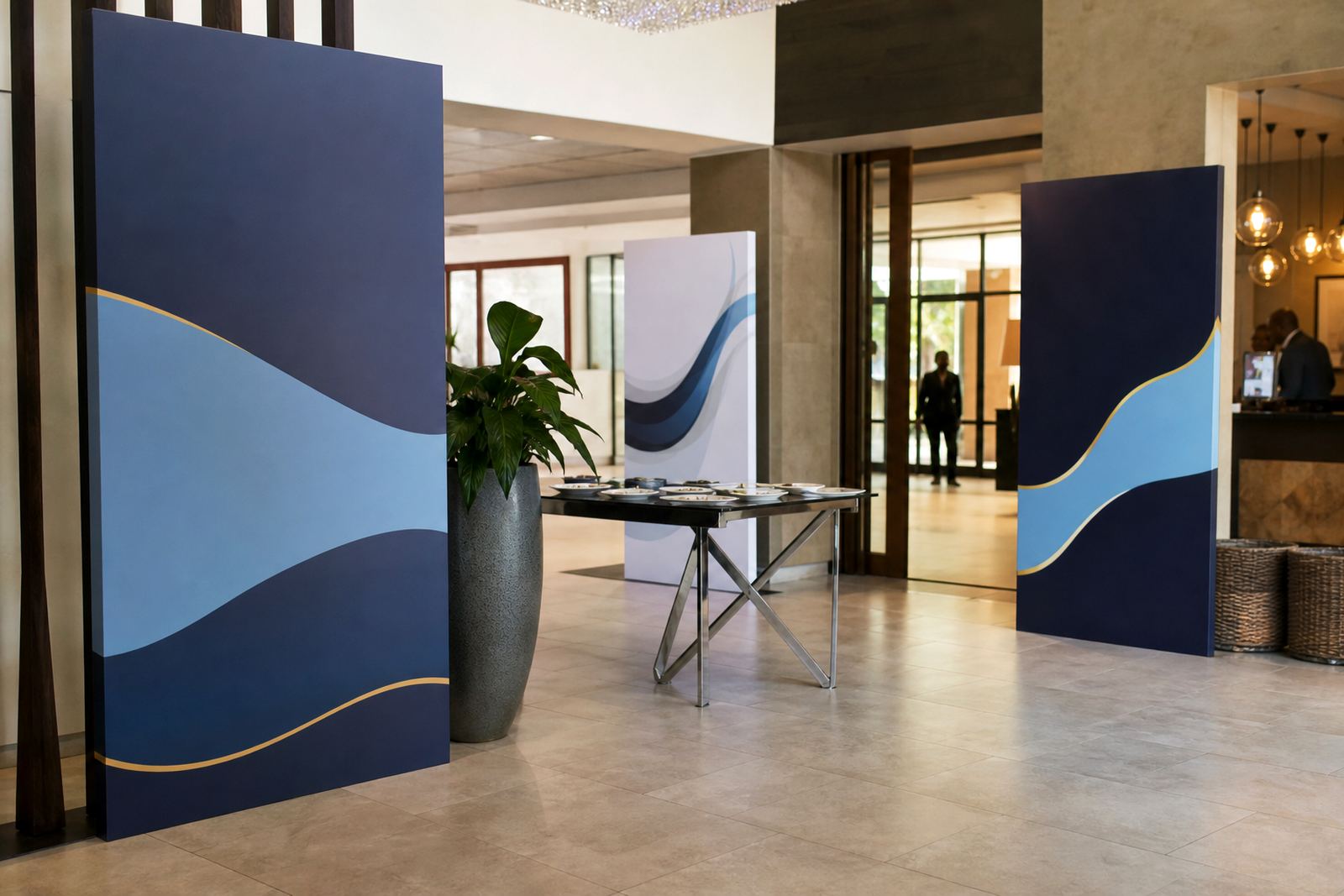
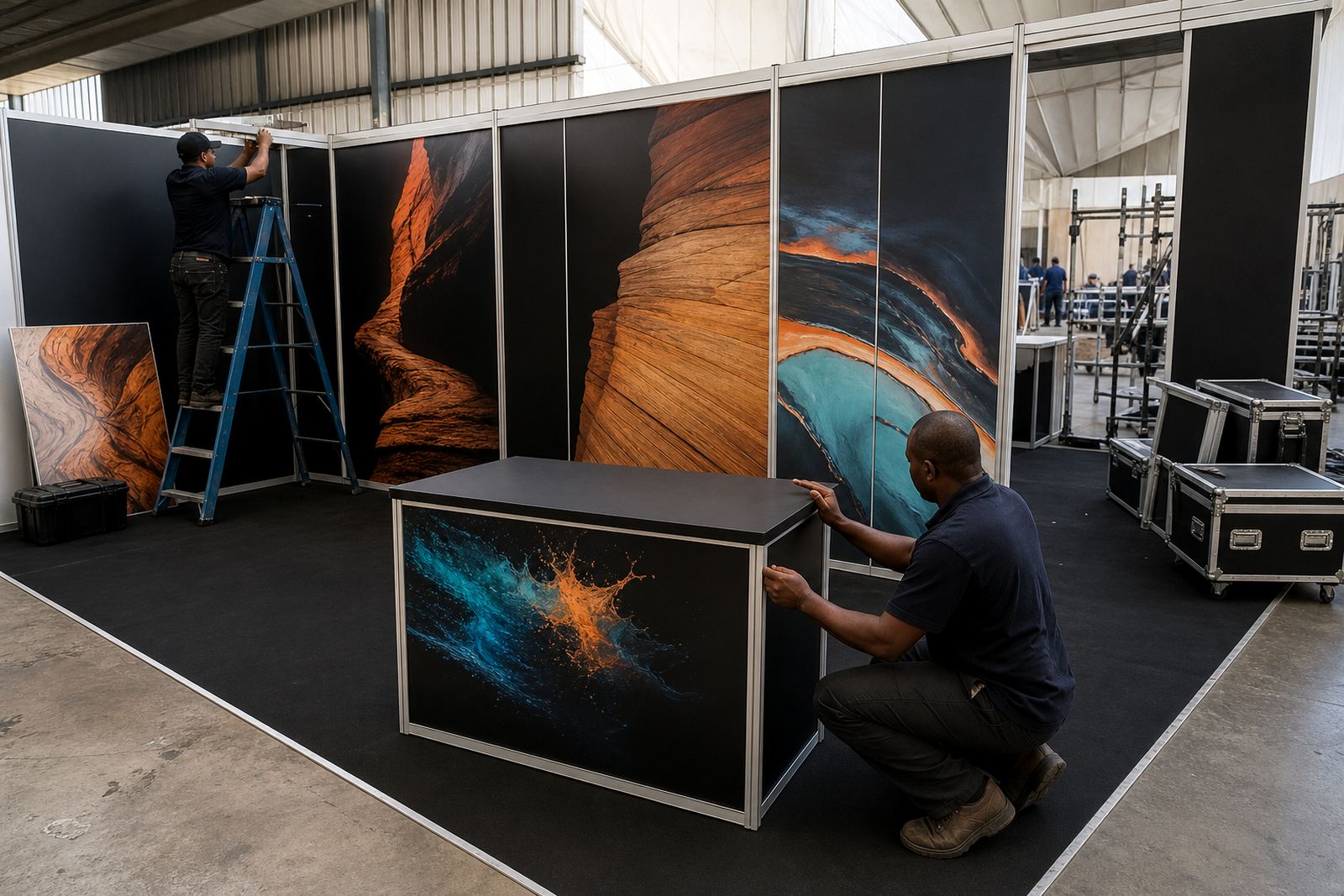
The client was a local event build team in Cape Town working to tight move-in times at an exhibition venue where access was limited and the stand had to be assembled fast. The panels were used as the main visual wall behind product displays, so the print had to read clearly from a distance and still look tidy up close.
The request was simple in principle but unforgiving in practice. The panels needed sharp text, even colour blocks, accurate panel alignment and surfaces that would not scuff easily during installation. Because event work often happens in stages, the material also had to travel well from our side to site without warping or edge damage.
- Application: exhibition wall panels and branded stand infill
- Location: Cape Town, Western Cape
- Substrate: rigid board for indoor display use
- Print method: flatbed UV printing on a production workflow suited to direct-to-board output
Why Flatbed UV Was The Right Route
Flatbed UV printing is well suited to signage and exhibition panels because the ink is cured as it prints, which helps with handling and keeps turnaround practical. It also works well on rigid media used for boards, point of sale panels and event structures where you do not want laminating delays or extra mounting steps.
For this job we focused on the things that matter on site: print fidelity, edge finish and predictable panel matching. The artwork relied on solid brand blocks and large type, so any shift in colour or alignment would show immediately once the panels were joined. We checked the file setup, panel orientation and joint positions before the run started.
In Cape Town, event crews often work around venue windows, loading bays and short install slots, so the panels had to be ready in a sequence that matched the build order. That meant planning the print flow, drying and packing order together rather than treating them separately. It saves time on site and avoids rework, which every installer will tell you is worth the effort.
Materials, Inks And Finishing Choices
We used rigid board media suited to indoor display panels, with UV ink coverage selected for strong colour and good readability under exhibition lighting. The finish was chosen to suit a trade event environment where overhead lights, aisle traffic and close viewing can expose every small fault.
Because stand panels often get moved between the production floor, the vehicle and the venue, the edge condition matters. We checked for clean cuts, sound corners and enough surface consistency for fixing methods used by the stand builder. The panels had to stack properly too, since event crews do not have the luxury of babying each sheet on install day.
- Rigid board selected for flat presentation and easier handling
- UV print chosen for direct application onto board without a wet ink drying wait
- Attention to panel joins so the graphic held together across the wall
- Colour guidance used to keep the artwork consistent under venue lighting
We also looked at how the panels would behave in the Western Cape climate. Coastal humidity and changing conditions between store and venue can affect some materials, so the workflow was set up to reduce movement, curled edges and surface marking before the client collected the job.
Workflow, Timing And Site Readiness
The project ran over two weeks from brief through to handover. Week one covered file check, size confirmation, panel planning and production sign-off. Week two covered printing, inspection, packing and support on the install side. That timing gave enough room to flag any layout issue before the final run, which is always better than discovering it on the stand floor.
Our team also supported the client with practical preparation points. For exhibition work, it is not just about printing the panels. It is about how they are stored, carried, fixed and touched up if needed. We shared guidance on handling order, transport protection and how to keep each panel in sequence for the build crew.
- Week 1: brief review, artwork check, panel layout and production planning
- Week 2: print output, quality check, packing and handover for venue use
- Support included installer notes for panel sequence and fixing order
- Prepared for fast assembly under event site time limits
What The Client Needed On The Floor
The result was a set of stand panels that supported the event build without creating extra work for the crew. The graphics stayed legible, the panels fitted the structure as planned and the finish matched the level expected for a trade show presentation. In a busy venue, that matters because visitors notice if a wall looks uneven or rushed.
The client wanted a display that looked professional without being fragile. By keeping the process focused on board choice, print consistency and practical handling, we delivered panels that were fit for the job rather than over-engineered. The build team could install them in sequence and get on with the rest of the stand items.
For future event work, we would approach the job the same way: confirm the structure first, lock down panel dimensions early and plan the print order around the installation sequence. That is the safest way to avoid surprises when the venue clock is ticking and the aisles are already busy.
What We Would Repeat On The Next Stand Build
If we were repeating this kind of Cape Town stand panel project, we would keep the same method and tighten the early checks even further. Exhibition work leaves little room for a second pass once the truck is loaded, so the first approval stage is where most of the value sits. The earlier the panel sizes and fixing points are confirmed, the smoother the install becomes.
We would also keep a close eye on transport protection and on any site-specific rules from the venue, especially where loading windows and access routes are limited. A good print job can still be let down by poor site handling, so the workflow has to respect the whole chain from media to mounting. That is where practical production advice makes a real difference.
- Confirm panel sequence before print starts
- Match board choice to the stand structure and fixing method
- Keep colour checks simple and repeatable for show lighting
- Plan for transport, storage and install order as one job
Flatbed UV is a practical choice for this type of work because it gives event teams a clean, direct route from artwork to mounted panel without unnecessary steps. For Cape Town projects, that kind of planning helps the job land on time and look right when the first visitor walks up to the stand.
Key facts
| Project | Cape Town Stand Panels |
|---|---|
| Client type | Local exhibition build and event team |
| Town | Cape Town, Western Cape |
| Substrate | Rigid board for indoor signage |
| Print method | Flatbed UV printing |
| Timeline | 2 weeks from brief to handover |