What the Kempton Park site needed from the boards
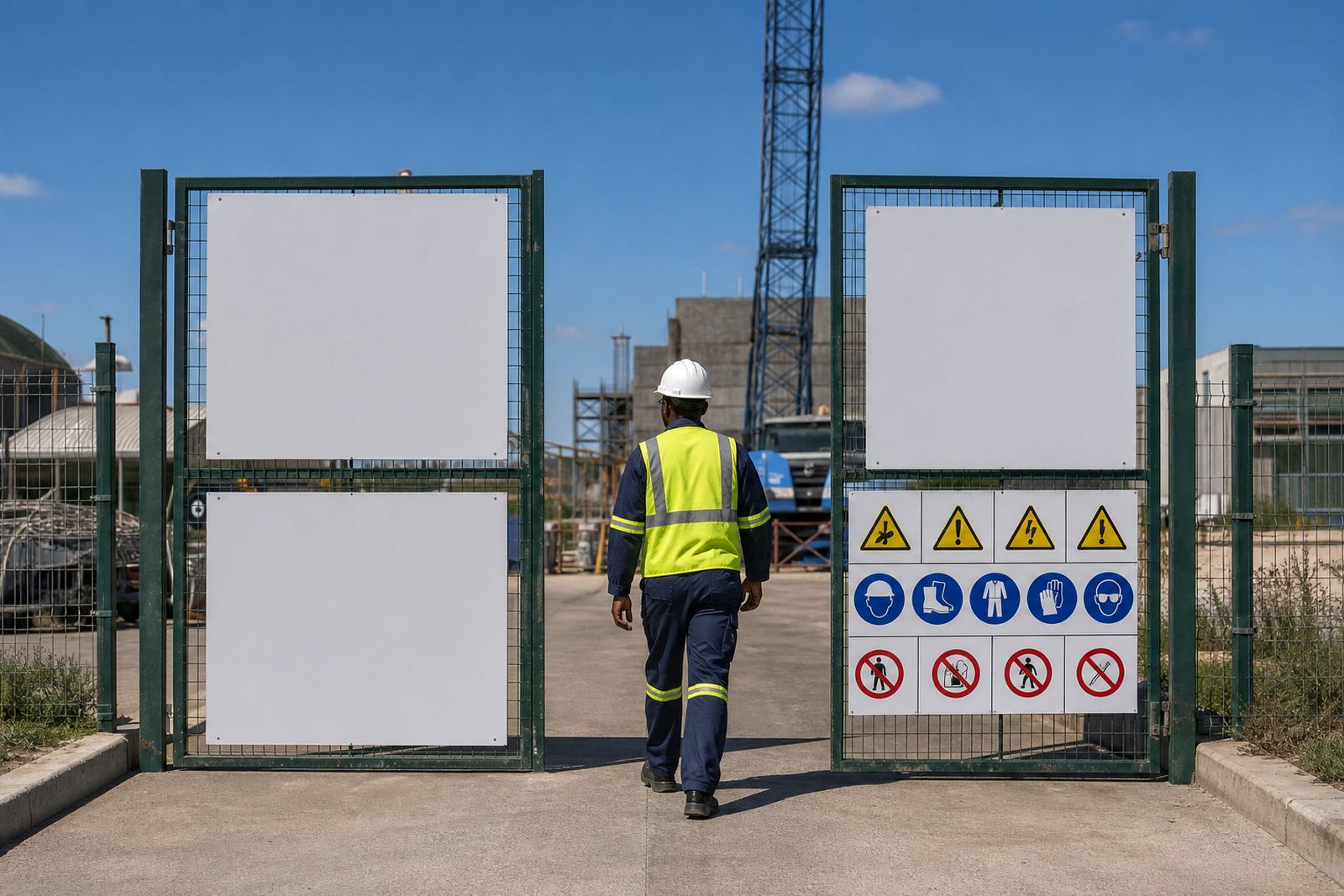
The client was a construction team working on a commercial project in Kempton Park, Gauteng, and the boards had to do more than carry a logo and a title. They needed to control site access, show the correct entry point, list basic safety rules, and make it easy for contractors, visitors and delivery drivers to understand what was expected before they stepped inside.
The site moved quickly, with different trades coming and going over the weeks, so the brief asked for boards that could be updated without starting from scratch every time. That meant clear layout planning, strong contrast between text and background, and enough room for changing notices such as PPE requirements, delivery times, and restricted areas. We also had to allow for outdoor exposure, uneven light near the boundary and the usual grime that builds up on a working site.
- Construction site boards for access control and project notices
- Outdoor-facing signs for perimeter fences and gate points
- Readable from a distance with simple, direct wording
- Prepared for repeated handling during installation and later changes
Material choice, print method and finishing
We used rigid board stock suitable for flatbed UV printing, with the print applied directly to the sheet for a clean finish and good edge detail. For a site like this, the main advantage is that the board stays flat and can be fixed neatly to fencing, hoarding or temporary framing without wrinkling. UV-curable inks were selected because they cure quickly and hold colour well on outdoor signage, which matters when boards are exposed to sunlight and handled during installation.
The artwork was set up with bold headings, clear numbering and practical spacing so the notices could be understood at a glance. We kept the colour palette simple and the type large enough for drive past visibility. In this kind of work, too much decoration usually gets in the way of the message, so the focus stayed on legibility, order and compliance. The final finish was clean and hard wearing, suitable for a busy site where boards are often touched, moved or checked by different teams.
- Rigid boards for flat surface mounting
- UV print for outdoor durability and sharp text
- Simple layout for fast reading at entrances
- Suitable for temporary or longer term site use
How we handled the workflow from file to site
The workflow started with the site rules and the wording for each board. We checked the layout, corrected spacing, and made sure the wording matched the purpose of each sign. For example, access boards need a different structure from safety notices, and both need clear hierarchy so a driver or subcontractor can find the key point immediately. We also prepared the print in a way that allowed the site team to keep consistent wording across more than one board.
Because construction projects often change while work is happening, we built the job around flexibility. If a notice changed during the programme, the board set could be adjusted without upsetting the rest of the system. That helped the client keep the site organised while the building work carried on. The result was a practical set of boards that supported access control, reduced confusion at the gate and gave the project a more orderly public face.
- Step 1: review content and site instructions
- Step 2: set out artwork for visibility and consistency
- Step 3: print directly to rigid board material
- Step 4: prepare for mounting and on-site use
Constraints on a live building site in Kempton Park
Kempton Park sites tend to deal with dust, changing weather, trucks arriving at odd times and the pressure of keeping work moving. The boards therefore had to be practical rather than delicate. We took into account glare from the sun, boundary fencing that could flex a bit, and the need for notices to stay readable even when the site was busy. There was also the matter of municipal and site management rules, which often require clear instruction boards and visible project information at the entrance.
We kept the production tight so the client did not lose time waiting on signage. On a live site, delays are expensive and can affect deliveries, labour planning and visitor control. We therefore prioritised quick turnaround, accurate wording and a format that could go up without extra fuss. The boards were made to support the site team, not create another thing for them to manage.
- Outdoor conditions and strong sunlight
- Dust, handling and frequent foot traffic
- Need for readable signage at the gate and perimeter
- Fast turnaround to avoid holding up site activity
Installation, checks and what the client received
Once the boards were printed, we checked the finish and the overall clarity before handing them over for installation. On site, the team wanted the signs positioned where they would be seen before a person entered the work area, so placement was important. We helped with advice on height, viewing angle and fixing points, especially where fencing or temporary structures were not perfectly square. That sort of detail makes a difference to whether a board looks professional or just sits there half hidden.
The finished set gave the client a neat and functional way to manage access and project communication. It supported the site in a practical sense, from the first deliveries through to day to day contractor movement. The boards stayed easy to read, which is often the real test on a construction job. If people can understand the notice without stopping and squinting, the job is doing its work.
- Boards delivered ready for mounting
- Placement guidance for entrances and visible fence lines
- Clean presentation for clients, contractors and inspectors
- Practical support for ongoing site control
Why this kind of board work needs a steady print partner
Site boards are often treated as a last minute task, but they carry real responsibility. They tell people where to go, what to do and where the limits are. In Kempton Park, where commercial and industrial projects often move quickly, the signage has to keep up with the work. That means a supplier needs to understand rigid boards, outdoor print behaviour, colour consistency and how to set up information so it works in the real world.
If we were doing this same job again, we would follow the same approach: keep the wording simple, confirm the access rules early, allow room for changes, and print on a board material suited to the site conditions. We would also continue to plan for practical handling, because construction signage gets used hard. A good board is one that still looks clear after a few weeks of dust, sun and site traffic, and that is exactly what this project needed.
- Clear message first, decoration second
- Board stock chosen for outdoor use and handling
- Simple updates when site rules change
- Consistent print quality across the full set
Key facts
| Project | Kempton Park construction site boards |
|---|---|
| Town | Kempton Park, Gauteng |
| Use | Access rules, project notices and safety information |
| Print method | Flatbed UV printing on rigid board |
| Timeline | Completed over 2 weeks |
| Outcome | Clear, durable boards for site control and visitor guidance |