
What Workflow Planning Covers for Rigid Board Jobs
Workflow planning is the practical side of flatbed UV production. It sets out how boards arrive, how they are checked, where they are stored, which jobs print first and how finished work leaves the print area. For signage shops in Germiston, Johannesburg or Cape Town, that structure matters when you are balancing same day retail boards, event signage and repeat runs.
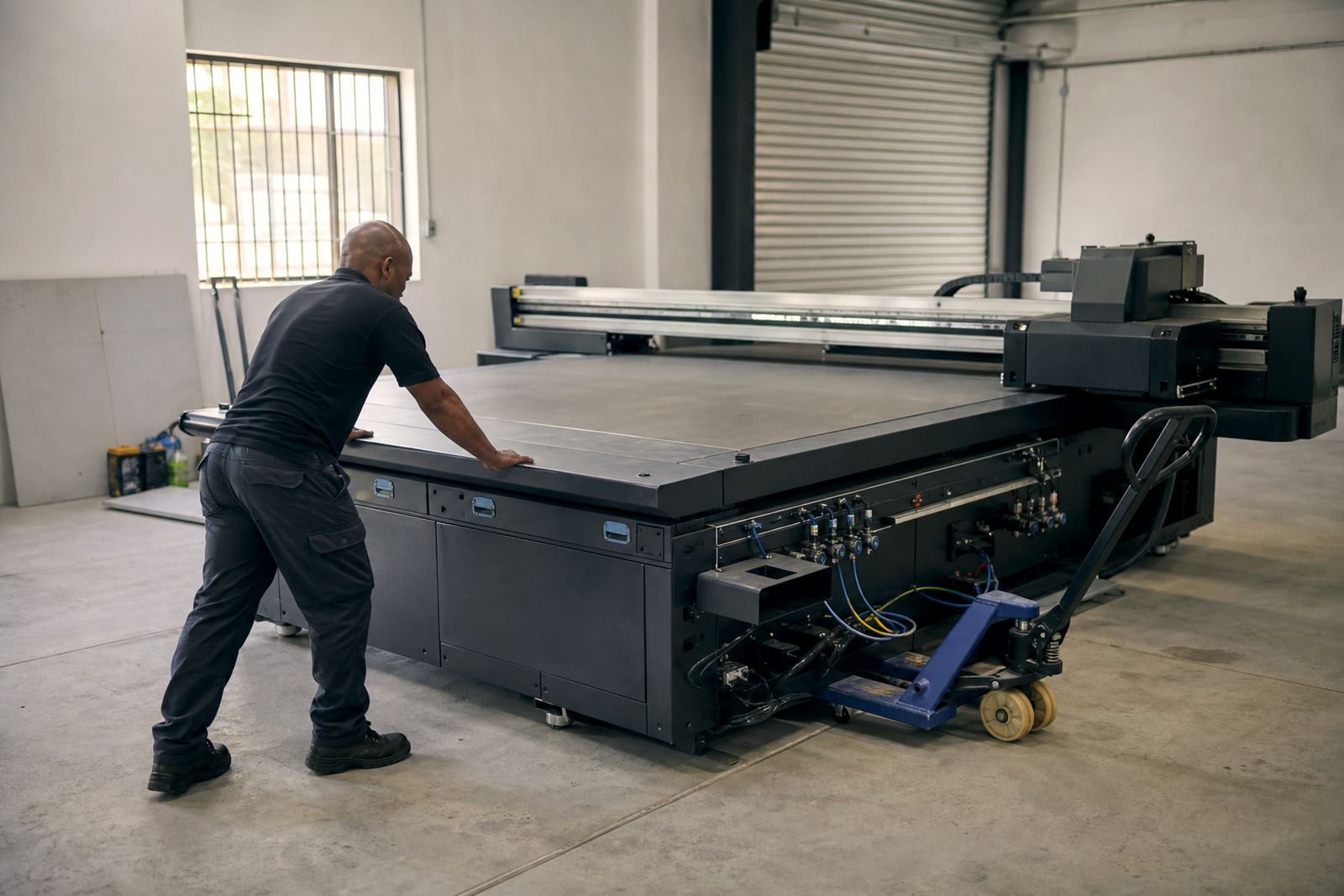
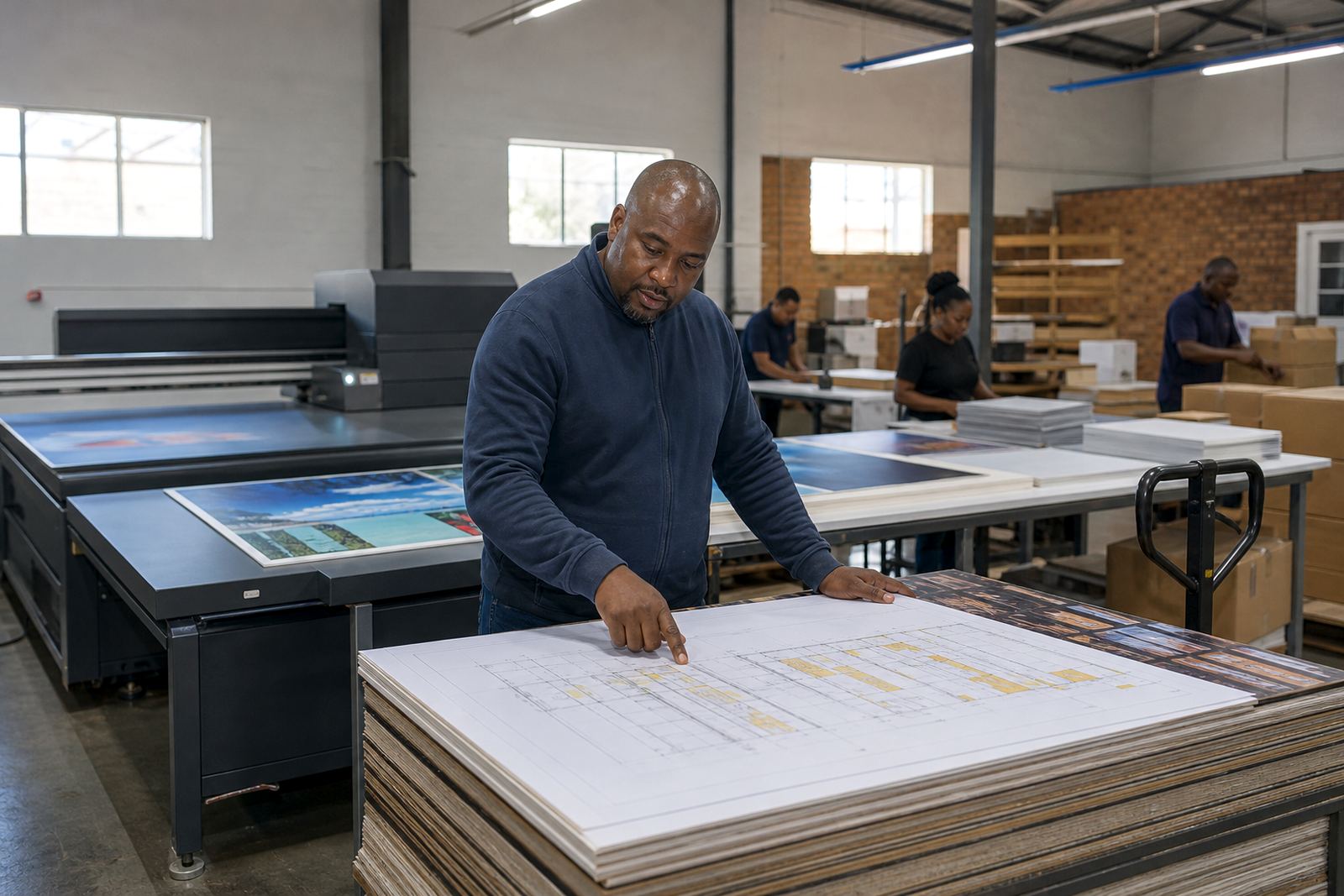
We focus on the full path of the job rather than just the printer itself. That includes board loading, queue order, drying or cure handling, registration checks, trimming handoff and packing. The aim is to reduce reprints, avoid handling damage and keep operators clear on what comes next.
- Board intake and condition checks
- Print queue order and priority rules
- Layout handoff to finishing teams
- Colour control steps and approval points
How We Set Up a Practical Print Flow
Every site works differently. A small shop in Centurion may have one operator covering the whole floor, while a larger plant in Durban may have separate teams for prepress, print and finishing. We map the space, the job mix and the available labour, then set a workflow that suits the actual load on the floor not an ideal one.
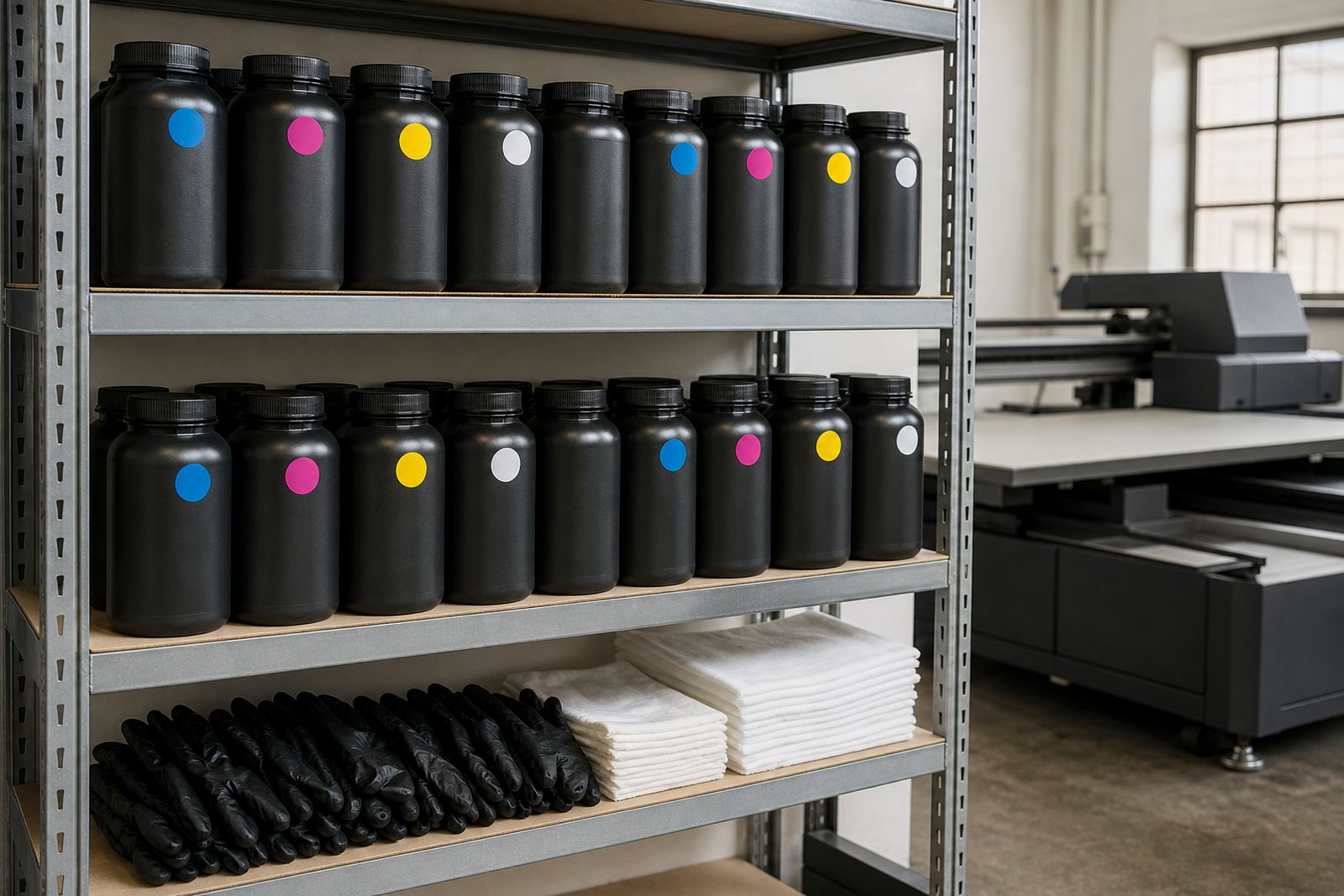
The process starts with a review of board sizes, daily volumes, access routes and storage. We look at how rigid media moves through the space, where dust collects, where humidity affects stacking and how load-shedding affects queue timing. From there we build a clear method for labelling, staging and release to finishing.
- Site review and process mapping
- Board storage and staging plan
- Queue rules for urgent and repeat work
- Handoff points for cutting, routing or packing
Flatbed UV Print Specs That Affect Workflow
Workflow planning is linked to the job specs because the printer, ink and media all affect handling time. Flatbed UV printers are used for rigid boards, signs, panels and display pieces that need direct-to-substrate printing. The ink cures during the print cycle, which helps with quick handling, but the board still needs careful movement, stacking and finishing.
We plan around the media you use most often, including foamex, ACM, acrylic, PVC foam, corrugated board and similar rigid sheets. We also account for media thickness, sheet flatness and surface sensitivity. If a board is bowed, dusty or poorly stored, the whole queue can slow down. That is why media testing and intake rules are part of the planning process.
- Rigid board handling and storage
- UV ink cure and cure-aware handoff
- Surface prep checks before print
- Queue timing for single pass and repeat jobs
Turnaround, Training and Handoff Support
Most workflow planning projects begin with a site conversation and a floor walk. After that we build a simple plan that your team can follow, often with one or two working sessions on-site. Where needed we also support remote follow-up so the team can fine-tune the process after the first jobs run through.
Turnaround depends on the size of the operation and the number of production points involved. A small setup can often be mapped quickly, while a multi shift site may need more review time. We keep the process practical and measurable, with written steps for operators, supervisors and finishing staff. The goal is a smoother handoff, fewer bottlenecks and less confusion during busy periods.
- On-site review and process mapping
- Operator guidance on queue discipline
- Handoff notes for finishing teams
- Remote follow-up where required
Pricing Approach for Workflow Planning Services
Pricing is based on the work involved, the number of production areas and whether the support is local or travel based. A single-site planning session in Germiston will not be priced the same as a multi-site rollout across Johannesburg, Pretoria, Durban or Gqeberha. We quote according to the site conditions, the time needed on the floor and the level of documentation required.
Where a client needs wider support, workflow planning can sit alongside installation, operator training, preventive maintenance or media testing. That helps avoid seperate visits for issues that are linked. We keep pricing clear and itemised so you can see what is included before the work starts.
- Quoted to site scope and time on location
- Local and national travel considered
- Can be linked to other service work
- Clear itemisation before approval
Maintenance Intervals That Keep the Plan Working
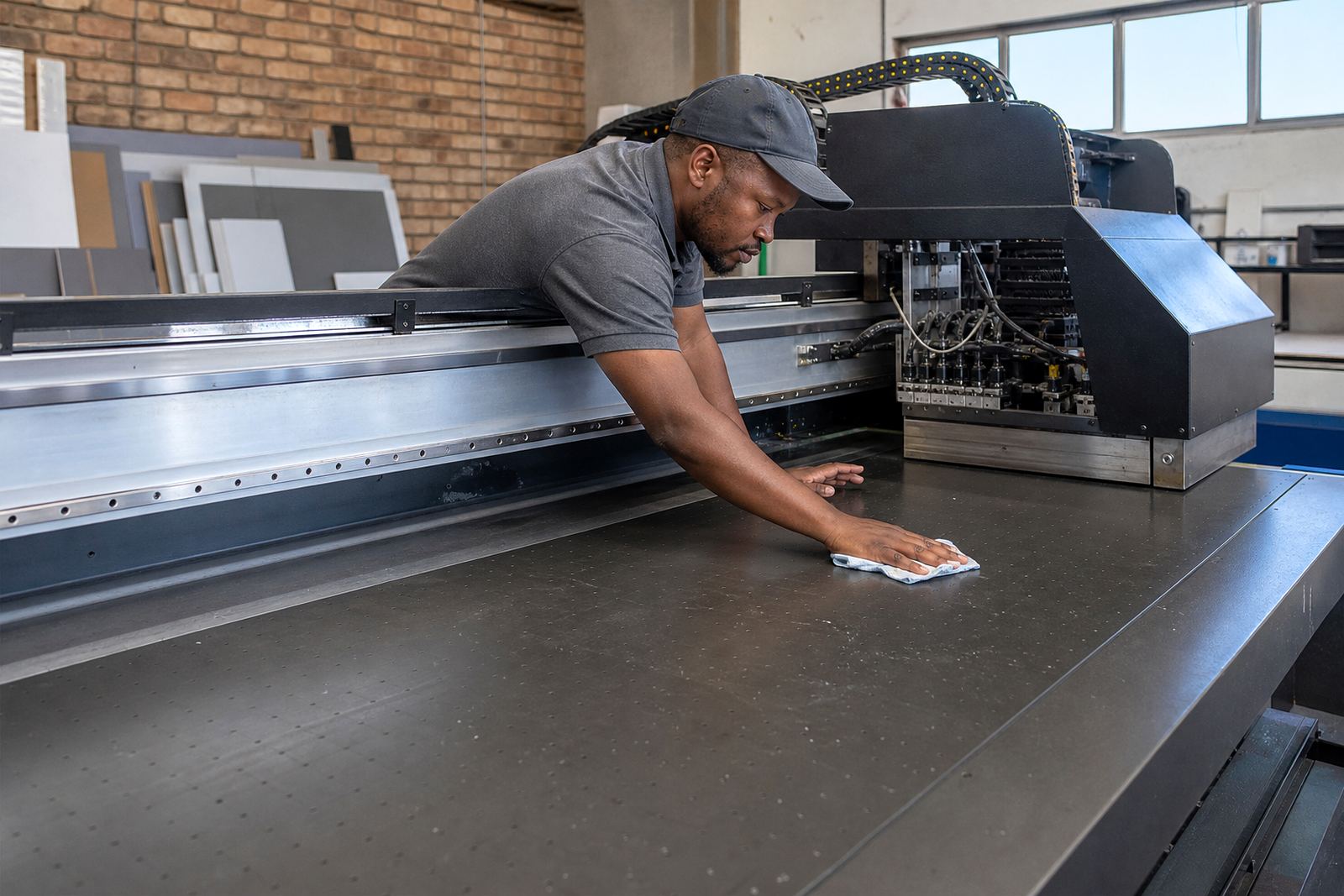
A workflow plan only stays useful if it is checked against the real production load. We recommend reviewing the process after the first busy week, then again after new staff join, new media is introduced or the job mix changes. In many print rooms, a quarterly review is enough to catch small issues before they become delays.
Maintenance intervals are not only for the machine. They also apply to the way boards are stored, labelled and moved. A clean intake area, regular media checks and a clear queue board help keep production steady especially in coastal conditions where humidity can affect flatness and dust can build up quickly. If load-shedding affects your shift pattern, the workflow should be adjusted so jobs are not left half set up.
- Review after the first production cycle
- Quarterly workflow and handling checks
- Adjustments after staff or media changes
- Queue updates after power interruptions
Key facts
| Service area | Germiston, Johannesburg, Pretoria, Durban, Cape Town and Gqeberha |
|---|---|
| Primary focus | Board loading, print queues and finishing handoff |
| Media types | Rigid boards, signage panels and display substrates |
| Workflow inputs | Site layout, labour, job mix and storage method |
| Support modes | On-site planning, operator guidance and remote follow-up |
| Review interval | After launch, then quarterly or when production changes |