
What our ink handling help covers
Our ink handling help service is built for printrooms that work with flatbed UV systems on boards, panels and other rigid media. We advise on how to store ink correctly, how to bring it into production without contamination, and how to keep daily handling consistent when the team is under pressure. That matters in Gauteng heat, coastal humidity in Durban or when a plant is running through load-shedding and the shift pattern changes.
The support is practical and site-based where needed. We look at the full path from delivery to printer, including how containers are opened, labelled, sealed and returned to storage. We also help teams manage expiry dates, batch rotation, agitation, and the small things that cause blocked heads, colour shifts or waste. A neat ink room saves time and it keeps the print flow steadier.
- Safe storage guidance for UV ink and related consumables
- Daily handling routines for operators and supervisors
- Advice on contamination control, seals and container rotation
- Support for colour consistency and repeatable output
Safe storage and day-to-day printroom practice
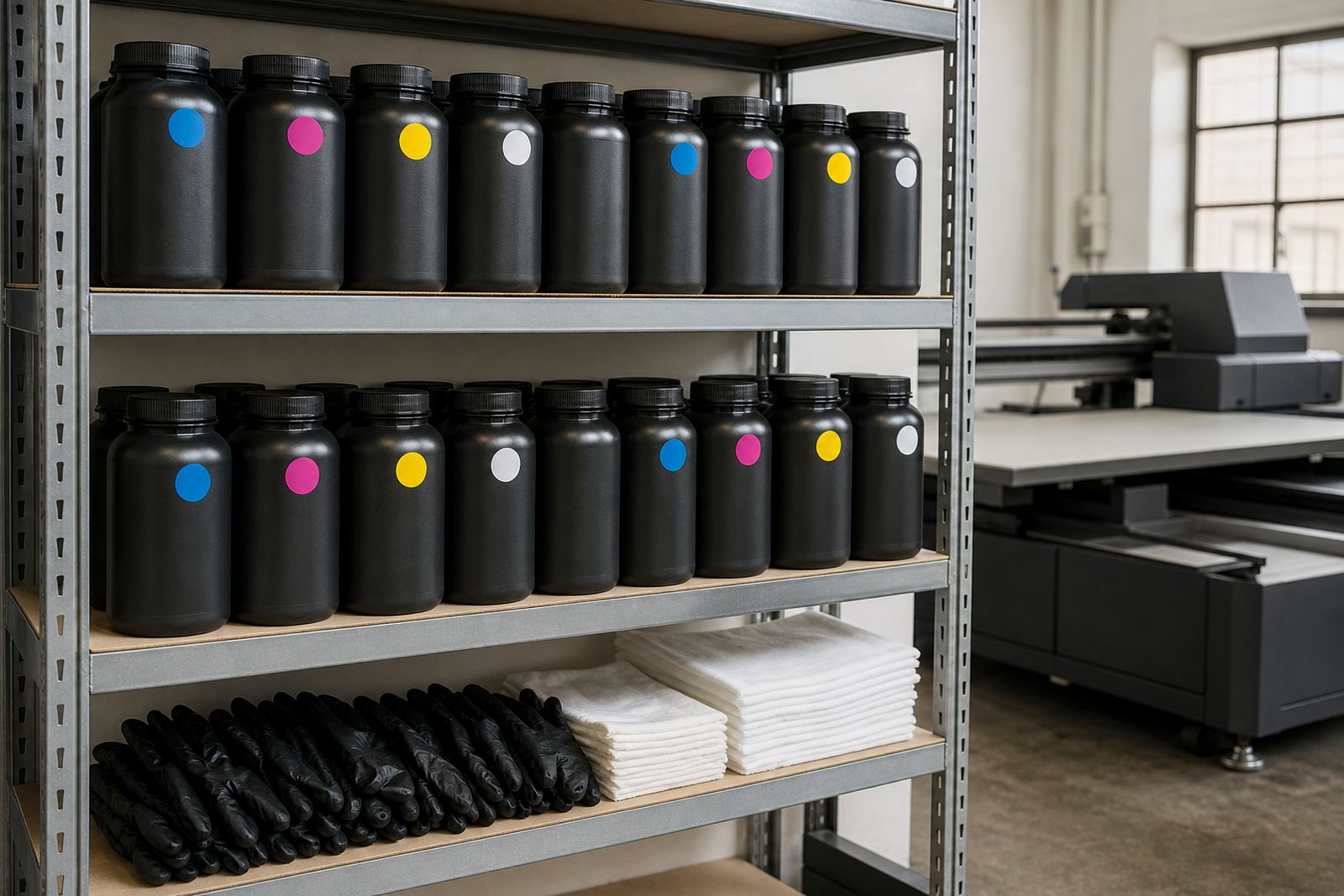
UV ink must be kept in a clean, dry area with stable temperatures and out of direct sun. We guide teams on shelving, bunded storage where required, and how to separate inks from cleaning materials, rags and general workshop stock. In humid areas, especially near the coast, poor storage can lead to moisture risk and messy handling. In dusty industrial spaces, simple housekeeping makes a big difference.
We also cover day-to-day discipline. That includes keeping caps clean, wiping container necks before closing, using the correct pour method, and making sure opened stock is tracked properly. If your team is sharing a production space with cutting, lamination or finishing, we help you set a cleaner path so dust and overspray do not end up near the ink stations.
- Label checks for opened and unopened containers
- Rotation of stock to use older batches first
- Cleaning steps for lids, funnels and transfer tools
- Basic spill response and waste segregation
How we set up a safer ink workflow
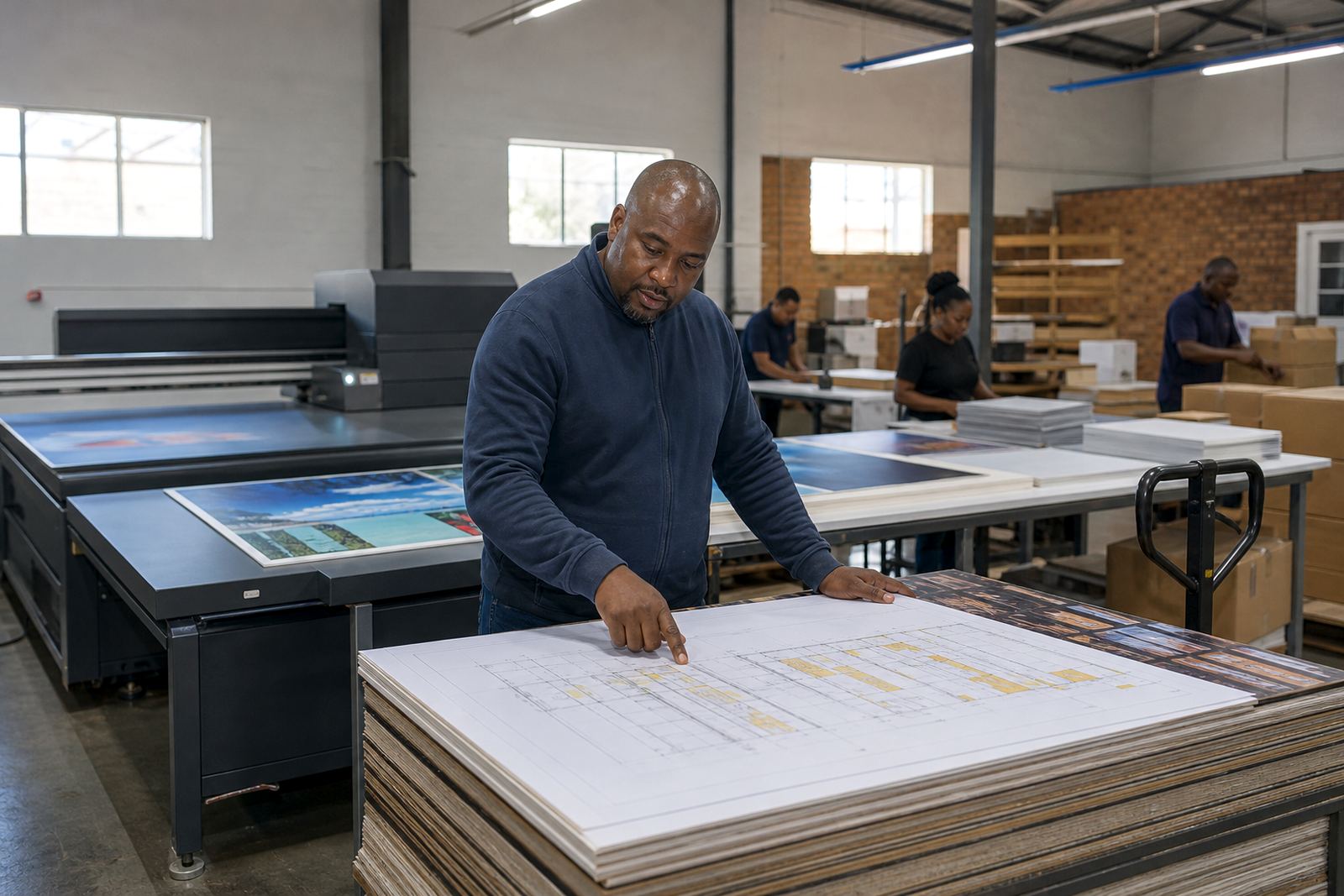
We start by reviewing the current setup, the media being printed, and the way jobs move through the printroom. Then we map the weak points. That could be a storage cupboard with no airflow, ink being moved too often between areas, or operators using different habits on different shifts. From there we recommend a simple workflow that suits the site rather than adding extra admin.
Where needed, we work alongside your production team to introduce checklists for opening, mixing, setting aside test pieces and closing down at the end of the shift. We also advise on personal protective gear, hand washing points and where to place absorbent materials for spills. The aim is not paperwork for its own sake, but fewer mistakes and cleaner production. It is practical work and it should stay practical.
- Site review and workflow mapping
- Operator coaching on safe handling methods
- Checklist setup for shift start and shift close
- Advice on PPE, spill control and waste handling
Ink handling and media testing together
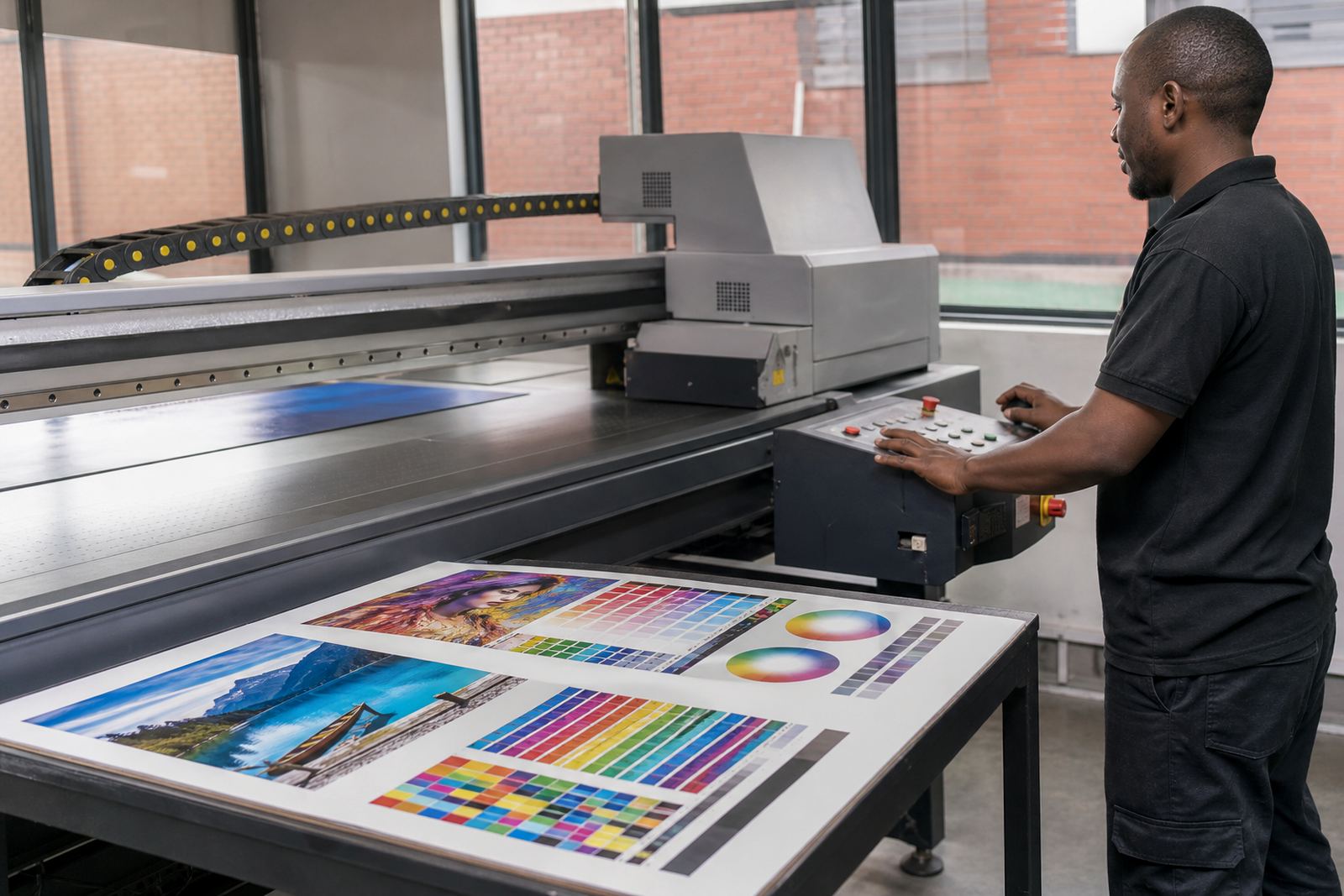
Ink behaviour is always linked to media. Rigid boards, coated panels and signage substrates all react differently, so good ink handling goes hand in hand with proper media testing. We help teams record what was printed, which ink set was used, how the surface was prepared and what the cure result looked like. That makes future jobs more repeatable.
In practice, this can mean checking adhesion, rub resistance, edge handling and the way the print sits on the board. If a job is being prepared for outdoor use, we look at how the handling process affects drying and finish. If it is for indoor retail signage, we focus on consistency and presentation. Small differences in handling can cause bigger problems later, especially when the same board size is being repeated across several sites.
- Ink and media compatibility checks
- Test print recording for repeat jobs
- Surface preparation notes for board work
- Guidance on cure and finish observations
Turnaround, response times and pricing approach
For most clients, ink handling help starts with a phone or form enquiry followed by a review of the issue and the production environment. If it is a planning request, we can often advise quickly and then schedule a site visit or remote support session. If a printroom is already dealing with contamination, blocked nozzles or poor storage habits, we prioritise the most urgent production risk first.
Pricing is based on the support needed, whether that is a one-off assessment, training session, follow-up visit or ongoing production consulting. We keep it straightforward and quote according to scope, location and time on site. There are no fixed one-size fees because a small Germiston printshop and a multi-shift operation in Cape Town will need different levels of support. If you want a clear plan and a clean process, we can scope it properly before work begins.
- Remote guidance for straightforward handling questions
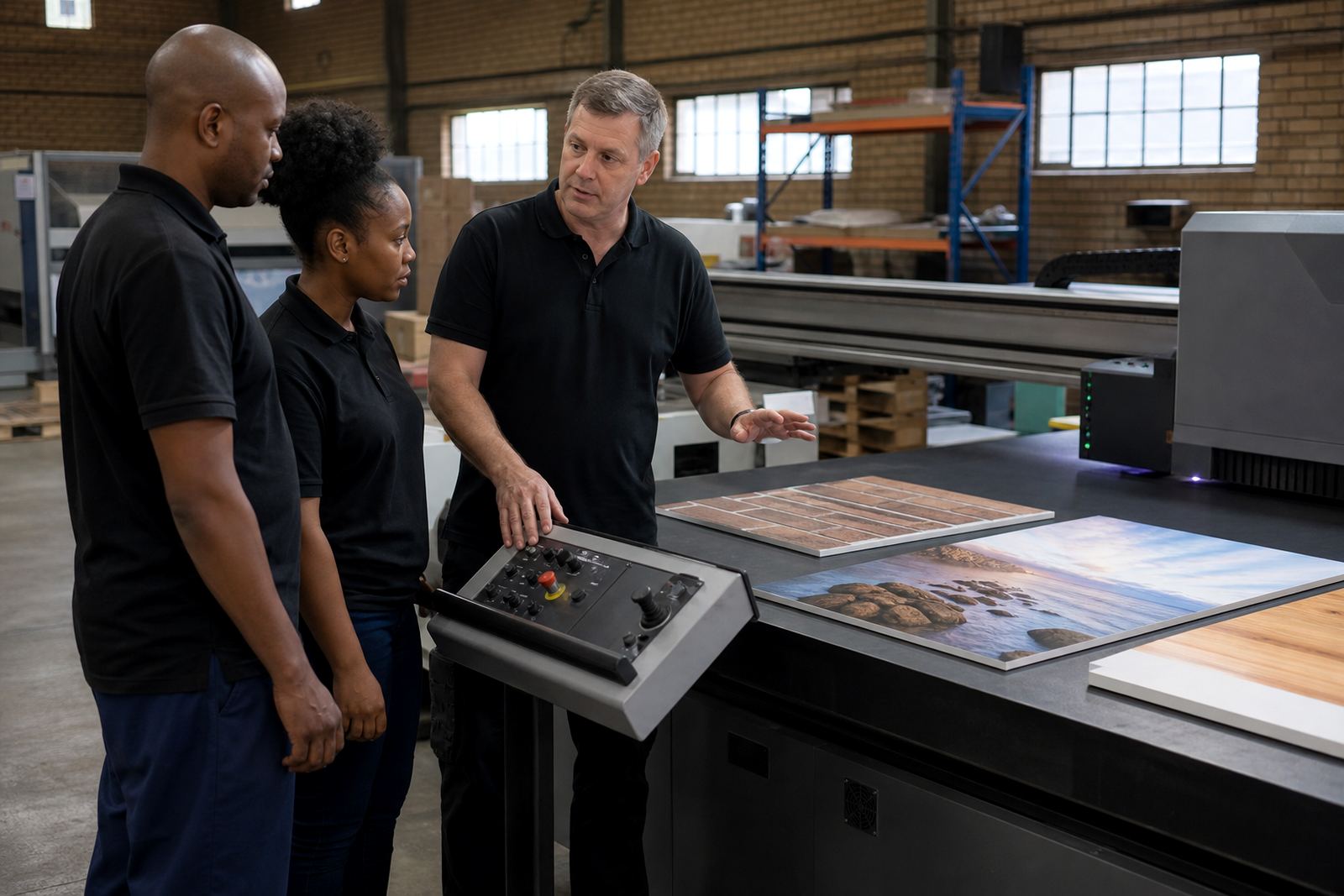
- Site visits for practical setup and staff coaching
- Quoted pricing based on scope, location and urgency
- Follow-up support available where process changes are being rolled out
Maintenance intervals for better ink control
Good ink handling is not a once-off fix. We recommend regular reviews so small habits do not turn into production faults. Weekly checks should cover storage condition, stock rotation, cap cleanliness and spill control. Monthly reviews can look at operator routines, expiry management, inventory movement and whether the current workflow still matches the workload.
For busy production sites, we often suggest a more detailed review after any major staffing change, machine service, seasonal shift or move in premises. If the printroom is running through cold mornings, summer humidity or power interruptions, ink handling needs to be checked more often. A little maintenance now avoids bigger cleaning and rework later, which is usually the expensive part.
- Weekly housekeeping and storage checks
- Monthly workflow and stock review
- After-change review for staffing or equipment changes
- Seasonal checks for temperature and humidity effects
Key facts
| Service type | Ink handling help for flatbed UV printrooms |
|---|---|
| Primary use | Safe storage, daily handling and contamination control |
| Supported media | Rigid boards, panels and signage substrates |
| Support format | Site visit, remote guidance, training and follow-up |
| Typical focus | Workflow, stock rotation, spill control and colour stability |
| Area coverage | Germiston, Johannesburg, Pretoria, Durban, Cape Town and Gqeberha |