What colour guidance covers on rigid UV work
Colour guidance is the practical side of getting a print job to look right from the first board to the last. On flatbed UV printing, that means checking how the ink sits on the media, how the surface finish affects colour, and how the curing process changes the final look. A white PVC board, foamboard, corrugated plastic sheet and ACM panel will all behave differently, so one setting rarely suits every job.
Our support is aimed at printers, signage shops and production teams that need better consistency for repeat runs, tender work, retail displays and site boards. We help with the visible result as well as the process behind it, so your team can make practical decisions before the press starts running.
- Colour matching for rigid boards and signage
- Ink laydown checks for light and dark substrates
- White ink use and underbase planning
- Gloss, matt and mixed-finish job handling
- Setup advice for repeat work and reprints
How we assess your media, ink and file workflow
Colour issues often come from a mix of small things rather than one big fault. A board may be slightly dusty, a sheet may warp in warm weather, or the file may be built for a different output condition. In Gauteng, coastal humidity, storage conditions and even load-shedding related stops and starts can affect consistency if the workflow is not steady.
We look at the full chain from file to finished board. That includes artwork preparation, black build, saturation levels, print order, curing response and whether the media needs testing before the full run. If you are printing on materials for outdoor signage or retail display, we also check how the colour will hold up once the job is handled, transported or exposed to sunlight.
- Artwork review and output intent
- Media test prints before production
- Ink behaviour on coated and uncoated boards
- Drying and curing checks for handling strength
- Repeatability checks for reorders
Step by step support from test print to approved run
We keep the process simple and practical. First, we discuss the job type, board size, quantity and where the final piece will be used. Then we look at the current setup and identify where colour is drifting. In many cases the answer is not a major change, just a better sequence of checks and a more disciplined production routine.
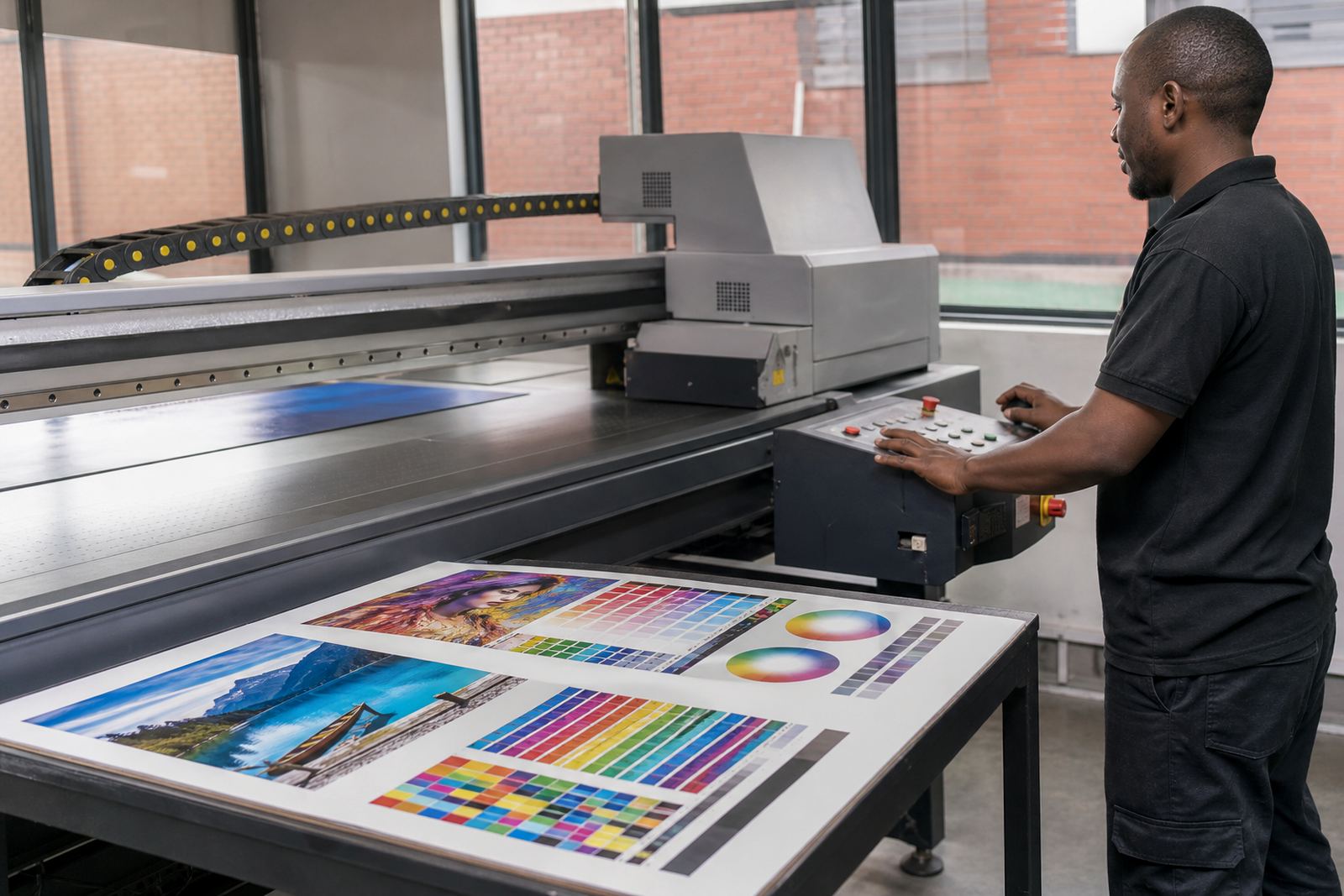
After that, we work through a test print stage. This usually includes sample outputs on the intended media, a review of solids, skin tones if relevant, greys and brand colours, then a final decision on the most suitable print approach. Once the job is approved, your team can use the same settings and notes for future runs.
- Job briefing and media identification
- Sample output and colour review
- Adjustments to laydown, curing and order of print
- Approval of the final target look
- Production notes for future repeat jobs
What is included in the service
Colour guidance is not just a one-off opinion. It is a working support service for day to day production. Depending on your site and the sort of rigid work you produce, we can assist with board selection, ink handling, media testing, job setup and the fine points of consistency between operators or shifts.
For many Germiston and East Rand clients, the biggest value comes from reducing waste. If a run is showing a colour shift, the fastest way to cut losses is to isolate the cause before more sheets are printed. That saves material, time and pressure on the team. It also makes it easier to keep reorders aligned when a customer comes back months later.
- Colour consultation for rigid media jobs
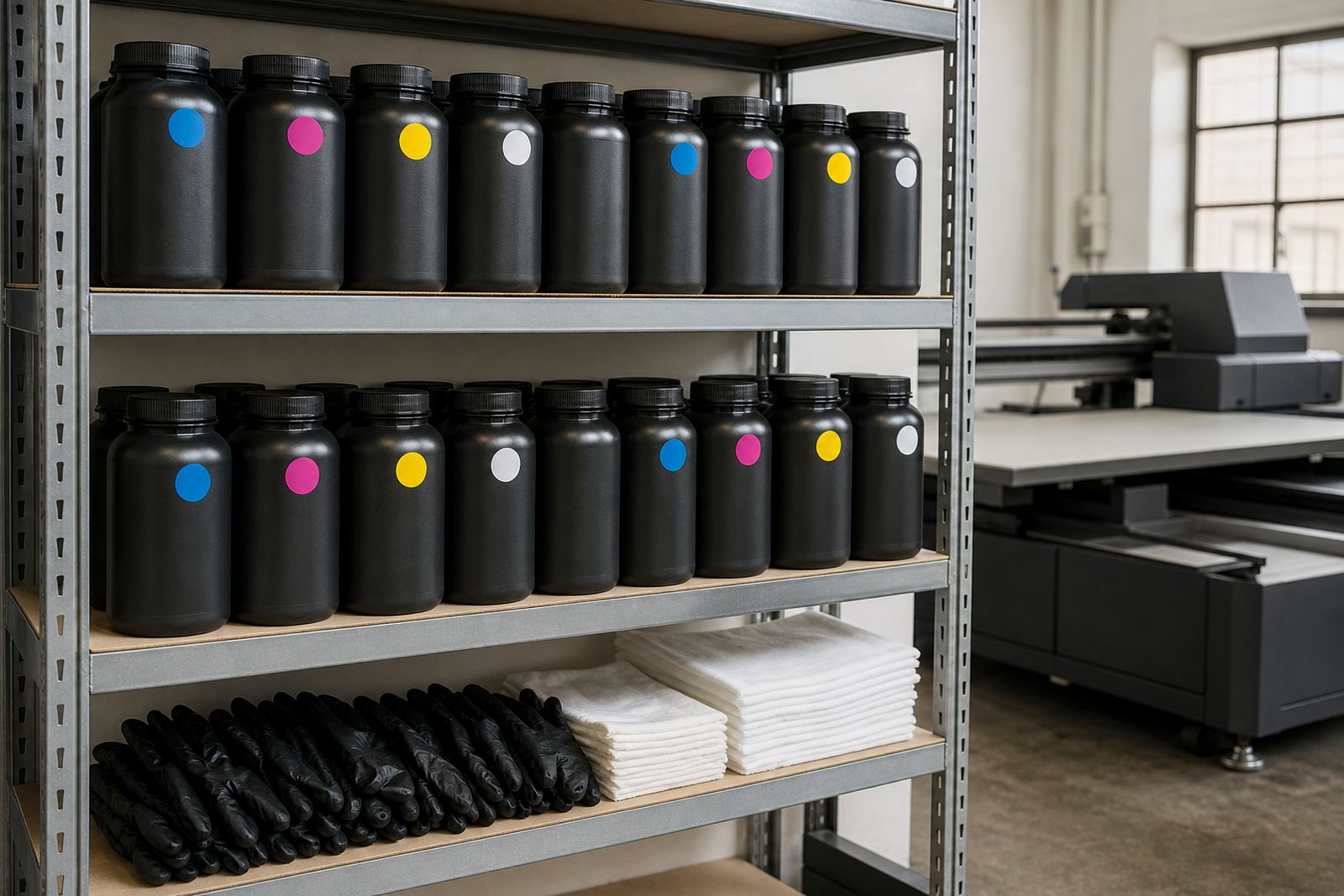
- Ink handling guidance for consistent output
- Media testing for new board types
- Workflow notes for operators and supervisors
- Follow-up help after the first production run
Turnaround, maintenance intervals and support timing
Turnaround depends on how complex the job is and whether the issue is limited to one material or affects several. Simple colour checks can often be handled quickly, while larger production reviews may need test prints, drying time and a second pass after changes are made. For remote support, we focus on fast diagnosis so your team is not waiting around while boards pile up.
As a rule, colour guidance should be revisited whenever you change media, ink batch handling, operator routine or the type of work you are running. In busy shops we usually suggest a regular review cycle, especially if the printer is used daily and handles a mix of signage, display boards and short runs. Preventive checks every few months can catch drift early and keep the press in proper working order.
Pricing approach and where we support clients
Our pricing approach is based on the actual work required. A straight-forward colour review is not priced the same as a full workflow consultation with media testing, operator coaching and follow-up support. We keep the conversation clear at the start so you know what is included and what may need extra time if the job opens up into a larger production issue.
Flatbed UV is based in Germiston, Gauteng and supports clients across Johannesburg, Pretoria, Durban, Cape Town and Gqeberha, with help also available in areas such as Centurion and the East Rand. If your team needs practical colour guidance for rigid boards and signage, we can work with your enquiry and build the support around the job at hand.
Key facts
| Service focus | Practical colour guidance for flatbed UV printing on rigid boards and signage |
|---|---|
| Media types | PVC board, foamboard, corrugated plastic, ACM panel and other rigid substrates |
| Process coverage | File review, test prints, ink laydown, curing checks and repeat-run setup |
| Support modes | On-site assistance, remote support and follow-up production advice |
| Maintenance interval | Review after media changes, operator changes or any recurring colour drift |
| Service area | Germiston, Johannesburg, Pretoria, Durban, Cape Town, Gqeberha and surrounding areas |