
Hands-On Training for Daily Flatbed UV Work
Our operator training is built for people who will be running flatbed UV printers on rigid boards and signage every day. We cover the full working routine, from loading material and checking settings to starting jobs, watching print quality and handing over a finished board that is ready for finishing or installation.
The training is suitable for new operators and for staff who already know the basics but need a clearer method. We work with common rigid media such as foam board, acrylic, PVC sheet, correx, aluminium composite panels and similar sign substrates used in Gauteng and across the country. The aim is simple: fewer errors, less waste and steadier output, even when the shop is under pressure.
- Media handling and safe loading
- Print setup and job preparation
- Daily start-up and shutdown routine
- Colour checks and print consistency
- Basic fault finding and operator care
What We Cover During the Session
Training is practical, not theory only. We show your team how flatbed UV printing works in real production conditions, including how inks cure, how board surface affects adhesion and why dust, static and poor storage can spoil a run. On coastal jobs we also talk about humidity and how it affects material handling, especially for boards that sit near loading bays or in hot storerooms.
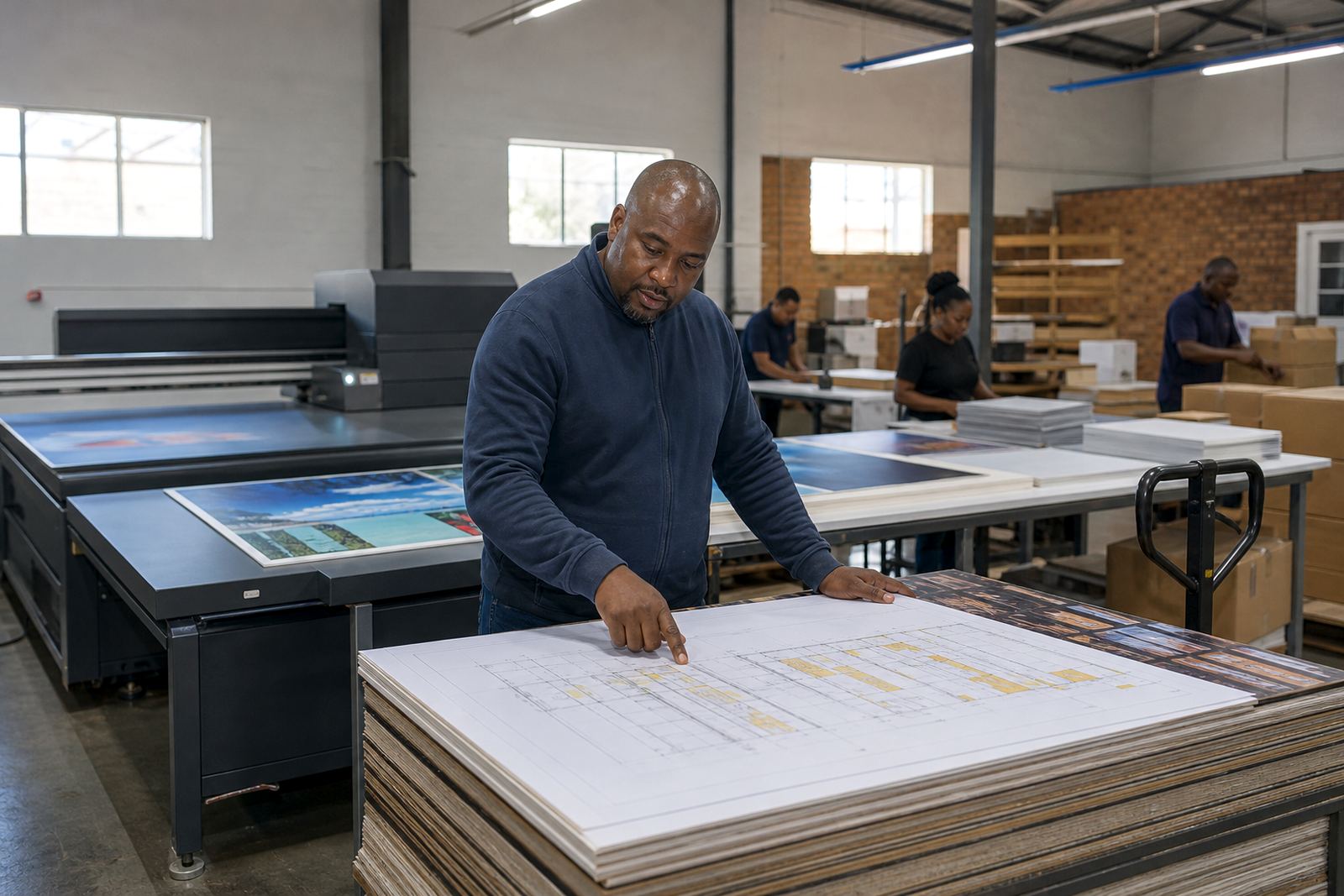
The session can include your own production workflow, so the training matches the work you actually do. That means planning queue order, checking artwork readiness, dealing with white ink where needed, and deciding when a board must be wiped, tested or rejected. A small setup mistake can waste material fast, so we spend time on prevention as much as correction.
- Flatbed UV print workflow from intake to output
- Ink handling, storage and basic safety
- Surface preparation and media testing
- How to spot banding, adhesion issues and colour drift
- Job handover between operator and finishing team
Step-By-Step Training Process
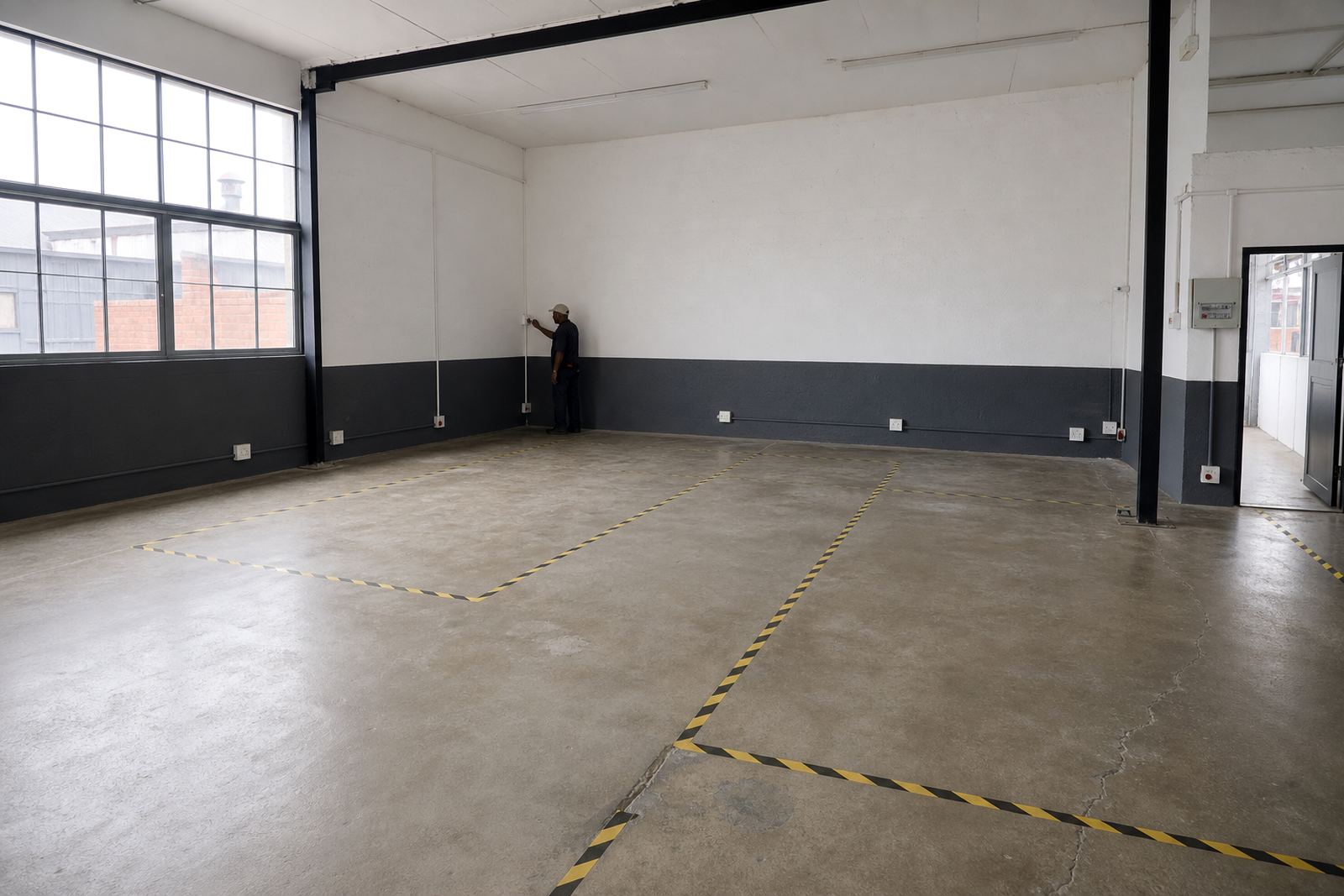
We usually begin with a short assessment of your current setup, your media range and the experience level of the operators. That helps us shape the session around the real work being done in the shop, not a generic class. If your team is new to rigid-board printing, we take it slower. If the operators already have experience, we can focus on speed, consistency and problem solving.
Training is then carried out in clear steps so the team can follow and repeat the process afterwards. We explain the why behind each stage, which helps staff remember the routine when work gets busy or a job has special requirements. Most teams find it easier once they see how the steps connect from preparation through to final output.
- Initial site review and workflow check
- Operator skill assessment
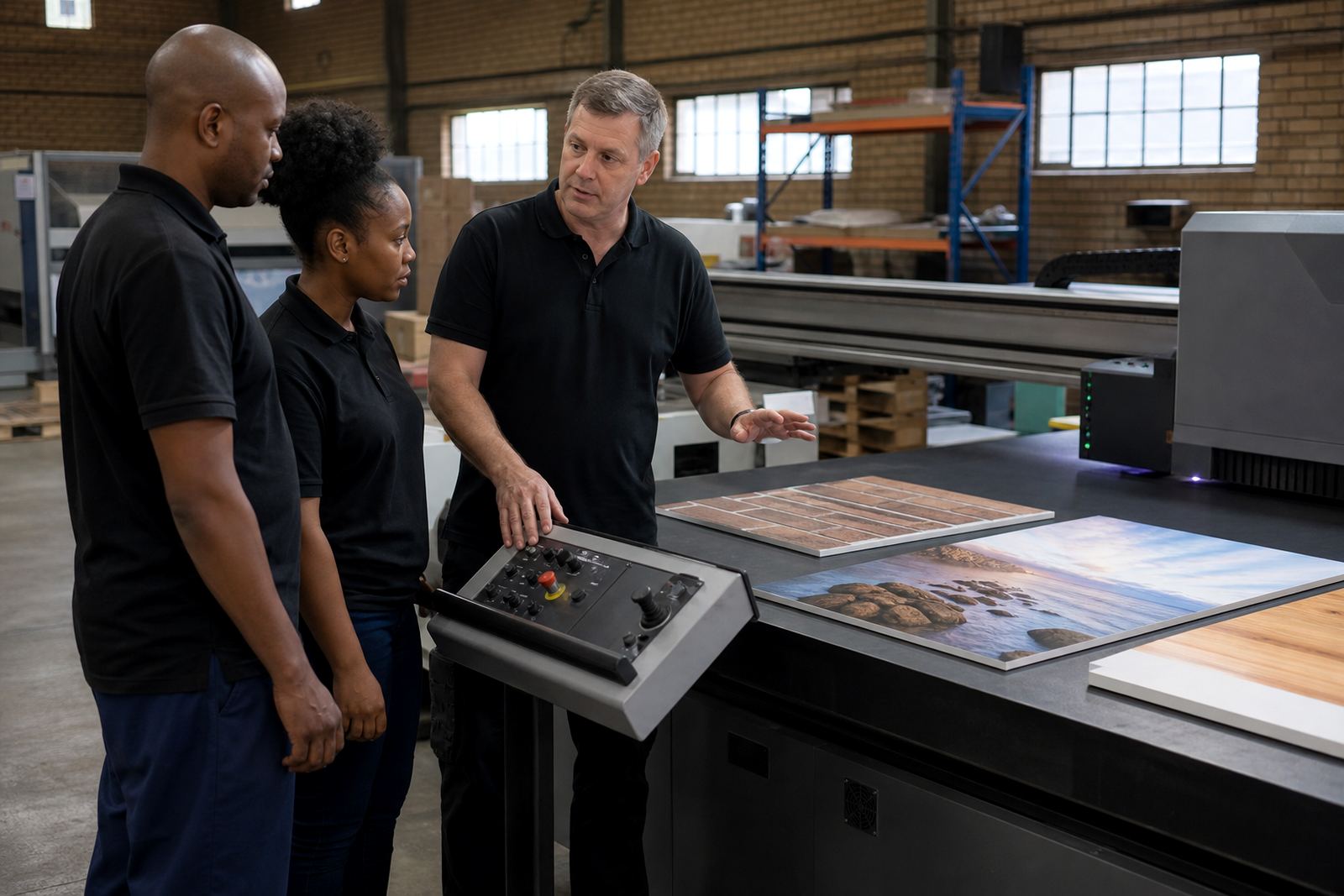
- Guided practical demonstration
- Supervised hands-on running of sample jobs
- Questions, correction and sign-off notes
We leave your team with a practical working method they can use straight away. Where needed, we also note simple job sheets or checklists for the operator to keep at the machine, because consistency matters when there are several people sharing the same printer.
Maintenance Awareness for Better Uptime
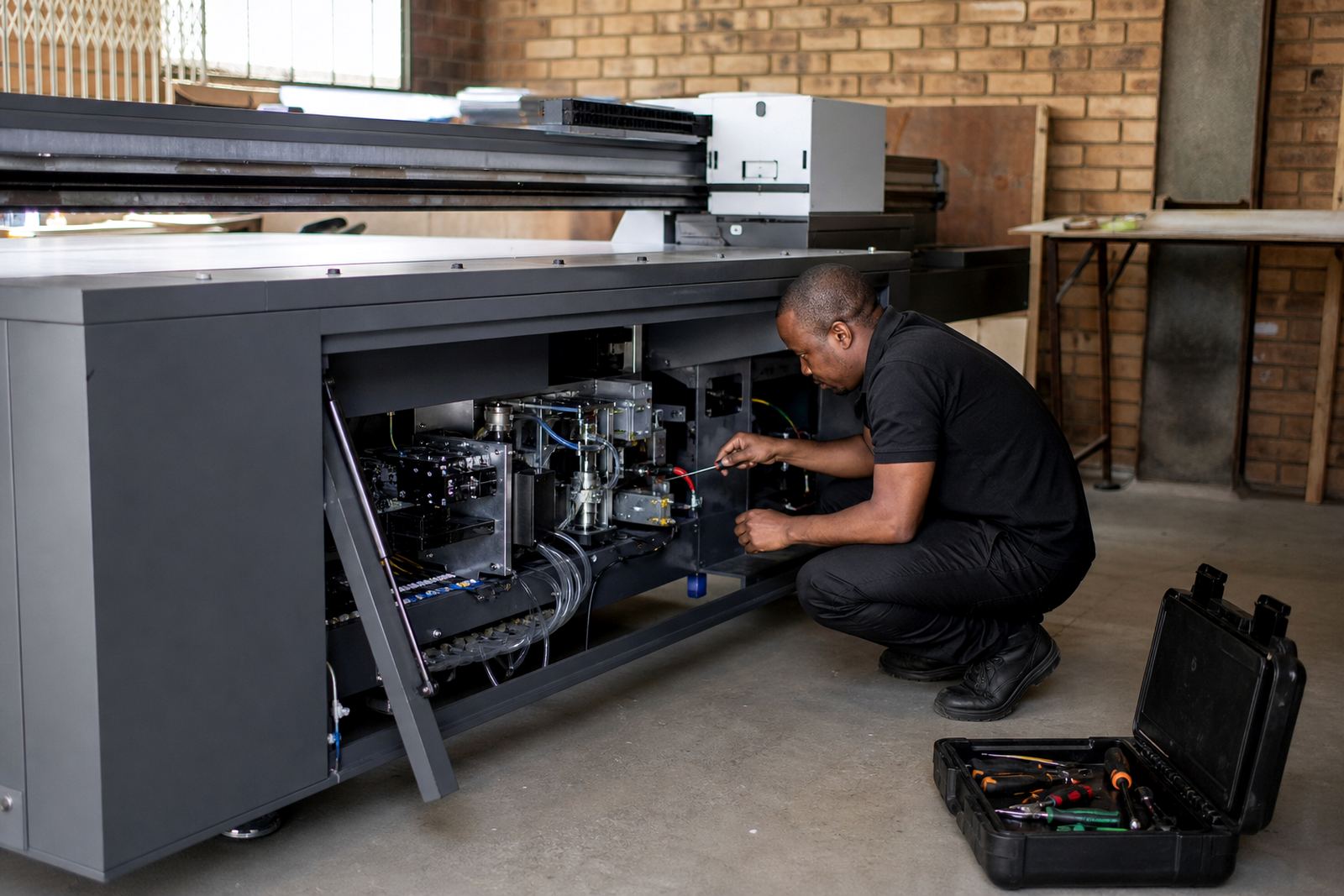
Operator training is also about protecting the machine and keeping downtime low. A flatbed UV printer needs daily care, weekly checks and longer interval servicing to stay reliable. We show the operator what must be done each shift, what should be looked at weekly and when a technician should be called in. That way, minor issues are caught before they become a stopped production day.
On busy sites in Johannesburg, Pretoria, Durban, Cape Town and Gqeberha, the routine often needs to fit around load-shedding, shift changes and short turnaround work. We guide teams on safe shutdowns, restart checks and how to inspect for dust build-up, ink residue or curing problems. Regular care also helps with print quality on more demanding substrates.
- Daily cleaning and inspection points
- Weekly operator checks
- Ink circulation and handling awareness
- Simple signs of wear that need service attention
- How to prepare the machine for a technician visit
Training Turnaround and Booking Format
Most operator training sessions are arranged once the machine is installed and ready for use, but we can also train new staff later if your team changes. The turnaround depends on the size of the team, the level of experience and whether you need one machine covered or a full production workflow. For some sites, a single focused session is enough. Other sites need a follow-up visit after operators have had time to run real jobs.
We work across Germiston, the East Rand, Centurion and the main metro areas, with support available nationwide. If the site needs a refresher or if a new operator joins after the first session, we can schedule a return visit or remote support call to reinforce the process. That is often useful where staff turnover is high or a business is scaling up production. It saves time later.
We also advise on the best time to train. Early morning sessions can work well for clean start-up routines, while mid-shift training suits teams that need to see live production issues. The right timing helps the lesson stick.
Pricing Approach and What Affects the Cost
Pricing for operator training is based on the scope of work rather than a fixed one-size-fits-all fee. We consider the number of operators, the amount of hands-on time needed, the complexity of the print workflow and whether the session includes media testing, colour guidance or follow-up support. Sites with several shifts or more than one printer usually need a broader training plan.
We keep pricing practical and clear. If your team only needs basic operator orientation, the cost is lower than a full workflow training package. If you want us to cover production planning, maintenance intervals and ink handling as well, that adds time and depth to the session. We will always explain what is included before work starts so there are no surprises.
- Number of operators being trained
- Single machine or multi-machine workflow
- Basic orientation or full production coaching
- On-site, follow-up or remote support needs
- Extra media or colour work requested
For companies in Germiston and the wider Gauteng area, training is often combined with installation or production consulting to save time. For national clients, we can plan sessions in line with site readiness and operator availability.
When Refresher Training Makes Sense
Refresher training is useful when print quality has started slipping, when there are new staff on the floor or when the business has changed media types. It is also worth booking when operators are not confident with start-up, colour control or daily maintenance. Even experienced staff can slip into bad habits if no one checks the routine for a while.
If a site is seeing repeated media wastage, poor adhesion or inconsistent finish, the issue is often operator process rather than the printer itself. A short refresher can reset the workflow, improve output and reduce avoidable waste. In many cases that is cheaper than letting the same problems carry on for months. The team usually notices the difference quickly.
Our support team in Germiston works closely with installation, service and production consulting, so operator training can be linked to the rest of your print process when needed. That makes it easier to keep the machine, the media and the people all working in the same way.
Key facts
| Training format | Hands-on on-site operator session |
|---|---|
| Main focus | Media handling, print setup and daily operation |
| Supported media | Rigid boards, signage substrates and similar flat materials |
| Coverage area | Germiston, Gauteng and nationwide support |
| Service add-ons | Colour guidance, workflow planning and maintenance advice |
| Booking method | Enquiry form on the contact page |