
When a Flatbed UV Printer Stops Mid-Job
Breakdown support is for those moments when production has to pause and the cause is not obvious. That can include print quality faults, curing problems, carriage errors, vacuum issues, electrical faults, media feed problems, or a printer that simply will not start. Our team works from Germiston and supports sites in Johannesburg, Pretoria, Durban, Cape Town and Gqeberha, with help also available in Centurion and the East Rand.
We focus on flatbed UV printing systems used for rigid boards, signage and display work. That means practical fault finding on the printer, ink delivery path, curing system, motion system, print environment and operator workflow. If the issue is minor we guide your team through checks. If it needs a technician, we help organise the next step so the machine gets back into production as soon as possible.
- Urgent fault finding for print stoppages, banding, skips and cure issues
- Help with printer alarms, sensor errors and start-up faults
- Guidance on inks, media handling and job setup after a breakdown
- Support for production planning while the machine is off line
What Is Included in Breakdown Support
Every call starts with a clear problem review. We ask what happened, what the printer was doing just before the fault, what material was loaded, and whether the issue appeared after a power cut, load-shedding event, or maintenance task. In many cases the quickest fix comes from narrowing the problem area before anyone opens the machine.
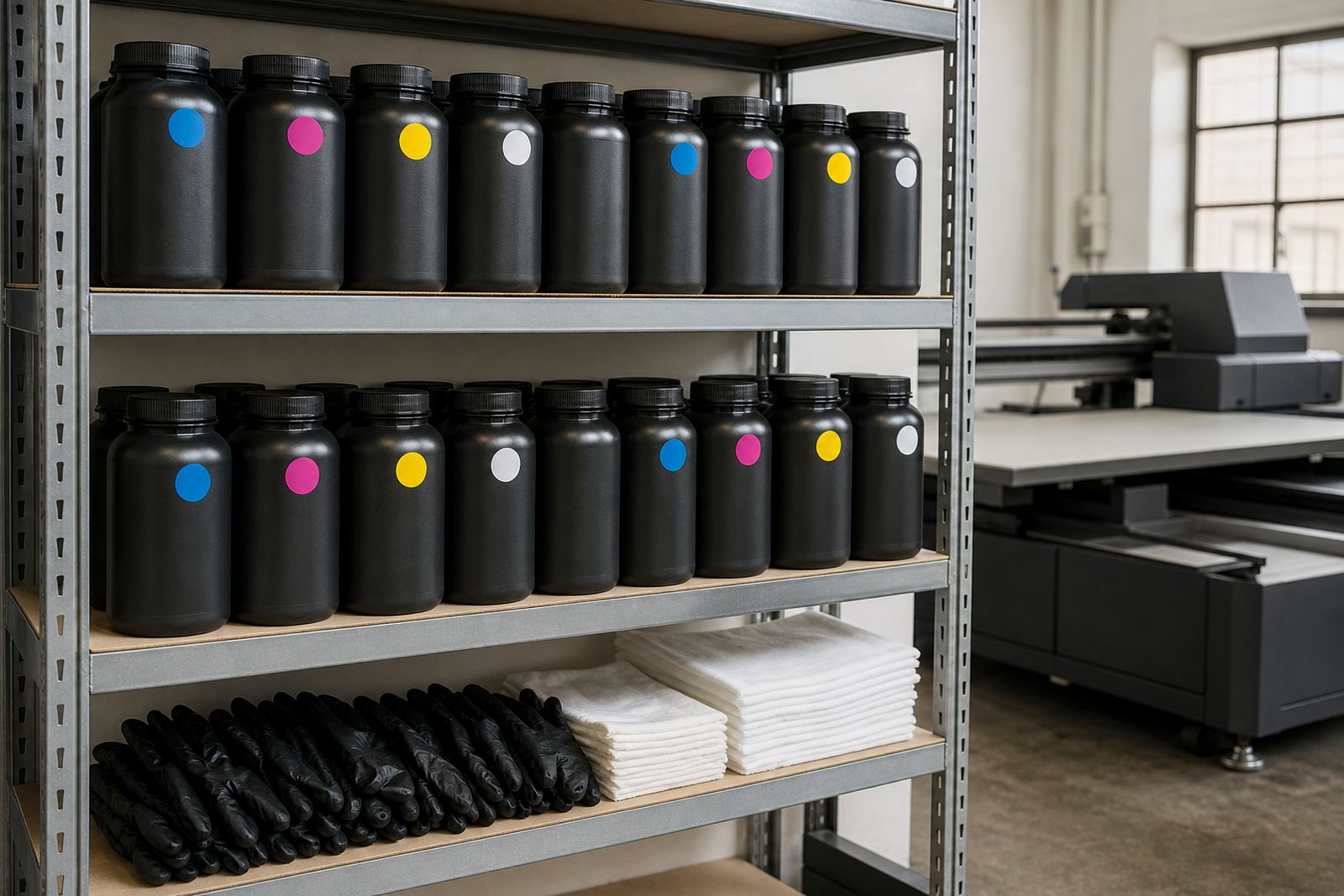
Support can include remote troubleshooting, on-site assessment, operator guidance, and repair coordination. Where required, we assist with cleaning procedures, basic resets, checking consumables, confirming ink condition and reviewing whether the board or substrate is suitable for UV curing and adhesion. Coastal humidity, dust, and unstable power can all affect output, so the support plan takes local conditions into account.
- Initial fault review and fault tree assessment
- Remote checks before site attendance where possible
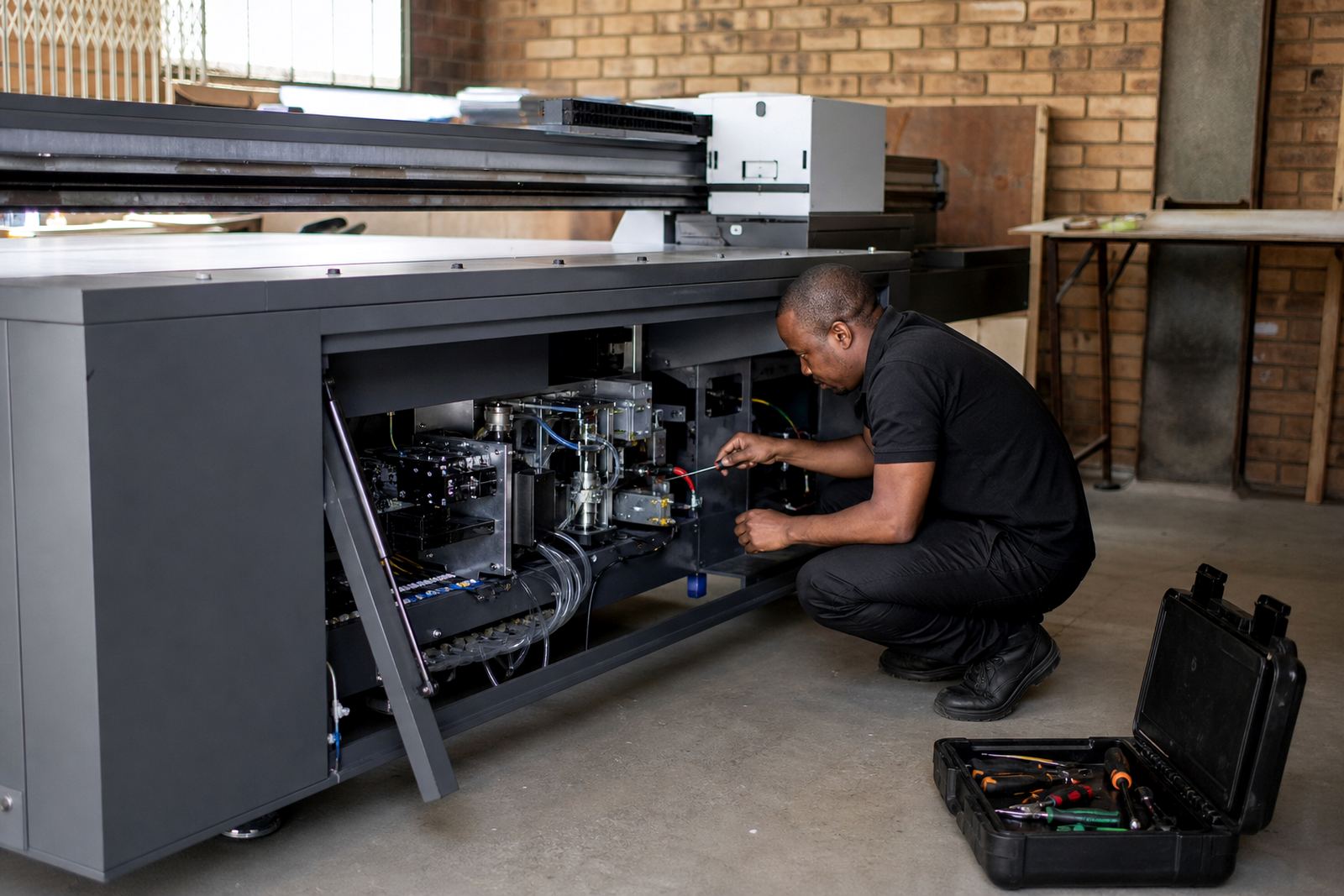
- On-site diagnosis for mechanical, electrical and print quality faults
- Ink handling help, media testing and production advice after repair
How Our Repair Process Works
We keep the process direct. First, you send a clear description of the fault through the enquiry form on our contact page. Include the printer type, the material in use, what the last good job looked like, and whether the problem came on suddenly or gradually. Photos or short video clips help a lot, especially for cure faults, carriage movement problems and recurring banding.
Next, we decide whether the issue can be handled remotely or whether a site visit is needed. If the printer needs a technician, we plan the visit around production urgency and the parts likely to be required. Once the machine is stable, we review the cause and suggest follow-up steps so the same fault does not keep coming back.
- Step 1: Submit the fault details and job information
- Step 2: Remote triage or call-back for quick checks
- Step 3: Site visit, inspection and repair plan if needed
- Step 4: Test prints, operator handover and prevention advice
Turnaround Times and Production Priorities
Breakdown work is handled according to urgency, location and the nature of the fault. A simple setup issue or blocked workflow can often be addressed faster than a hardware failure. For sites in Germiston, Johannesburg and the East Rand we can usually respond more quickly than distant locations, while coastal jobs may need travel planning and parts coordination. We always aim to give a realistic time frame rather than guess.
Where a printer is out of action for a longer period, we help you decide how to protect deadlines. That may mean splitting work to another machine, adjusting board sizes, changing material selection, or holding a job until the printer is stable. It is better to do that early than lose a full shift chasing an unclear fault.
- Fast triage for urgent production stoppages
- Time frames depend on fault type, access and spare part needs
- Remote support can reduce waiting time for smaller faults
- Priority is given to active production sites and repeat breakdowns
Pricing Approach for Breakdown Calls
We quote breakdown support according to the work involved, not a one-size-fits-all rate. The final cost depends on whether the issue is handled remotely or on-site, how much diagnosis is needed, whether parts must be sourced, and how far the site is from Germiston. If a fault turns out to be simple, we do not inflate the job with extras.
For ongoing production sites, it often makes sense to combine emergency support with a service plan, especially when the printer is used daily for boards, signs and seasonal work. That way the cost of urgent attendance and routine care is easier to manage across the year. We explain the options clearly before work starts, so there are no surprises.
- Remote support charged differently from on-site attendance
- Parts, travel and labour are handled separately where applicable
- Repeat faults may point to maintenance gaps, not just one bad day
- Quoted pricing is based on the actual fault and site needs
Maintenance Intervals That Reduce Breakdowns
Most breakdowns do not start as a major failure. They often begin with small issues that build up over weeks, such as dust on the bed, ink residue, poor curing, inconsistent cleaning, or operators rushing setup before a deadline. A sensible maintenance interval reduces the number of urgent call-outs and keeps print quality steadier.
We normally review maintenance after repair and suggest the right interval for your print volume, shift pattern and environment. High-volume signage work may need more frequent checks than occasional production, while coastal and industrial sites may need closer monitoring because of humidity and dust. Power protection matters too, especially where load-shedding has interrupted a job or caused a restart issue.
- Routine checks on ink flow, cure performance and motion accuracy
- Bed cleaning, filter checks and basic operator housekeeping
- Regular inspection after power interruptions or long idle periods
- Maintenance timing based on usage, material type and site conditions
Why Local Support Matters for Flatbed UV Users
Flatbed UV printers are used for jobs that need accurate placement, clean edges and reliable cure on rigid media. When something goes wrong, the fix is rarely just one setting. It can be a mix of operator habit, environment, material choice and machine condition. That is why breakdown support works best when the team understands both production pressure and the practical side of flatbed printing.
Sibusiso Mthembu leads the business, with support from Lerato Nkosi, Johan van der Merwe, Ayanda Dlamini, Michael Naidoo and Zanele Khumalo. The team covers installation, training, service and production support across South Africa, and breakdown work is handled with the same direct approach. If you need urgent help, use the enquiry form on our contact page and give us the fault details, so we can respond properly the first time.