
What A Print Room Upgrade Changes
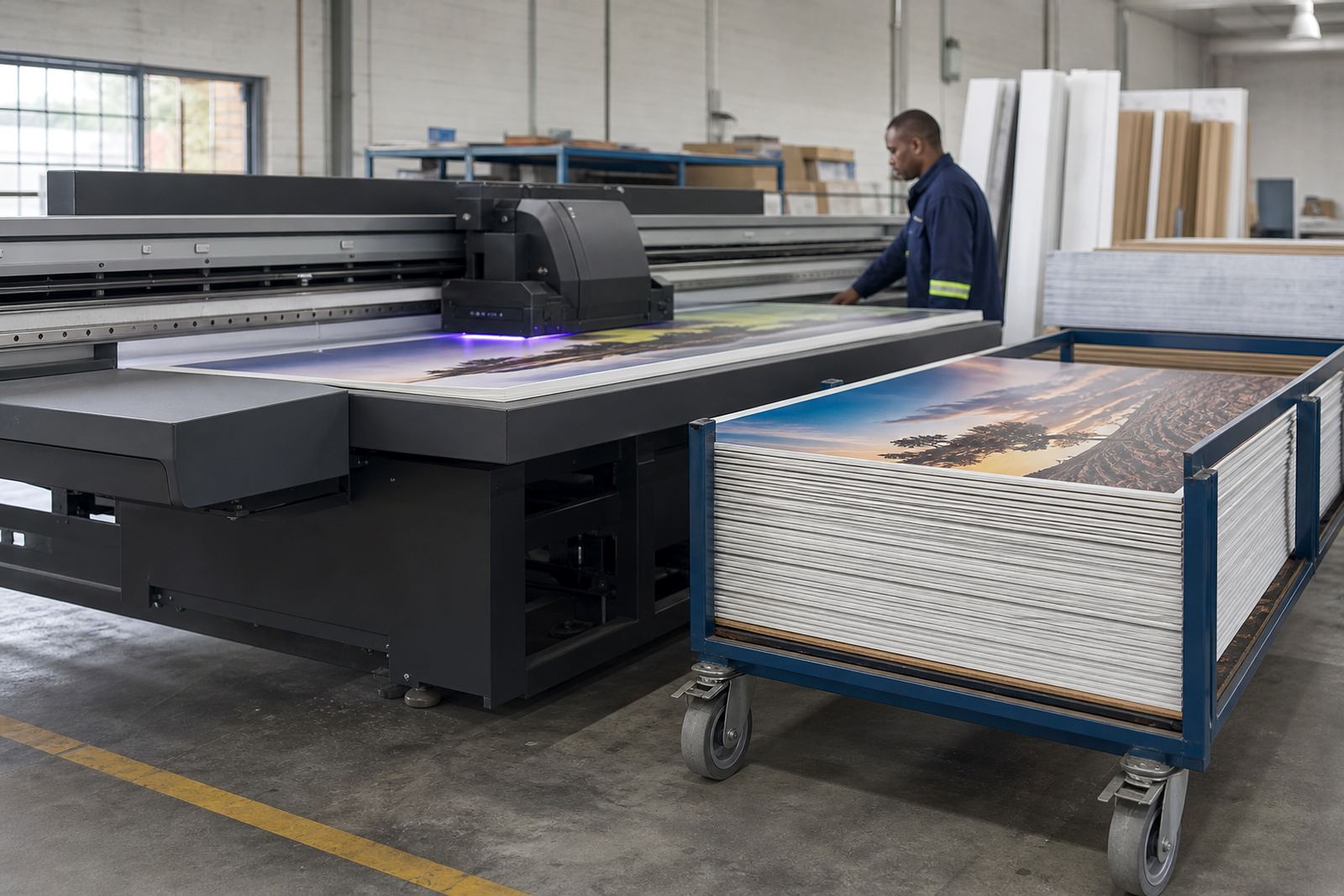
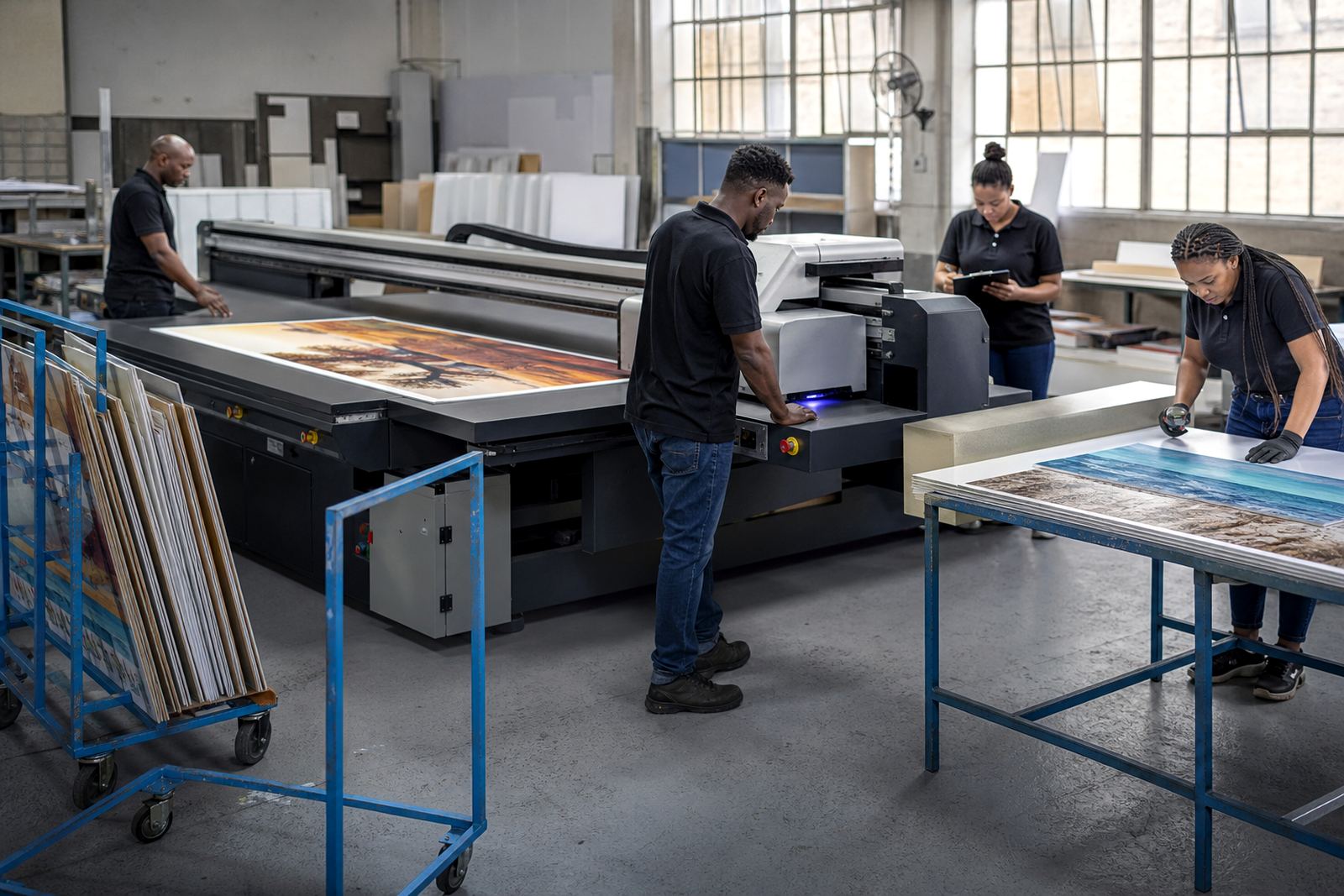
A print room upgrade is not only about changing a printer. It is about moving from slower, higher-touch rigid media work to a more controlled UV workflow where boards go in, prints come out cured and ready for finishing. That matters for shops handling Corflute, foam PVC, acrylic, aluminium composite, timber panels and other rigid substrates used in retail and signage work.
For many businesses in Germiston, Johannesburg and the East Rand, the biggest shift is reliability. Older processes often need extra drying time, more handling and more room for errors when power is unstable or the job queue is full. A modern flatbed UV setup supports direct printing on rigid boards, clearer colour control, and a tidier production flow from file prep to final output.
- Suited to rigid boards and signage production
- Helps reduce handling between print and finishing
- Supports short runs, repeat work and fast turnarounds
- Useful where space, labour or drying time is limited
Sizes, Formats And Working Options
Flatbed UV systems are selected around the board sizes and production mix you need to handle. Some print rooms work mainly on smaller display boards and point-of-sale items, while others need wider tables for large signage panels, shopfit work and event graphics. The right setup depends on your sheet sizes, output volume and how often you change jobs during the day.
Options usually include different bed sizes, vacuum hold-down, zoning for smaller panels and settings for direct-to-substrate printing. If you handle mixed work, it helps to choose a setup that can take both full sheets and cut pieces without constant re-alignment. This saves time and gives better placement control on tricky materials like textured board or slightly bowed panels.
- Small, medium and large flatbed format options
- Direct printing on rigid sheets and panels
- Suitable for single items or repeated batch work
- Can support white ink and layered print workflows where needed
Where This Upgrade Fits Best
This product suits print businesses that need to replace older rigid media methods with a cleaner UV route. It works well for signage shops, retail display producers, exhibition installers, interior fitout teams and print rooms doing recurring board work for corporate and municipal clients. It is also a practical step for businesses that need to reduce outsourced rigid printing and keep more work in-house.
In coastal areas such as Durban and Gqeberha, UV production also helps with work that must hold up better against humidity and regular handling. For Gauteng operators, the value is often around speed, layout control and dependable turnaround during load-shedding planning. The aim is to keep production moving even when the day is not perfect.
- Retail signage and promotional boards
- Exhibition panels and event graphics
- Interior fitout boards and decorative panels
- Institutional, office and site signage
Installation, Power And Site Readiness
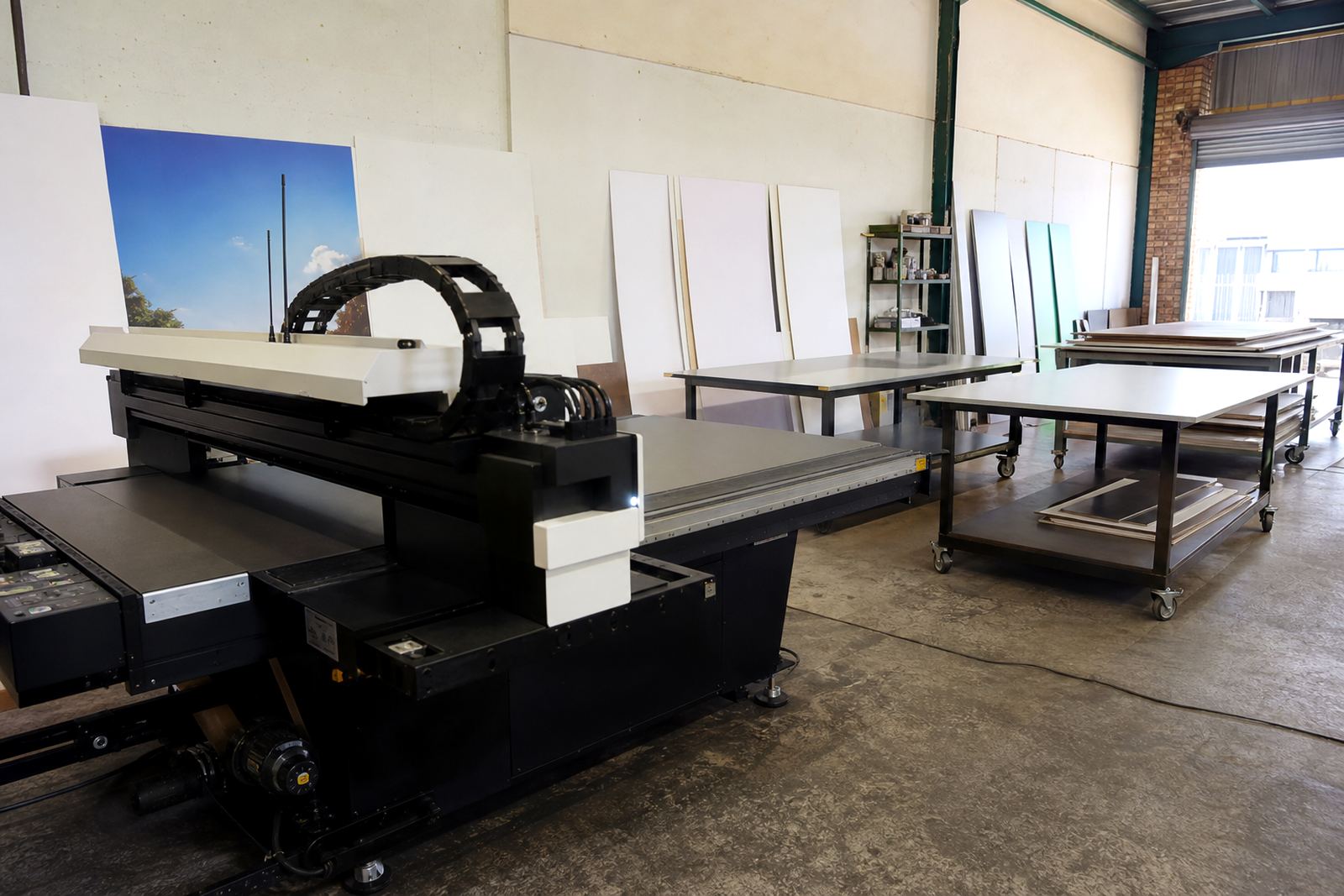
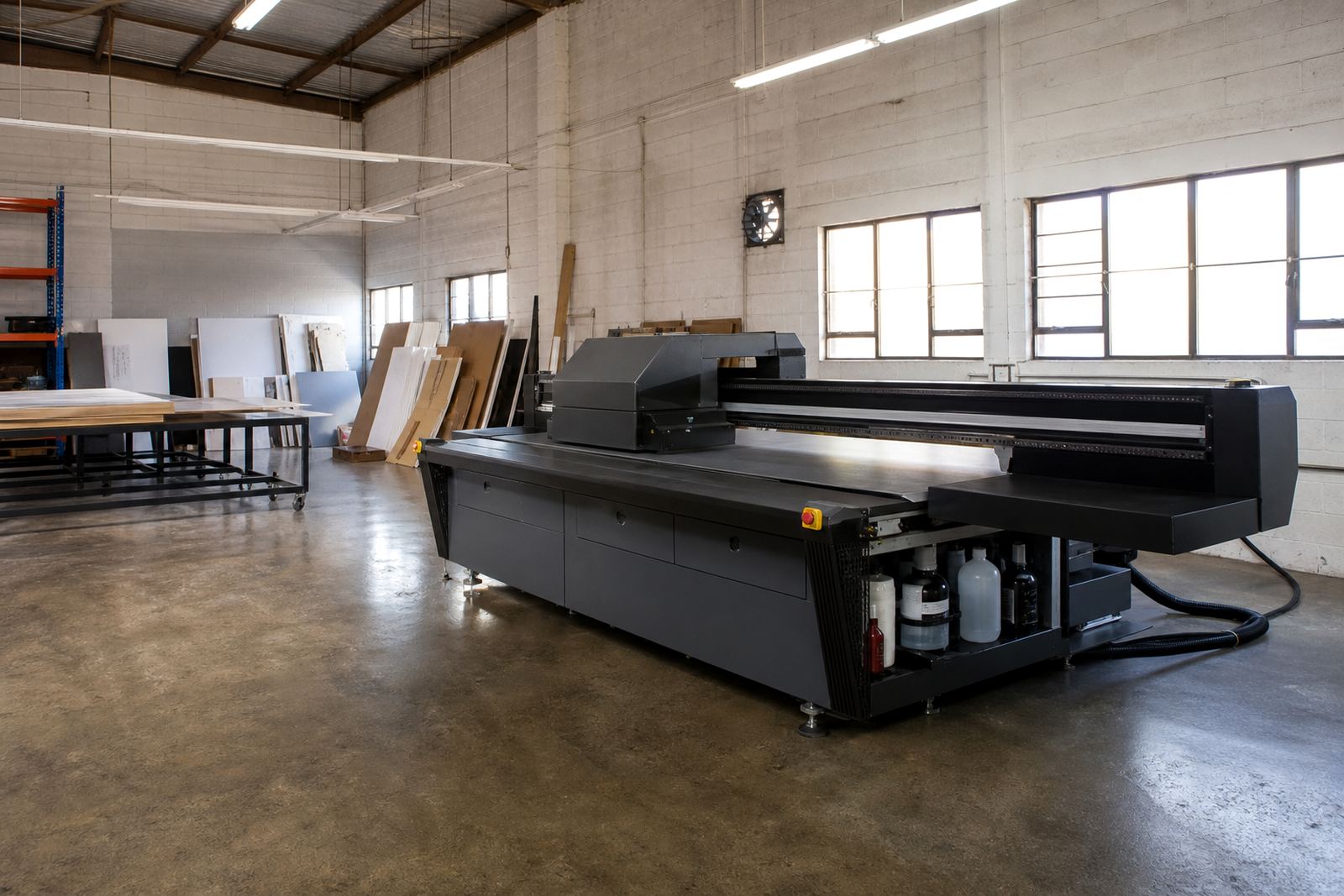
Before installation, the print room should be checked for floor space, clear access, ventilation, media storage and electrical capacity. Flatbed UV equipment needs a stable area with enough room for loading, unloading and finishing. If the printer is going into a working production space, the path from the table to the cutter, packing area or storage racks should be planned properly.
Power requirements must be checked early. Some sites need a dedicated electrical supply, surge protection and backup planning for load-shedding. Where compressed air or vacuum support is part of the workflow, the site should also allow for that equipment and proper cable or hose routing. Site preparation helps avoid surprises on installation day and reduces downtime after commissioning.
- Check floor loading and access routes before delivery
- Plan power, backup and surge protection early
- Allow space for board storage and finished work
- Review ventilation, cable routing and operator movement
Inks, Media And Print Workflow
Flatbed UV printing uses UV-curable inks that cure under UV light as the job moves through production. The workflow is different from older methods because the print is formed directly onto the board and cured in place. That means less waiting, fewer touch points and a cleaner handover to trimming, drilling or mounting. White ink can be used where the job calls for opacity on dark or clear media, and varnish or layered effects may be part of the job depending on the application.
Media testing is important before full production, especially on coated, textured or non-standard boards. Some substrates need surface prep, adhesion checks or small test runs to confirm quality and cure. A good workflow also includes colour guidance, file checks and print sequencing so that the machine, media and finishing line all work together without waste.
Care, Servicing And Breakdown Support
UV production equipment needs regular care to stay productive. Daily checks normally include cleaning, nozzle checks where applicable, keeping the work area dust-free and making sure inks are handled correctly. On busy sites, preventive maintenance matters because it helps catch issues before they become costly stoppages. This is especially important where the print room is running long hours or has to recover quickly after power interruptions.
Service planning should cover consumables, routine checks, spare parts coordination and operator support. If a job is not printing cleanly or a board is misfeeding, remote support can often help identify the cause before a technician visit is needed. For sites in Germiston, Johannesburg, Pretoria, Durban, Cape Town and Gqeberha, local support helps keep downtime down and keeps production moving.
- Routine cleaning and inspection
- Ink handling guidance and media checks
- Preventive maintenance and breakdown support
- Remote support for production issues and setup questions
What To Check Before You Order
Before ordering, confirm the board sizes you print most often, the daily volume, the types of media you use and the finish expected by your customers. It also helps to list your current pain points, such as drying time, poor colour match, excess handwork or too much outsourcing. That gives a clear picture of what kind of upgrade is worth making.
You should also check delivery access, power supply, training needs and whether the team needs help with workflow planning or colour guidance. A print room upgrade works best when the machine, the site and the operators are prepared together. If you are based in South Africa and need support from Germiston, our team can help with installation, operator training, media testing and service planning through the enquiry form on our contact page.
- Board sizes and substrate types
- Daily output targets and turnaround time
- Power supply, space and access to the print room
- Training, maintenance and support needs
Key facts
| Product type | Flatbed UV print room upgrade for rigid boards and signage |
|---|---|
| Print method | Direct UV curing on rigid substrates |
| Compatible media | Corflute, foam PVC, acrylic, aluminium composite, timber panels and similar rigid boards |
| Ink options | UV-curable colour inks with optional white ink and spot effects where required |
| Workflow support | Installation, operator training, workflow planning, colour guidance and media testing |
| Support area | Germiston, Johannesburg, Pretoria, Durban, Cape Town, Gqeberha and wider South Africa |