Built for repeated board runs and daily output
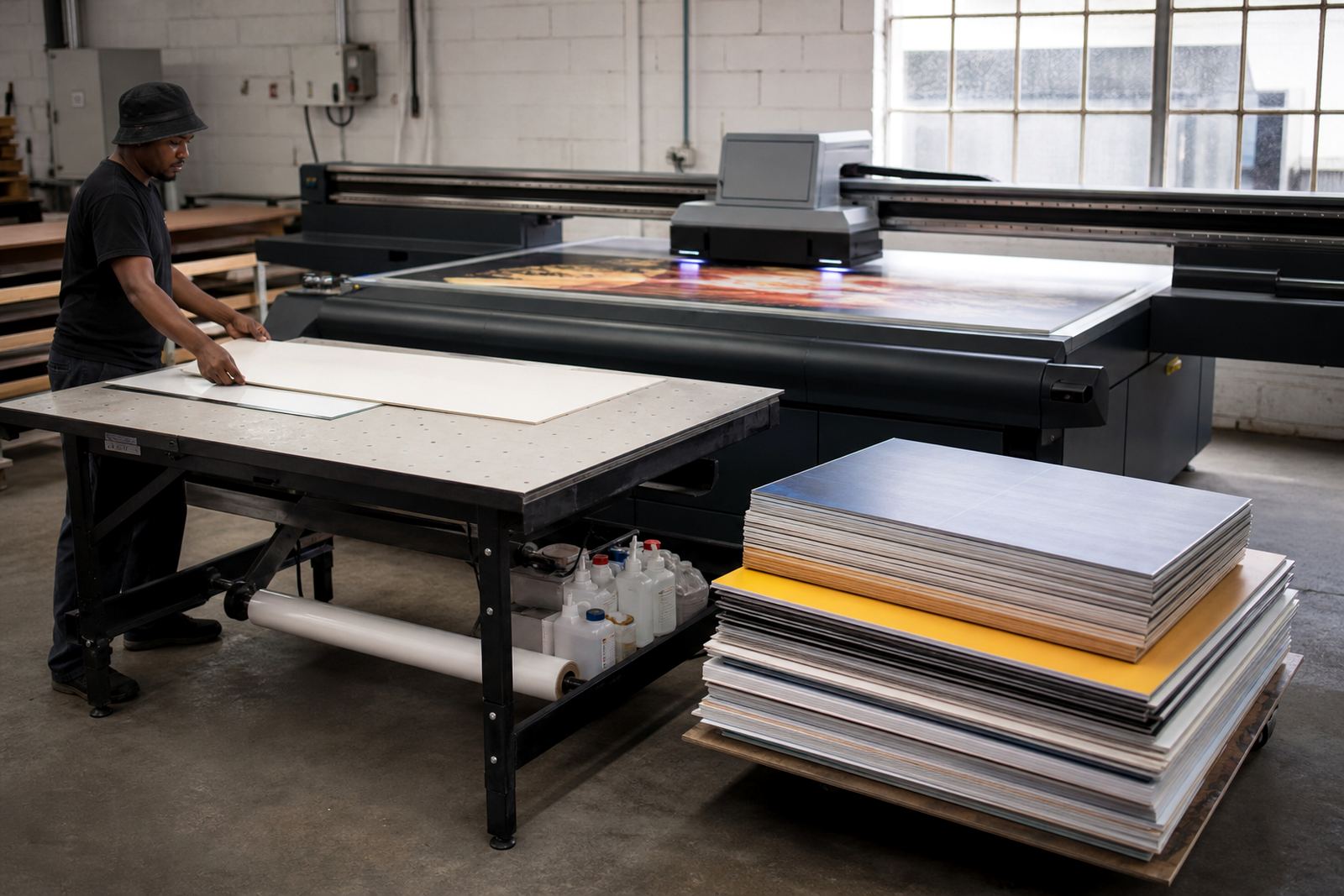
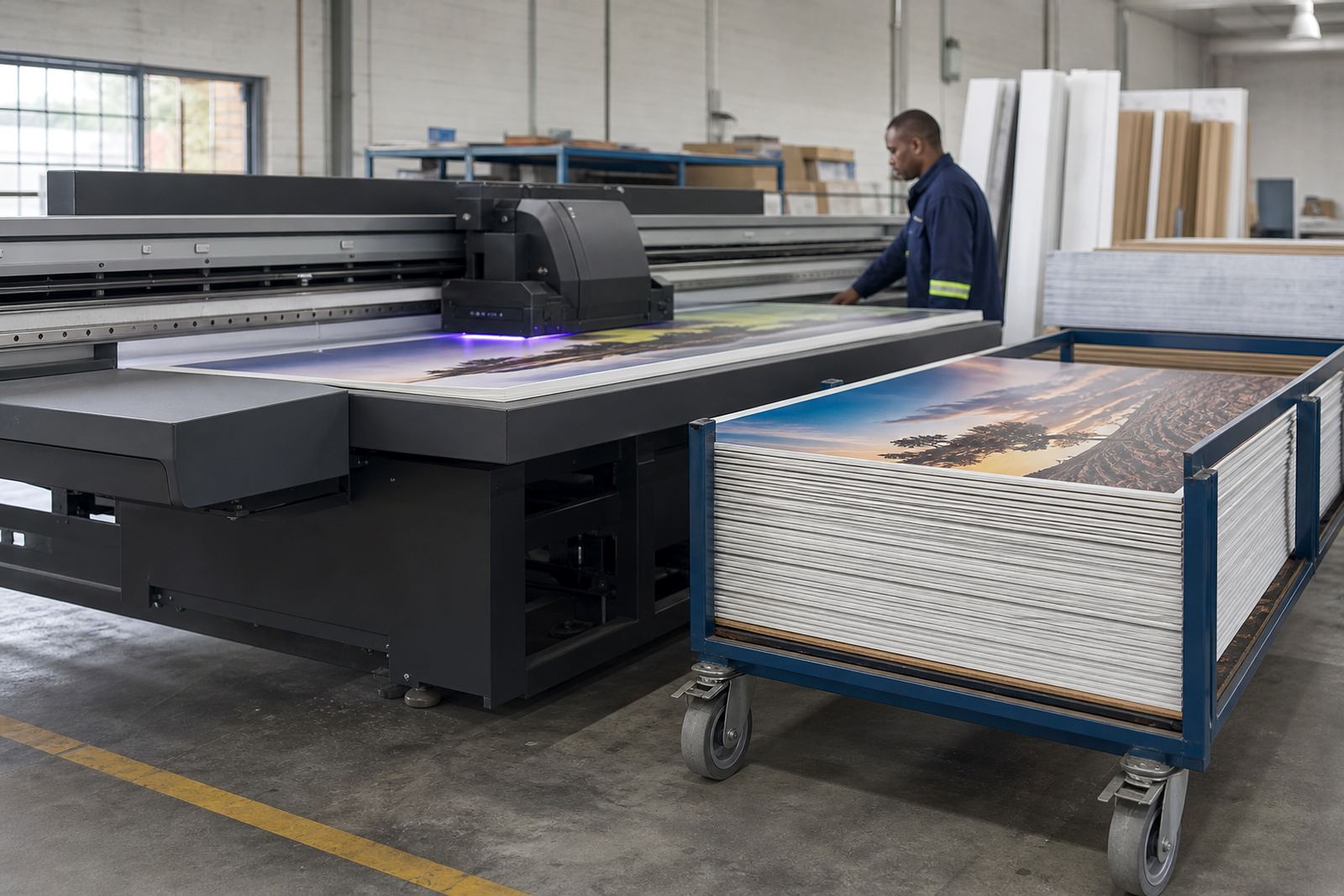
A high volume flatbed is made for shops that print the same size and shape over and over, day after day. It suits busy sign makers, display fabricators and print houses that handle rigid boards, panels, promotional displays and short production deadlines where a reliable feed path and repeatable registration matter more than fancy extras.
These printers are generally used where volume, uptime and predictable handling are the priority. You are not only printing one-off samples. You are moving through runs of boards, keeping colour stable and reducing rework when clients want the same job repeated next week. In many Gauteng workshops that means working around load-shedding, tight floor space and stock that must stay dry in summer humidity.
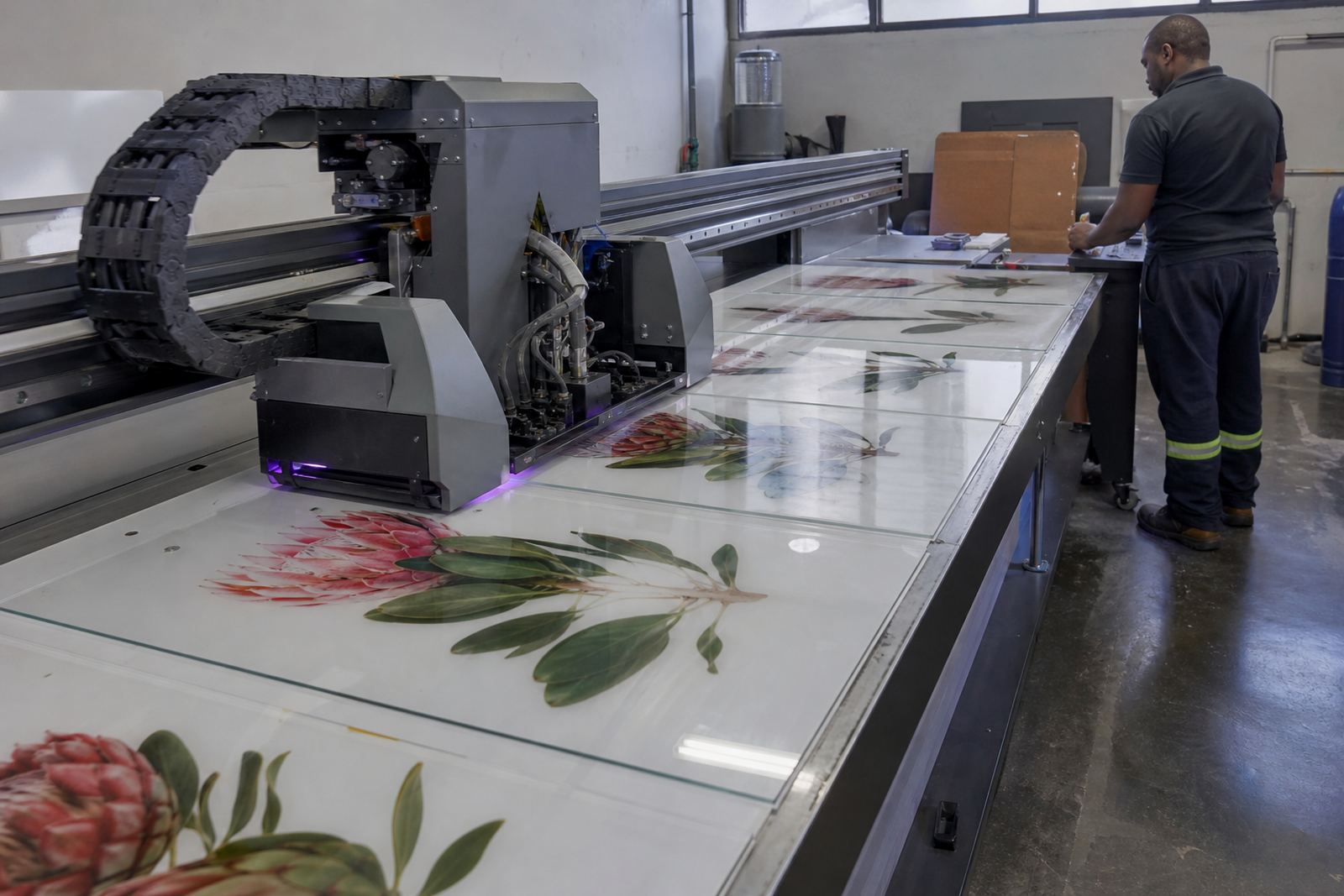
Flatbed UV printing cures ink as it lands on the media, so the output is dry enough to handle soon after printing. That helps in production environments where boards must move quickly to cutting, routing, laminating or packing.
Media choices for rigid boards and signage
High volume flatbed printing is suited to a wide range of rigid media, depending on the surface treatment and the end use. Smooth boards print differently from textured boards, and some materials need a primer, better cleaning or a sample test before a full run. If a board is going outdoors, on a site with sun and rain, or in a retail space with close viewing, the ink and media choice should be matched properly.
- Foam board and PVC board for indoor displays
- Acrylic and other clear or coloured rigid sheets for signage and light display work
- Composite panels and coated boards for shopfront and directional signs
- Corrugated or fluted boards for short-term promotions and events
- Wood, metal and other specialty rigid substrates where adhesion testing is done first
We always recommend media testing before committing to a large order. Different board brands, coating levels and storage conditions can change how the ink anchors and how clean the edges print. Coastal areas like Durban and Gqeberha can be more demanding because humidity affects handling, storage and drying behaviour around the plant.
Typical specifications and configuration options
Because flatbed systems vary by production need, the right setup is usually chosen around the largest sheet size, the daily board count and the type of work being produced. Some workshops need a wider bed for oversized boards, while others want a faster production rhythm for repeated standard sheets. A practical spec review should cover the real job mix, not just the brochure.
- Rigid board print format suited to medium and high output production
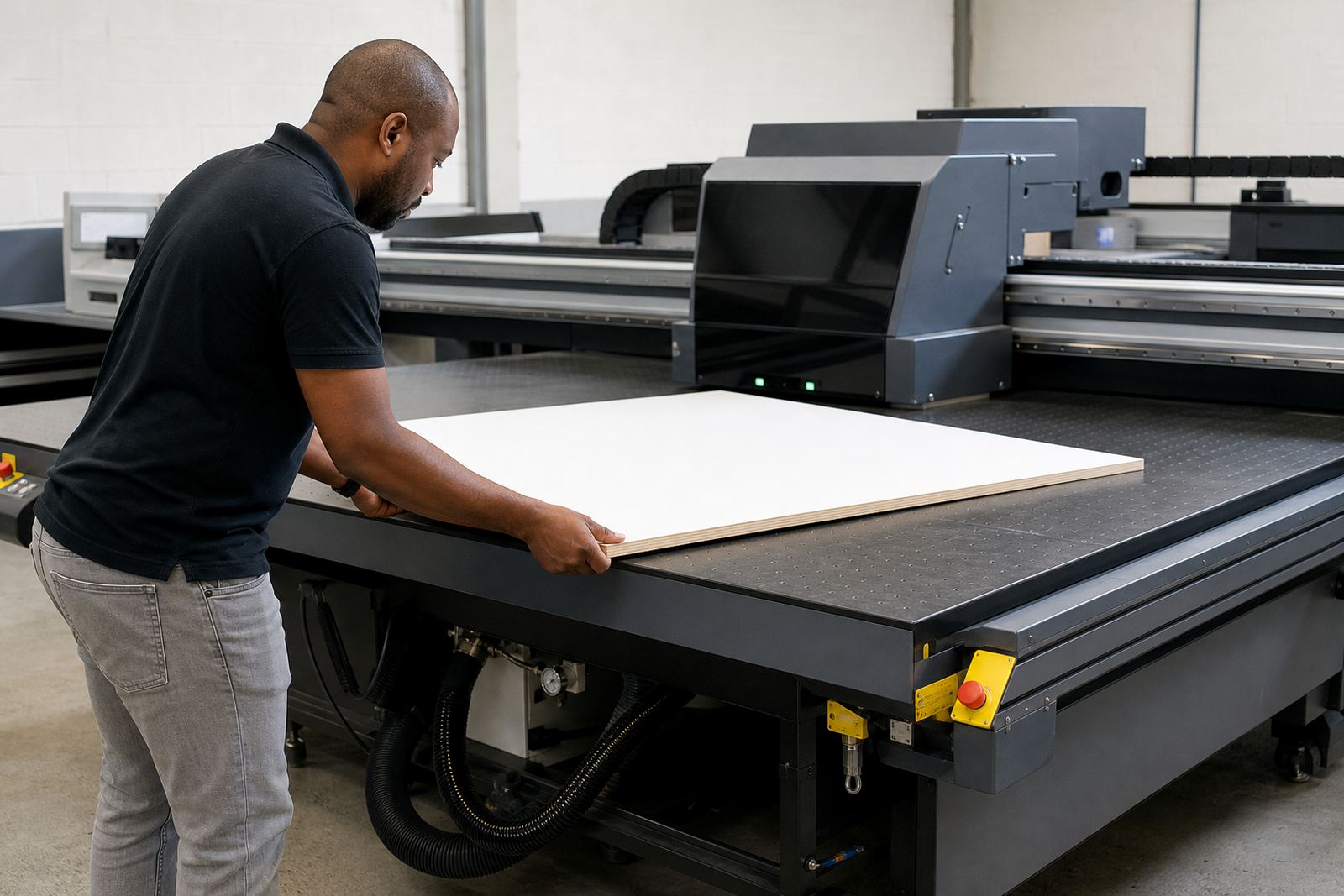
- Vacuum flatbed hold-down for stable media positioning
- Multi-zone setup options for different board sizes and offcuts
- White ink support where opaque colour or reverse-print work is needed
- Gloss, matte and layered finish options depending on the application
- Controlled curing for immediate or near-immediate handling after print
Operators should also check whether the workflow needs single-pass printing, layered spot colour, or multiple layers for special display work. If the room layout is tight, access for loading boards and moving finished sheets matters as much as the printer footprint itself.
Installation, floor planning and power requirements
Installation starts with site preparation. The floor must be level, clean and able to carry the machine and board movement safely. There should be enough clearance for loading, unloading and service access, plus space for stock, waste handling and a clean finishing area. In Germiston and the East Rand, many production spaces work with mixed-use floors, so planning the route in and out of the machine is often just as important as the printer spec.
Power needs depend on the model and the production setup, but a stable electrical supply is essential. Many sites also need backup planning for outages or voltage issues, especially where printing forms part of a just-in-time production chain. If compressed air is required for the installation, the air supply should be clean, dry and correctly sized for continuous use. Poor air quality can cause avoidable faults and inconsistent operation.
Before installation we check access doors, delivery routes, cable runs, ventilation and whether the site has enough space for staging rigid boards without damage. For municipal compliance, fire exits, electrical safety and workshop housekeeping should be sorted before the machine is commissioned.
Keeping the printer productive over time
Flatbed UV equipment works best when the daily routine is simple and disciplined. Print heads, curing components, rails and media tables need regular care, and ink handling must be clean to avoid contamination. Operators should keep the work area free of dust and offcuts because fine debris can affect surface quality and board placement.
Preventive maintenance is worth doing on schedule rather than waiting for a breakdown. That includes checks on alignment, cleaning routines, filtration, vacuum performance and the condition of consumables. If a workshop is running long shifts, it is also important to log faults early and keep spare parts coordination in place so a small issue does not become a full day of lost production.
- Daily cleaning of critical print surfaces and working areas
- Regular ink agitation or handling procedures where required
- Checking vacuum zones and board hold-down before major runs
- Keeping spare consumables and commonly used parts on hand
- Monitoring output quality for banding, cure marks or adhesion changes
What to confirm before you place an order
Before ordering a high volume flatbed, confirm the sheet sizes you need to run most often, the daily board count, the materials you print on, and whether the work is indoor, outdoor or both. You should also be clear on how boards move through your shop after printing, because trimming, routing and packing can create delays if the workflow is not planned properly. That is where good production consulting helps.
It is also wise to ask about operator training, site readiness, media testing and remote support. A printer that looks good on paper can still slow a team down if the room is cramped, the power is unstable or the operators have not been shown the correct cleaning and ink handling steps. For clients in Johannesburg, Pretoria, Durban, Cape Town and Gqeberha, we support setup and service across the country, with local support areas in Germiston, East Rand and Centurion.
Clients usually reach us through the enquiry form on our contact page. From there we can discuss the right configuration, the media mix, and the support level needed to keep board production moving without unnecessary stoppages.
Key facts
| Print method | Flatbed UV curing for rigid boards and signage |
|---|---|
| Media type | Rigid and specialty substrates, subject to adhesion testing |
| Output use | Indoor display work, retail signage, event graphics and general board production |
| Configuration | High volume production setup with vacuum flatbed hold-down |
| Ink support | CMYK with optional white and layered print workflows |
| Service support | Installation, training, maintenance, breakdown support and remote assistance |