White Ink Printing On Rigid Media
A white ink flatbed is used when standard colour printing is not enough. The printer lays down a white layer first, or in a second pass, so colour stays visible on dark substrates and transparent material gets proper coverage. This is useful for shop signage, exhibition panels, branded boards, window display inserts and short-run industrial marking where the face of the sheet matters as much as the message.
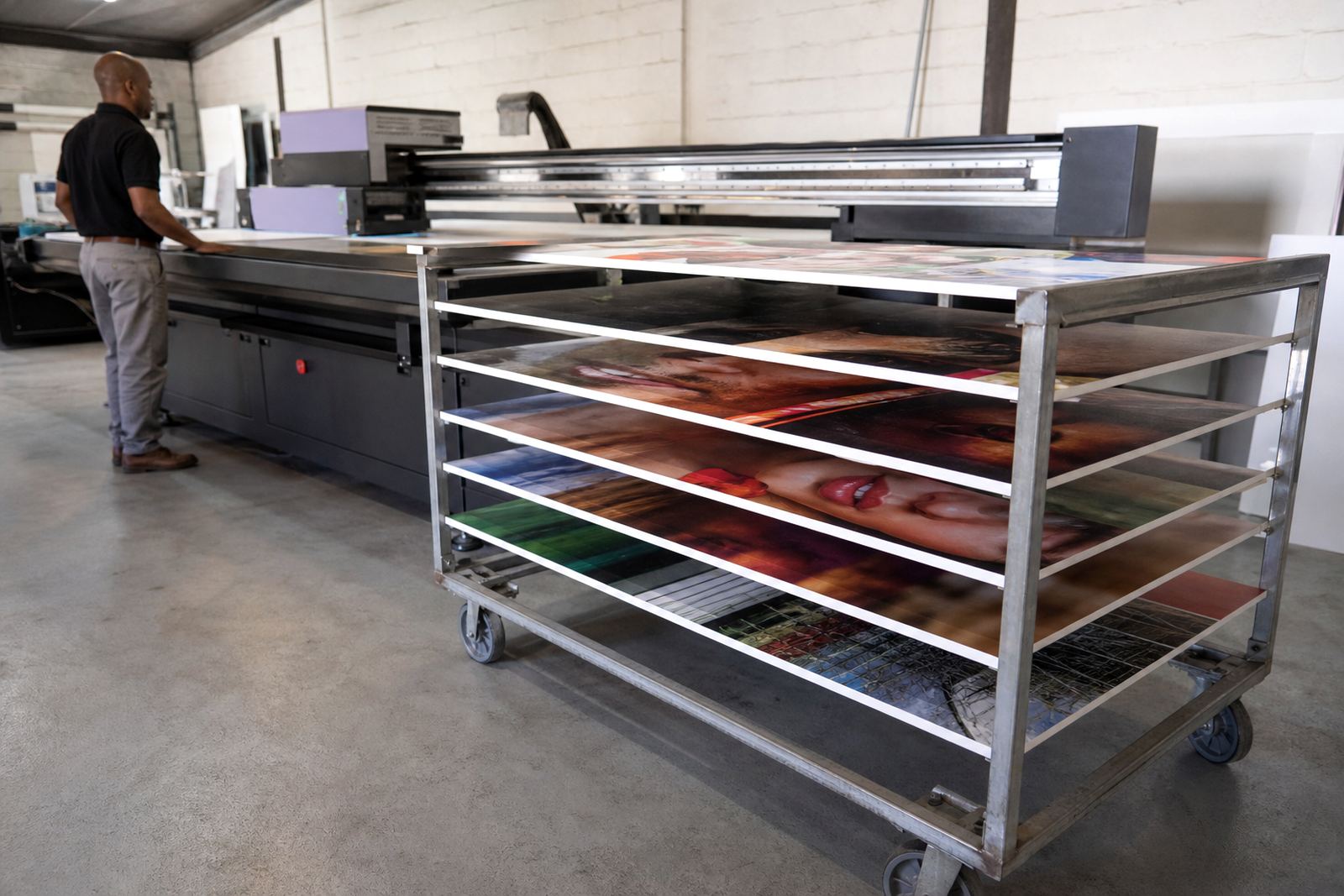
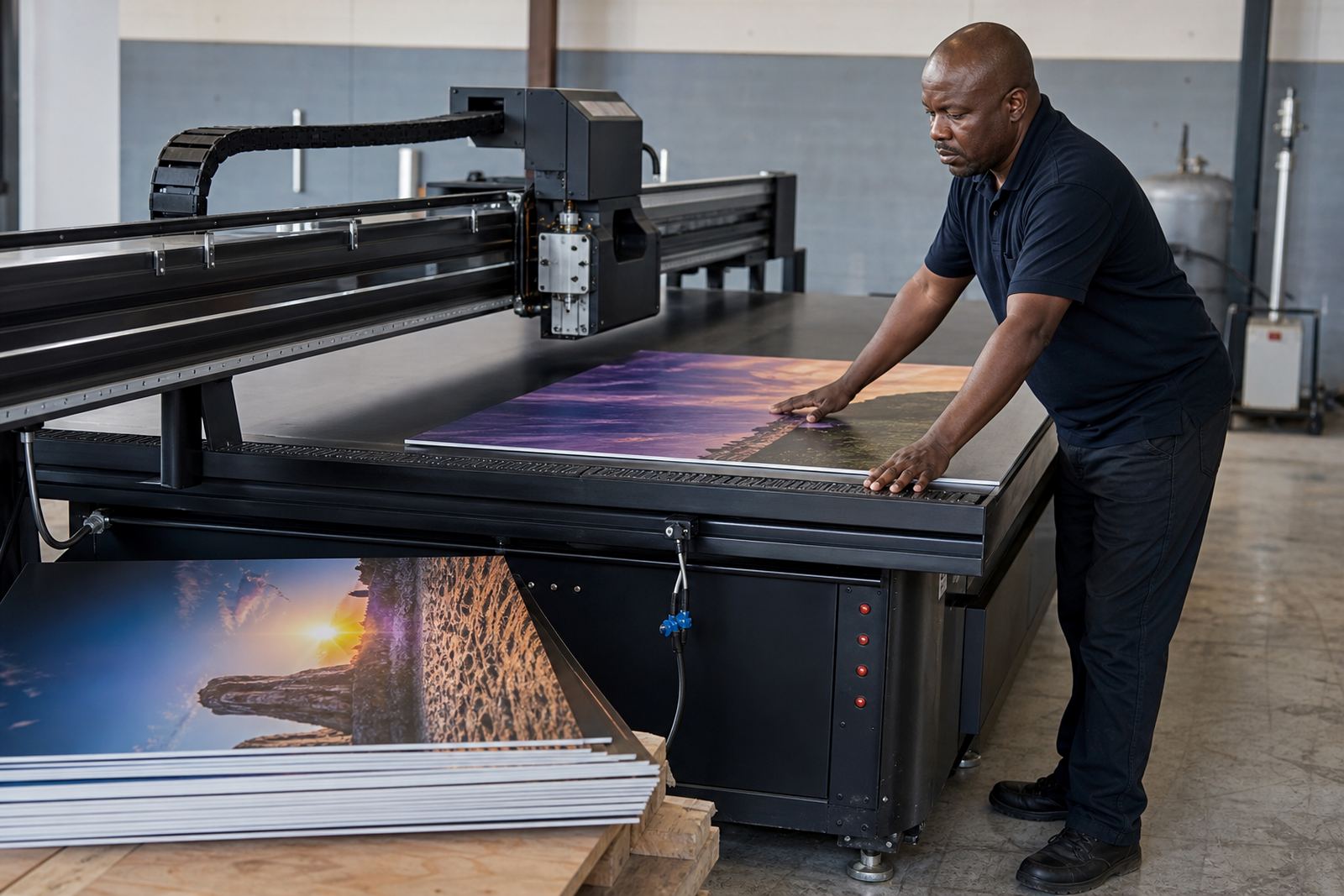
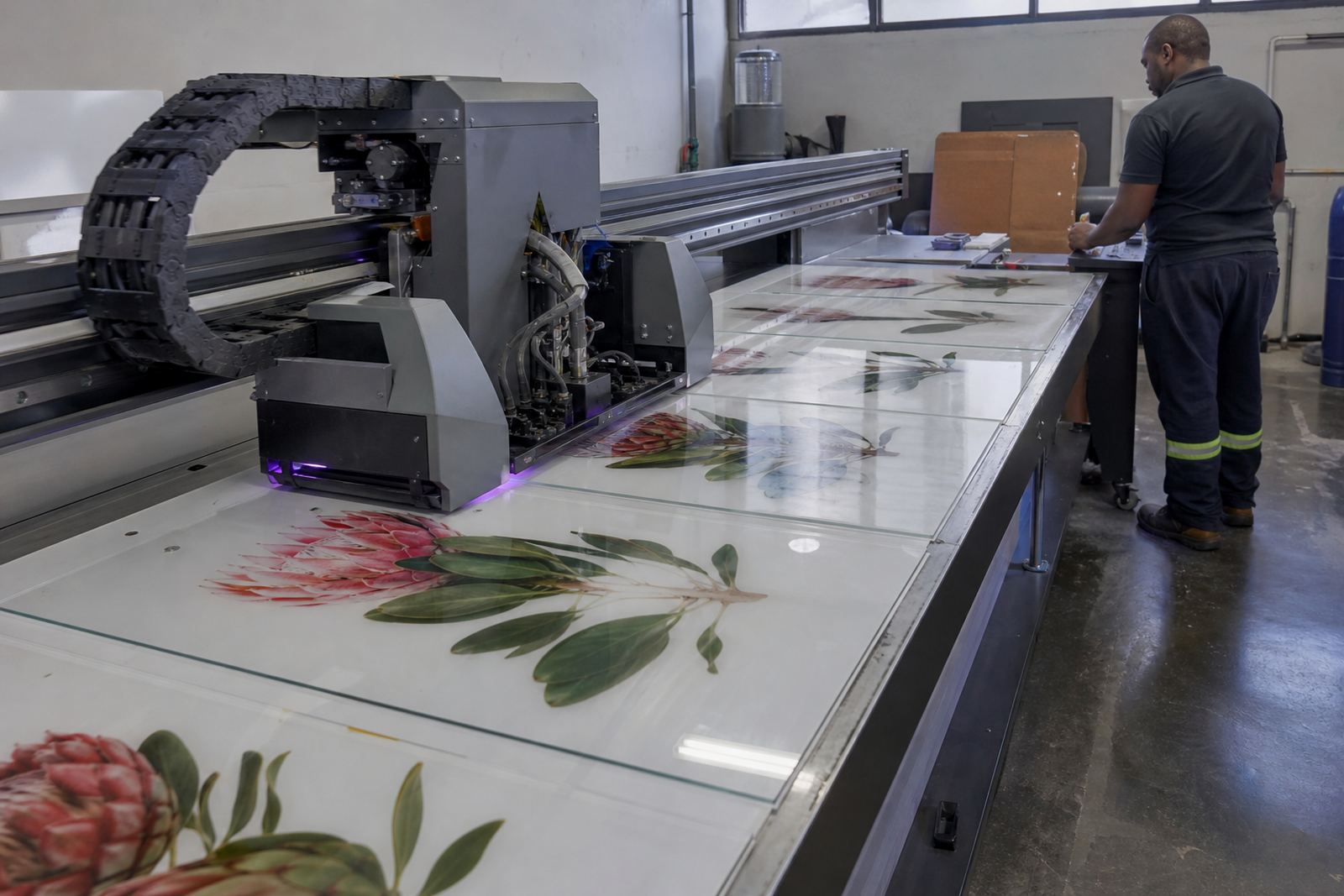
In practical terms, the process is aimed at rigid media such as PVC foam board, acrylic, polystyrene sheet, coated board, composite panels, fluted board and other flat substrates that can sit safely on the bed. The workflow can include full colour plus white, spot white, flood white, underprint, overprint or layered effects. For some jobs the white acts like a base coat, for others it is the feature itself, especially on clear acrylic or dark boards where contrast is important.
In Germiston and the East Rand, many users need output that can handle warehouse dust, transport movement and sunlight exposure at site. White ink UV work is a good fit because the cured print is dry to touch straight off the bed and can move into finishing sooner than solvent jobs that need drying time.
Where White Ink Flatbeds Work Best
This setup is suited to businesses that produce signs, display panels and branded boards in-house or for clients across Gauteng and further afield. It is commonly used by print shops, signage makers, exhibition fabricators, retailers, interior fit-out teams and municipal or corporate suppliers that need repeat work on sheet material. It also helps when a customer wants a clear or tinted base but still needs the printed image to stand out.
White ink is especially useful in these cases:
- Printing on clear acrylic where the image must be visible from the front
- Printing on coloured boards where standard CMYK would look dull
- Backed displays, lightbox inserts and window graphics on rigid sheets
- Short-run industrial labels, panels and coded signage
- Multi-layer jobs where white sits between colour layers for effect
The same press can often support retail point-of-sale pieces, event signage, information boards and directional signs. In places like Durban and Cape Town, where humidity and coastal conditions can affect storage and handling, white UV prints are valued because the cured surface is less fussy than some other print systems, though media prep still matters.
Sizing, Bed Options And Output Control
White ink flatbeds are selected by bed size, print area, head configuration and the level of white coverage needed for the work you do. The right setup depends on the sheet sizes you handle, the daily volume and whether you need more emphasis on speed or finer detail. A smaller format may suit a tight production room, while a larger bed is better where boards are cut to size and loaded in batches.
Typical configuration choices include flatbed height clearance for thicker boards, vacuum hold-down for accurate placement, and flexible print modes for underprint, overprint or double-strike white. In many shops the machine is paired with a simple loading path, staging table and cutting area so sheets can move from prep to print to finishing without unnecessary handling.
- Rigid sheet compatibility for boards, panels and display media
- Vacuum or hold-down control to reduce movement during print
- White ink coverage settings for base, highlight or layered work
- Variable resolution modes for fine detail or faster throughput
- Manual or assisted loading depending on the media weight
When selecting a unit, it is wise to check the true print area rather than only the advertised bed size. Also confirm edge-to-edge behaviour, minimum media thickness, and whether the machine can keep registration tight on repeated runs. This matters when you are printing a set of matching panels for a retail rollout or a compliance sign range.
Installation, Power And Workshop Readiness
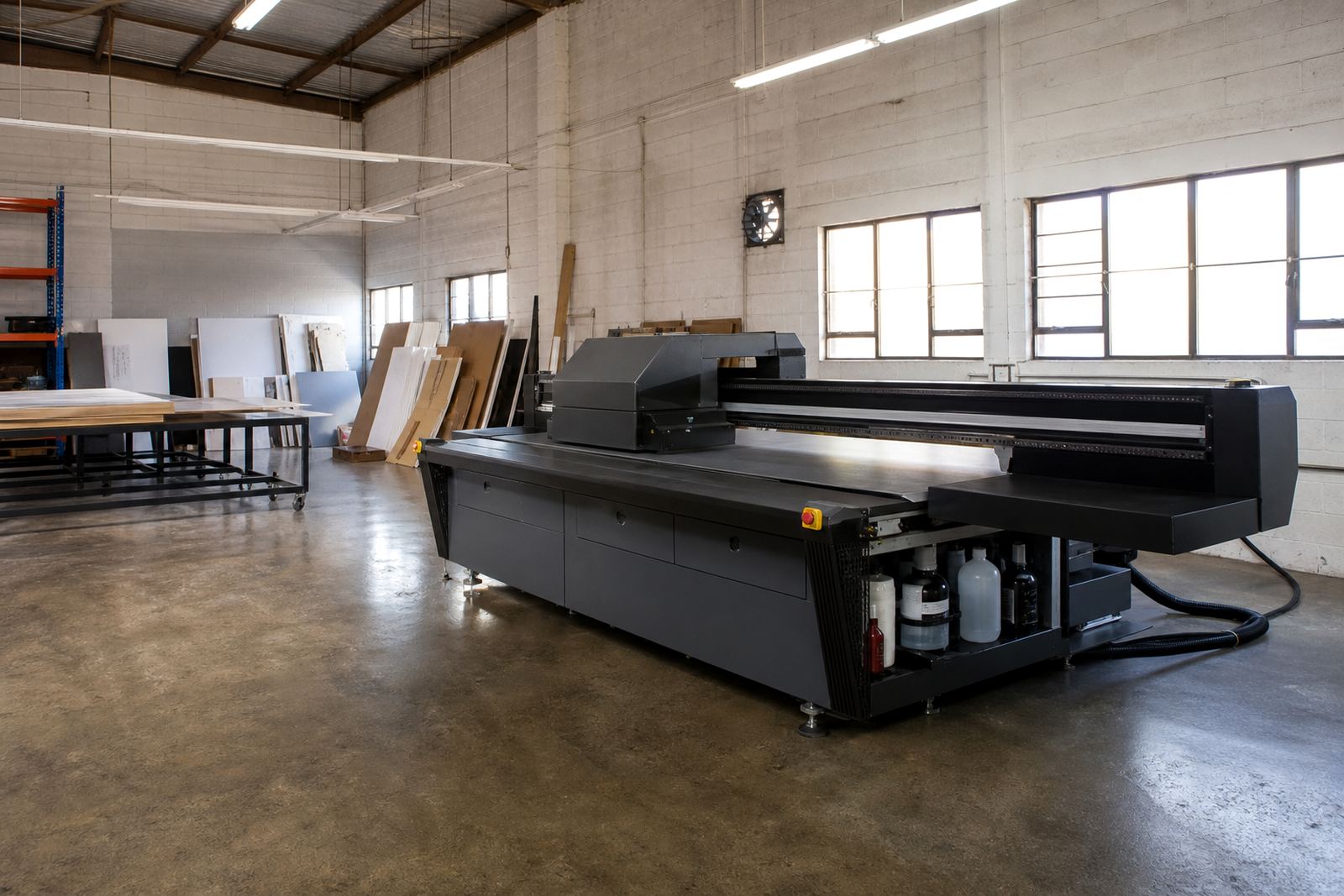
White ink flatbed UV printers need a stable site, correct power and a clean working layout. Site preparation is part of the job because the machine is only one part of the setup. You need enough floor space for the bed, operator movement, loading area and finishing table, plus access for service and media handling. In busy production rooms, the main issue is often not the printer itself but the workflow around it.
Power requirements should be checked before installation so the supply suits the equipment and the workshop can handle startup surges and consistent running. In South Africa, load-shedding and voltage fluctuation are real concerns, so backup planning is worth doing early. Many operators also need surge protection, correct earthing and a sensible shutdown routine. If the site uses compressed air or extraction for related tasks, those systems must be planned too, although the printer itself may not need gas in normal use.
For Germiston and Johannesburg sites, the usual setup conversation includes access for delivery, door widths, floor strength and the path from receiving to production. Coastal customers in Cape Town, Durban and Gqeberha often ask about dust, salt air and storage conditions, because media and ink handling are affected by the room environment. A clean, dry, level room makes a big difference to consistency.
Ink Handling, Media Testing And Print Care
White ink needs more attention than standard colour because the pigment can settle if it is left idle. Good daily habits help keep the system reliable. Operators should follow a proper start-up routine, check circulation if fitted, keep caps and heads clean and watch for changes in opacity or banding. Media testing is also important because not every board takes white the same way. Surface finish, coating, dust and static can all change how the layer sits.
For day-to-day care, it helps to keep a log of what was printed, which media was used and any adjustment made to white density or curing. That record saves time when the same job comes back two months later. Preventive maintenance should cover cleaning schedules, calibration checks, curing performance and inspection of moving parts. If the printer stands idle for periods, especially over holidays or during seasonal dips, follow the storage routine so the white system does not dry out or clog.
- Use approved cleaning steps and never mix incompatible fluids
- Test new boards before taking a full production run
- Keep the room free of dust and loose board fibres
- Watch curing settings so white does not undercure or overheat
- Schedule servicing before problems start, not after a breakdown
When a machine is used for opaque white work every day, service discipline matters. Small issues can become expensive fast if the white layer starts to drop out or if the print head path is not checked. That is why breakdown support and remote support are often part of the service plan.
What To Check Before You Order
Before buying a white ink flatbed, confirm how you plan to use it. The right choice is the one that matches your boards, your daily volume and your finishing process. A printer that suits signage on acrylic may not be the best fit for heavy board work or mixed production. It is better to check the basics first than to find out later that the bed size or loading method slows the shop down.
Key points to confirm include the size of media you print most often, whether you need spot white or full flood white, how much daily output you expect, and whether your team needs structured operator training. Also check spare parts planning, service access and how quickly support can be arranged if a run is delayed. For businesses serving customers across South Africa, it helps to know whether the setup can be supported from Germiston or remotely when needed.
Flatbed UV also helps with production planning. Once the white layer, cure and finishing steps are mapped out, you can quote more accurately and avoid rework. If you are handling layered output on coloured or transparent rigid media, the whole workflow should be checked before the first job lands on the bed. That includes substrate testing, artwork setup, registration, curing and storage after print.
Clients can reach the team through the enquiry form on the contact page for installation, training, maintenance planning or product guidance. Support is available from the Germiston base with coverage into Johannesburg, Pretoria, Centurion, the East Rand, Durban, Cape Town and Gqeberha.
Key facts
| Print type | UV flatbed system for white ink layered output on rigid media |
|---|---|
| Media | Coloured, clear and opaque boards, panels and signage substrates |
| White ink use | Underprint, spot white, flood white and layered effects |
| Typical applications | Retail signage, display boards, window inserts, exhibition panels and branded rigid prints |
| Setup needs | Level floor, suitable power supply, clean workshop space and planned media flow |
| Service support | Installation, operator training, preventive maintenance, breakdown support and remote assistance |