
What short run flatbed UV printing is used for
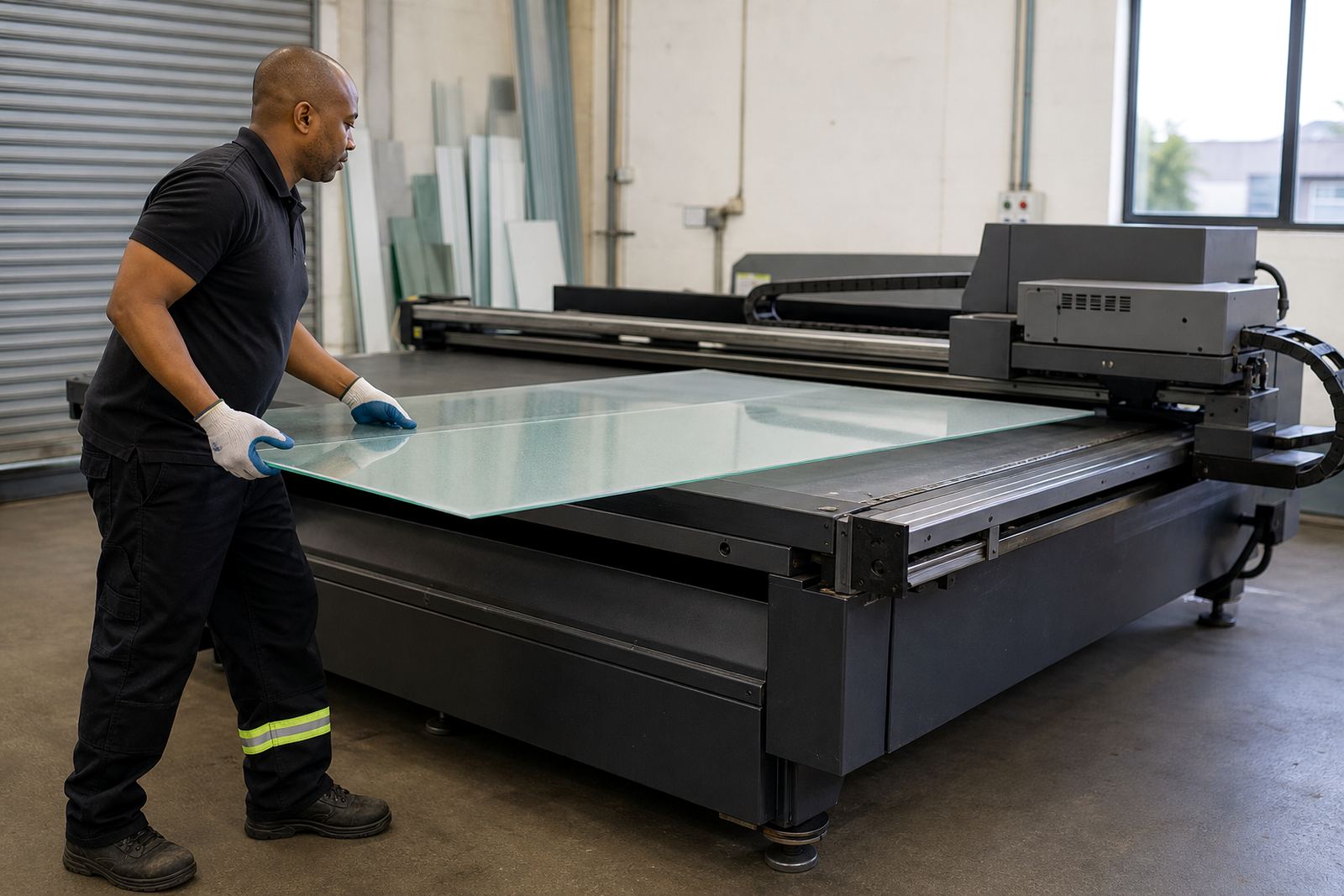
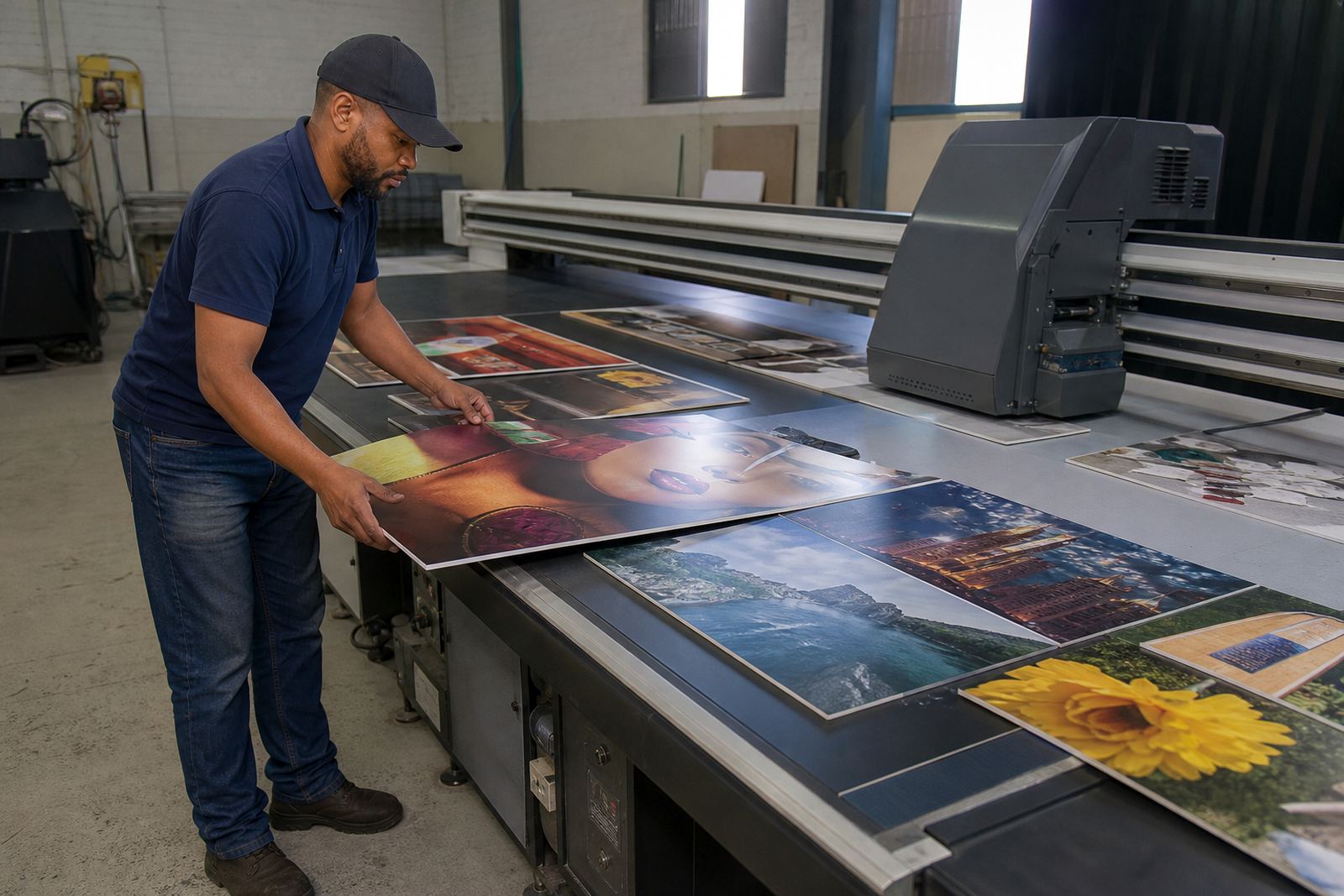
A short run flatbed is used to print directly onto rigid boards, panels and similar flat sheets without needing a long set-up for every job. It is a good choice when you need 1 board, 10 boards or a small mixed batch for a client who wants names, directions, branded panels or promotional pieces fast.
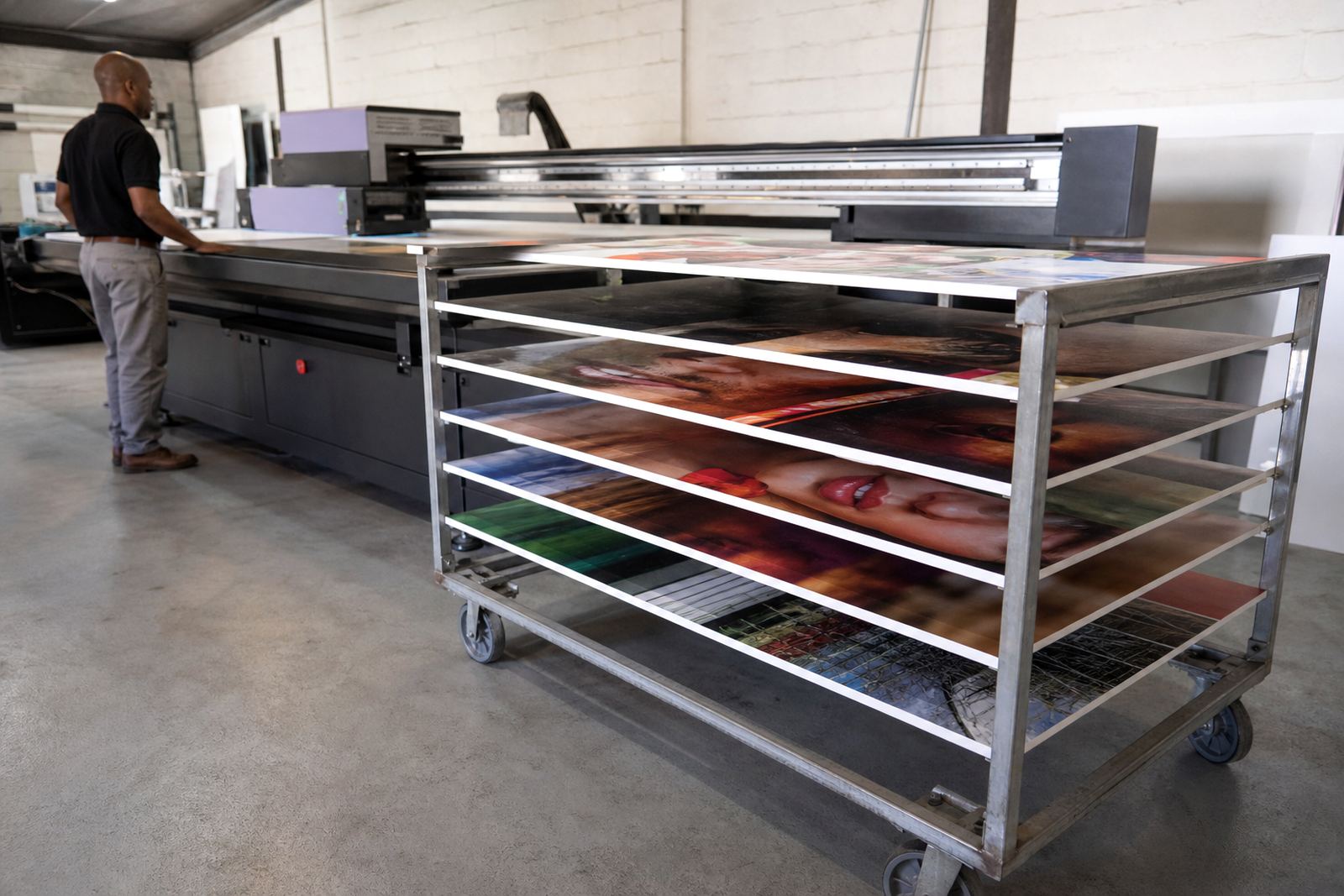
Because the print goes straight onto the substrate, the workflow suits jobs that change often. You can move from retail display panels to event boards, internal signs, point-of-sale pieces and light industrial marking with far less handling than traditional mounted work. The inks are cured on the surface, so the print is ready for finishing sooner, which helps when a job must move from print to cutting, packing or dispatch on the same day.
For many South African businesses, the main value is not volume but flexibility. A short run setup helps when you get irregular orders, a mix of sizes, or urgent work that must still look sharp in strong indoor light or in covered outdoor areas.
Suitable media, board sizes and common applications
Short run flatbed printing is commonly used on rigid substrates such as foam board, PVC board, acrylic, corrugated plastic, MDF, composite panels and coated boards made for print. The right media depends on the finish you need, the thickness of the board and whether the item will stay indoors, under cover or outdoors for a short period.
- Retail signage, shelf headers and in-store promo panels
- Event boards, sponsor boards and directional signs
- Small batch display panels and promotional items
- Construction site boards, safety notices and temporary wayfinding
- Packaging samples, branded inserts and presentation pieces
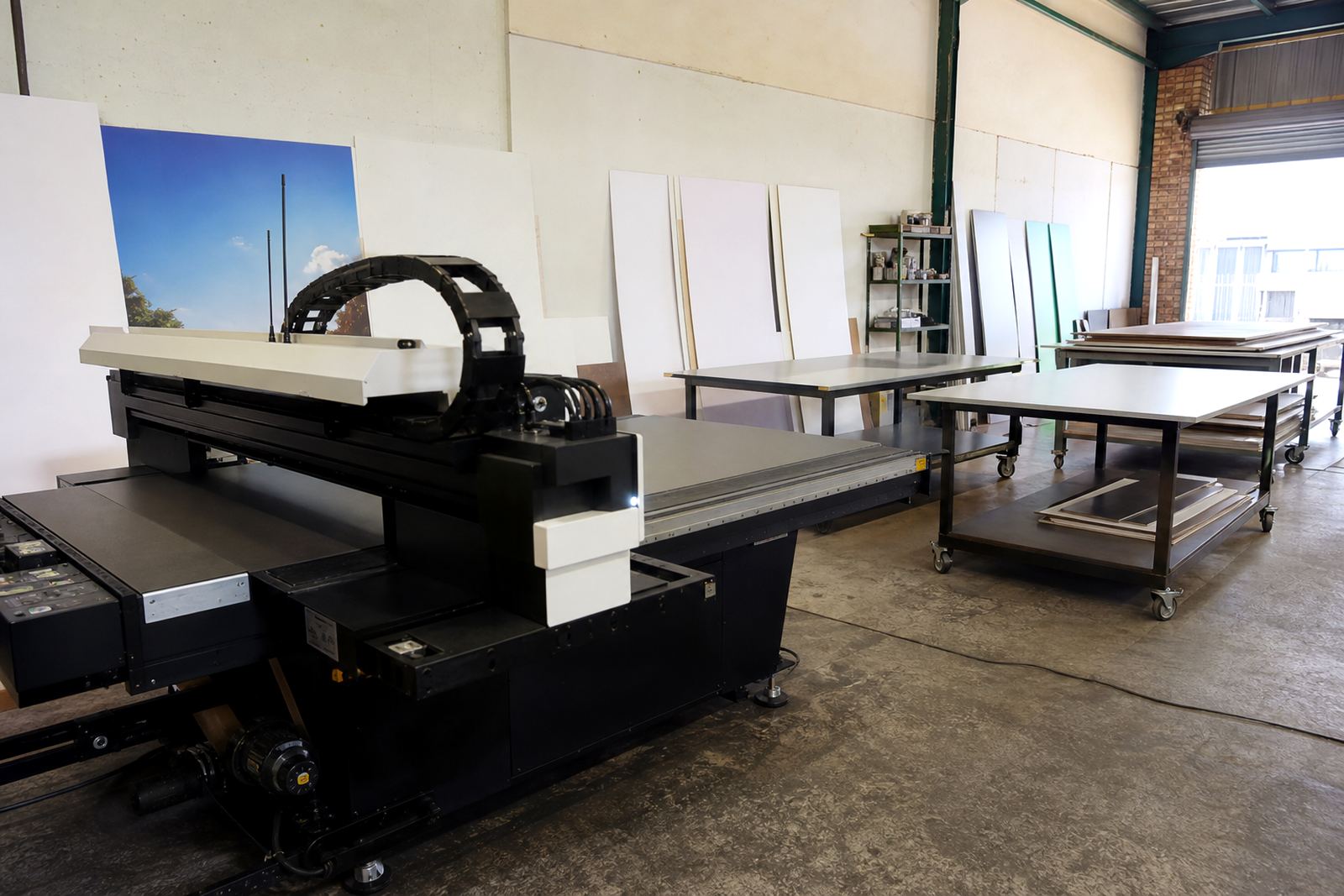
Working sizes vary by system. Many flatbeds are used for full sheets and partial sheets, with the bed chosen to match the most common board sizes in the shop. For short runs, a useful setup is one that handles a mix of board widths and can take thicker stock without slowing the whole line down. If your work includes a lot of smaller pieces, it helps to have a table that is easy to load and align, so you are not wasting time on every set-up.
Colour, inks and finish on short runs
Flatbed UV ink is cured as it prints, which supports fast handling and neat edge definition on rigid boards. For short runs, that matters because colour has to stay stable from the first board to the last board, even when the quantity is small and every piece may be slightly different in layout or size.
Colour control starts with the file, then the media profile, then the print pass and curing level. If the board surface is uneven or very absorbent, the result can change, so test prints are worth doing before the main run. This is especially useful for coated boards, textured sheet, and jobs that need a strong white base under colour. In some cases a primer or adhesion aid may be needed, depending on the substrate and the expected wear.
- Standard CMYK work for general signage and display jobs
- White ink for darker boards, clear sheets or layered effects
- Multi-layer printing for a raised or mixed-opacity look where required
- Spot testing for adhesion, scratch resistance and colour shift
When the job is short, small colour problems are easier to see. That is why colour guidance and media testing are important before production starts, not after the boards are already printed.
Installation, power and site planning
Flatbed UV equipment needs a clean, level area with enough room for loading boards, walking around the machine and placing finished sheets safely. In Germiston, Johannesburg and the wider East Rand, many print rooms work in shared industrial spaces, so planning the route from delivery point to production area is often part of the job. You need enough clear access for large sheets, pallet movement and service checks.
Power requirements depend on the exact system and configuration, but a stable electrical supply is essential. A proper site check should look at supply capacity, earthing, breaker protection and how the machine will behave during load-shedding. A UPS or generator strategy may be needed for control equipment and safe shutdowns, even where the print room is not running full production during outages. There is no gas requirement for the UV curing process, but the room should have suitable ventilation and dust control, especially where boards are trimmed or cut nearby.
Before installation, check floor loading, humidity, dust levels and whether the room can keep a steady working environment. Coastal branches such as Durban, Cape Town and Gqeberha often need extra attention to humidity and salt in the air, while inland sites may need dust control and cleaner storage for media. Good planning saves time later.
Care, servicing and production support
Short run work can become expensive if the machine is left idle and not maintained properly. UV systems do best with regular cleaning, ink handling discipline and basic checks on nozzles, belts, heads and curing components. Daily habits matter: keep caps and stations clean, store media flat, and avoid leaving boards in damp areas where dust sticks to the surface.
Preventive maintenance helps avoid stoppages during busy periods, especially when jobs arrive with little notice. A service plan should cover cleaning, inspection, test prints and early fault finding before a breakdown becomes a late-night problem. If you run in a region affected by power cuts, it helps to follow a shutdown process and restart routine so the system does not lose time after each outage.
- Keep inks sealed and stored correctly to reduce contamination
- Test new board stock before committing to a full run
- Inspect curing and print quality after long idle periods
- Track cleaning intervals and parts that wear under daily use
- Use trained operators for media loading and file checks
Flatbed UV can be reliable in South African conditions, but only if the room, the workflow and the upkeep are handled properly. That is where operator training and remote support can save a lot of wasted media and repeat printing.
What to check before you order
Before you place an order for a short run flatbed, it helps to work through the job profile first. Ask what sizes you print most often, how many boards you need per day, what substrates you use and whether the work is mostly indoor, under cover or exposed to weather. That gives a clearer picture of the right configuration and the right support plan.
Also check the practical details of your shop floor. Some teams need faster loading and unloading, others need better colour repeatability or white ink support, and some just want a machine that can handle a small mixed batch without creating a bottleneck. If you are doing sign work for municipalities or site contractors, you may also need consistent sizing, clear legibility and materials that meet site rules.
- Largest board size you need to load regularly
- Thickness range of the media you use most often
- Need for white ink, spot layers or special finishes
- Available floor space, access and power supply
- Whether you need installation, training and maintenance support
Flatbed UV is a practical choice when short runs need to move quickly from file to finished board. The best setup is the one that matches your daily work, not the one that looks impressive on paper.
Key facts
| Print method | Direct-to-rigid substrate UV printing for short runs and custom board work |
|---|---|
| Typical media | Foam board, PVC board, acrylic, corrugated plastic, MDF and coated sign board |
| Format options | Various bed sizes and loading configurations depending on production needs |
| Ink options | CMYK with white ink support on selected jobs and media |
| Power and site needs | Stable electrical supply, level floor, ventilation, dust control and safe access for board handling |
| Support services | Installation, site preparation, operator training, colour guidance, maintenance and breakdown support |