Clinic boards for a busy Bedfordview practice
The client was a healthcare practice in Bedfordview, Gauteng with a steady flow of patients, carers and visiting specialists. The job called for reception boards and directional signs that would look neat from the first day on site and stay legible under strong indoor lighting, frequent cleaning and constant foot traffic.
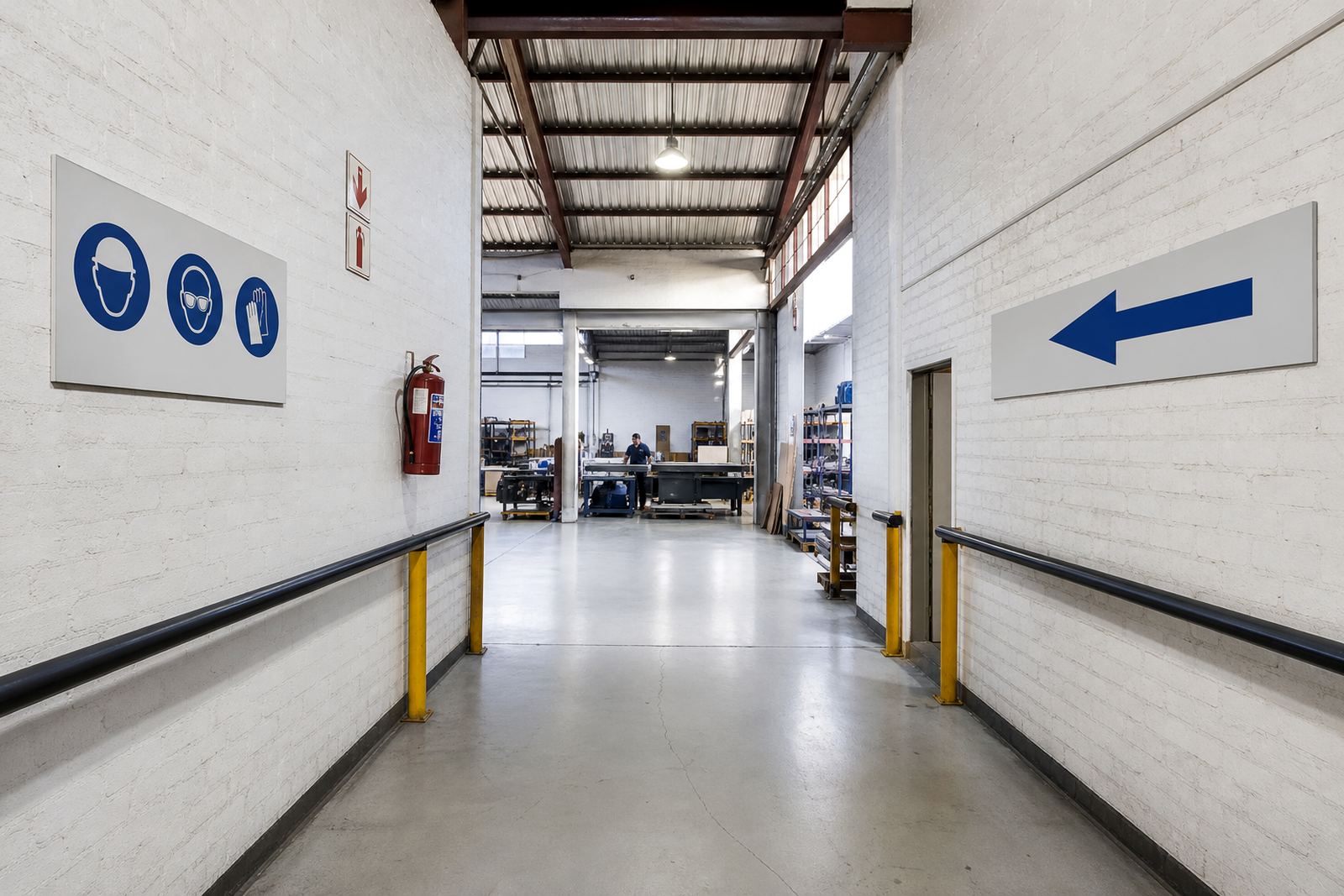
Because clinics need information to be read quickly, the layout had to be plain and direct. We planned the boards to support a calm arrival experience, with clear room naming, arrows and service points that could be understood at a glance. The finished set had to fit the building flow, not fight it.
- Project type: reception and directional panels
- Location: Bedfordview, Gauteng
- Use case: healthcare wayfinding and public facing branding
- Finish requirement: easy to wipe down and suitable for indoor use
The brief, layout and practical constraints
The brief was simple in wording but detailed in practice. The clinic needed boards that were readable for first-time visitors, suitable for indoor mounting and tidy enough to match a professional medical environment. The design had to stay consistent across several panels so the signs would feel connected rather than pieced together.
There were a few practical limits to work around. The board sizes had to suit existing wall space and corridor widths, and the graphics needed enough contrast for quick reading without looking harsh. We also planned around the site schedule so there was no disruption to patient flow. In a setting like this, timing matters as much as finish quality.
- Clear typography and simple direction cues
- Consistent layout across all panels
- Indoor-safe materials selected for repeated cleaning
- Measured to fit existing wall positions and sightlines
Flatbed UV production for rigid boards
For this type of work, flatbed UV printing is well suited because it prints directly onto rigid sheets and holds detail cleanly on signage panels. The process supports crisp text, flat solid colour areas and consistent output across multiple boards, which is important where visitors must read names and directions quickly.
We used a production workflow built for signage: prepare the artwork, confirm measurements, test the media, print, then check alignment and surface finish before dispatch. The ink system was selected for good adhesion on rigid material and for everyday indoor handling. That matters in a clinic, where signs are touched, wiped and viewed all day.
We also considered how the boards would sit under the lighting in the reception area. Healthcare spaces often have white walls, reflective surfaces and bright fittings, so we kept the contrast strong without overcomplicating the design. That made the signs easier to read from the waiting area and from the corridor approach.
Installation and handover in four weeks
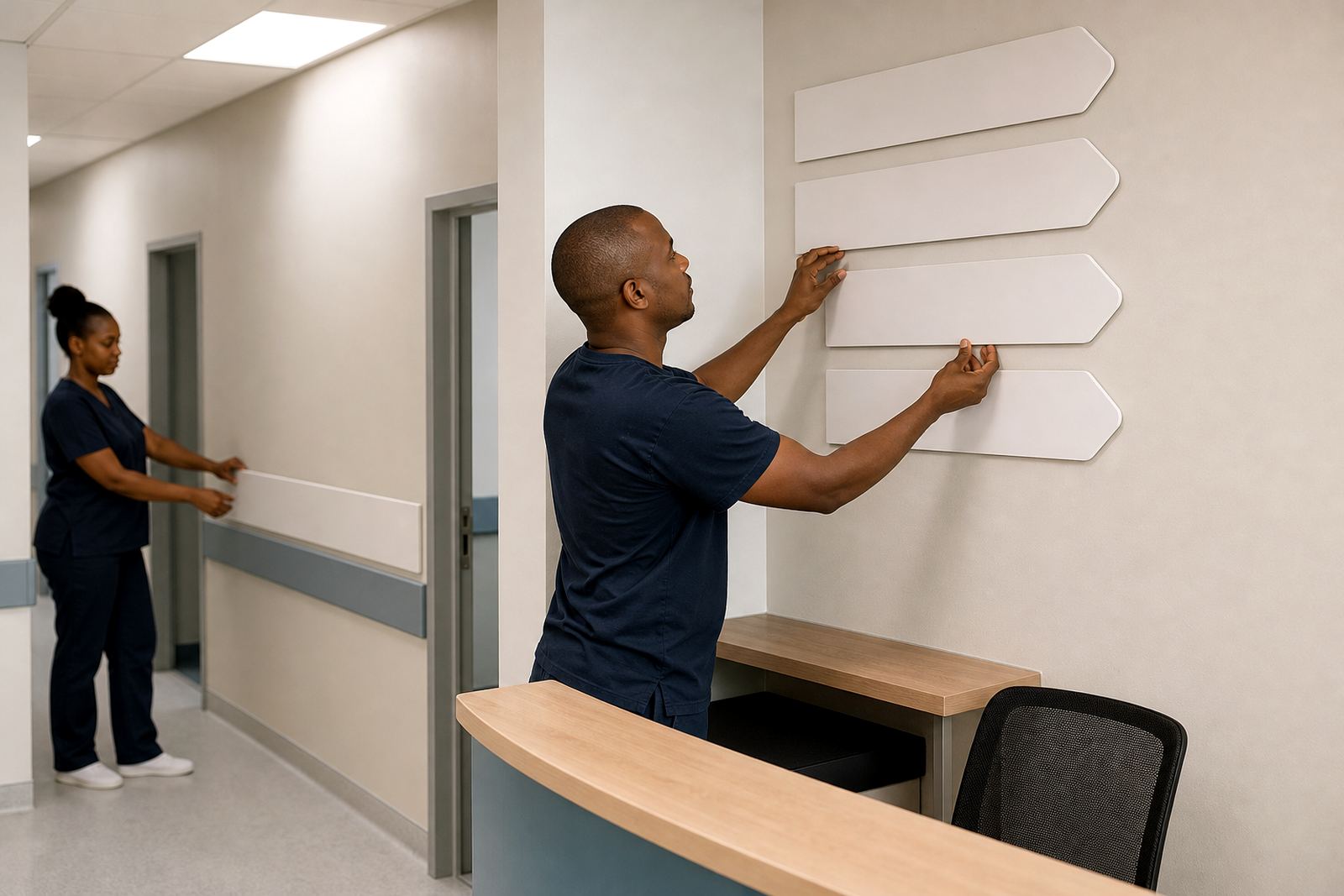
The project ran over four weeks from confirmation to final handover. Week one covered site information, measurements and layout confirmation. Week two focused on print setup and production checks. Week three allowed for finishing, packing and preparation for installation. Week four covered fitting, final positioning and a walk-through of the completed boards.
On site, we checked wall positions, height alignment and reading distance before fixing the panels. The clinic team needed the signs placed where they would help most, not just where there was space. A good result in healthcare is often about those small adjustments, and once the panels were up the building felt easier to move through.
- Week 1: measurements and board schedule
- Week 2: artwork checks and print production
- Week 3: finishing and dispatch prep
- Week 4: installation and final sign-off
What the clinic gained from the new boards
The most immediate result was clearer movement through the practice. Patients could identify reception, consulting areas and key directions without stopping to ask for help at every corner. That keeps traffic moving and helps the front of house team focus on people rather than repeating basic directions all day.
The boards also gave the interior a more settled appearance. In medical spaces, good signage does not need to shout. It should sit neatly, carry the information and stay easy to maintain. The clinic now has a signage set that supports daily use and still looks appropriate for visitors of different ages and needs.
- Better patient flow through reception and corridors
- Clearer room identification for staff and visitors
- Simple surface cleaning as part of daily maintenance
- Neat visual match with the clinic interior
What we would repeat on the next clinic project
If we were doing a similar healthcare job again, we would keep the same approach: measure carefully, keep the layout direct and use a production method that suits rigid boards from the start. We would also repeat the early checks on lighting and viewing distance, because those details make a proper difference in a reception area.
For clinic signage, we have found that the best outcomes come from plain language, strong contrast and correct placement. The work does not need unnecessary decoration. It needs to be easy to follow, durable in daily use and fitted with enough care so the signs do exactly what the building needs.
Clients across South Africa reach us through the enquiry form on our contact page for installation, training, site preparation, colour guidance, preventive maintenance and support. From Germiston we service Johannesburg, Pretoria, Durban, Cape Town and Gqeberha, with support also available for the East Rand and Centurion. Ongoing maintenance matters, especially where load-shedding, humidity or busy foot traffic can affect day to day operations.
Key facts
| Project | Bedfordview Clinic Boards |
|---|---|
| Client type | Healthcare practice |
| Town | Bedfordview, Gauteng |
| Print method | Flatbed UV printing on rigid boards |
| Scope | Reception and directional panels |
| Timeline | 4 weeks from approval to handover |