Industrial brief from a Germiston facility
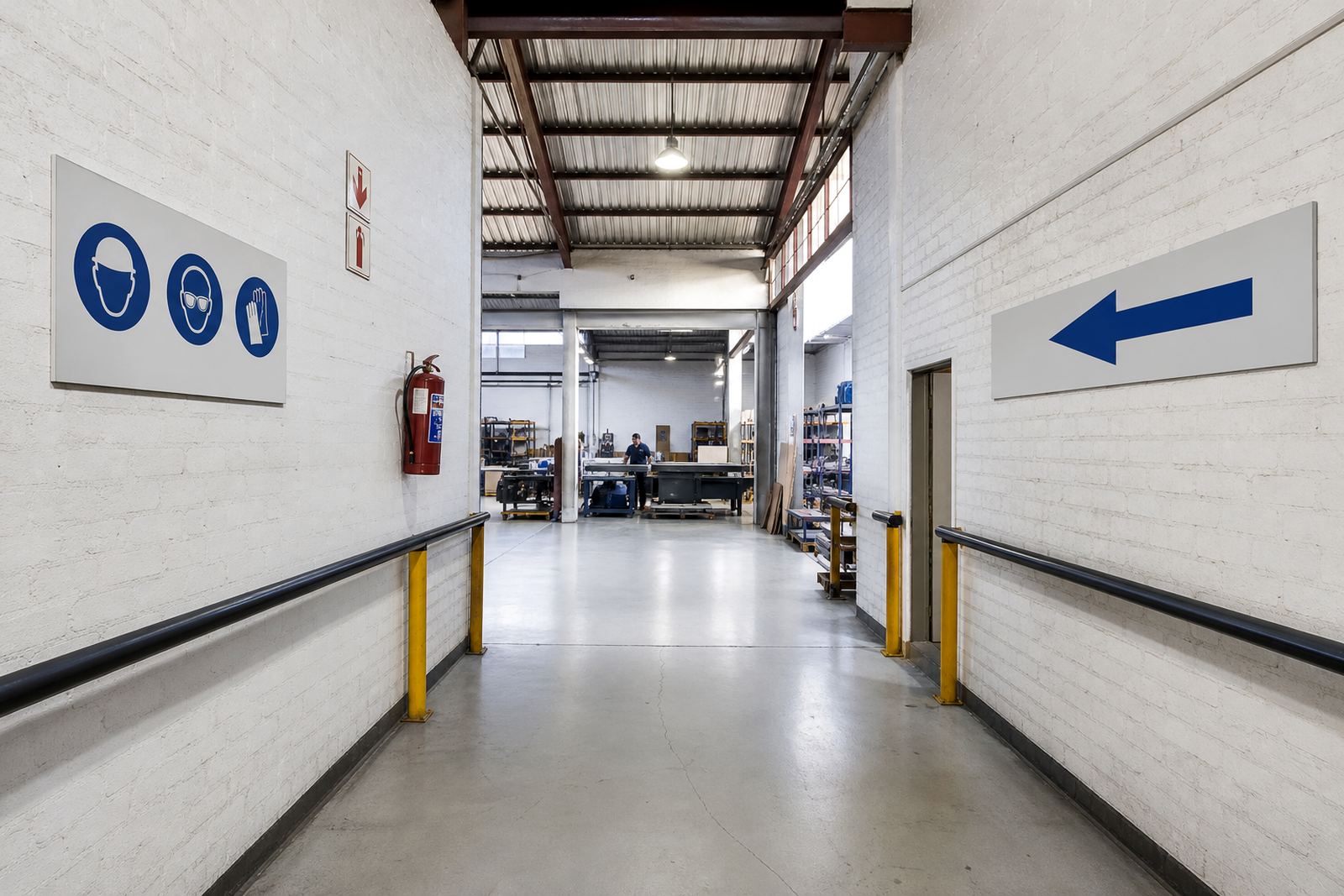
The client was an industrial facility in Germiston that needed a full set of safety and operational boards for plant areas, access points and work zones. The main aim was simple: make critical instructions visible, consistent and easy to keep up to date across the site. The team wanted signage that could be mounted cleanly on walls, posts and entry points without adding unnecessary maintenance work.
The job was planned for a site where production could not stop for long. That meant we had to work around shifts, restricted access areas and existing equipment on the floor. We also had to consider glare from overhead lighting, dust in certain zones and the need for signage that stays legible in areas with regular cleaning. It was a practical brief, not a decorative one.
- Project type: safety and operational boards
- Client type: industrial facility
- Location: Germiston, Gauteng
- Signage use: internal safety, direction and process control
What the site conditions required
Before any print work started, the main constraint was the factory environment itself. Boards had to be suitable for rigid mounting and readable in mixed light, including sections with shadow and reflection. The client also needed surfaces that would hold colour well and remain tidy after handling, especially on signs placed near doors, walkways and machine areas. In some places the boards needed to be changed out later, so fixing method mattered just as much as the print finish.
We also had to take into account local operating conditions in Gauteng. Factory sites can get warm, and during load-shedding the workflow must still be planned so deadlines are not missed. For that reason the production sequence was set up to keep the job moving in stages, with clear sign-off points before final output. The brief was checked carefully so the right boards went to the right locations, which reduced rework later on.
- Hard-wearing rigid boards for wall and post mounting
- Readable copy at working distance
- Suitable for indoor industrial conditions
- Planned around phased site access
What we supplied and how it was produced
We supplied flatbed UV printed rigid signage for the facility, using a workflow suited to boards that need crisp lettering, clear colour blocks and neat edge finish. The production process was set up to handle a mix of safety icons, directional text and operational instructions. On this kind of work, the print has to stay sharp and the board needs to sit flat so the final piece mounts properly. That is where the right media selection matters.
For this project, the work included print-ready file checking, colour guidance and production on rigid sheets for industrial use. UV cured ink was used because it bonds well to suitable sign media and gives good handling strength for boards that are moved, drilled or mounted. The final set was prepared for installation with the site team, and the layout was kept practical so staff could read the instructions quickly. One board was adjusted after a site walk-through, which saved time later and avoided a second round of changes.
- Flatbed UV printing on rigid sign boards
- UV cured inks for handling strength
- File check and layout confirmation before print
- Boards prepared for drilling and mounting on site
Installation, training and handover in stages
The project timeline ran over three weeks from brief confirmation to final handover. In week one, site needs were reviewed and the board schedule was confirmed. In week two, the signage was produced and checked against the agreed layout. In week three, the boards were delivered and installed in planned sections so the facility could carry on working. That staged approach helped keep disruption low.
Along with the physical signage, we gave guidance on placement, cleaning and routine checking. For factory signage, a board is only useful if staff know where it belongs and who updates it. We also covered simple maintenance points such as keeping mounts tight, checking for damage after shifts, and replacing any board that gets stained or scratched. The client wanted a practical handover and that is what we gave them, no fuss, just clear steps.
- Week 1: brief, site review and sign schedule
- Week 2: production and quality check
- Week 3: delivery, installation and handover
- Training on placement and basic upkeep
Results on the floor after installation
Once the boards were up, the site had cleaner visual control in the areas that mattered most. Staff could see instructions more quickly, which helped reduce confusion at entry points and around process areas. The factory also had a neater look overall because the boards were consistent in size, finish and message style. In an industrial setting that matters more than people sometimes think.
The client also wanted a supplier who could handle follow-up support if any board needed changing later. That is part of the value on projects like this. Signs are not a once-off item when a site changes layouts, adds equipment or updates safety rules. We keep the process simple for future reprints and replacements, and we can help with colour matching, media testing and spares coordination when required.
If we were to do this job again, we would follow the same approach: walk the site first, confirm the message list before printing, then install in sections so production is not held up. That method works well for factories in Germiston and elsewhere in South Africa, especially where time, access and safety rules all have to line up.
Key facts
| Project type | Safety and operational boards for an industrial facility |
|---|---|
| Location | Germiston, Gauteng |
| Print method | Flatbed UV printing on rigid media |
| Ink type | UV cured ink for handling strength and colour stability |
| Timeline | 3 weeks from brief to handover |
| Scope | Supply, delivery, installation and basic training |
| Support areas | Johannesburg, Pretoria, Durban, Cape Town, Gqeberha and the East Rand |