
Showroom Refresh Brief in Midrand
The project came from a showroom team in Midrand, Gauteng that needed interior signs to lift the customer area without interrupting daily trading. The brief was practical: replace tired panels with rigid signage that looked sharper, matched the updated layout, and could be fitted with minimal fuss. The client needed a finished look for product zones, wall features and directional panels, all inside a busy commercial space where staff and visitors were moving through the area every day.
Because the site was active, the main constraint was timing. We worked around the refresh schedule so the panels could be produced and fitted in a short window, and the signs had to be accurate first time. There was also a simple but important requirement around indoor light. The panels needed to stay legible from different angles, and the colour had to read consistently under showroom downlights and daylight near the windows.
What We Printed and Supplied
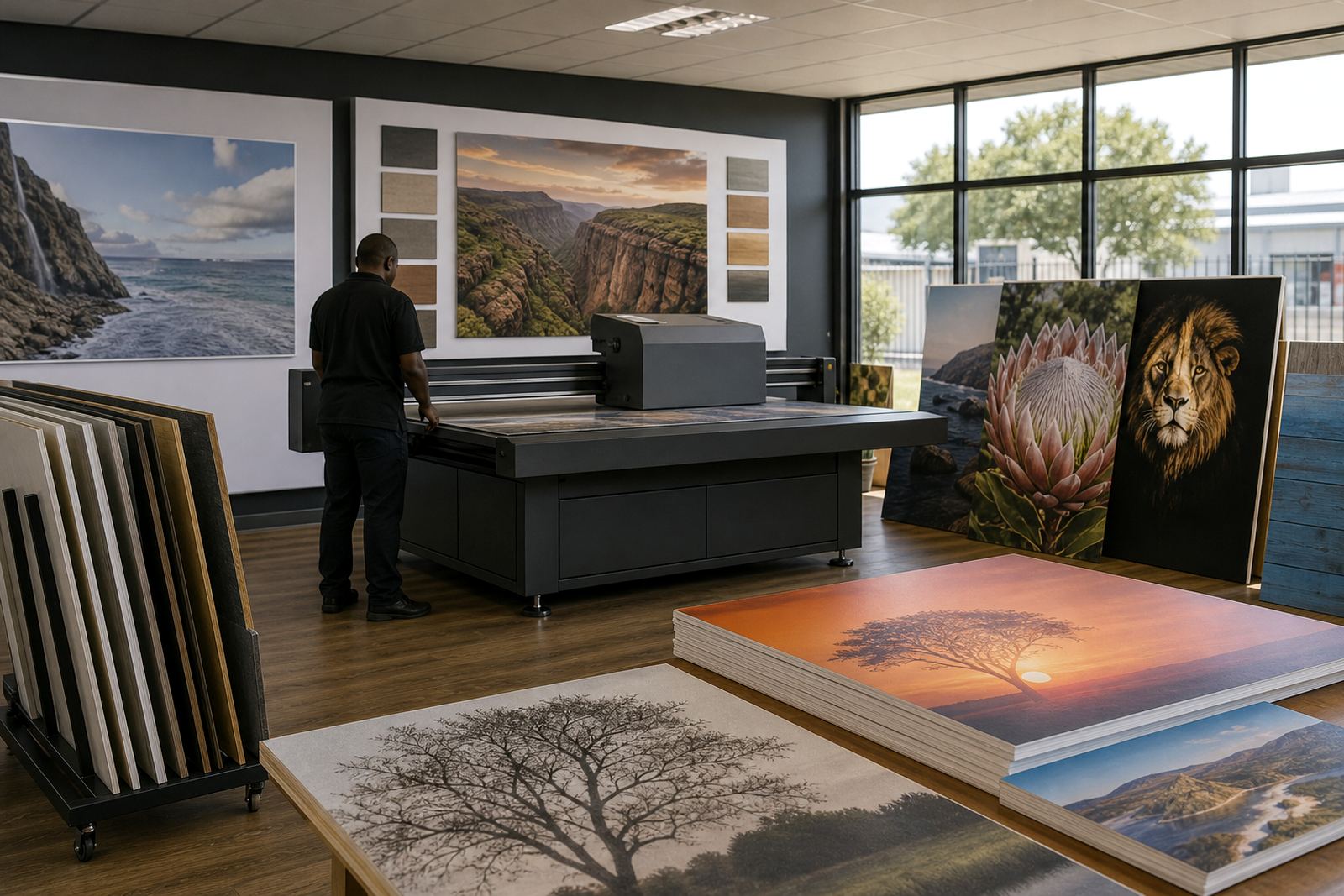
We produced rigid interior signage panels using flatbed UV printing on suitable board for indoor use. The workflow was set up for clean artwork transfer, controlled ink laydown and a consistent finish across the set of panels. For a showroom environment, that matters because the signs are viewed at close range, so edges, text clarity and flatness all count.
The panels were supplied as a coordinated set for the refresh, with the print, trimming and handling planned together. The aim was to keep the install neat and avoid site rework. The printed surfaces were specified for display conditions rather than heavy handling, which suits interior signs that stay in place and need to look tidy over time.
- Rigid interior panels for wall and feature signage
- Flatbed UV printed graphics for direct-to-board output
- Clean colour reproduction for text, icons and branding elements
- Finished for indoor showroom use, not outdoor exposure
- Prepared for straightforward mounting on site
Production Workflow and Colour Control
The production side focused on file checks, layout accuracy and colour guidance before anything was committed to board. That step helps avoid issues once the panels are on the wall. In a showroom, even a small shift in tone can make signage look out of place against painted walls, tiles or product displays. We kept the workflow tight from artwork review through to final output, with practical attention to line weights, type size and safe margins.
Flatbed UV printing is well suited to this kind of work because the ink cures on the surface and the panels can move through finishing without a long drying wait. That helps when a client needs a refresh done within a narrow timeframe. The indoor environment also called for stable media selection, since a flimsy board can warp or show movement after installation. We used material suited to rigid display work so the signs stayed flat and presentable.
- Artwork review and layout checks before print
- Colour guidance for consistent branding across multiple panels
- Media testing to confirm finish and handling suitability
- Output planned for clean trimming and fitting
Install Planning for a Busy Commercial Space
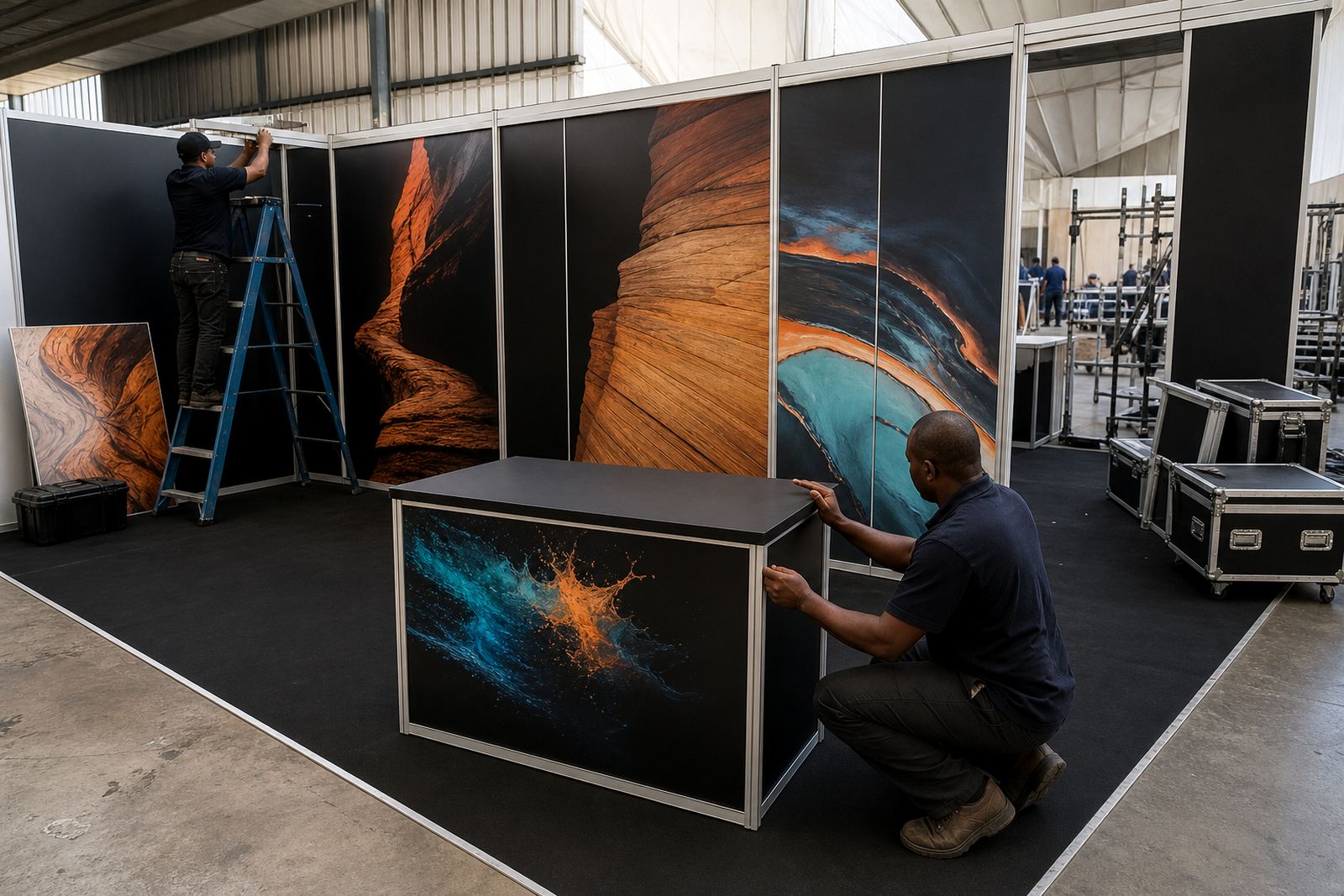
The site in Midrand needed a sensible install plan because showroom staff still had to keep working. We coordinated the sign set so the panels could go in with limited disruption and no unnecessary rework on the day. For interior signage, that often means confirming wall positions, fixing points and final heights before the panels arrive on site. It sounds simple, but it saves time and avoids errors once the crew is there.
We also factored in the local conditions that affect commercial fit-outs in Gauteng. Dust from construction nearby, load-shedding interruptions and uneven wall prep can all slow down a project if they are not accounted for early. The idea was to keep the install practical and tidy, with a finish that looked intentional rather than rushed. The client wanted a showroom that felt organised, and the signs had to support that without shouting for attention.
Timeline From Brief to Sign-Off
The full project ran over a short period of weeks, which suited the refresh schedule. The first week covered brief confirmation, measurement checks and artwork alignment. The second week focused on printing, finishing and final quality checks. Installation and handover followed soon after, once the client was ready for the panels to go up. That pace worked well because the signs were part of a broader interior update, not a long construction programme.
For projects like this, speed is only useful if the work still fits properly. We kept the process steady and practical, and that helped the handover go smoothly. The client received signage that matched the showroom layout and could be used immediately. No special treatment was needed after install beyond normal cleaning with a soft cloth and basic care around the edges.
- Week 1: brief, measurements and layout confirmation
- Week 2: print production, trimming and finishing
- Final stage: installation and client sign-off
- Result: a refreshed showroom interior with clear signage zones
What Changed in the Room After Installation
The biggest change was visual order. The new panels gave the showroom a cleaner flow, so visitors could move through the space and understand the sections more easily. Interior signage does not need to be complicated to work well, it just needs to be readable, aligned and suited to the room. Once the rigid panels were in place, the walls looked more deliberate and the retail floor felt less patchy.
For the client, the practical benefit was that the signage supported the refresh without causing extra maintenance issues. Rigid UV printed panels are a good fit for indoor showrooms because they stay neat, handle normal cleaning and present well under artificial light. If we were doing this again, we would keep the same approach: confirm the wall conditions early, test the finish against the actual lighting, and plan the install around the showroom's trading hours.
Best Fit for Future Midrand Signage Work
This project is a good example of how rigid interior signage should be handled in a commercial space. The right approach is simple: choose a board that sits flat, keep the print sharp, and allow enough time for measurement and sign-off before installation. Midrand sites often move quickly, especially when the client is updating a showroom, office or customer-facing area, so there is value in planning the sign package as part of the wider refresh from the start.
We would use the same process again for similar work in Midrand or nearby areas like Centurion, Sandton and Bryanston. It works because it keeps the job practical. The print is handled in-house, the panels are matched to the interior setting, and the finish is built for everyday use rather than showy extras. That is usually what a showroom needs most.
Key facts
| Project | Midrand Showroom Signs |
|---|---|
| Client type | Showroom team, no company name supplied |
| Town | Midrand, Gauteng |
| Product | Rigid interior signage panels |
| Print method | Flatbed UV printing on rigid board |
| Use | Indoor showroom refresh, wall and feature signage |