
What media testing checks before you print a full run
Media testing is the practical way to see how a rigid substrate behaves under flatbed UV printing before you commit to a larger order. We check how the sheet receives ink, how it cures, whether the surface needs treatment, and if the finished print will stand up to handling, transport and display. This matters for boards that may sit in sun, near shop entrances, or in humid areas along the coast where poor adhesion shows up fast.
Our support is aimed at common rigid materials used for signage and display work, including foam board, PVC sheet, corrugated plastic, acrylic, composite board, aluminium composite and other rigid panels. If a material is dusty, oily, warped or sensitive to heat, we help assess it before the job goes into production. A quick test can save a lot of waste and rework, especially when the client has a tight deadline and the boards must go out the same week.
How the test job is set up and assessed
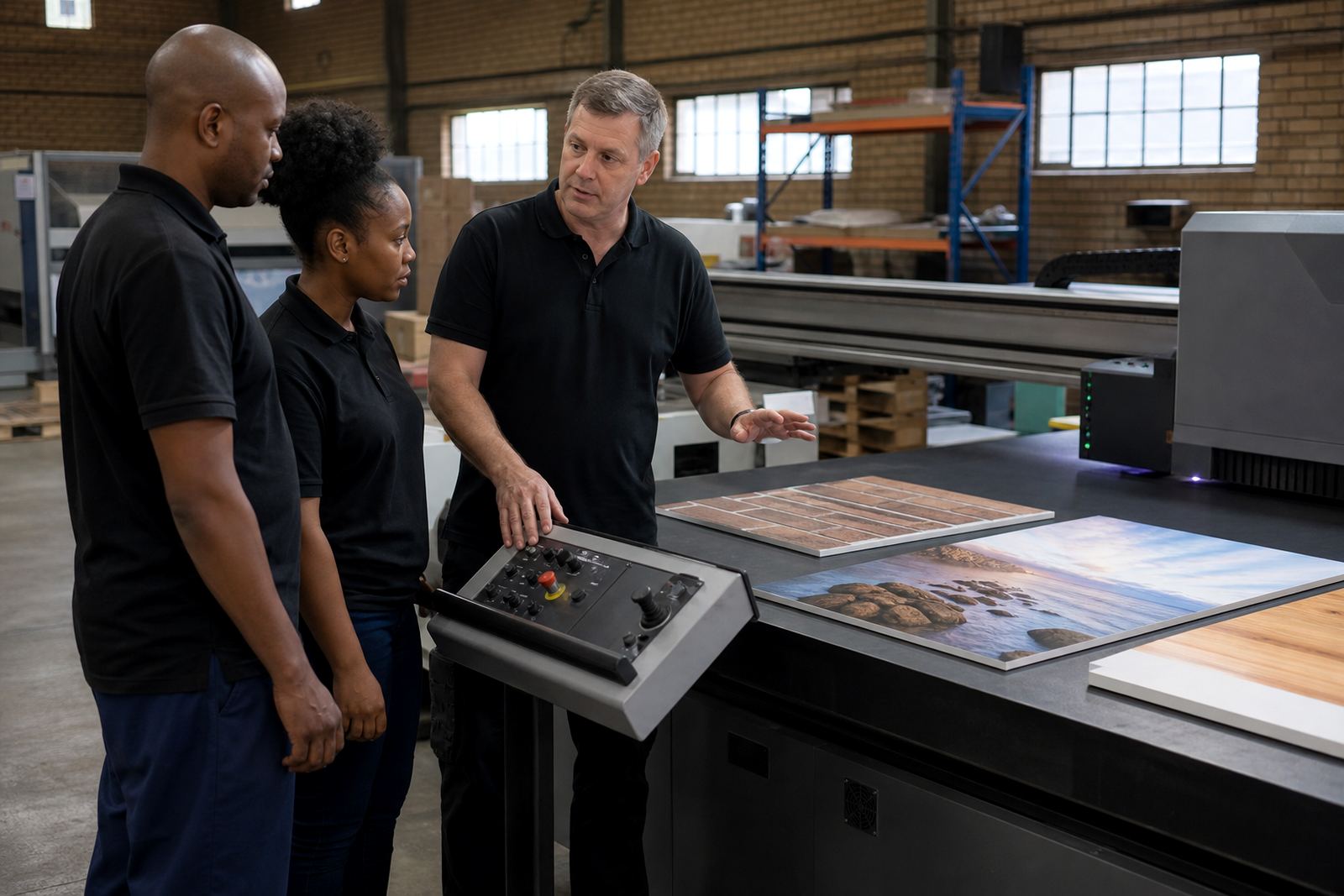
We start by reviewing the substrate type, thickness, surface finish and intended use. Then we look at the print sequence, primer or pre treatment needs, curing behaviour, and whether the artwork needs adjusted ink limits or a different print order. The aim is to make the process practical for your production team, not just to produce a sample that looks good in the workshop but fails on site.
- Surface inspection for dust, sheen, oil and warping
- Adhesion checks before and after curing
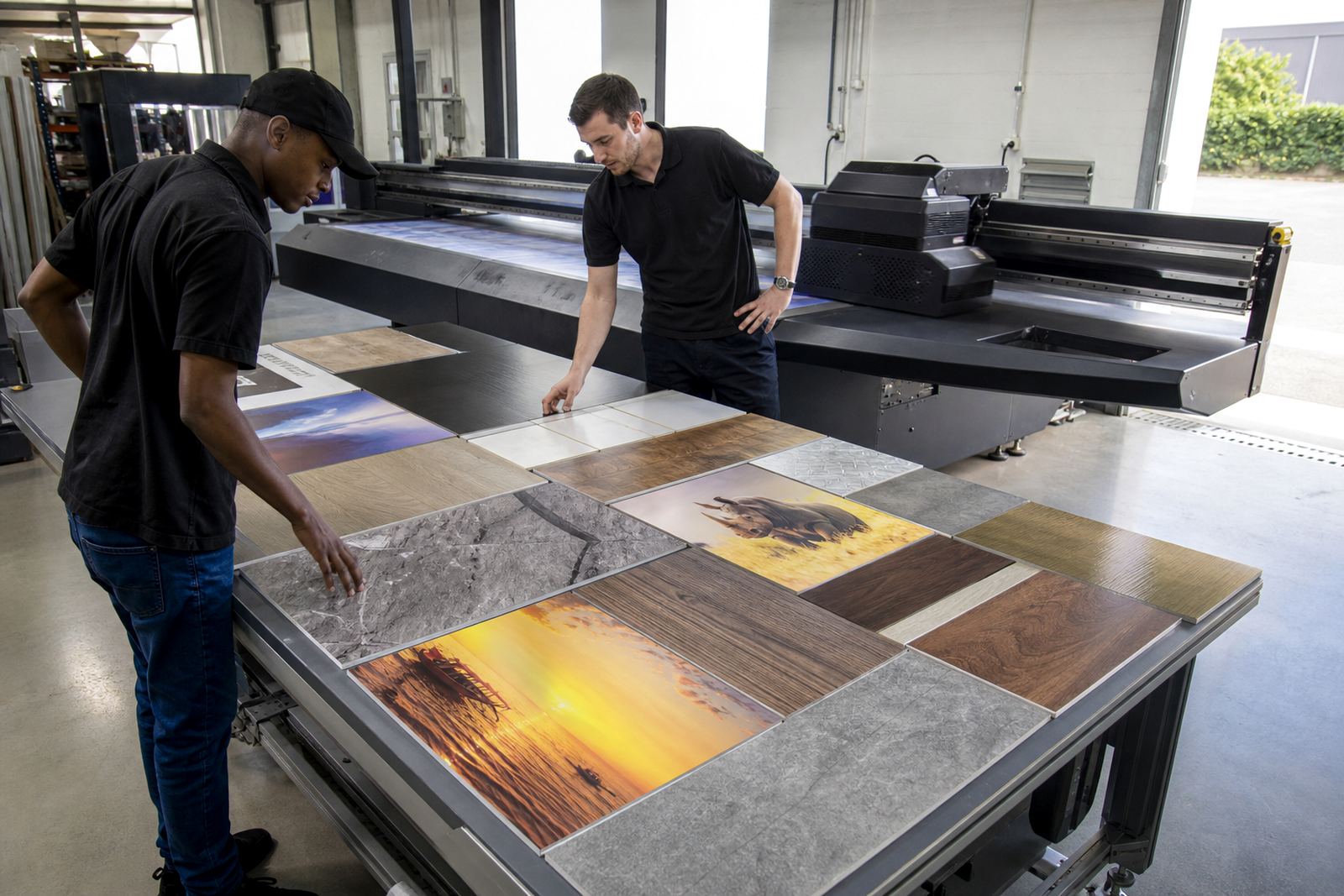
- Small test prints on the actual board or a matching sample
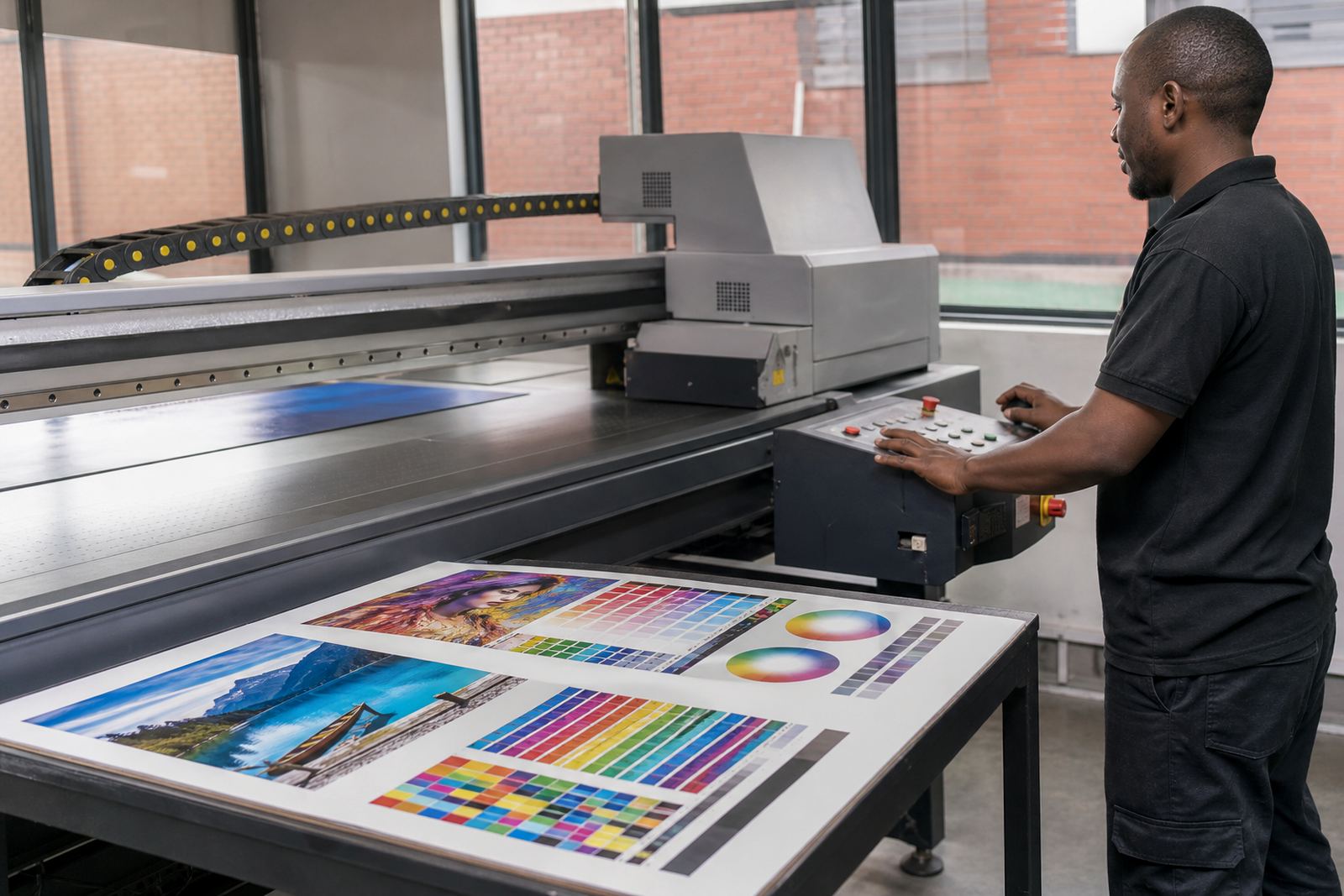
- Colour and density checks under normal viewing light
- Handling checks for scratching, scuffing and edge lift
- Feedback on drying, stacking and post print handling
Where needed, we also review file prep, white ink use, layered printing and whether the board should be tested flat or in a production sequence. That gives a clearer picture of how the job will behave in a real workflow, not just on one sample sheet.
What is included in media testing support
The service is structured to help you make a go or no-go decision on a substrate. We can test one material or compare a few side by side, which is useful when you are deciding between different suppliers or grades. If a board passes the basic checks, we can advise on the likely production setup and what maintenance is needed to keep output consistent.
- Initial consultation on substrate suitability
- Test print planning for the intended application
- Adhesion and cure assessment
- Workflow guidance for loading, curing and stacking
- Colour guidance for practical production matching
- Advice on media storage and handling in local conditions
We also look at common risks such as dust pickup, uneven surfaces, lifting edges and marks caused by poor storage. In Germiston and across Gauteng, we often see material damage from moisture, heat and rough handling, so the storage side is part of the test as well.
Turnaround, sampling and production planning
Turnaround depends on the number of substrates being tested and whether samples need to be brought in from site or collected from your production floor. Simple checks can often be handled quickly, while comparison testing or repeated print trials takes longer. We keep the process direct so that you can decide whether to proceed, change the board or adjust the print method without losing time.
For most enquiries, we first confirm the substrate type, the end use, and the result you need from the test. Then we schedule the sample review, print trial and follow up discussion. If the job is urgent, we will prioritise the materials that affect the final deadline first. That helps when a client needs signs for an opening, a promotion or a site handover and there is no room for guesswork.
Pricing approach for testing and consultation
Pricing is based on the scope of the test rather than a one-size-fits-all rate. A single substrate review is different from a multi material comparison with repeat prints, colour adjustments and workflow planning. We keep the quote transparent so you can see what is being assessed, what sample work is included, and what extra time may be needed for more complex materials.
Where testing leads to a wider production plan, the initial review can inform later installation, training or maintenance support. That makes the spend more practical because the same findings can guide your longer term print setup. For businesses operating on tight margins, it is better to test once and print correctly than to lose stock on boards that will not hold the ink or cure properly.
Maintenance intervals and ongoing substrate checks
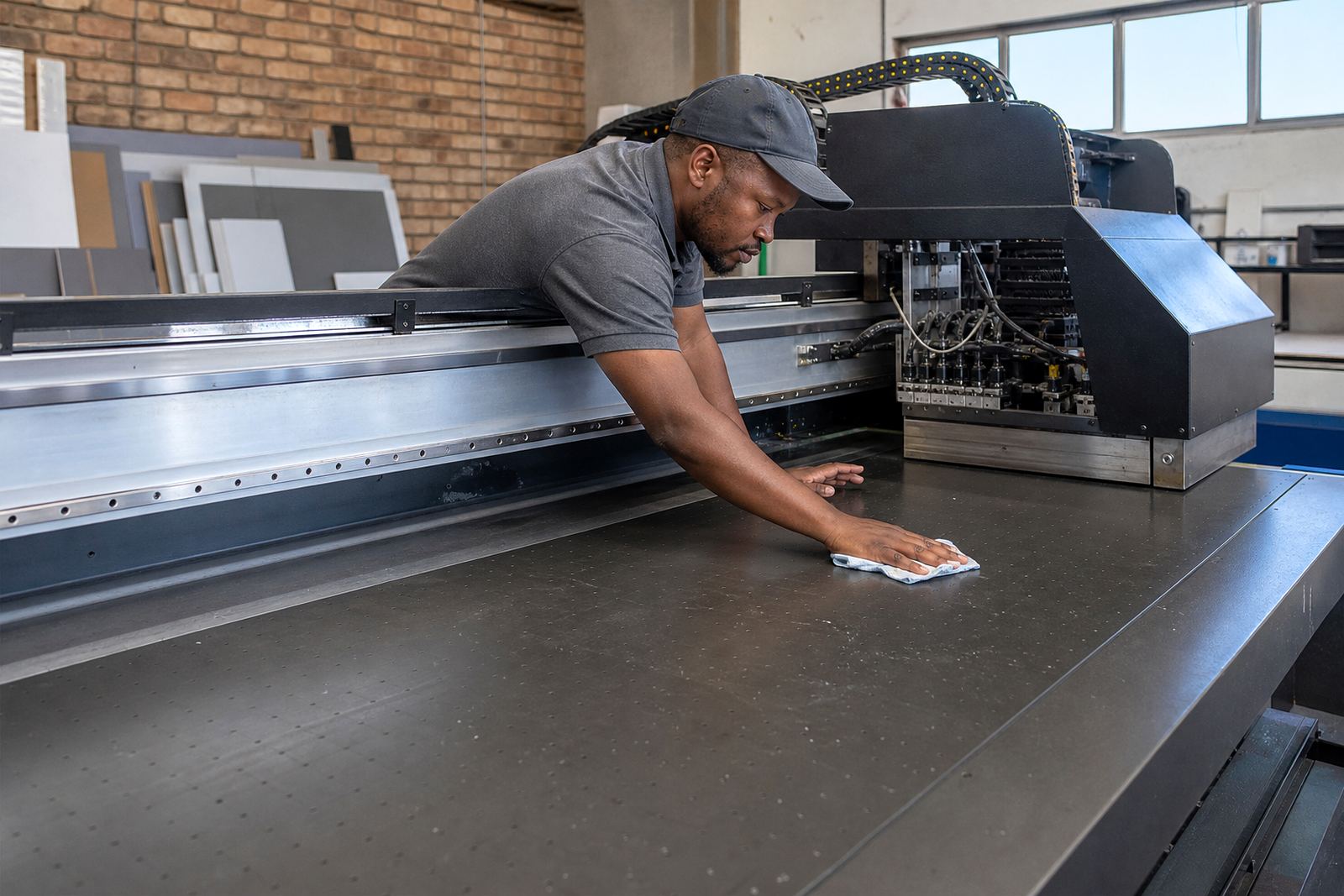
Media testing is not only for new materials. It is also useful when a supplier changes a board finish, when storage conditions change, or when print results start to vary from job to job. In busy print environments, we recommend rechecking key substrates at regular intervals, especially if you work with outdoor signage, coastal deliveries or boards that move through different sites and warehouses.
A practical schedule is to retest when you change supplier batches, after a machine service, or when you introduce a new application such as display panels, retail signage or event boards. If your team sees recurring issues like poor adhesion, colour shift or scuffing, a fresh test can identify the cause before it affects more stock.
- Retest after changing board supplier or batch
- Check again after maintenance or ink changes
- Review stored stock that has been exposed to heat or damp
- Repeat testing when moving into a new application type
Our Germiston base supports teams across Johannesburg, Pretoria, Durban, Cape Town and Gqeberha, with local help available through our regional support areas. Clients reach us through the enquiry form on our contact page, and we use that information to match the right support to the job.
Key facts
| Service type | Media testing for rigid substrates and signage workflows |
|---|---|
| Substrate range | Rigid boards, panels and display materials |
| Checks performed | Adhesion, cure, colour, handling and workflow suitability |
| Output | Practical go or no-go advice with production guidance |
| Coverage | Germiston, Gauteng and nationwide support across South Africa |
| Typical use | Before full print runs, supplier changes or new applications |