
What Colour Layer Flatbed Means In Production
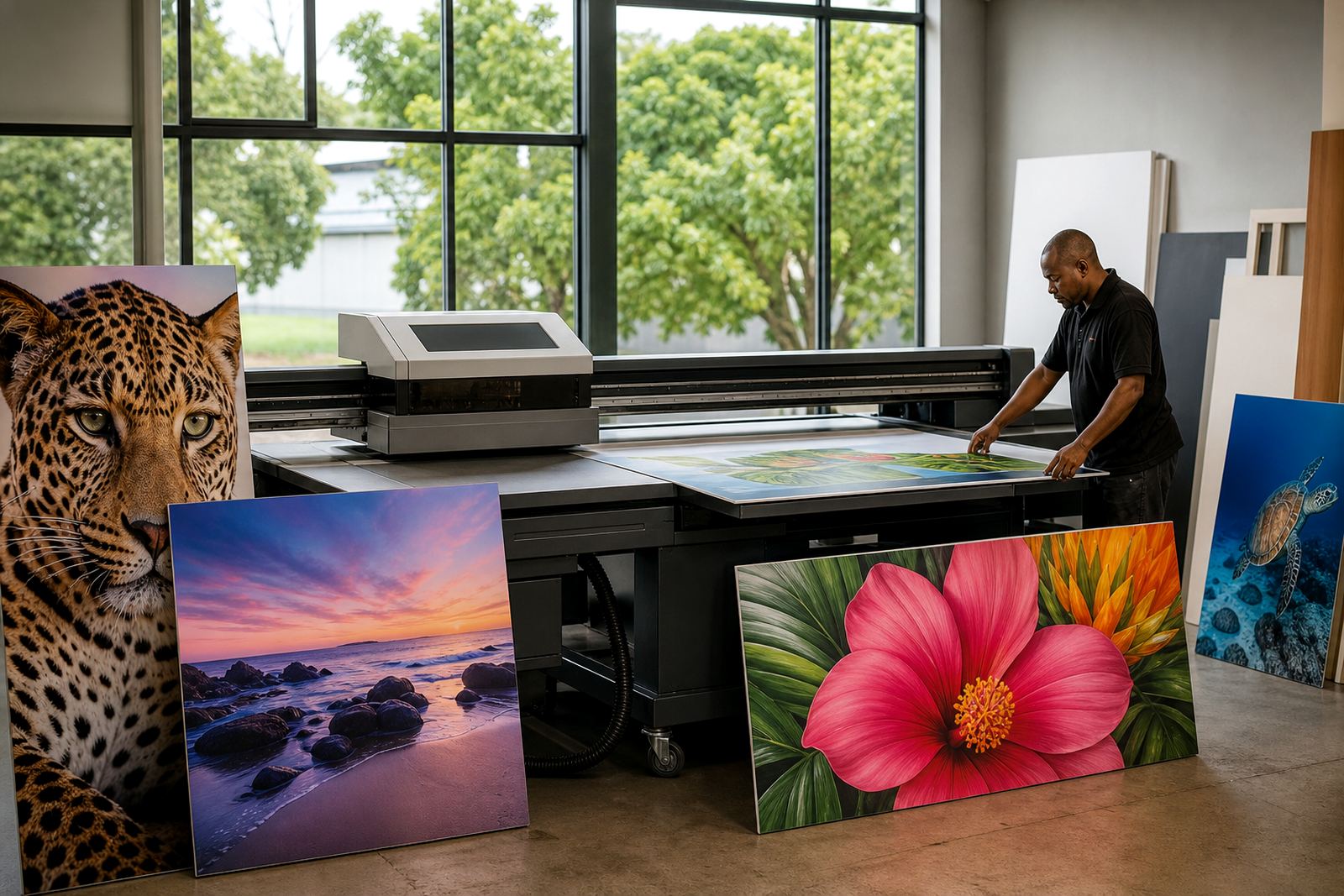
Colour Layer Flatbed printing is a method for building up colour in passes on rigid media so the finished panel has stronger impact, better definition and a cleaner visual finish. It is used for sign panels, directional boards, retail displays and other applications where the print needs to sit neatly on PVC board, foam board, ACM, acrylic, timber panels or similar rigid sheets. The process can be set up for single pass work or for layered output where white, colour and special effect passes are combined.
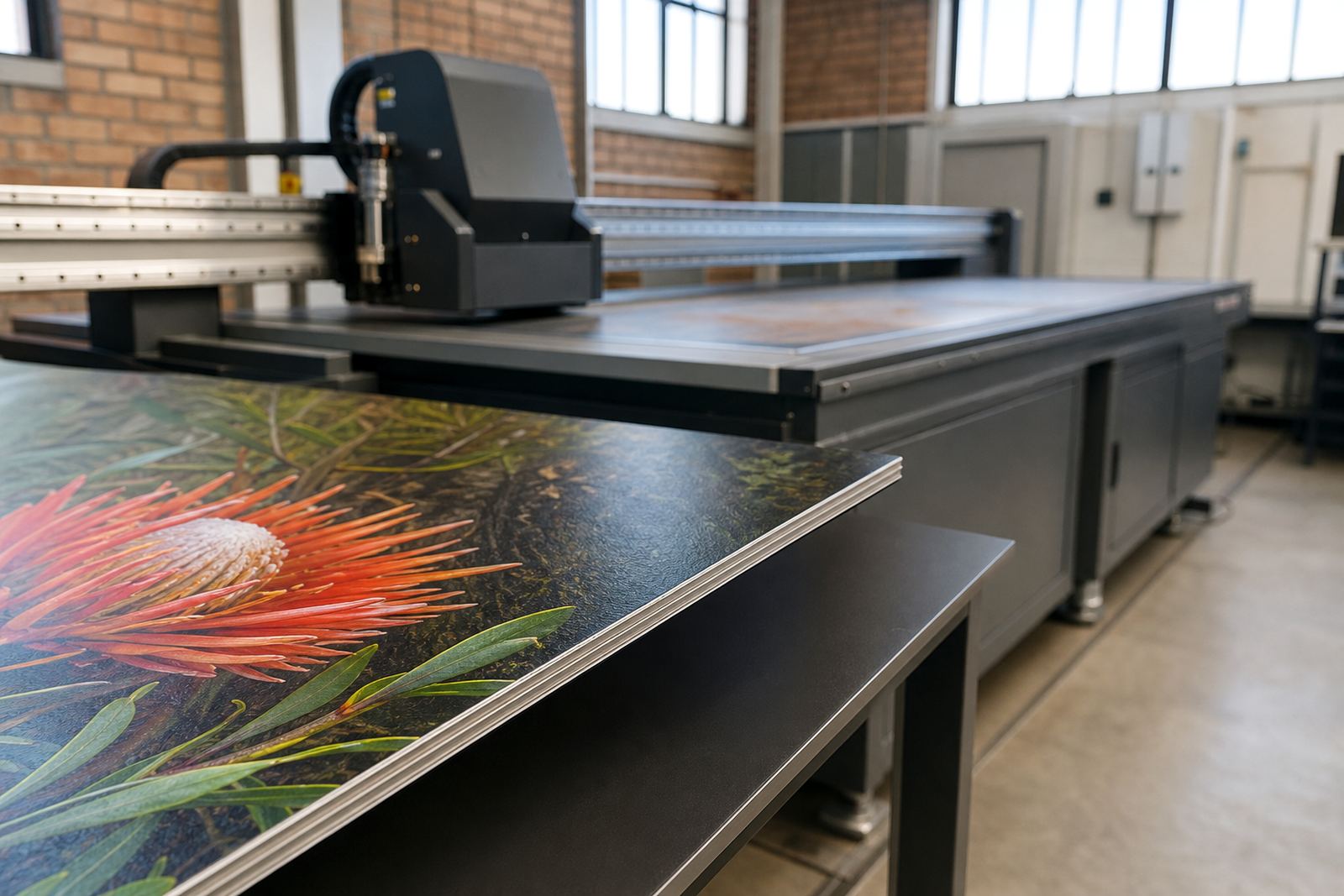
In practice, this means more control over how the final image appears on light or dark boards, textured surfaces and clear materials. Some jobs need a solid white underlay, others need several colour layers for contrast or a raised visual effect. The right setup depends on the media, the ink system, the curing method and the finish required. For busy shops in Gauteng and beyond, that flexibility helps keep production moving without having to outsource every special job.
Media Types And Sizes That Suit Layered Work
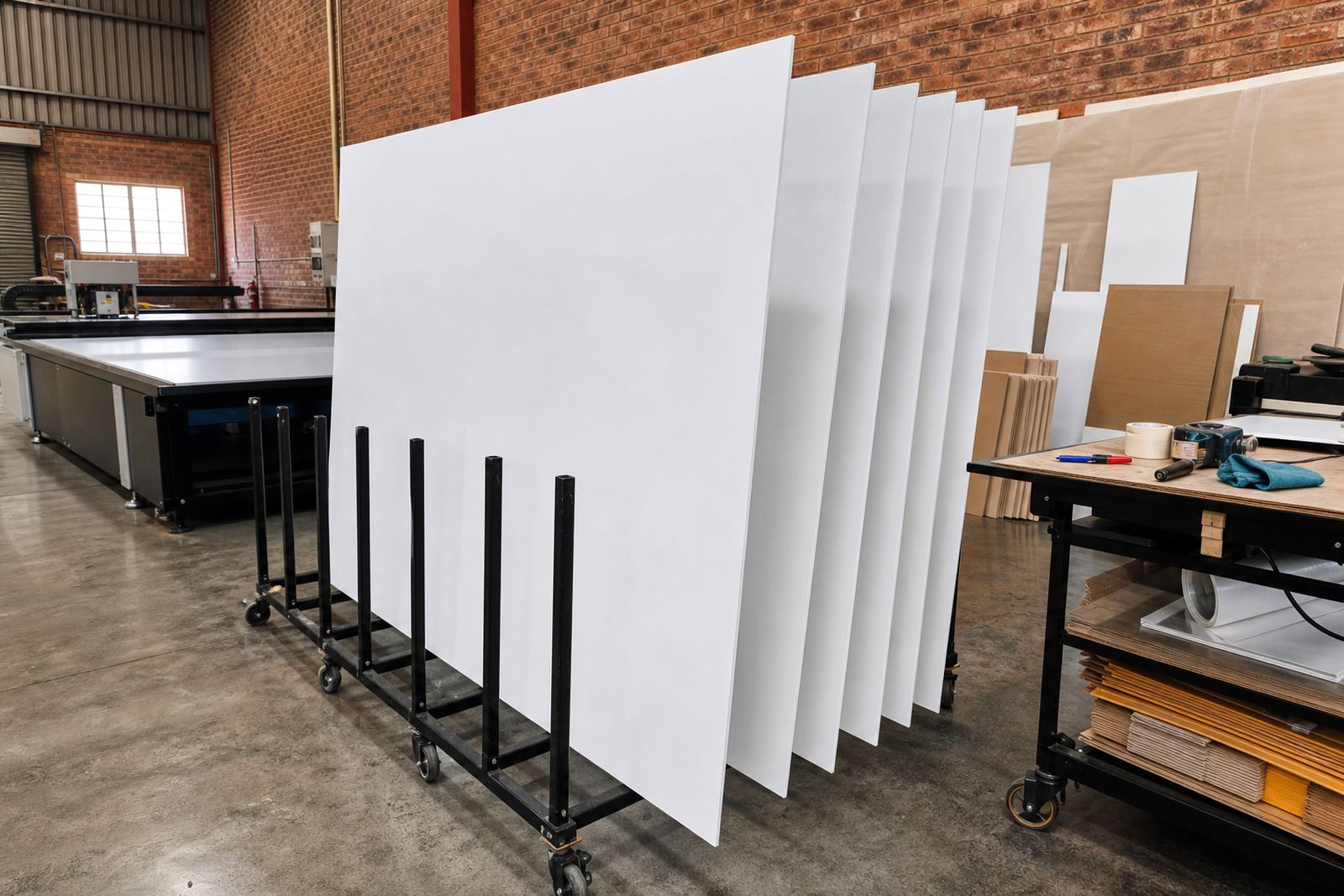
Colour Layer Flatbed work suits rigid media first and foremost. It is often chosen for boards that need to stay flat, carry crisp type and handle regular handling after printing. Common applications include site boards, retail panels, exhibition graphics, menu boards, safety signage and short run décor items. The media should be clean, dry and evenly surfaced before it goes onto the bed, because dust and uneven board edges can affect registration and print finish.
- Rigid board sizes from small panels up to full sheet work, depending on the machine set-up
- Materials such as PVC board, foam board, ACM, acrylic, timber and coated composite panels
- Gloss, matt or satin finish requirements, depending on the job spec
- White ink or clear layer options for darker or transparent substrates
- Short runs, repeated runs and one-off custom pieces
For shops working across Johannesburg, Pretoria, Durban, Cape Town and Gqeberha, it helps to plan the media choice before the order is accepted. Coastal humidity can affect storage, and warped sheets can cause more stoppages than most people expect. A quick media test on the actual board type is usually the safest way to confirm adhesion, curing and colour result.
Where Colour Layer Flatbed Prints Work Best
This product is a good fit for print businesses that need a visual result stronger than standard flat colour on a plain board. It suits retail stores that change campaigns often, event teams that need quick turnaround display pieces, and sign makers who want a clean finish on rigid substrates for indoor or sheltered outdoor use. It also works well for production teams handling layered graphics with white backing, spot colour work or high contrast text over dark surfaces.
Because the workflow is built around controlled passes and curing, it can support both simple and more demanding jobs. A manufacturer in Germiston may use it for regular signage, while a print shop in Centurion may use it for mixed media runs that include directional boards, point of sale displays and exhibition panels. If the job needs more than plain coverage, layered UV printing gives the operator more options without changing the whole production line.
Installation, Power And Workshop Planning
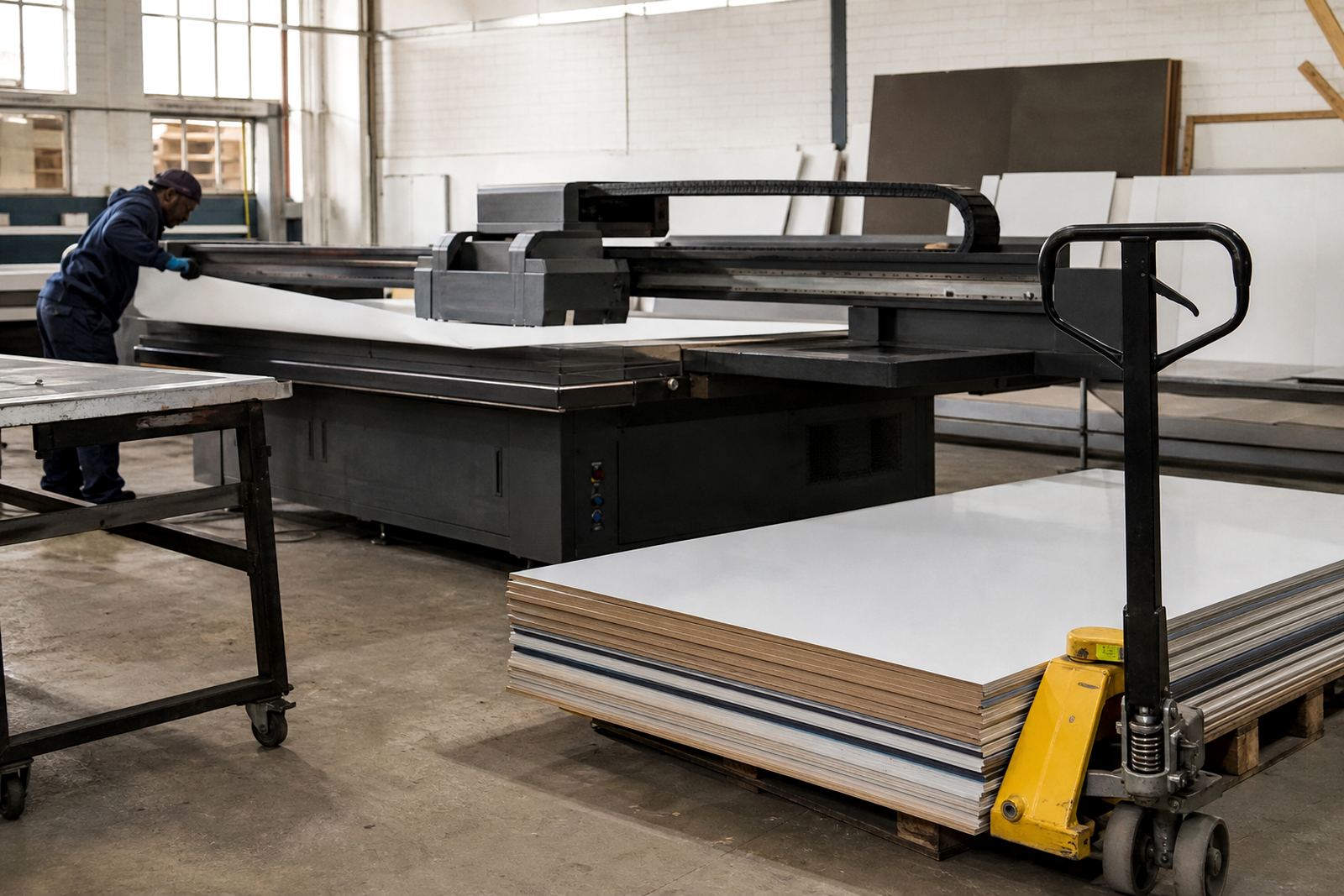
Flatbed UV systems need proper site preparation before installation. The floor should be level, the route into the workshop should allow the machine to move in safely, and the loading area must suit the largest sheets being handled. It is worth planning for board storage nearby, a clean unpacking area and enough space for operators to move around the bed without bumping panels or disrupting alignment. In many South African workshops, this planning matters just as much as the machine itself.
Power supply must be checked before installation so the site can cope with the printer, curing equipment and any support systems used in the room. Some sites also need air management, extraction or temperature control depending on the workflow and the inks in use. Load-shedding can interrupt production, so backup planning should be considered early, including safe shutdown procedures and a sensible restart routine. When a site is prepared properly, operators usually settle in quicker and there is less downtime from avoidable faults.
- Check floor space, access doors and sheet handling routes
- Confirm the electrical supply and any backup arrangements
- Allow room for boards, cleaning materials and finished work
- Plan for dust control, ventilation and safe curing conditions
Ink Handling, Colour Control And Daily Care
Layered UV printing depends on clean ink handling and consistent colour control. Operators need to keep inks sealed correctly, follow storage guidance and avoid mixing old stock with fresh stock unless the workflow allows it. White ink especially needs routine agitation and careful handling because settling can affect output. Colour matching should be checked against the substrate, not only on screen or in a sample file, because rigid media can shift the final look slightly.
Daily care should include nozzle checks, wipe-downs in the right places, bed cleaning and a review of any build up around the print zone. If the printer is used on textured or dusty boards, maintenance becomes even more important. Preventive attention saves time later, and it helps avoid blocked heads, poor adhesion or misread media marks. A clean, steady routine is usually better than a reactive one when production is busy and the jobs are stacked.
- Store inks in a stable area away from direct sun and heat
- Check white ink circulation and agitation routines
- Keep boards dust free before printing
- Log cleaning, checks and any repeat faults
What To Confirm Before You Place An Order
Before ordering a Colour Layer Flatbed setup, confirm the sheet size you want to run, the media types you use most often and the finish expected by your customers. It is also worth checking whether you need standard colour only, white underlay, clear effects or layered passes for special applications. If your work includes frequent changeovers, ask how quickly the workflow can move from one board type to another and how the operator will manage file setup.
You should also confirm the power requirements, installation conditions and any service access needs at the site. If your business works from Germiston, the East Rand or further afield, ask about onsite support, remote support and spare coordination so the production plan stays practical. The right setup should match your daily output, your available space and the kind of boards you print most often, not just the biggest spec on paper.
- Main media type and board thickness
- Largest sheet size and expected daily volume
- Need for white ink, layered colour or special effects
- Power, floor space and environmental conditions at the site
Key facts
| Product type | Flatbed UV printing system for rigid boards and signage |
|---|---|
| Print approach | Layered colour passes, white underlay and optional special effect workflows |
| Compatible media | PVC board, foam board, ACM, acrylic, timber panels and coated rigid sheets |
| Typical usage | Retail signage, display panels, directional boards, exhibition work and short runs |
| Installation needs | Level floor, clear access, electrical supply review and planned board handling space |
| Support options | Installation, training, preventive maintenance, breakdown support and remote assistance |