
Built for boards, panels and one-off signage
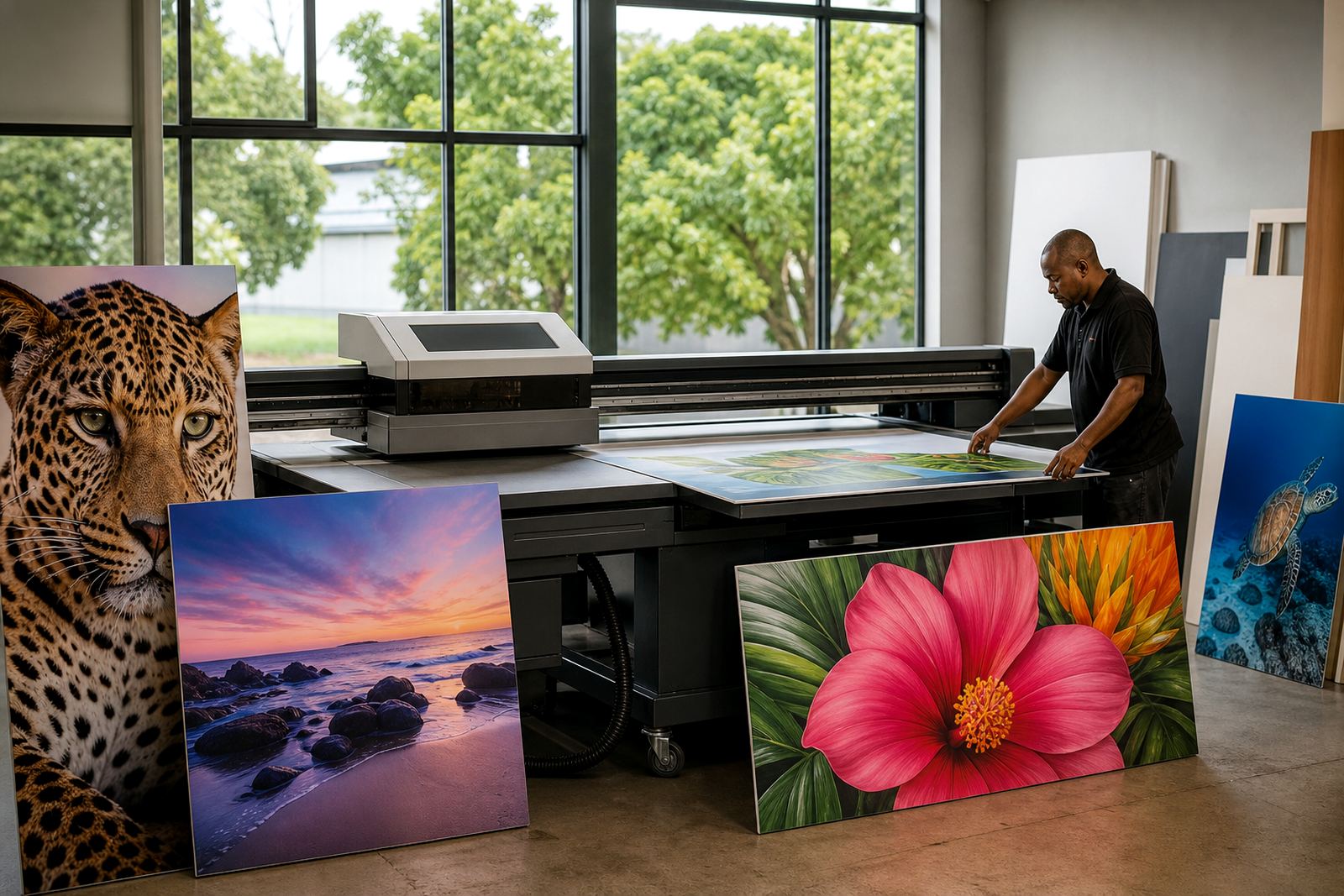
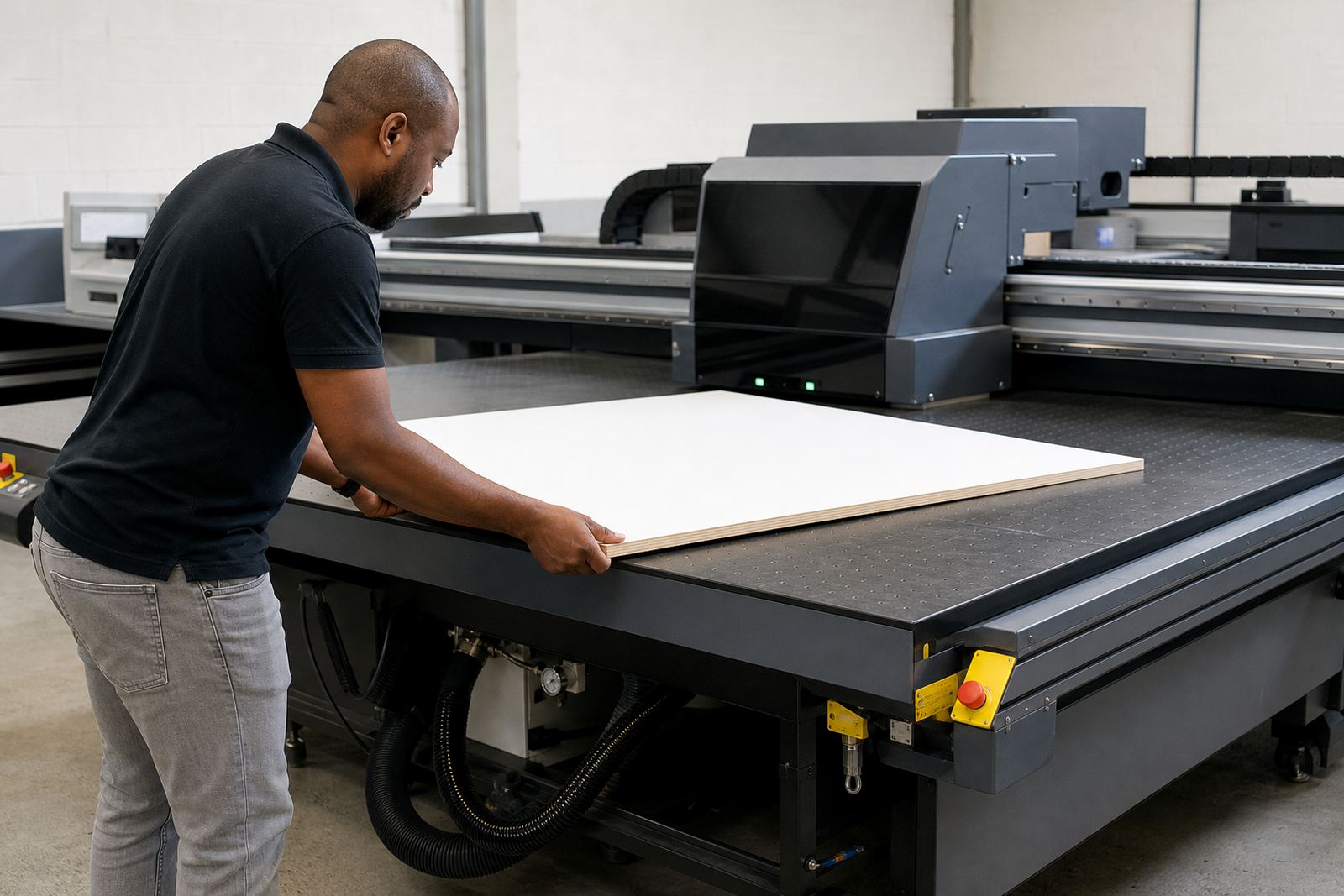
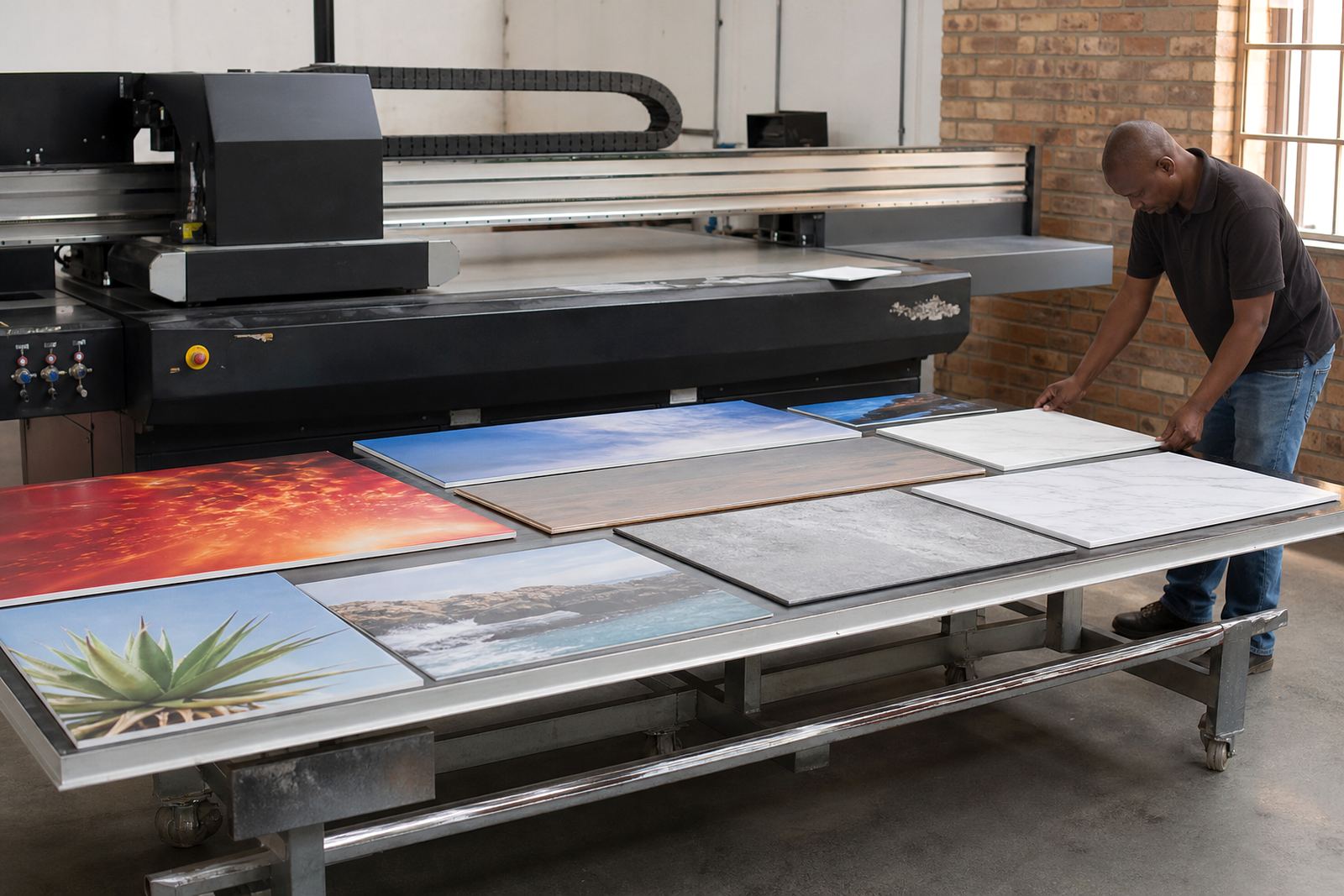
A custom size flatbed is made for printing directly onto rigid sheets, panels and shaped pieces rather than flexible roll media. It is a practical choice when your work changes from job to job, such as corflute, acrylic, PVC foam board, aluminium composite panels, display boards and timber based substrates. Because the sheet stays flat during print, registration is easier and the finish is consistent across the full surface.
For shops, sign makers, exhibition suppliers and print rooms around Germiston, Johannesburg and Pretoria, this type of printer helps reduce mounting steps and handling time. It is also useful for jobs that need a white underlayer, layered colour or spot treatment for added visibility.
Size choices and working area options
Custom size does not mean one fixed format. The working area can be planned around the boards you use most often, from smaller display pieces to larger signage panels. The right size depends on sheet dimensions, loading space, print throughput and the room available for operator movement around the machine.
- Standard board sizes for retail and site signage
- Oversize panels for displays and wall graphics
- Mixed size production where nested parts are common
- Short run custom pieces for events, fit-outs and point of sale
When planning the size, allow space for infeed, outfeed and sheet staging. A good layout makes day to day work easier, especially where staff are moving boards on and off the machine throughout the shift.
How flatbed UV printing works in production
Flatbed UV printing lays down ink directly onto the substrate and cures it with UV light as the print is made. This creates a firm finish that can handle handling, cutting and fitting soon after print, depending on the substrate and workflow. The process is well suited to signage that must stay legible in sunlight, indoor lighting and busy retail settings.
Most setups can be run with a workflow that includes artwork prep, media placement, test print, production run and finishing. White ink can be used on dark or clear materials, while clear varnish or layered effects may be used when extra texture or emphasis is needed. Ink choice and curing settings should match the media, because some boards take ink differently and edges can show if the setup is off.
Power, air and site preparation essentials
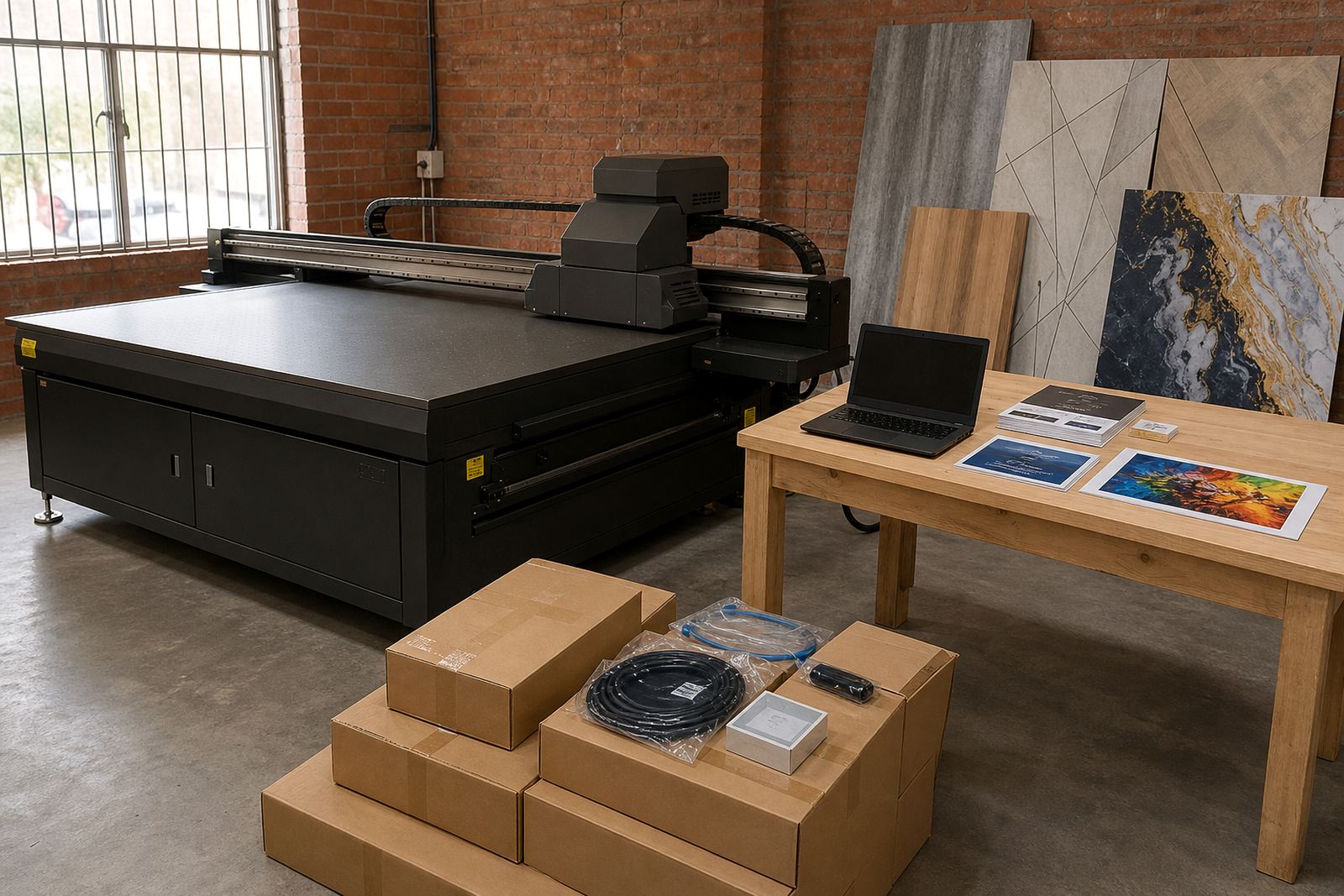
Before installation, the room needs to be checked for floor space, access routes, dust control and power supply. A clean area matters because flatbed work is sensitive to grit, loose board fibres and small debris on the surface. In many South African sites, the plan also needs to account for load shedding and voltage changes, so backup power and proper electrical protection are worth discussing early.
Depending on the exact configuration, you may also need compressed air, extraction or other support equipment for the workflow. The room should have enough lighting for inspection, enough clearance for board handling and a safe path for moving sheets from cutting to print and then to finishing.
- Stable power supply with backup planning for outages
- Dry, clean room with limited dust and airborne fibres
- Level floor and enough space for sheet handling
- Access for maintenance and operator movement
Care, servicing and print consistency
Like any production machine, a flatbed UV printer needs regular care to keep output steady. Daily checks should cover cleaning, ink condition, print head area and the bed surface. Weekly and monthly servicing usually focuses on alignment, safety checks, filters, moving parts and the general condition of the print path. In coastal areas such as Cape Town and Gqeberha, humidity can affect storage and media behaviour so proper room control helps a lot.
Preventive maintenance is cheaper than stoppages. If the printer is used hard for signage runs, it helps to keep spare consumables on hand and log any shifts in colour, adhesion or cure quality. Small changes are often the first sign that a setting or component needs attention.
What to check before you order
Before placing an order, it helps to know what you print most often and how the work moves through your shop. The best choice depends on board size, monthly volume, substrate range, colour expectations and the level of support your team needs after installation. If you print for retail, events or site signage, ask whether the machine can handle the mix of materials you use now and the jobs you want to take on later.
- Largest and smallest board sizes you handle
- Substrates used most often, including coated and uncoated boards
- Need for white ink, layered effects or special finishes
- Power supply, room conditions and backup arrangements
- Training needs for operators and finishing staff
- Support requirements for maintenance, ink handling and remote help
Our Germiston base supports installations, training and service across South Africa, including Johannesburg, Pretoria, Durban, Cape Town, Gqeberha, the East Rand and Centurion. Enquiries come through the contact form on the contact page, which keeps the next step simple when you need advice on sizing, workflow or servicing.
Key facts
| Print method | Direct-to-substrate flatbed UV printing |
|---|---|
| Typical materials | Rigid boards, panels, signage sheets and display substrates |
| Ink system | UV-curable inks, including options for white and layered print work |
| Workflow fit | Short runs, mixed sizes, bespoke pieces and signage production |
| Site needs | Stable power, clean room conditions and proper sheet handling space |
| Support | Installation, training, maintenance, breakdown help and remote support |