Direct Printing For Event Boards And Display Panels
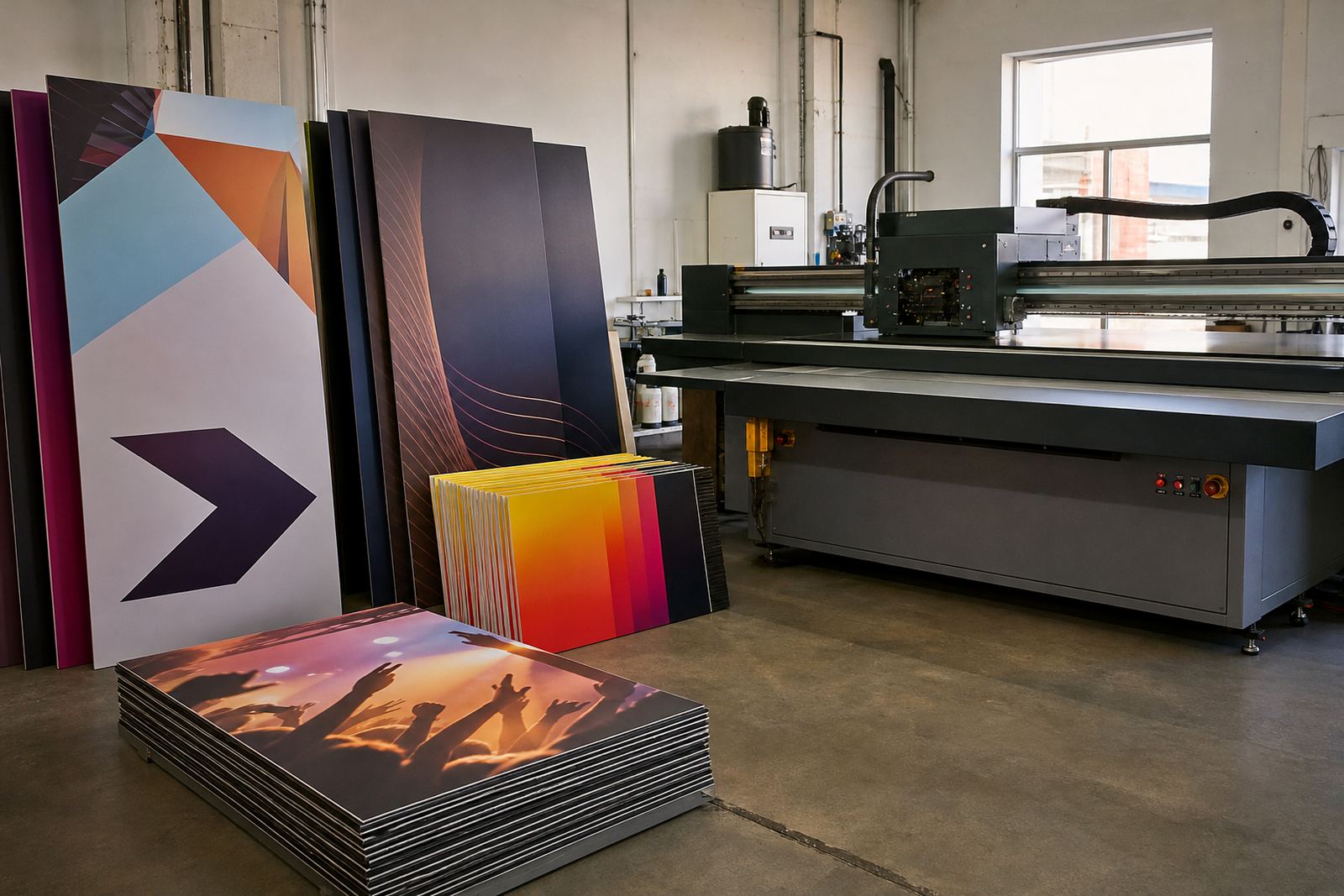
Flatbed UV printing places ink straight onto rigid material, which is useful when you need event signage that can go from production to venue floor without extra mounting steps. It works well for foam board, PVC board, acrylic, aluminium composite sheet, MDF, corrugated board and similar sign substrates used for exhibitions, launches, conferences and retail activations.
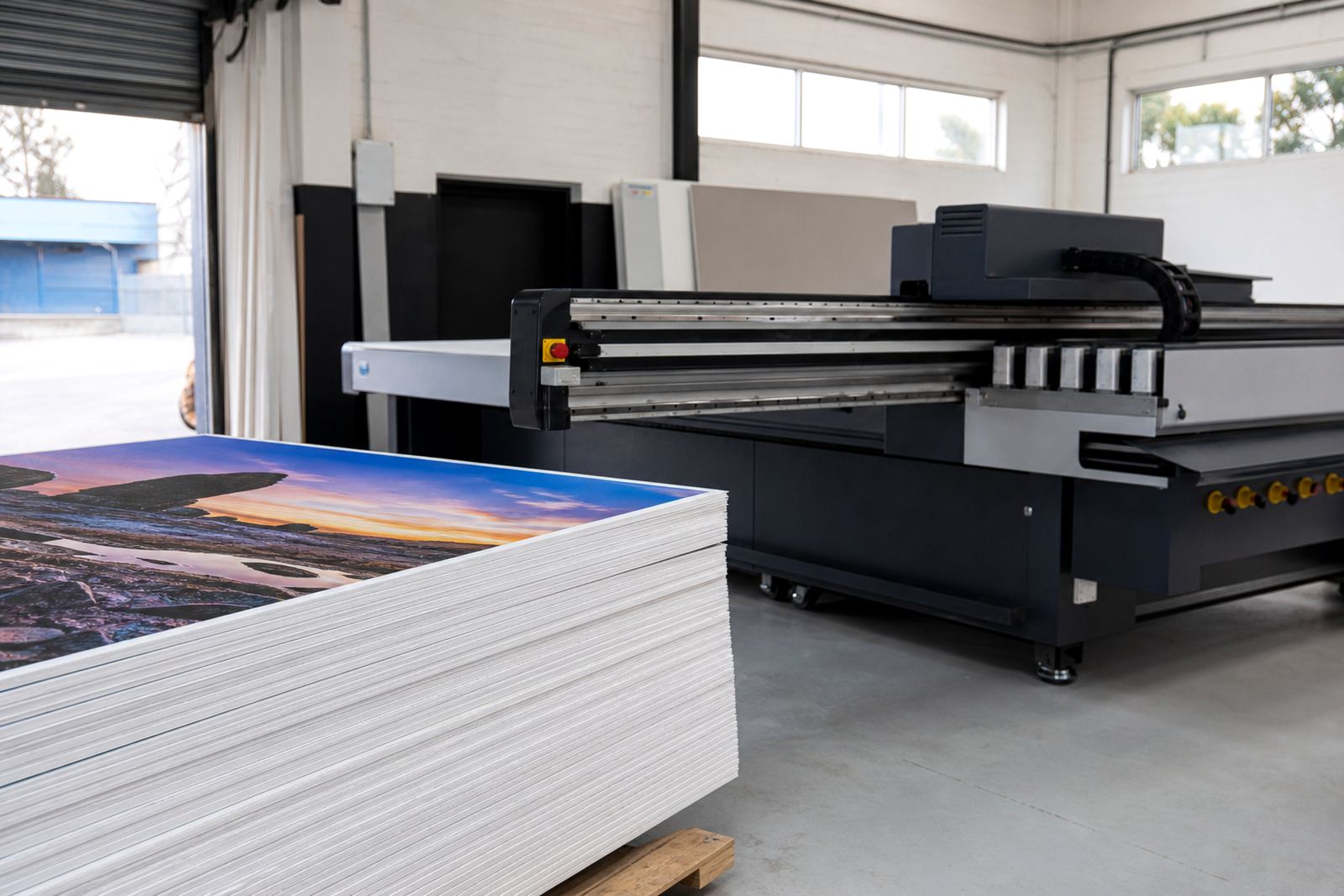
The main advantage is speed of turnaround and a tidy finished result. Artwork is printed directly onto the panel, then cured with UV light so the surface is dry to the touch soon after printing. That helps when a team is working to a tight event window, or when there are separate jobs for directional signs, sponsor boards, menu boards and photo wall panels.
Where A Flatbed UV Printer Fits Best
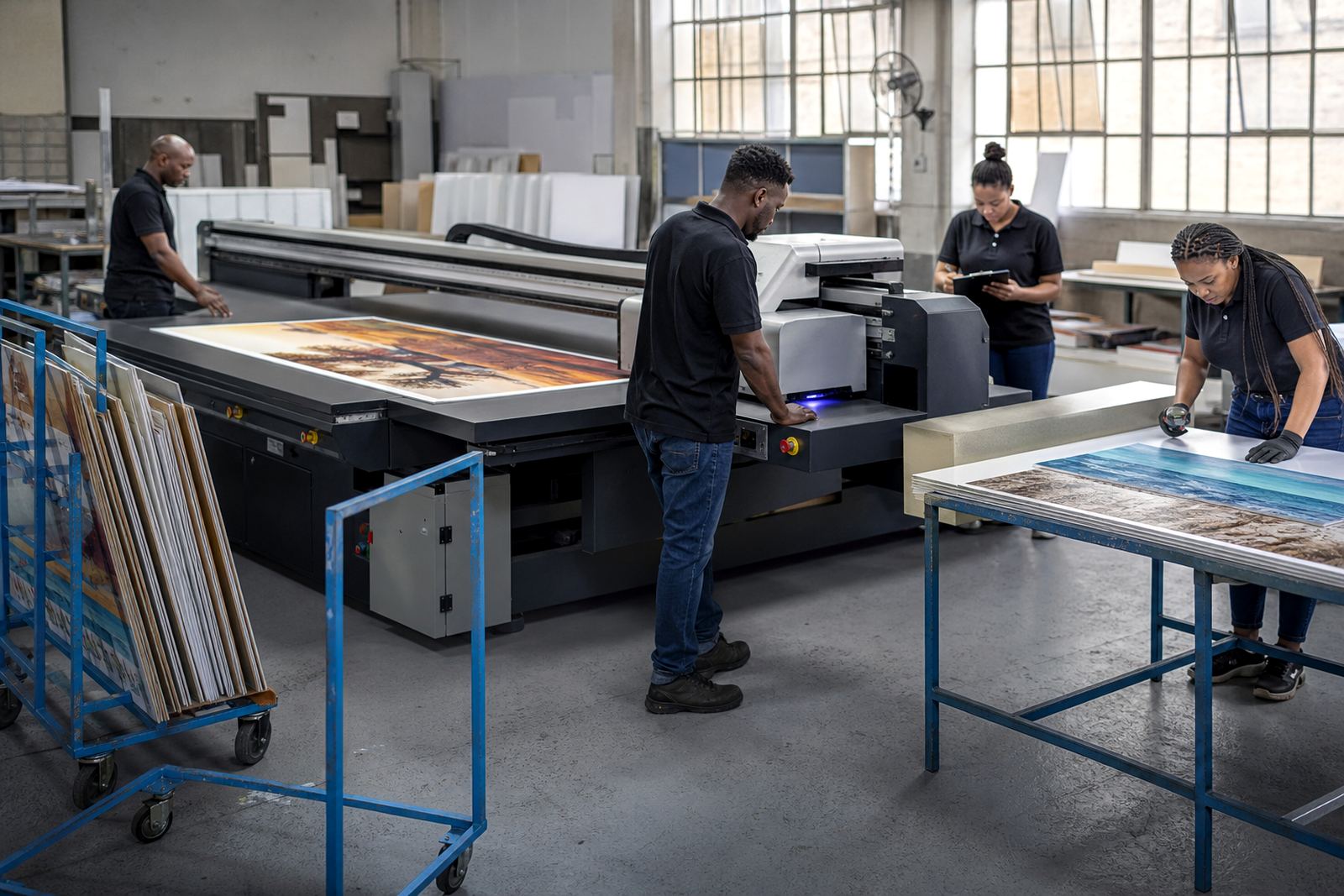
This type of printer suits display production teams, event organisers, sign shops and internal marketing departments that handle a mix of one-off boards and repeat work. It is especially useful for items that need a clean front face and a consistent result across different materials. In Gauteng, KZN and the Cape, it is often used for venue branding, trade show signage, retail campaign boards and temporary outdoor displays.
- Foam board signs for conference entrances and wayfinding
- Rigid directional boards for events and exhibitions
- Brand walls, sponsor panels and stage backdrops
- Promotional display boards for retail launches
- Short-run production where each board may have different artwork
It also makes sense where a print team needs local support, because event schedules do not leave much room for delays. If a board is damaged during setup, replacement work has to move quickly and the workflow must be simple enough for more than one operator to handle. A good setup saves time and reduces reprints, which matters when the venue is already live.
Sizes, Configuration Choices And Print Handling
When you are ordering an event signage printer, the bed size and the type of work you plan to run should guide the choice. Larger beds suit full boards, panel work and mixed production, while smaller setups may be better for compact teams with limited floor space. It is also worth checking whether the printer can handle both rigid media and selected flexible sheets, since some event jobs combine printed panels with wrap elements or temporary graphics.
Look at the following points before you decide:
- Maximum board size and usable print area
- Number of boards that can be loaded for efficient runs
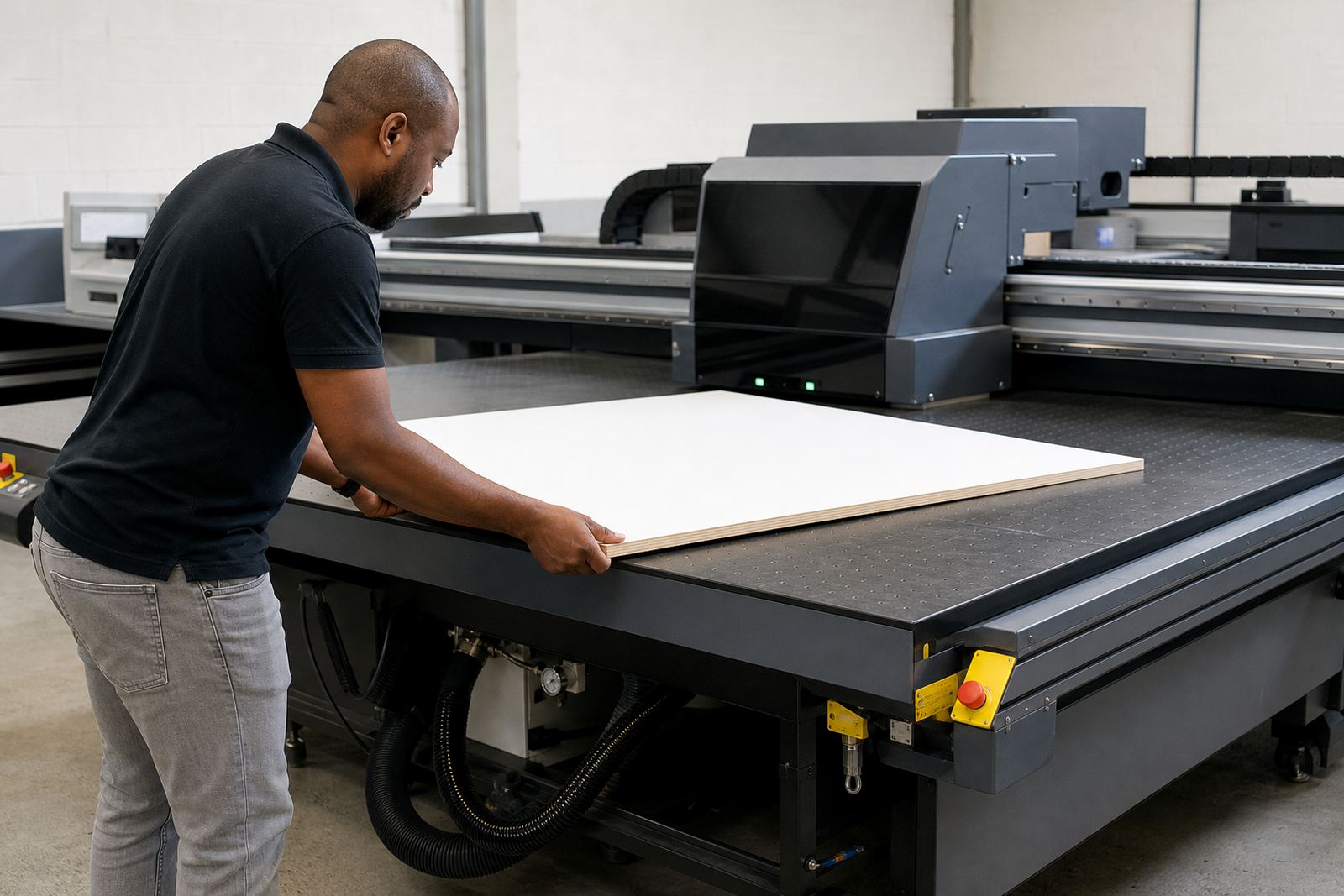
- Handling of heavy or uneven rigid sheets
- White ink use for coloured or clear media
- Print resolution options for close-view work
- Table access, loading space and operator movement around the machine
If your production room is tight, remember to leave room for loading, cleaning and packing out finished boards. A printer can be a good fit on paper, but if the operator cannot move safely around the table it will slow production. That is a common mistake on busy sites in Johannesburg and Pretoria where space is already at a premium.
Installation, Power And Site Readiness
Flatbed UV printers need a proper site plan before installation. The floor should be level and strong enough for the machine and media handling area, with access for delivery and safe positioning inside the production space. Ventilation and dust control matter too, because fine dust can affect print quality and maintenance if the room is not kept clean.
Power planning should be checked early. Most UV systems need stable electrical supply and the site should be prepared for load-shedding conditions, especially where production cannot stop in the middle of a job. A proper installation review should cover the electrical point, cable routing, backup power arrangements if used, and the space needed for operator movement. Some teams also ask about compressed air or gas supply for nearby equipment, but for the printer itself the key point is a reliable, clean power source and a safe working area.
Our Germiston base supports site preparation, installation and handover across South Africa, with practical work in Johannesburg, Pretoria, Durban, Cape Town and Gqeberha. We also assist East Rand and Centurion clients who need a local response without waiting around for a call-out slot.
Ink, Media And Colour Control For Event Work
UV printing uses inks that cure under UV light, which is why the print can be handled soon after it leaves the table. For event signage, the real value is in colour control, adhesion and consistency across different sheets and batches. If a campaign includes white ink, overprint or layered colour, the workflow must be set up carefully so the result matches the artwork intent and the substrate underneath.
Media choice also matters. Not every board takes ink in the same way, and a surface that looks fine on one day may show a problem when the venue is warm or humid. Coastal work in Durban, Gqeberha and Cape Town can expose weak media quickly, so it is worth testing the actual board you plan to use. A small trial run is cheaper than discovering edge lift, mottling or poor cure on event day.
Good colour guidance also helps when a brand needs repeat panels months apart. The printer settings, media profile and artwork checks should stay consistent from job to job, especially for sponsor boards and directional signage where exact colour matching is important.
Care, Servicing And Keeping Production Moving
A flatbed UV printer needs routine care if it is expected to stay productive. Daily cleaning, head checks, safe ink handling and proper shutdown steps help reduce downtime. Preventive maintenance matters even more when the machine is used for short deadline work, because one blocked nozzle or dirty sensor can set a whole job back.
- Keep the table and surrounding area free of dust and board offcuts
- Follow cleaning and start-up checks before each shift
- Store inks and media correctly to avoid contamination
- Schedule routine inspections before peak event periods
- Use trained operators for loading, curing and colour checks
We support breakdown work, remote support, spares coordination and production consulting from Germiston, with service across South Africa. When a team is new to flatbed UV, training is just as important as the machine itself. Operators need to know how to load media, check cure, read the job ticket and spot issues before the board leaves the room.
What To Check Before You Order
Before you place an order, confirm the jobs you need to run most often. Event signage is not all the same, and the right printer for board work may differ from one meant for mixed display production. Think about the largest panel size, the usual substrate thickness, the need for white ink, the pressure on turnaround times and the level of operator experience on site.
It is also sensible to review service access, training needs and spare parts planning. If your team works across multiple venues or branches, make sure the workflow is simple enough for different operators to follow. A clear setup makes it easier to handle urgent reprints, updates to sponsor names and last-minute layout changes without confusion. That kind of planning saves money and keeps the event team calm, which is worth a lot when the venue opens in the morning and the boards still need to go up.
Clients usually reach us through the enquiry form on our contact page for product advice, installation planning and after-sales support. We work with production teams that want practical guidance, not a sales pitch.
Key facts
| Printing method | Flatbed UV direct-to-substrate printing for rigid boards and selected display media |
|---|---|
| Media support | Rigid boards, panels, signage sheets and other suitable flat substrates |
| Ink system | UV-curable ink set with colour, white and layering options depending on configuration |
| Workflow use | Short-run event signage, repeat board production and mixed display jobs |
| Installation needs | Level floor, clean working space, access for loading and stable electrical supply |
| Support available | Installation, training, preventive maintenance, breakdown support and production consulting |