What a Foam Board Printer Does in Day-to-Day Production
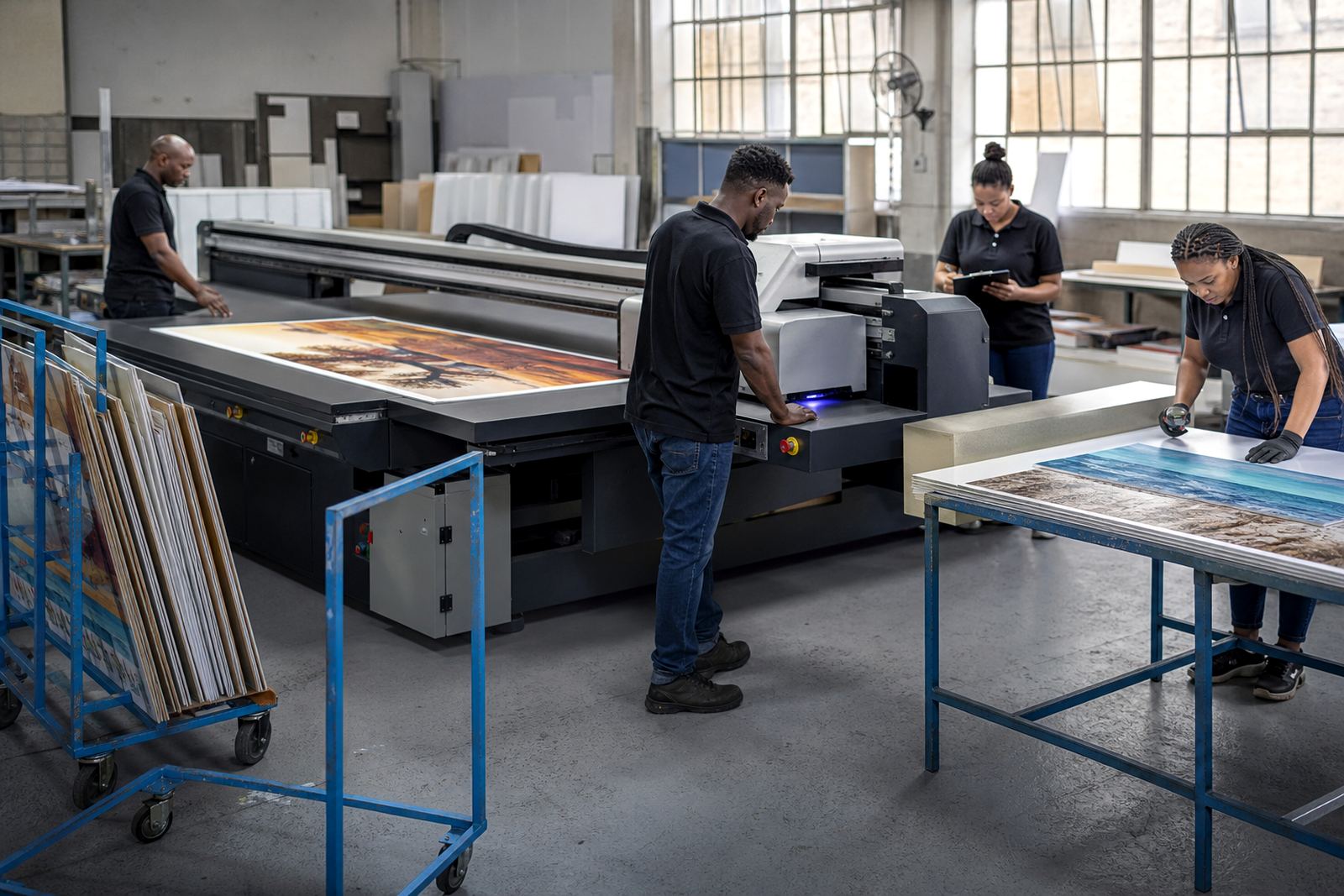
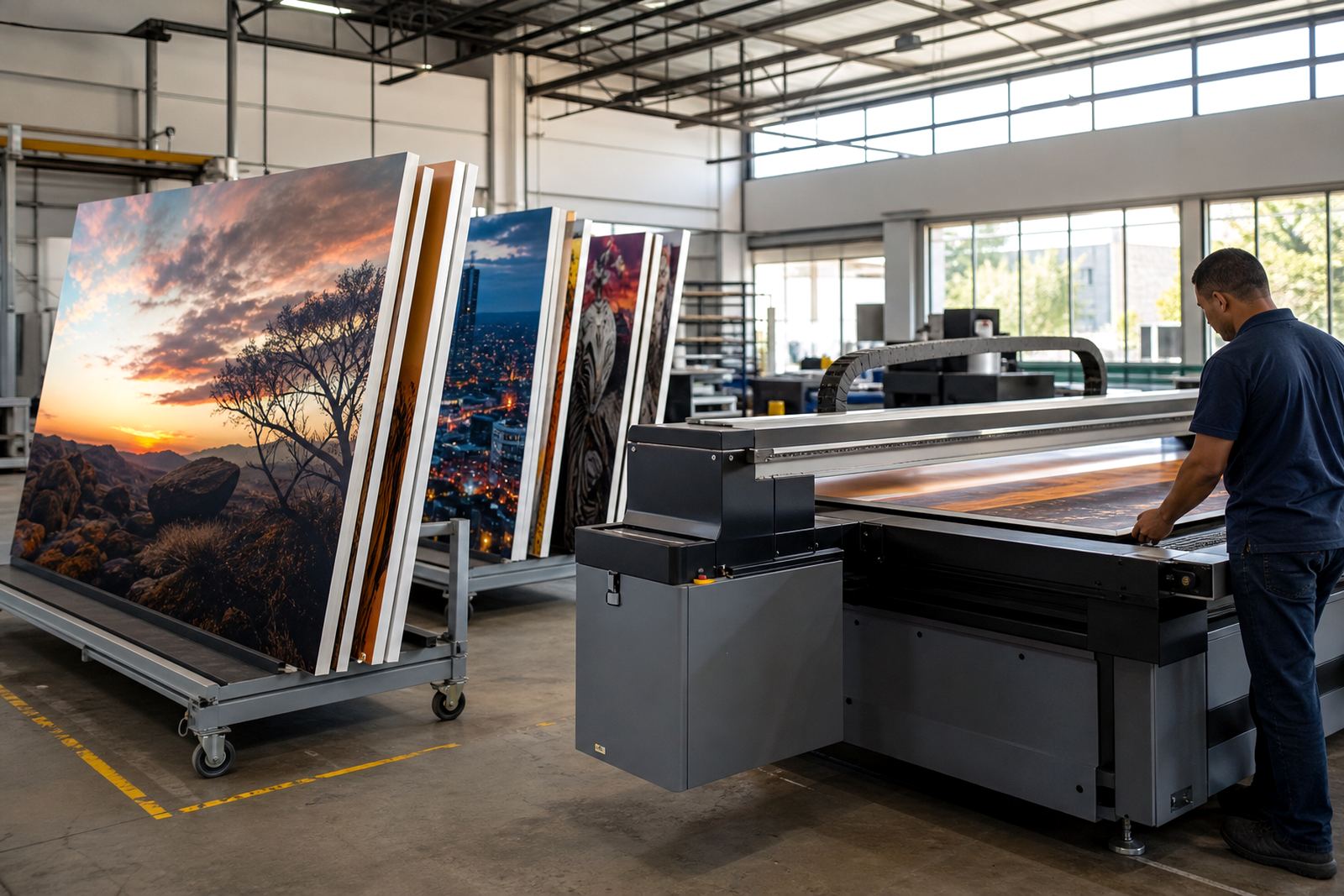
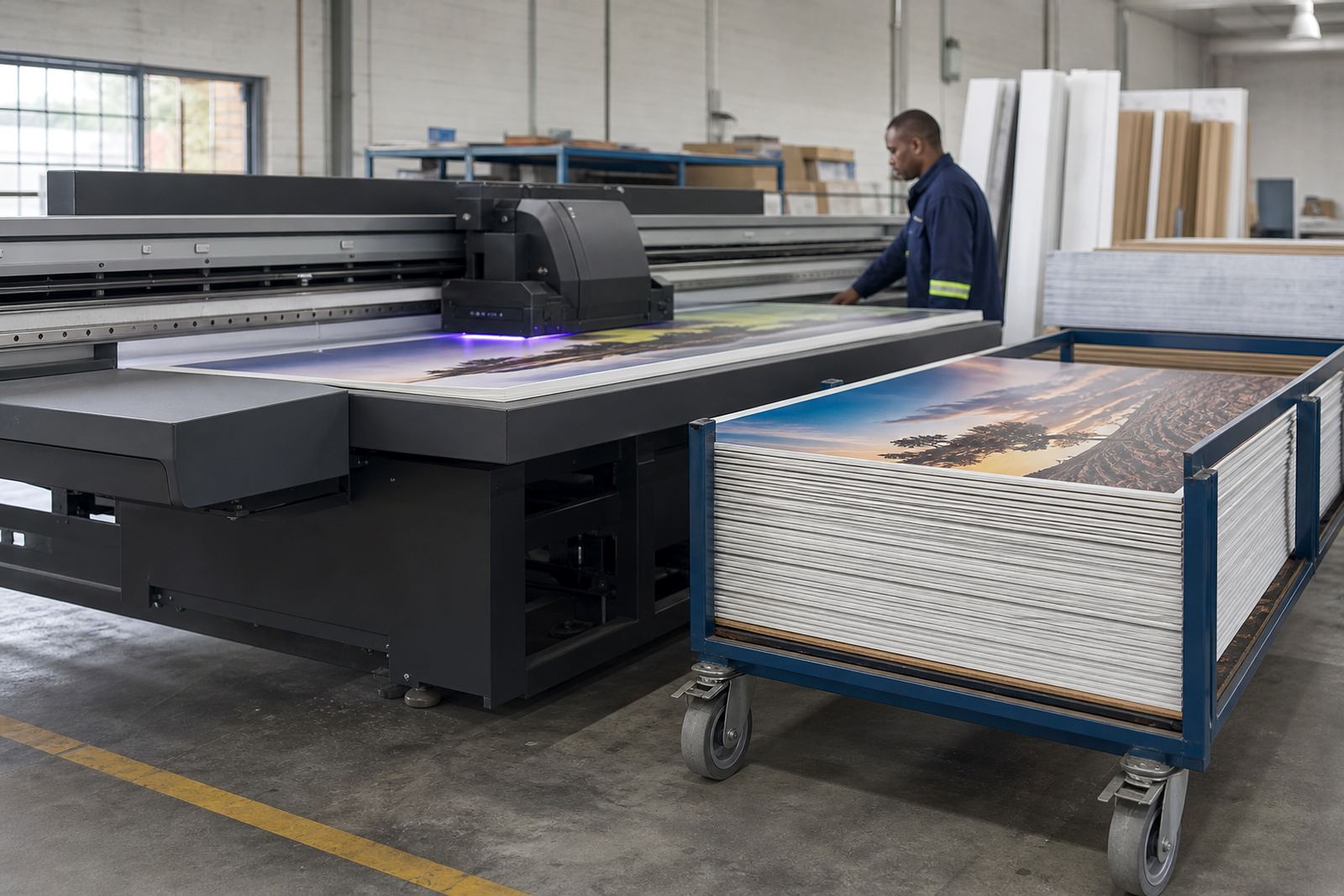
A foam board printer is used to print directly onto rigid sheet material such as foam board, mounted display board and other lightweight sign substrates. In practice, it suits work that needs a flat, tidy surface, strong colour and a quick turnaround, without the extra step of applying printed vinyl to a board. That makes it useful for retail specials, exhibition panels, presentation boards, menu boards and temporary indoor signage.
UV flatbed printing cures the ink as it lands on the board, so the print is ready for handling much sooner than many solvent or water-based workflows. It also means you can produce a wide range of jobs in one run, from single boards to repeat orders for branches in Johannesburg, Pretoria, Durban, Cape Town and Gqeberha. For shops and print rooms that handle daily sign work, that speed helps keep the queue moving.
For foam board, the key is control. The printhead height, board flatness and ink laydown all need to be managed properly. If the board is warped or the vacuum hold is uneven, you can see banding, head strikes or slight image drift. That is why site setup, operator training and basic workflow planning matter just as much as the machine itself.
Board Sizes, Print Area and Common Options
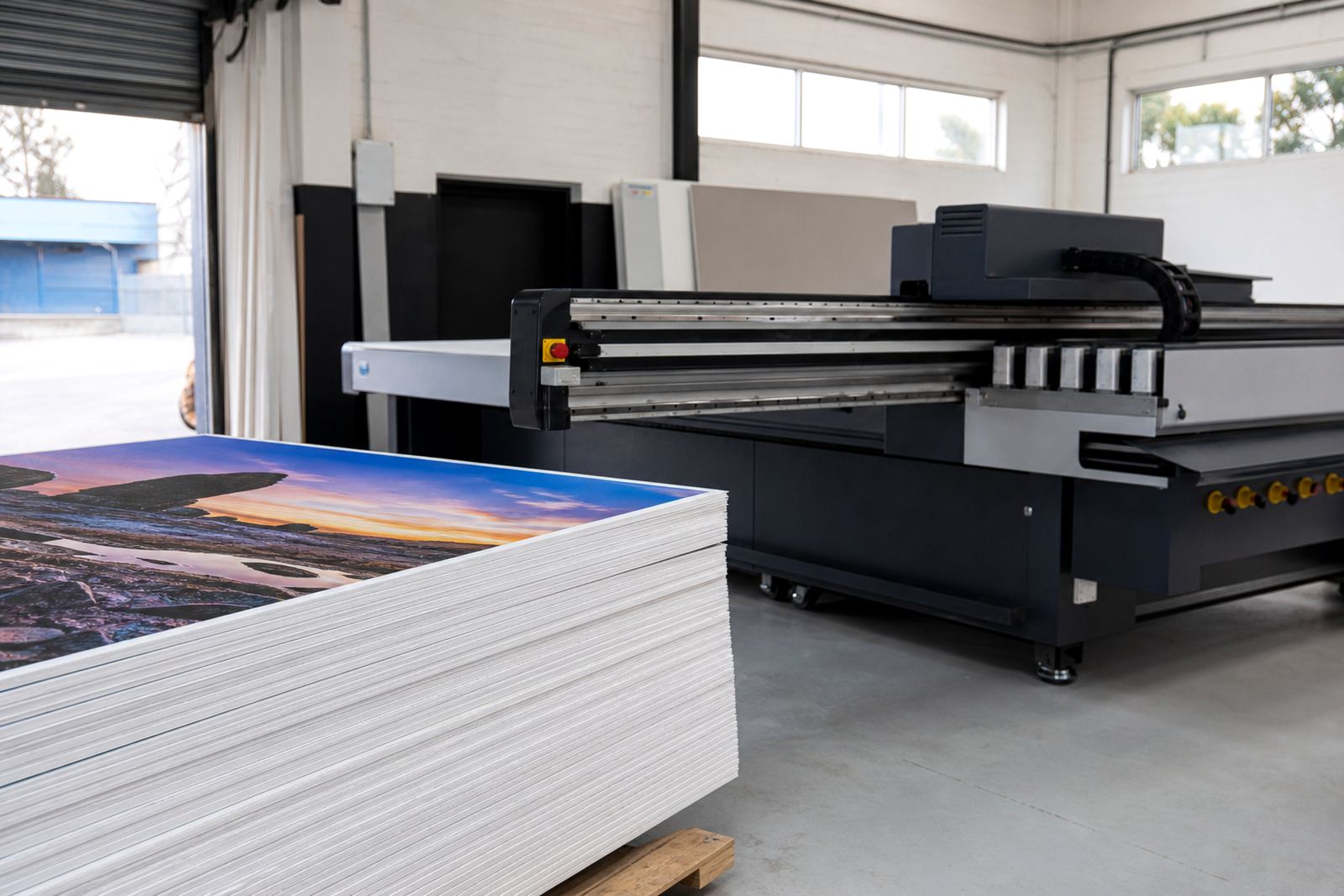
Foam board work is usually produced on a flatbed UV printer with a rigid table, vacuum hold-down and a carriage that can handle different board thicknesses. Depending on the format you choose, the machine can support small point-of-sale pieces, full sheet boards and larger display panels for indoor campaigns. If you are pricing a unit, the first thing to check is the maximum board size you want to load, not only the print image size.
Options vary by setup, but a practical buying checklist should cover the following:
- Vacuum table size and how well it holds lightweight board stock
- Maximum media thickness for foam board, mounted board and similar rigid sheets
- Number of ink channels and whether you need white ink or varnish
- Operator controls, including job setting, nozzle checks and maintenance access
- Ink curing method and the space needed around the printer for safe loading
Some businesses only need a printer for A1 and A0 boards, while others want a wider table for recurring retail panels and exhibition graphics. If you work from Germiston and service clients across Gauteng, it is worth planning for the board sizes most commonly used by your customers rather than buying for the rare oversized job.
Best Use Cases for Indoor Displays and Point-of-Sale Work
Foam board is mainly used indoors, so this product suits controlled environments where light weight, a smooth appearance and decent colour consistency are more important than weatherproofing. It is a sensible choice for shopping centres, showrooms, office interiors, trade counters, exhibitions and events. If you need signs that are easy to carry, quick to change and neat on a wall or easel, foam board is often a good fit.
It also works well where the sign changes often. Retailers use it for seasonal promotions, price boards, new product launches and branded window displays inside the store. Event teams use it for registration boards, direction signs and stage-side messages. The board itself is affordable relative to many other rigid media, which helps when you need to produce several versions without pushing the job cost too high.
That said, foam board is not the answer for every project. It is not suited to wet areas, direct outdoor exposure or heavy handling unless it is protected in another way. If a customer asks for a board that will sit in sun, rain or coastal humidity for a long period, a different rigid medium may be safer. It helps to ask where the board will hang, how long it must last and whether it will be moved often.
Installation, Power and Workshop Requirements
Flatbed UV printers need proper installation if you want reliable output from the start. The machine should sit on a level floor with enough space for loading boards, cleaning, service access and safe movement around the table. In a busy print room, this also means planning where boards will be stored, where curing and finishing will happen, and how finished jobs will leave the area without damage.
Power requirements depend on the printer configuration and the site layout, so the safest approach is to confirm the electrical supply before purchase. Many businesses in South Africa also need to think about load-shedding protection, clean power and whether a backup plan is in place for production hours. It is not unusual for an unstable supply to cause print interruptions or damage to sensitive components if the setup is poor.
There is no gas requirement for standard flatbed UV board printing, but you may still need extraction, ventilation and a sensible room temperature for comfort and print consistency. On coastal sites, humidity control matters too because board stock can absorb moisture and lift slightly at the edges. A simple site check before installation can save a lot of trouble later.
Care, Servicing and Print Quality Control
A foam board printer can give good day-to-day results, but only if it is cleaned and checked properly. UV ink systems need regular nozzle checks, head cleaning and attention to the ink delivery path. If dust collects on the board surface, the print can pick up marks or small defects. If the vacuum table is dirty, the board may move during the run and cause a poor finish.
Preventive maintenance should be part of the weekly routine, not something done only after a fault. We help with service plans, breakdown support, remote support and ink handling help, as well as operator guidance for the common issues that slow production. In many cases, a small adjustment to the workflow or a better board prep routine is enough to improve consistency.
- Store boards flat and dry before printing
- Check for dust, curls and edge lift before loading
- Keep the work area clear of loose paper, trim and overspray residue
- Record common settings for repeat jobs so operators do not guess
- Use scheduled cleaning to reduce the risk of blocked nozzles
What to Check Before You Place an Order
Before ordering a foam board printer, work through the jobs you expect to produce in the first year. Ask what board sizes you use most, whether you need white ink for coloured or clear materials, and how many prints you must complete in a normal shift. It also helps to confirm who will install the unit, who will train the operators and who will handle service when something goes wrong.
Other points worth checking include spare parts coordination, the time needed for site preparation, and whether the machine suits your power supply and workshop space. If your team prints for multiple branches or regions, workflow planning becomes important because boards, artwork approval and delivery need a clear path. We support clients across Germiston, Johannesburg, Pretoria, Durban, Cape Town, Gqeberha, the East Rand and Centurion from our Gauteng base.
Clients reach us through the enquiry form on our contact page, and our team can assist with printer installation, operator training, colour guidance, media testing and production consulting. If you are comparing options for indoor display boards and point-of-sale work, the right printer should fit the board type, the daily workload and the way your shop actually runs, not just the brochure description.
Key facts
| Print method | Flatbed UV printing for rigid boards and signage |
|---|---|
| Suitable media | Foam board, mounted board and other flat rigid display substrates |
| Typical use | Indoor display boards, point-of-sale signs, exhibition panels and retail graphics |
| Ink system | UV-curable inks, with options that may include process colour and white |
| Installation needs | Level floor, working space around the table, power planning and site preparation |
| Service support | Installation, training, preventive maintenance, breakdown support and remote assistance |