
Built for regular board work, not over sized setups
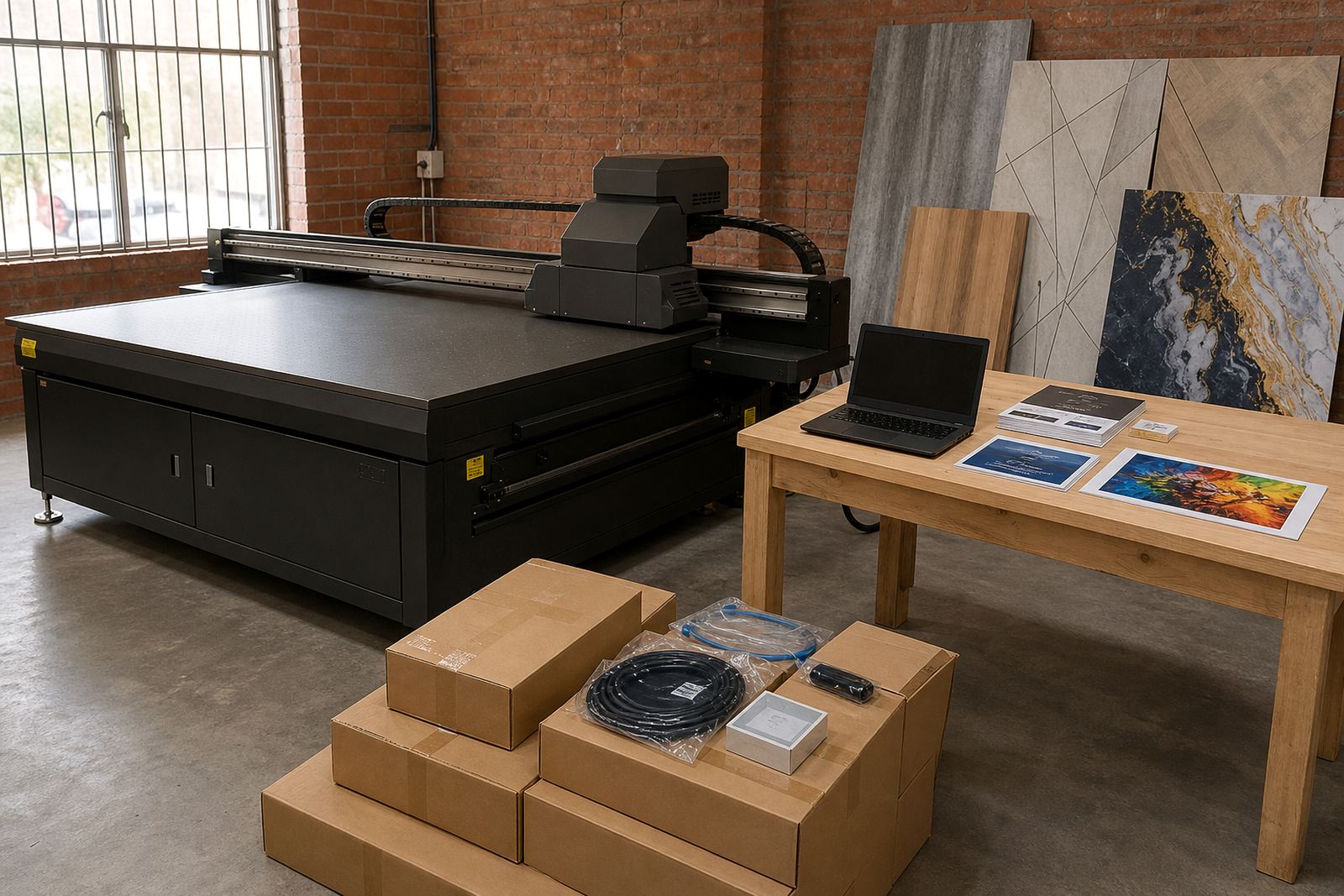
The mid size flatbed sits between compact entry level units and full scale production machines. It is designed for businesses that print on boards every day, but do not need the floor space, power draw or staffing level of a very large format line. In practical terms, it gives you room to handle common signage jobs, point of sale pieces, shop fitting panels and short run display work with less fuss.
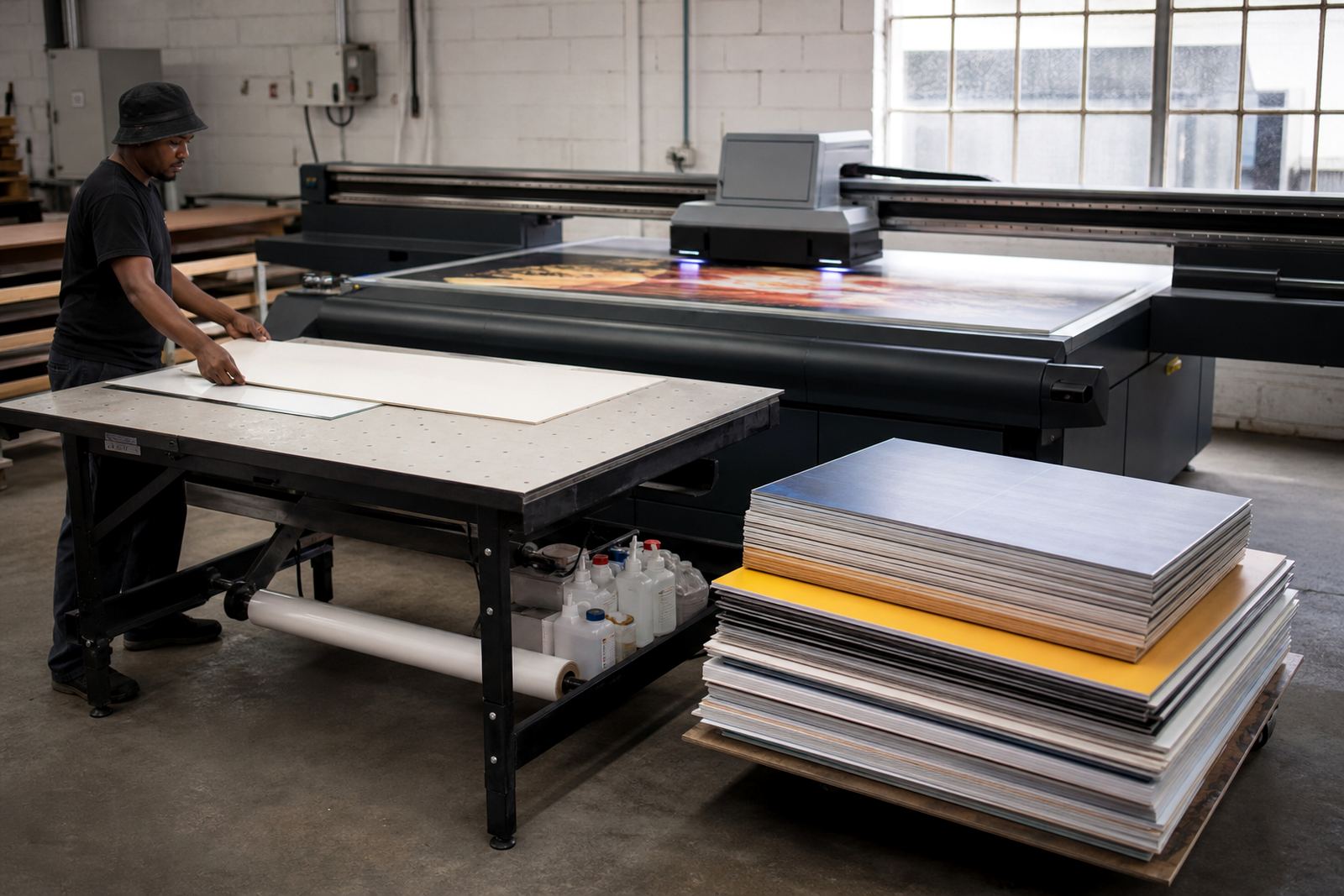
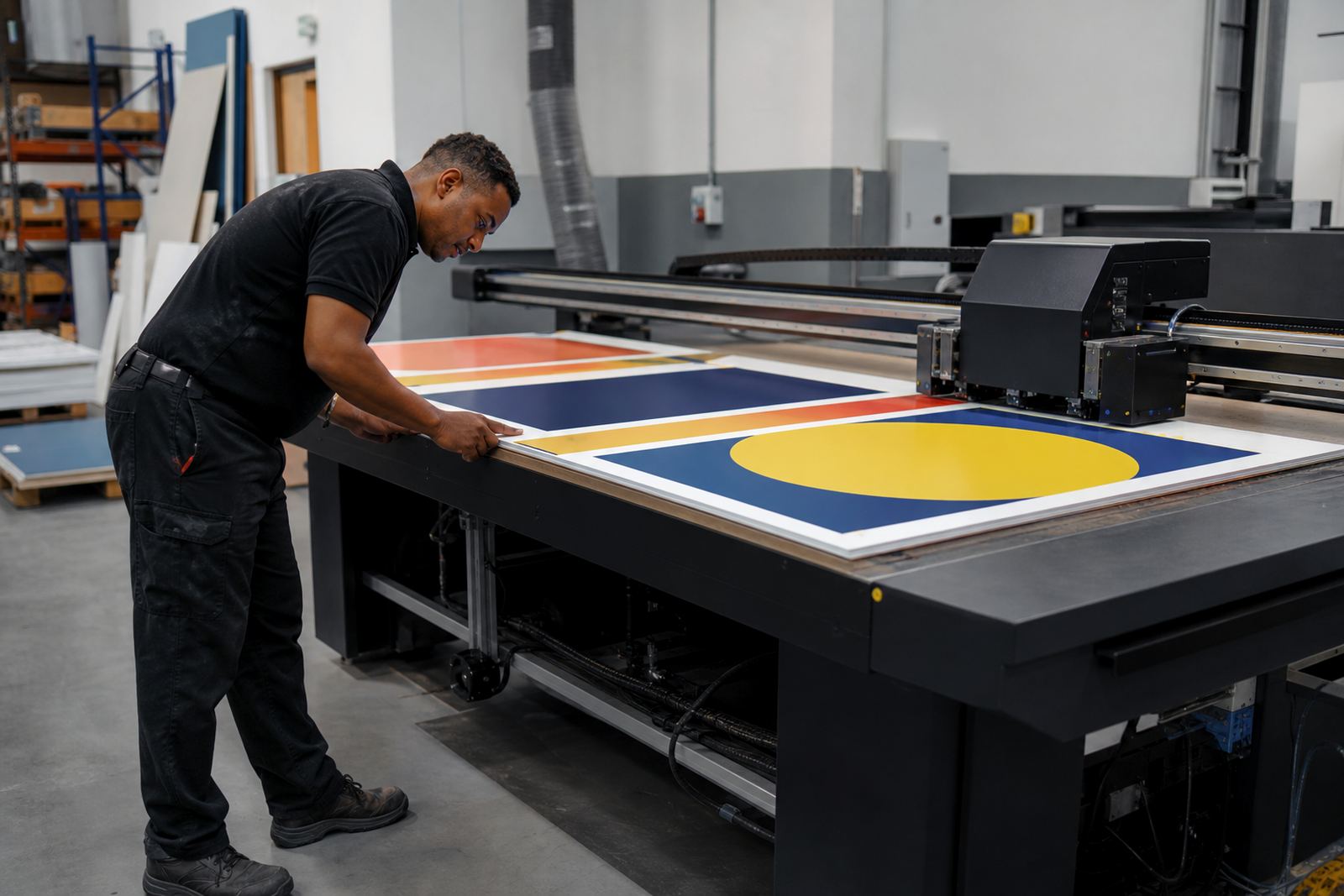
Flatbed UV printing cures ink directly onto the surface of the material using UV light, which makes it suitable for rigid boards and many sign substrates. The finish is fast to handle, and with the right workflow you can move jobs from print to cutting or fitting without long waiting times. That matters when you are working against a same day deadline or sorting a municipal noticeboard job that must go out cleanly and on time.
- Best for businesses that need balanced board handling
- Suitable for steady daily output rather than very high volume mass production
- Works well in sign shops, display production and fabrication environments
Typical sizes, bed options and what they handle
Mid size flatbed units are usually chosen for their practical working area and manageable footprint. The exact bed size depends on the configuration, but the format is aimed at boards that are common in signage and display work, including rigid sheets used for indoor and outdoor applications. Depending on the machine setup, you can also choose options for white ink, varnish or layered print work where the job calls for added depth or a special finish.
When you are comparing options, look at the usable print area, the type of vacuum hold-down, head carriage clearance and how easily the bed can take thick boards. If you often print mixed jobs, check whether the table can handle different material thicknesses without slowing the workflow too much. This is especially useful for shops in Johannesburg, Pretoria or Durban where board stock may vary from one client to the next.
- Rigid boards commonly used for signage and display
- Options may include white ink, spot varnish and layered imaging
- Check the working area against your common board sizes before you order
Where a mid size flatbed makes sense in South Africa
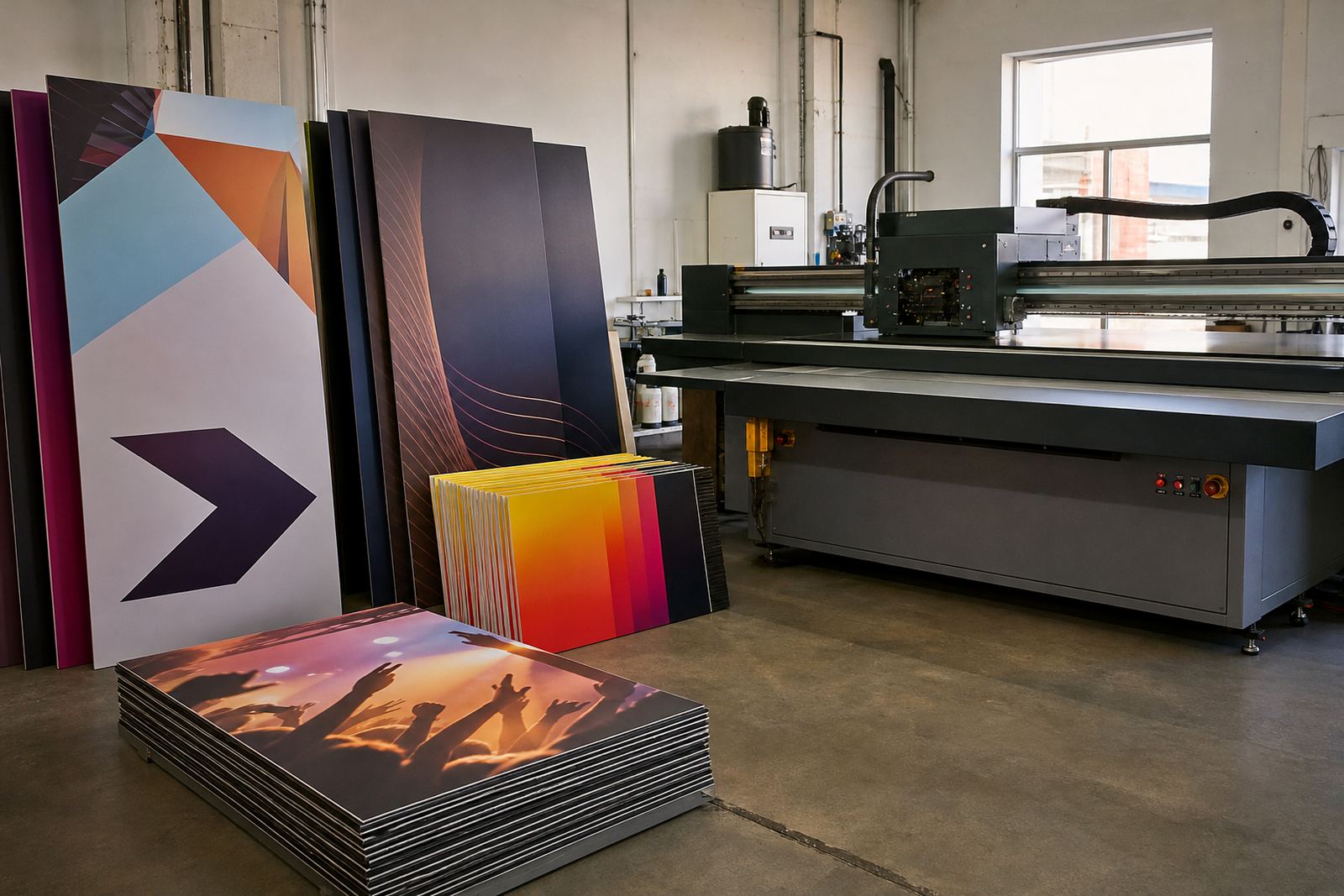
This format suits businesses that do retail displays, internal signage, promotional boards, exhibition pieces and short run visual communication. It also works well for firms that need a dependable printer for recurring jobs rather than occasional use. In coastal areas like Cape Town, Durban and Gqeberha, a controlled print workflow can help when humidity affects certain media and storage conditions. In Gauteng, many shops like the mid size format because it fits into a production space without forcing a full layout change.
For businesses serving shopping centres, contractors, event teams or municipal projects, the mid size flatbed can cover a wide mix of requirements. It is a good fit if you want to produce practical signage with consistent colour and enough speed to keep the queue moving. Not every job needs a very large machine, and not every business wants one taking up the whole room.
- Retail displays and in store graphics
- Event boards and exhibition panels
- Directional signage, safety boards and branded rigid media
Installation, power and workshop preparation
Installation starts with site preparation, access planning and checking that the workshop can support the machine properly. The floor should be level, the room should allow safe handling of boards, and you need enough space around the unit for loading, cleaning and maintenance. We also look at airflow, dust control and the route boards will take through the room so the operator is not forced into awkward movements.
Power requirements depend on the configuration and should be confirmed before delivery. Some setups may also require compressed air or other support equipment depending on the workflow, so it is worth checking the full list early. In South Africa, load-shedding planning matters too. A good installation should consider power protection, safe shutdowns and how to protect the printer and work in progress when electricity is unstable. The last thing you want is a board half printed when the supply drops.
- Check floor space, access doors and loading space before installation
- Confirm power requirements and any air supply needs in advance
- Plan for load-shedding, surge protection and safe shutdown procedures
Care, servicing and day to day handling
Flatbed UV printers need routine care if you want clean output and less downtime. That includes proper ink handling, regular checks on print heads and keeping the work area free from dust and board debris. Media testing is useful when you are trying a new substrate, because not every rigid board behaves the same way under UV ink and curing. Some materials need a different setup, and it is better to find that out on a sample than on a full production run.
Preventive maintenance is the best way to avoid breakdowns. A basic care plan should cover cleaning routines, nozzle checks, curing review, software workflow checks and storage guidance for inks and media. Coastal humidity can affect boards and storage, while dust in workshop areas can lead to avoidable print issues. With regular servicing, the machine stays more predictable and the operator spends less time correcting errors. A small issue left alone can become a costly stoppage.
- Keep inks, boards and cleaning materials stored properly
- Use preventive maintenance rather than waiting for faults
- Test new media before committing to production quantities
What to confirm before placing an order
Before ordering a mid size flatbed, check what you actually print most often and what your finishing process looks like after the print stage. The right setup depends on board thickness, sheet size, colour expectations, output speed and whether you need special effects like white underprint or layered work. It also helps to think about who will run the machine, because training needs differ between a new operator and an experienced production team.
You should also confirm the service plan, spare parts access and whether remote support is available when a workflow issue comes up. If your business operates across Johannesburg, Pretoria, Durban, Cape Town or Gqeberha, local support coverage matters because downtime is not just an inconvenience, it affects delivery to the client. Ask for clear guidance on media testing, colour management and what the machine needs for stable day to day use. That is the part many people miss at first.
- Confirm your common board sizes, thickness and daily output needs
- Ask about training, service coverage and spare parts coordination
- Check the full workflow from file prep to final cure and handling
Key facts
| Format | Mid size flatbed UV printer for rigid boards and signage |
|---|---|
| Print media | Rigid boards, display panels and selected sign substrates |
| Ink system | UV curing ink with options that may include white ink and varnish |
| Workflow | File setup, board loading, printing, curing and post print handling |
| Support | Installation, operator training, preventive maintenance and breakdown support |
| Service area | Germiston base with support across South Africa including Johannesburg, Pretoria, Durban, Cape Town and Gqeberha |