Built for rigid boards that must carry a message clearly
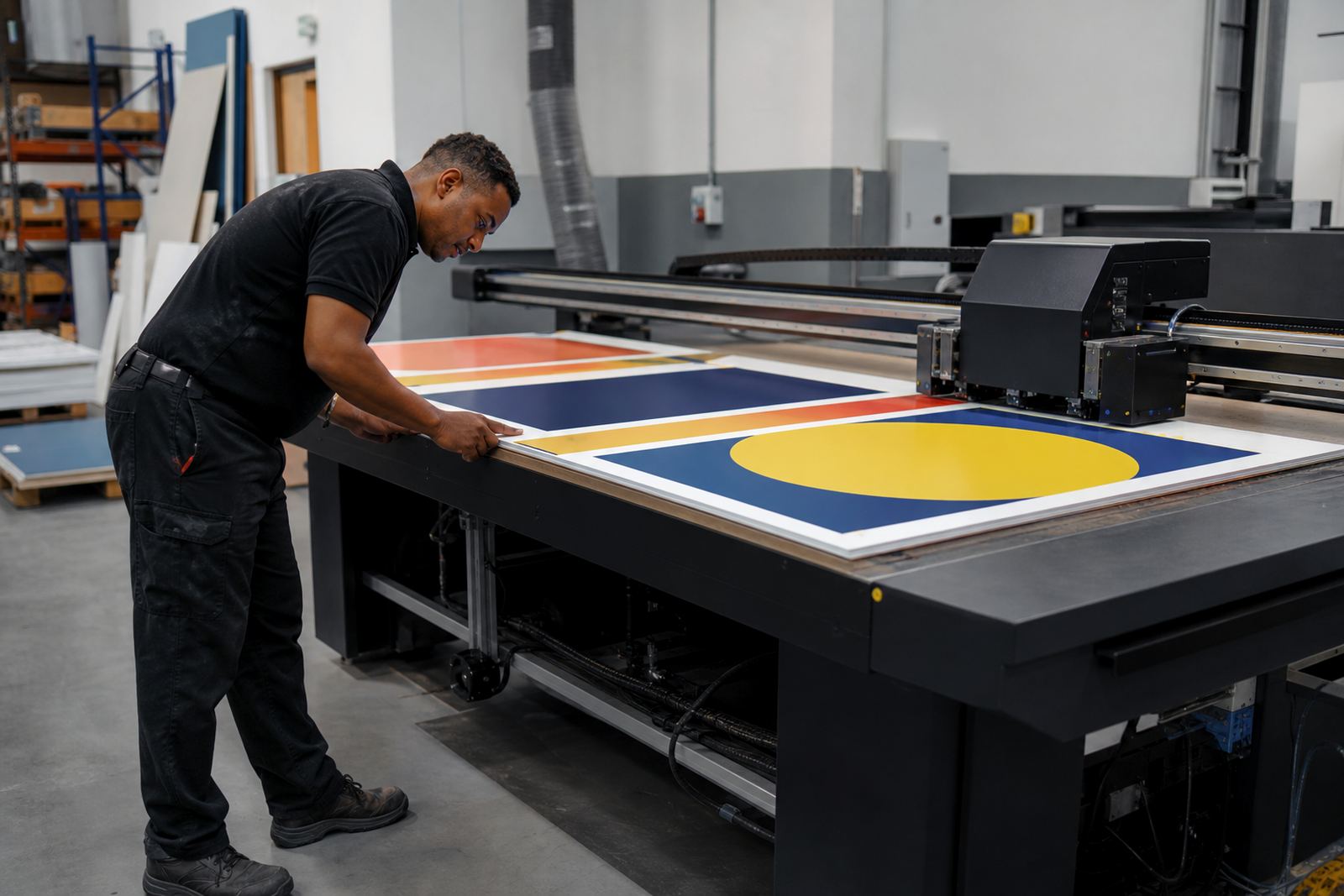
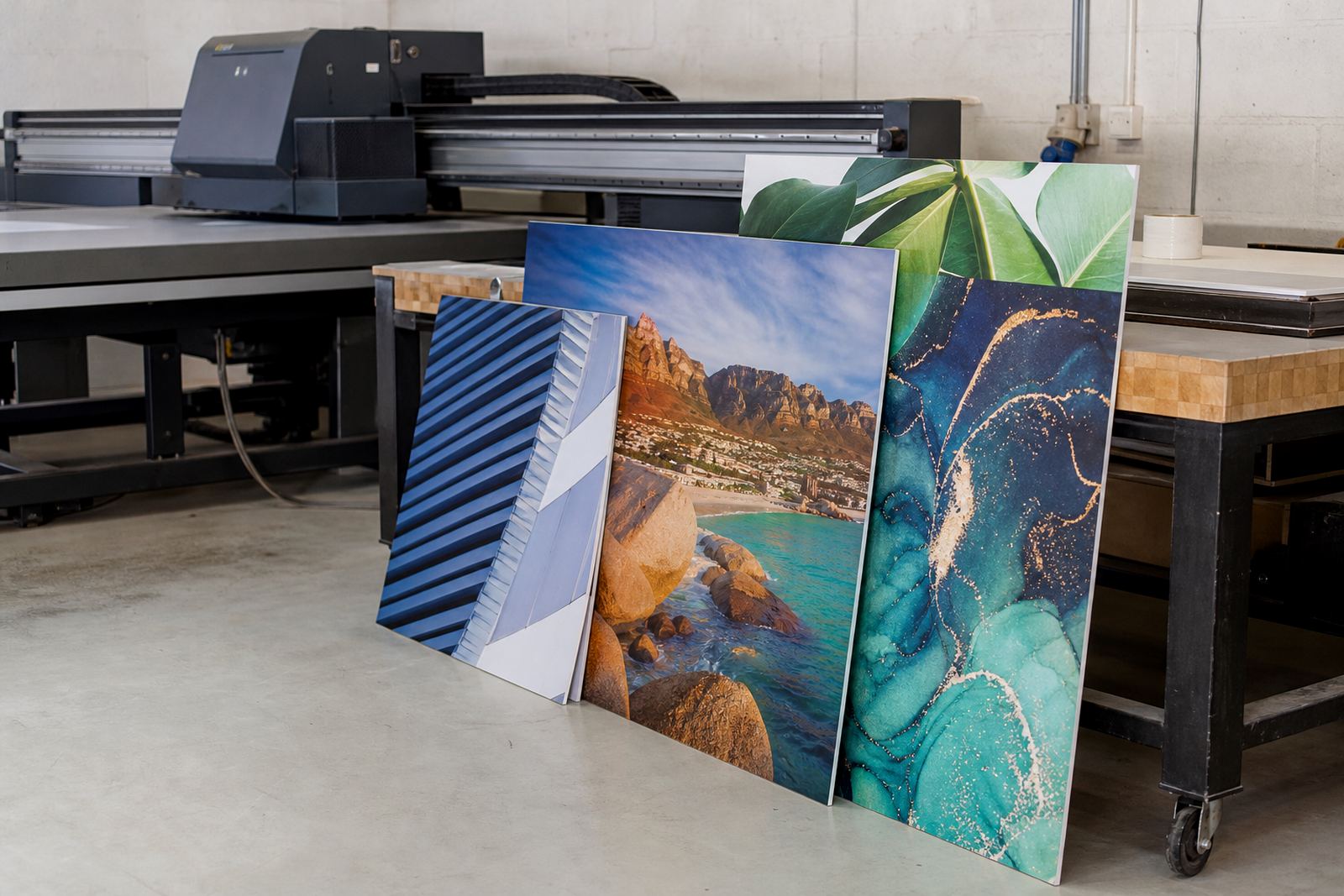
A promotional panel printer applies UV-curable ink directly onto rigid sheet stock, which means the print is ready to handle soon after it leaves the bed. It suits promotional boards where colour, legibility and clean edges matter, including campaign signage, retail launches, exhibition panels and directional boards for events. The process is especially useful when you need controlled output on foam board, PVC board, corrugated plastic, acrylic, sintra, composite panels and other flat materials.
For South African work, that matters on jobs that move from Germiston to Sandton, Pretoria, Durban, Cape Town or Gqeberha with little time to spare. A good workflow will manage artwork prep, board alignment and curing so the finished panel stays presentable in transport, on site and through the run of a campaign. In humid coastal areas or dusty inland sites, the right ink and handling make a clear difference.
- Direct printing onto flat, rigid sheets
- Suitable for short runs and repeat campaign work
- Colour is applied in a controlled layer for cleaner detail
- Works well for indoor and many sheltered outdoor uses
Typical sizes, print options and finishing choices
Promotional panel printers are chosen for the board sizes and production volume they can handle, not for one single application. Depending on the setup, you can print small point-of-sale panels, medium display boards or larger event backboards. Many users also want white ink for darker media, gloss or matte finishes, and the ability to print layered graphics for stronger visual impact. If the job calls for braille, spot varnish or raised effects, these should be checked before ordering because not every workflow will support them.
When comparing options, look at the bed size, media thickness range and whether the system can take heavy rigid sheets without flexing. A printer that is easy to load and register will save time on repeated runs, especially where staff changes between shifts or production teams handle urgent reprints. It is also worth checking how the machine manages smaller sheets, offcuts and nested layouts so material waste stays under control.
- Common board sizes include A1, A0 and custom event panels
- Media thickness should match the board type used most often
- White ink support helps on clear, dark or coloured substrates
- Registration and vacuum hold-down matter for neat alignment
Where promotional panel printing works best
This type of printer is a strong fit for signage businesses, retail suppliers, exhibition contractors, marketing teams and print operations that receive regular board orders. It is often used for branded backdrops, launch signs, shelf panels, wayfinding, menu boards, sponsor boards and exhibition graphics. Where a client wants a neat promotional item that can be fixed to a wall, stand or frame, flatbed UV printing gives a practical result without needing separate vinyl lamination for every job.
It is also useful where a customer wants quick proofing and fast repeats. Because the image is printed directly onto the panel, turnaround can be faster than layered production methods, provided the artwork is ready and the substrate is flat and clean. For branches working across Johannesburg, Pretoria and the East Rand, that can help when site delivery and install are both on tight deadlines.
- Retail promotions and seasonal campaign boards
- Exhibitions, launches and press backdrops
- Directional signage and temporary site boards
- Brand panels for malls, offices and event venues
Installation, power and site preparation matters
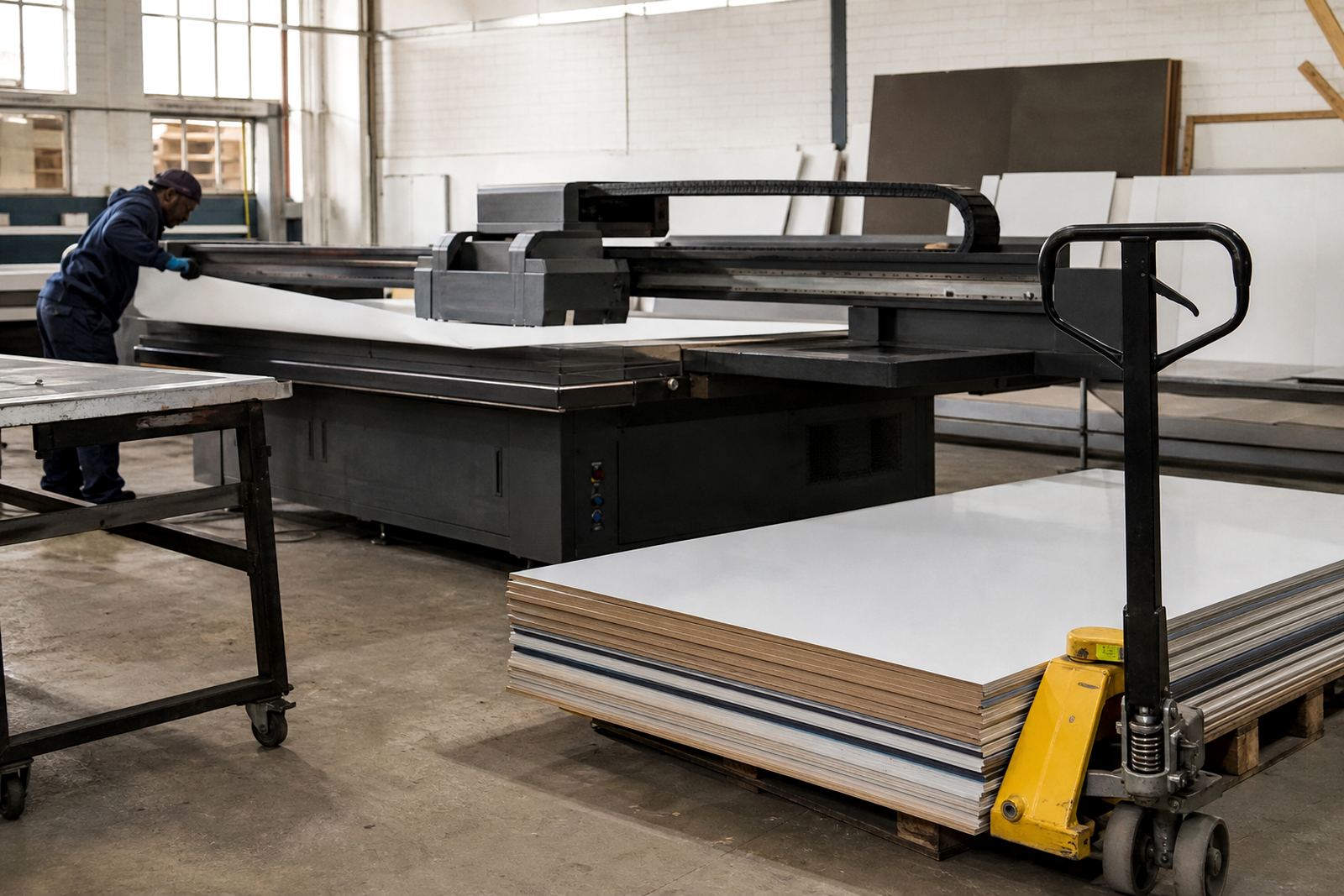
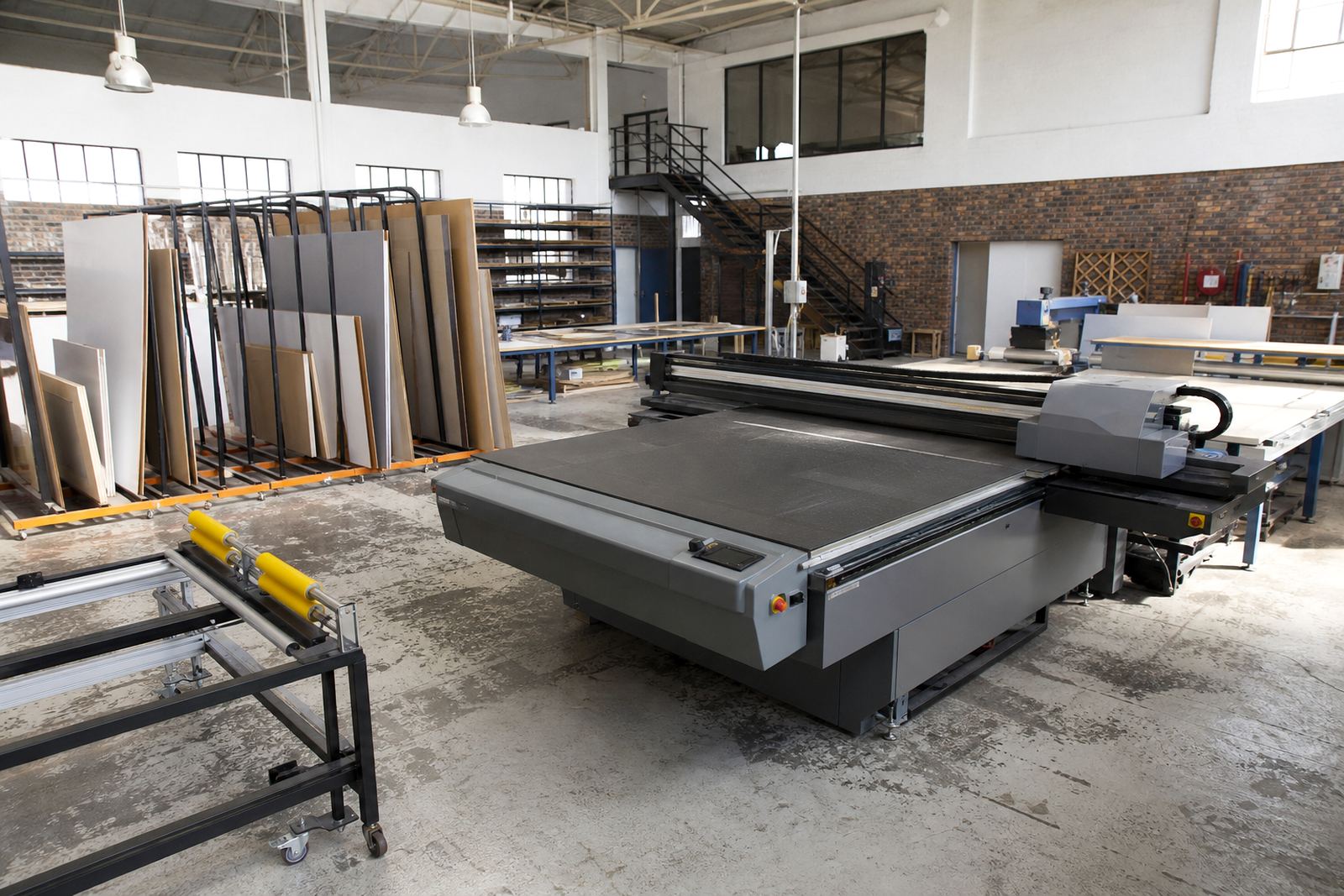
Proper installation starts with a level floor, enough access for sheet handling and a room that can stay clean and stable. UV printers do not need gas, but they do need reliable electrical supply, proper earthing and enough ventilation for the production space. In areas affected by load-shedding, many clients also plan for backup power or production scheduling so print runs are not interrupted mid job. The machine should be placed where boards can move in and out without catching on walls, doors or traffic paths.
Site preparation normally includes checking the floor load, cable routing, environmental conditions and the space needed for operators to load large sheets safely. Airflow, dust control and temperature stability all help with print consistency. If the room is too hot, too cold, or full of fine dust from cutting and routing, the finish can suffer. That is why installation support and site checks are often just as important as the printer itself.
- Level floor and clear access for rigid sheet handling
- Stable electrical supply with suitable earthing
- No gas supply required for normal UV printing use
- Ventilation, dust control and practical loading space needed
Ink, media and workflow choices that keep jobs moving
Flatbed UV printing uses inks that cure under UV light and bond well to many rigid media types. For promotional panels, the main concern is whether the ink matches the substrate and the intended use. Some boards print well straight away, while others need testing for adhesion, colour result and scuff resistance. If a job will be handled often, moved between venues or exposed to damp conditions, the media choice and curing behaviour should be checked before the full run starts.
A sensible workflow starts with artwork checks, media testing and a clear production path from file to finished panel. Colour guidance also matters because different board surfaces absorb and reflect light differently. A shop that tests a small sample before a large order is less likely to face surprises on a campaign rollout, especially when the client is expecting a consistent look across multiple sites.
- Check ink adhesion on each media type before full production
- Allow for curing, handling time and finishing steps
- Use a repeatable colour process for multi site campaigns
- Keep boards clean, flat and dry before printing
Care, service and what to confirm before you order
A promotional panel printer needs routine care to stay consistent. That usually means regular cleaning, proper ink handling, basic head checks, scheduled maintenance and attention to dust and temperature around the machine. If the printer is used daily, preventive servicing is worth the effort because downtime can hold up campaigns and tie up board stock. In coastal areas, storage and servicing also help manage humidity related issues, while inland sites often need more attention to dust and power interruptions.
Before ordering, check the maximum sheet size, media thickness, ink set, available colour channels, software workflow, service support and spare parts process. Ask how the machine is installed, what training is included, and whether operator support is available after handover. It is also sensible to confirm whether the job mix includes short-run panels, repeated campaign boards, or mixed media work so the selected setup matches the daily workload and not just the biggest job on the quote.
- Confirm sheet size and thickness range before placing the order
- Ask about training, maintenance and breakdown support
- Check whether colour guidance and media testing are included
- Make sure spares coordination is practical for your location
Key facts
| Print method | Flatbed UV direct-to-board printing |
|---|---|
| Media types | Foam board, PVC board, acrylic, corrugated plastic, composite panels and similar rigid sheets |
| Ink type | UV-curable ink set with optional white ink depending on configuration |
| Job use | Promotional boards, event displays, retail signage and campaign panels |
| Support | Installation, operator training, preventive maintenance and breakdown support |
| Service areas | Germiston, Johannesburg, Pretoria, Durban, Cape Town, Gqeberha and surrounding areas |