Clear boards for active sites, not just a name on a fence
Construction sites, fit-out projects and temporary works all need signs that are easy to read from the gate, the street and the loading bay. A good site board carries the project name, contractor details, safety notices, access rules and emergency information in a layout people can follow quickly. On busy sites in Johannesburg, Pretoria, Durban and Cape Town, that can save time at the entrance and reduce confusion with suppliers, inspectors and security teams.
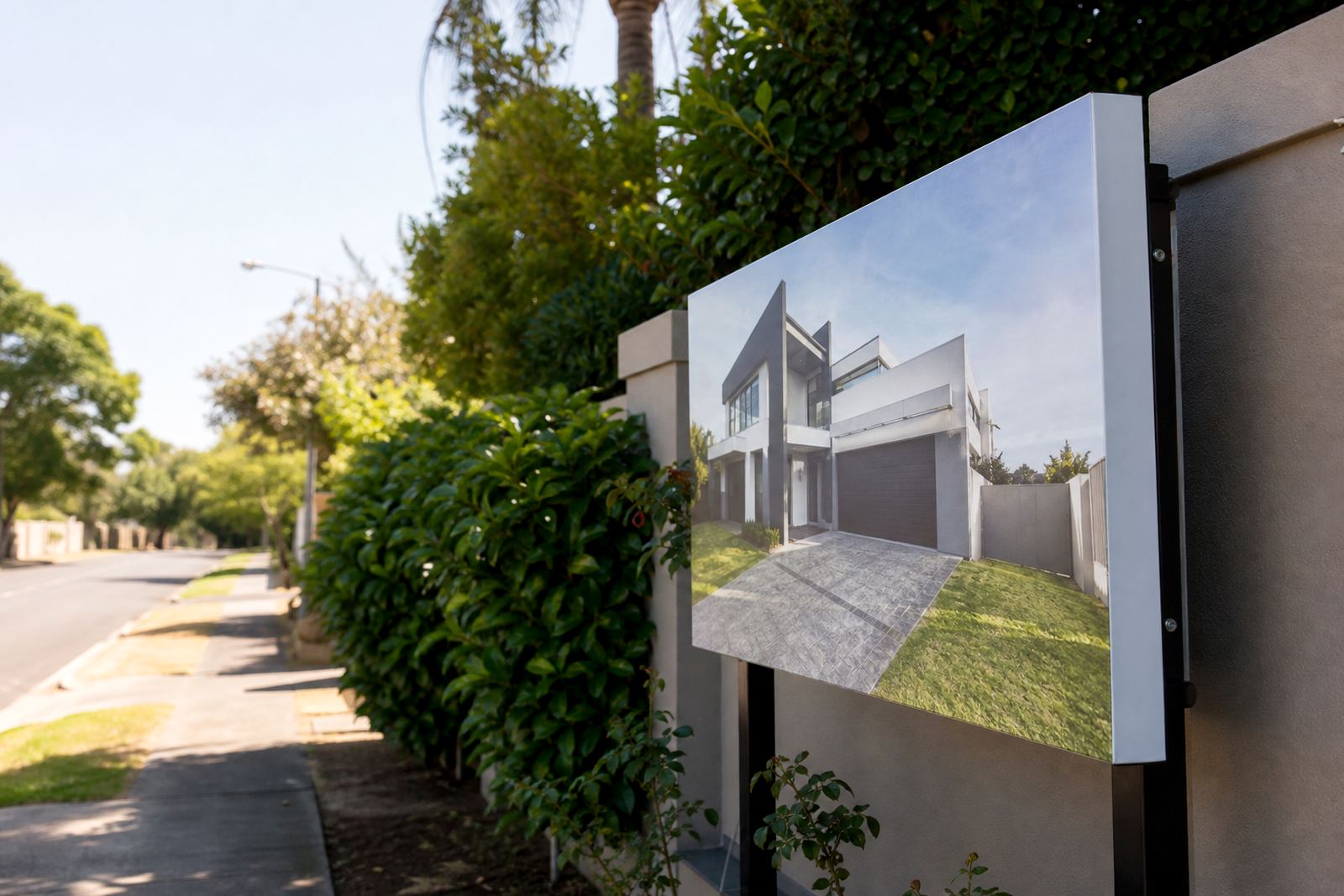
Flatbed UV printing suits rigid boards because the print is applied directly to the substrate, so it works well for panels that will be drilled, mounted, moved or replaced. The finish can be used for site notice boards, perimeter information panels, directional boards and temporary compliance signs. If the board is exposed to strong sun, coastal humidity or dust, we can advise on suitable media and a clear ink and finish choice before production starts.
Typical board sets and where each one fits
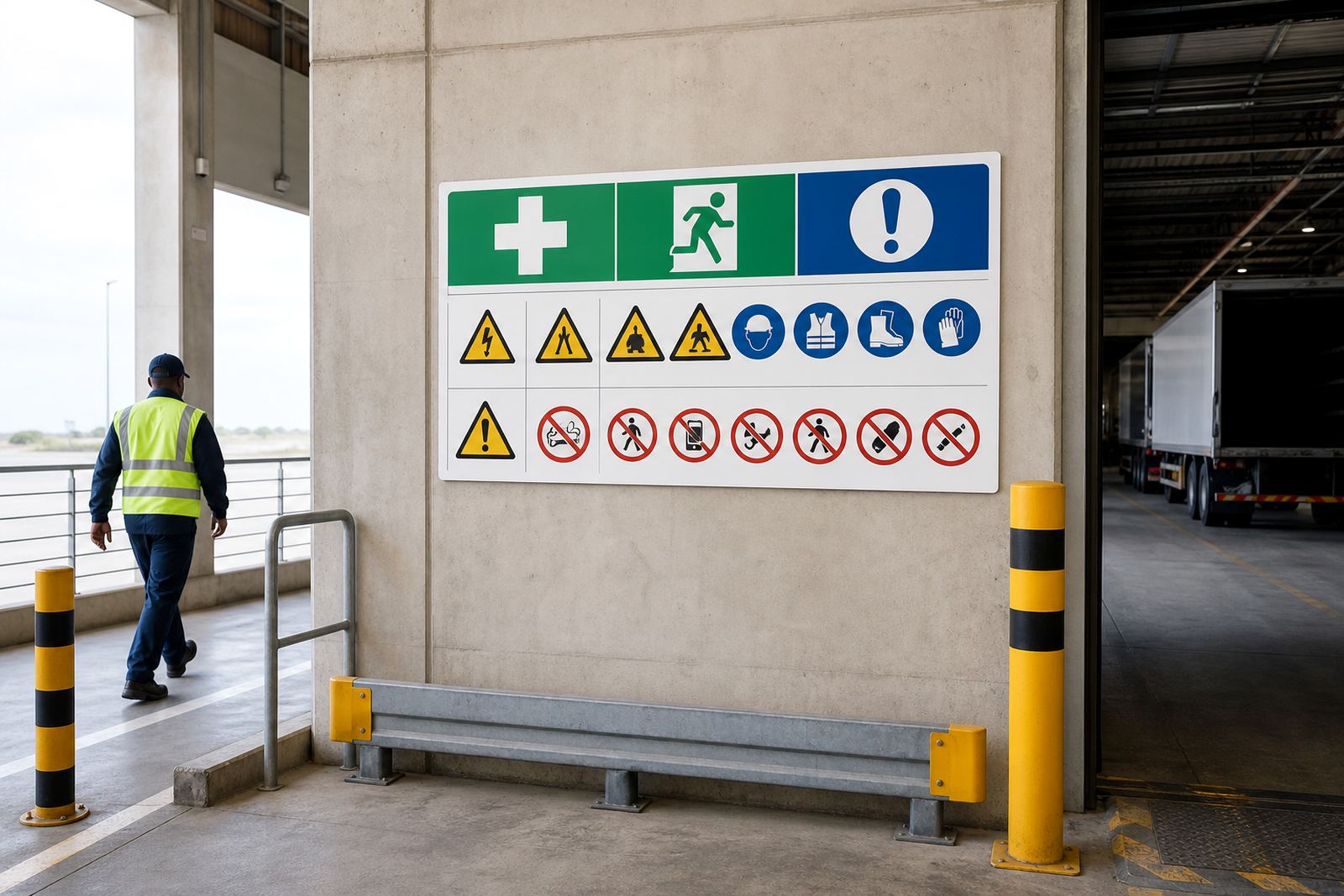
Most site jobs need more than one panel. The main board sits at the entrance or along the boundary where it can be seen by the public. Smaller boards may be used for pedestrian routes, contractor parking, PPE reminders, no entry points and emergency contacts. On larger developments, a set of matching boards keeps the site looking orderly and helps everyone understand the flow of movement.
- Main project notice board for the entrance or street frontage
- Site rules board for inductions, PPE and access control
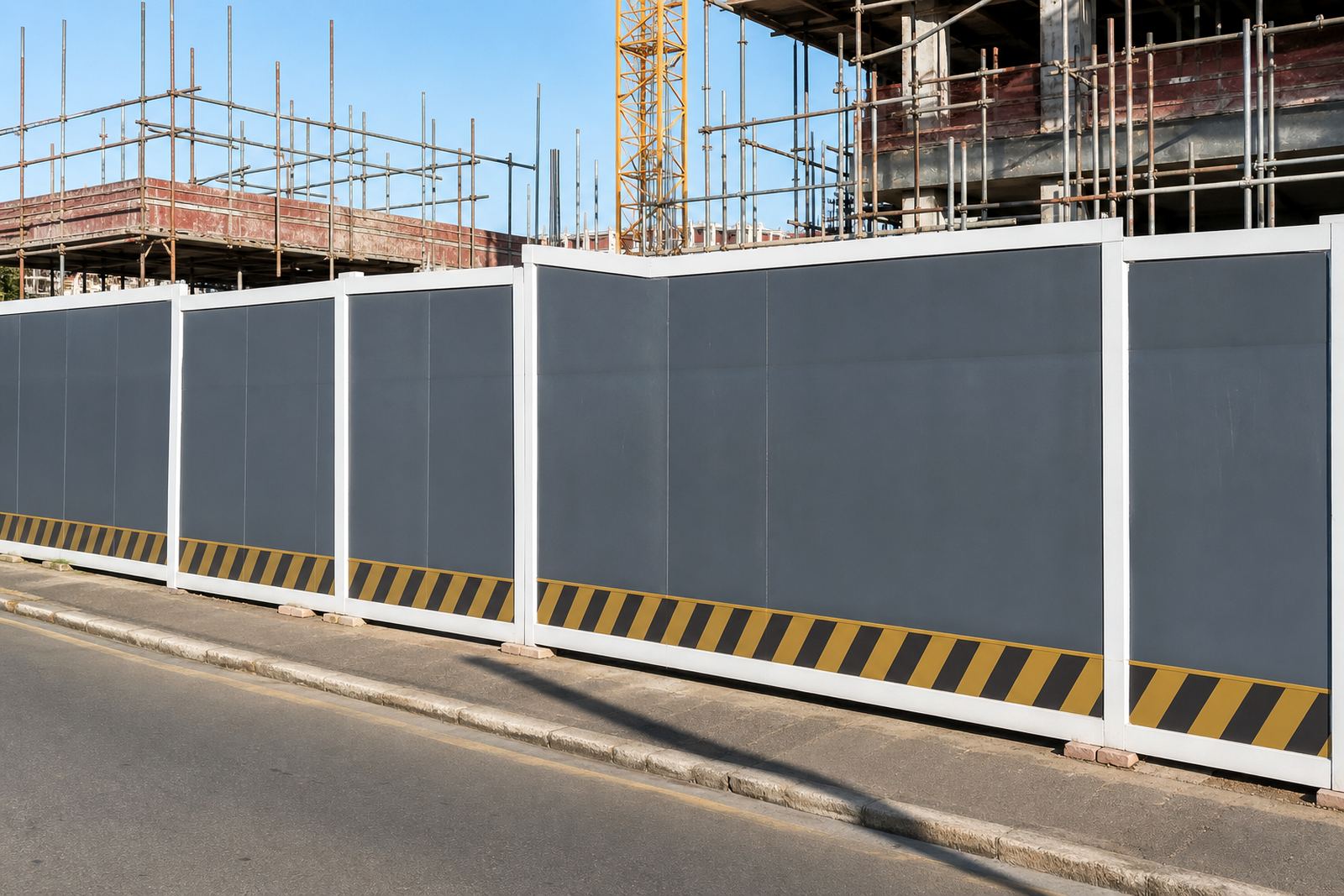
- Perimeter board for fencing, hoardings and boundary lines
- Directional boards for deliveries, parking and visitor entry
- Temporary information panels for changes in work areas
Media choice depends on where the board will be fixed. Common options include foam board for short-term indoor or sheltered use, corrugated plastic for lighter temporary signs, and rigid composite or PVC board when the panel must last longer outdoors. For windy areas or exposed coastal sites, fixing method matters just as much as print quality, because a board that flexes too much can crack at the edges.
Layout planning that keeps the message readable
Good layout starts with distance. A board viewed from 10 to 20 metres needs large type, simple wording and enough contrast between text and background. Avoid trying to fit every rule onto one panel. Split the content into sections, use clear headings and keep the most important line near the top. If a sign is meant for road-facing visibility, the project name and warning or instruction should be legible before the finer details.
We usually advise clients to think about the board as part of the site workflow. If delivery vehicles enter from one side and workers from another, the signage should point them in the right direction without requiring a call to the office. For municipal or estate-controlled areas, check any local rules on size, placement or permissions before printing. It is easier to plan that at the start than to remove and reprint a panel later.
- Keep one message per panel where possible
- Use high contrast colours for outdoor viewing
- Leave margin space for drill holes and mounting strips
- Confirm the final wording before print starts
- Measure the exact frame or fence bay on site, not only on paper
Ink, media and finish choices for South African weather
Flatbed UV inks are used because they cure quickly and give a clean, durable finish on rigid materials. They are well suited to boards that need to go out to site soon after printing, though the right curing and handling still matter. In humid coastal areas such as Durban and Gqeberha, and in high sun zones around Gauteng, the media should be selected with the end location in mind. A board that looks fine indoors may not last the same way on an exposed boundary.
For site boards, we consider whether the surface will be handled often, whether it will be cleaned, and whether it will sit in full sun all day. Lamination may be useful for some applications, but not every board needs it. Sometimes the better answer is the right substrate, proper mounting and a print layout that avoids weak corners. We also help with ink handling, media testing and colour guidance so the final panel stays readable and tidy once it is on site.
Common mistakes that cause reprints and delays
Many site board problems start before printing. The wrong dimensions are a common one, especially when the board must fit between fence posts, on a hoarding section, or inside a temporary frame. Another issue is vague content, where the client wants a safety board but has not confirmed the rules, contact names or site access instructions. If that is sorted late, the whole job can slip.
Other mistakes include low resolution images, too much text, poor colour contrast and choosing a board that is too thin for the wind load. At the coast, boards can also pick up grime faster, so a finish that is easy to wipe down may be worth considering. For builders and project managers, the cheapest board is not always the cheapest outcome if it needs replacing after a few weeks.
- Do not finalise artwork before the site measurement is confirmed
- Do not overcrowd the panel with too many departments or contacts
- Do not use a weak fixing method on a large exposed board
- Do not leave colour matching to the last minute
- Do not ignore wind, dust or salt air on the final site location
What site boards usually cost in Rand
Budgets depend on size, substrate, print coverage, quantity and whether the job needs cutting, drilling, mounting or repeated revisions. A simple temporary notice board can cost less than a full entrance panel with multiple messages and finishing work. Larger perimeter signage, especially when several boards are needed across one development, naturally moves the budget up. If the site requires courier delivery, installation assistance or multiple versions for different gates, that should be planned in early.
As a broad guide, smaller short-term boards may sit in the lower Rand range, mid-sized outdoor panels fall into the middle range, and larger rigid site systems with multiple units can move into a higher project budget. For accurate pricing, it helps to share the site address, sizes, wording and expected outdoor life. We can then advise on the most practical set-up and whether a lighter temporary solution or a longer-life board makes better sense for the job.
Installation, support and ongoing site changes
Site work changes. Access points move, safety rules update and project contacts change after the first board goes up. That is why our process includes installation planning, operator training, workflow guidance and breakdown support where needed. From Germiston, we support projects across South Africa, including Johannesburg, Pretoria, Durban, Cape Town, Gqeberha, the East Rand and Centurion. If a board needs replacing, updated wording or extra units for a new phase, we can help with the next run without making the whole job complicated.
For clients who are managing several sites at once, it helps to keep one file structure, one sign format and one approval process. That makes repeat printing faster and reduces errors. If you are planning project notices, site rules boards or perimeter panels, send the details through the enquiry form on our contact page and we will help plan the right print set for the job.