What estate agent boards need to do on site
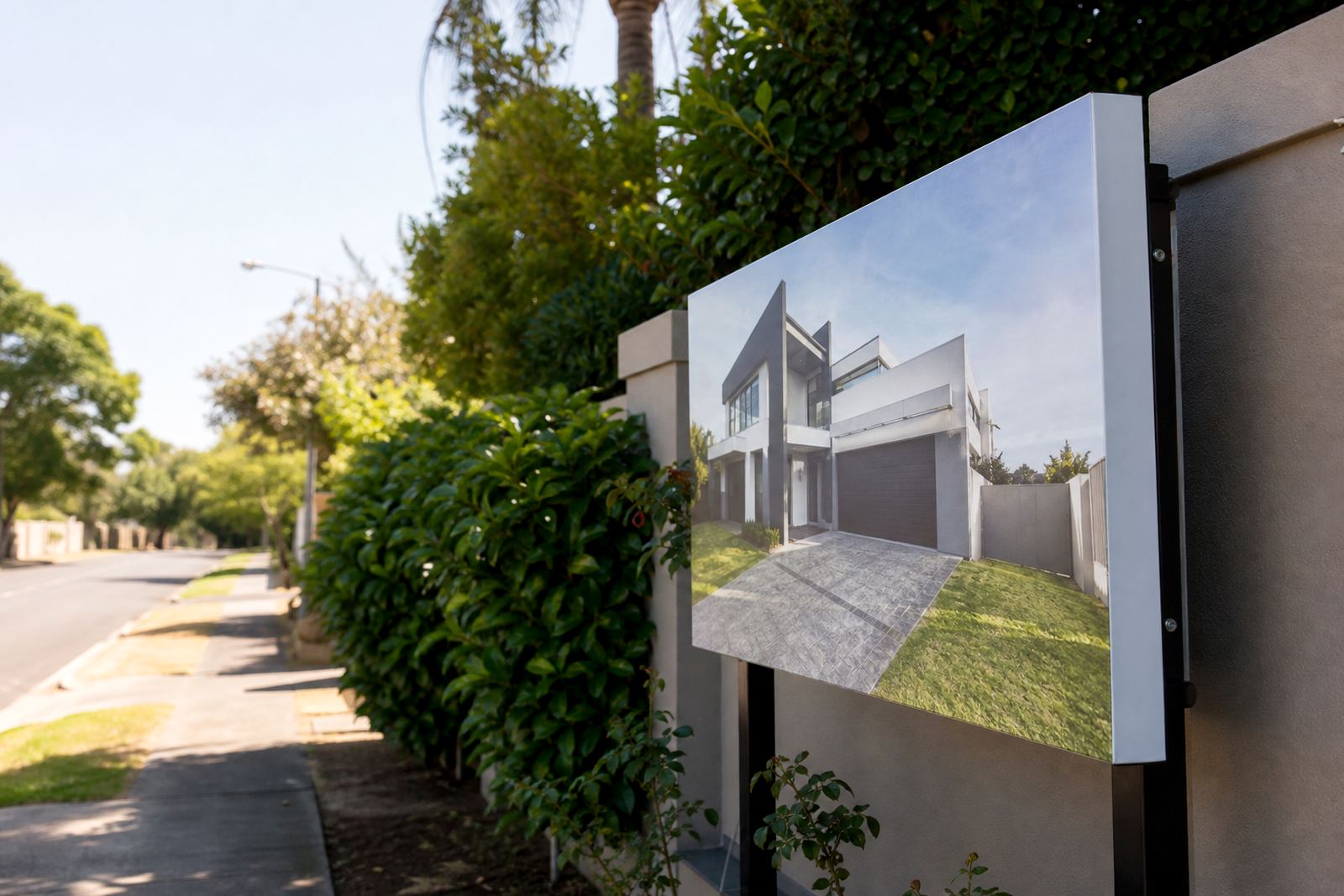
An estate board is not just a sign on a fence. It has to catch the eye from the road, hold up in sun and rain, and still look tidy when the seller, tenant or developer wants the property presented properly. In Germiston, Sandton, Durban North or the Southern Suburbs, the same board may face direct sun, dust, coastal humidity or strong wind, so the print and board material both matter.
Flatbed UV printing suits rigid property boards because the ink cures onto the surface and is made for direct print onto signage substrates. That means you can produce sales boards, to-let boards, developer boards and show day boards with crisp text, strong colour and a clean finish. The aim is simple: make the property easy to spot and easy to remember.
For many agencies, the board also forms part of the brand image. A faded or bent board can make a listing look neglected, while a well-finished rigid sign gives a more organised impression. This is especially useful for sectional title complexes, security estates and new housing developments where municipal rules or estate rules may limit size, fixing points or placement.
Typical rigid board setups for property use
The most common estate agent boards are printed on rigid board stock for outdoor display, then finished for mounting on poles, walls, gates or temporary frames. The print set-up normally depends on how long the sign must stay up and where it will be displayed. Short-term rental boards may use lighter material, while development launch boards often need a stronger board and a cleaner finish.
- Sales boards for houses, townhouses and sectional title units
- Rental boards for residential and commercial listings
- Development launch boards for new estates, apartments and commercial sites
- Directional boards for show houses, open days and access control points
- Large site boards for corner stands, vacant land and building projects
Common media choices include corrugated plastic board, rigid foam board, PVC-based sheet and other flat board signage materials suited to direct UV print. The right choice depends on exposure, mounting method and budget. In coastal areas like Durban and Gqeberha, a board may need extra attention to edge sealing and fixing points because moisture and wind can shorten its life if it is not prepared properly.
Planning the layout before printing
The best estate boards are easy to read at speed. A driver or passer-by should understand the message in a few seconds, so the layout has to be kept clear. Too much text, too many phone numbers, or small photos can make the board cluttered. A board that looks busy on screen often looks worse once it is mounted outside.
Start with the purpose of the sign. A sales board needs the property status, agent name and a strong call to action. A launch board may need the development name, phase detail and directional information. A rental board should show the type of property, availability and contact route. Keep the wording short and make sure the key information is placed high enough to read from the road.
- Use large, simple lettering for the main message
- Keep logos and contact details visible but not crowded
- Allow for fixing holes, clamps or frames before final layout
- Check whether the board will be seen from one side or both sides
- Leave enough margin so important text is not trimmed or hidden by mounting hardware
For agents operating across Johannesburg, Pretoria and the East Rand, a standard board system can save time. Once the layout is set up properly, the same size and structure can be used for many listings with only small changes to the wording. That helps with consistency and reduces mistakes on urgent jobs.
Ink, colour and weather resistance for outdoor boards
Estate boards spend most of their life outdoors, so the ink and print method need to suit direct sun, rain and regular handling. UV-cured ink is commonly used because it bonds well to rigid media and gives a practical finish for signage. It also helps when boards must be produced for quick turnaround, such as a property that has just gone on the market or a development launch that has moved up by a week.
Colour control matters more than many people think. A dark navy can shift slightly if the file is not prepared properly, and reds can become too strong if the artwork is not managed well. That is why colour guidance is part of the workflow. It is also worth checking how the board will look at a distance and in direct sunlight, not only under office lighting. A board that looks fine indoors may wash out outside, especially in high glare conditions.
In some areas, boards are replaced often because of theft, damage or tenant changes. In those cases it can be useful to keep a repeatable print setup with standard sizes and saved artwork. This makes reprints easier and keeps the site looking orderly. If the property is in a windy location or near the coast, ask for material advice before going ahead because the cheapest option is not always the best value.
Workflow for quicker turnaround and fewer errors
Property boards often need to be produced fast, and mistakes are expensive because the board may already be booked for installation. A clear workflow helps avoid wasted media, reprints and delayed launches. Good planning starts with the final size, the mounting method and the exact wording that must appear on the board.
The usual workflow is artwork check, media choice, print testing, production print, finishing and delivery or collection. If the site is being prepared for a launch, it helps to confirm how the board will be fixed on the day. A board that is too large for the frame or too close to the edge on a drilled hole can cause problems on site.
- Confirm exact dimensions before artwork is approved
- Test a small section for colour and legibility if needed
- Match the board thickness to the fixing method
- Keep a record of the approved design for repeat orders
- Plan for lead time if the board needs multiple versions for different units
Our Germiston base supports installations and service across Johannesburg, Pretoria, Durban, Cape Town and Gqeberha, so when a property board campaign is spread across several branches the same process can be followed everywhere. That helps agencies stay consistent from one suburb to the next.
Common mistakes on estate agent boards
One common mistake is putting too much into one board. If the text is tiny, the sign may have all the right information but still fail on the street. Another is using a board material that is not suited to outdoor exposure, which can lead to bowing, edge lift or cracking around fixing points. A third mistake is forgetting that boards are read quickly from moving traffic, not from a still office screen.
It also helps to think about the property itself. A board for a suburban home is different from a development board on a busy main road. For apartments, security estates and commercial sites, the wording may need to meet body corporate or municipal rules on placement and size. In some areas, the wrong fixing method can cause trouble with estate management or local compliance.
- Too much text and not enough white space
- Board size chosen before the site is measured
- Incorrect board material for wind, rain or coastal air
- Artwork not set up for drilling, trimming or mounting
- No spare boards kept for quick replacement after damage
If a board is intended for repeated use at different listings, it is worth choosing a setup that can be cleaned and reused where possible. That is especially useful for rental portfolios and developer roadshows where timing changes often.
Budget ranges in Rand for property boards
Budgets for estate agent boards vary depending on size, quantity, board material and finishing. A basic rigid board for a single listing will cost less than a larger development board with special finishing or multiple versions for a launch. As a guide, smaller single boards may start from a few hundred Rand, while larger or more specialised boards can move into the higher hundreds or more, depending on the brief.
It is usually better to think in terms of use and lifespan rather than just unit price. A board that lasts longer, reads better and does not need replacing after one storm can work out cheaper in the end. If an agency prints the same size board repeatedly, there may also be savings from setting up a standard format and ordering in batches.
For larger rollouts, such as a new estate launch or a rental campaign across several suburbs, the budget should allow for extra boards, spare units and possible revisions. That is the practical way to handle last-minute changes without holding up the job. We can help with printer installation, operator training, media testing, workflow planning and production consulting so the board supply side stays manageable.