
Clear boards for clinics, rooms and patient flow
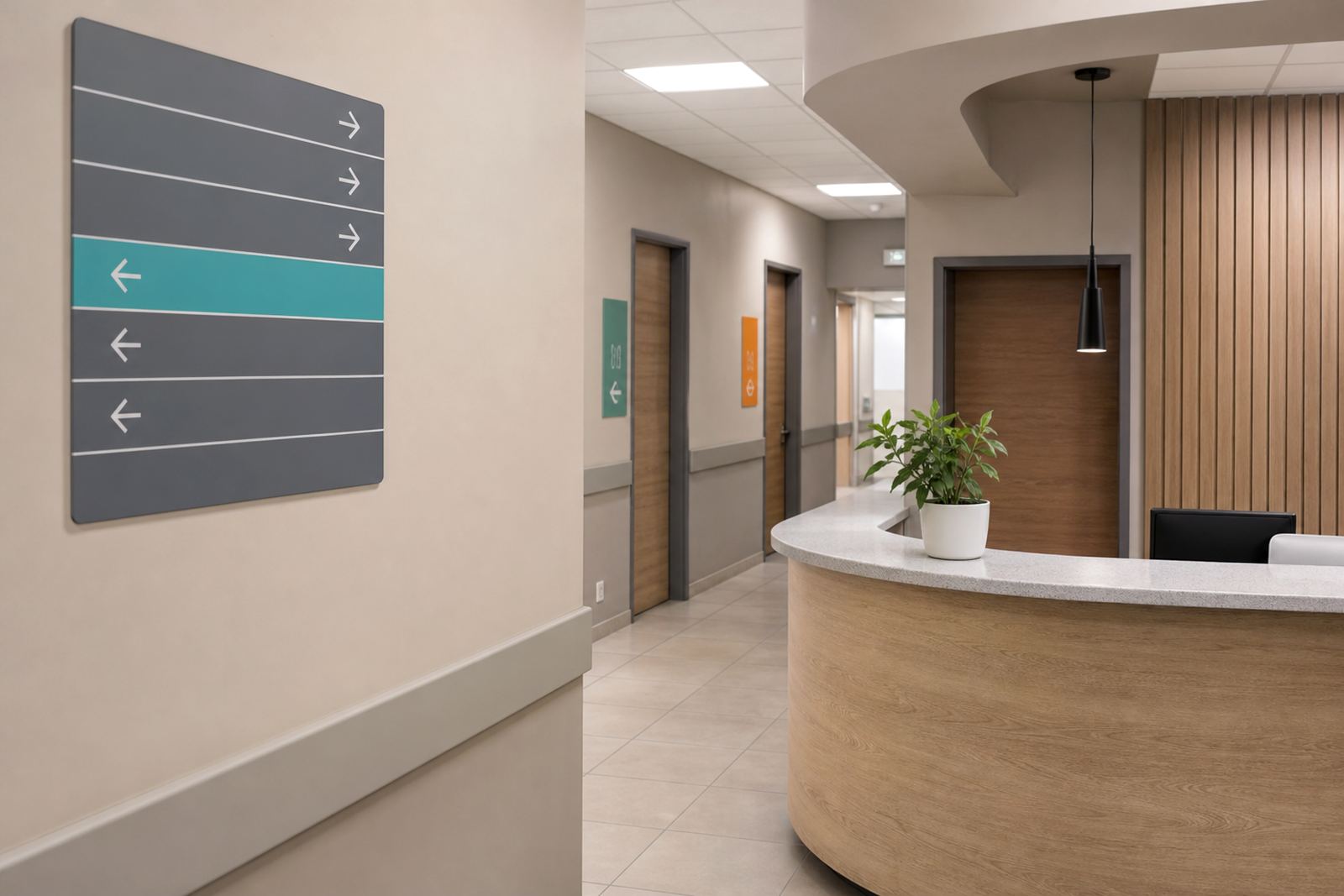
In a clinic, every sign has a job. Reception boards, consultation room markers, queue direction signs, hand hygiene reminders and restricted area notices all need to be easy to read at a glance. Flatbed UV printing is well suited to rigid boards used in these spaces because it produces direct, durable output on common signage media without the need for lamination in many applications. That matters in healthcare where signs are cleaned often and must stay tidy in bright light, air conditioned interiors and sometimes humid coastal towns too.
Most healthcare clients need a mix of small directional panels and larger information boards. The right setup depends on how the building moves people from entrance to reception, triage, treatment rooms and pharmacy. A simple layout can reduce confusion, keep queues moving and cut down on repeated questions at the front counter.
Typical print set for healthcare signage
For clinics and practices, the print mix usually includes rigid boards for walls, doors, stand-alone points and wayfinding. Flatbed UV systems are commonly paired with media such as foam board, fluted board, ACM style panels, acrylic, PVC sheet and other rigid materials chosen for the location. In some cases, the same workflow can also support safety notices, floor standing graphics and temporary event boards for screening days or outreach clinics.
- Directional arrows and room identification boards
- Reception welcome signs and opening hours panels
- Hygiene reminders for handwashing and sanitising points
- Private area, staff only and emergency route signage
- Wall-mounted patient information boards
- Temporary boards for pop-up clinics or drives
Ink choice and media selection matter. Indoor healthcare spaces need sharp text, stable colour and a surface that can handle regular wiping. Where signs sit near entrances or on sheltered outside walls, extra care is needed for sunlight, moisture and dust. In Gauteng, load-shedding and power interruptions can also affect production schedules, so planning print runs and maintenance windows helps keep work moving.
Planning the layout before anything is printed
The best healthcare signage starts with a practical plan. Measure each wall, door and corridor point before design begins. Check sight lines from the entrance, wheelchair access routes, counter height and where people naturally pause. A sign that looks fine on screen can fail in a real building if it is hidden by a door swing, a plant stand or a busy notice area.
We usually advise clinics to group signs into a simple system: general direction, room naming, privacy notices, safety messages and service information. Keep fonts consistent and use enough contrast between text and background. If a practice has multiple units or a pharmacy counter, the same visual rules should run through all branches so patients recognise the layout quickly. It is worth checking municipal and building rules as well, especially where signs project from a wall or must fit within landlord requirements.
- Use one numbering system for rooms and departments
- Keep arrows and wording consistent across the site
- Leave room for future services or changed room use
- Place critical signs where a patient stops, not where staff stand
Common mistakes that slow patients down
Healthcare signage often goes wrong when it is treated as decoration instead of navigation. Too much text, low contrast colours, inconsistent sizes and mixed wording can confuse people. Another common mistake is using a light substrate in a bright corridor where glare makes the sign harder to read. In reception areas, crowded notice boards also become a problem because important messages get lost among general paperwork.
Production errors can cause trouble too. If cut lines are not checked, a board may fit the wall poorly. If the media is not suited to the cleaning routine, the surface can mark or lift at the edges. And if the operator is not trained on proper ink handling, curing settings and board preparation, the finished work may look fine on day one but not hold up over time. Small issues add up, especially in busy practices where staff do not have time to explain every sign.
Budget ranges for healthcare rigid signage
Budgets vary by size of practice, number of rooms and whether the job is a single site or a multi-branch rollout. For a small clinic needing a basic set of rigid directional and information boards, a sensible starting point is often in the low thousands of Rand. A fuller package with room sets, privacy notices, reception boards and a more detailed wayfinding plan can move into a higher range depending on media choice, finishing and installation. Larger practices, hospital-adjacent facilities and grouped branches will usually need a phased budget so the most urgent signs are done first.
It is better to budget for the full workflow than only the print. That means allowing for site preparation, layout confirmation, operator training if the client will print in-house, spares coordination, preventive maintenance and breakdown support where needed. In South Africa, a practical support plan matters because clinics cannot afford long delays when a key sign is damaged or a production line stops. Our base in Germiston supports work across Johannesburg, Pretoria, Durban, Cape Town, Gqeberha and the surrounding areas including East Rand and Centurion.
How Flatbed UV supports healthcare projects
Flatbed UV provides printer installation, site preparation, workflow planning, colour guidance, media testing, ink handling help and production consulting for rigid board signage. For healthcare clients, that support is often focused on clarity, repeatability and clean finishing. Our team, led from Germiston, works with clinics, practices and related facilities that need signage to be dependable from the first board to the last.
When a site is being set up or refreshed, we can help with operator training, preventive maintenance, remote support, spares coordination and breakdown support. That keeps the production room steady and reduces surprises when deadlines are tight. If your practice needs a cleaner patient journey, better room identification or a full set of rigid healthcare boards, the enquiry form on our contact page is the best way to get started.