
Reception Areas That Need a Clean First Impression
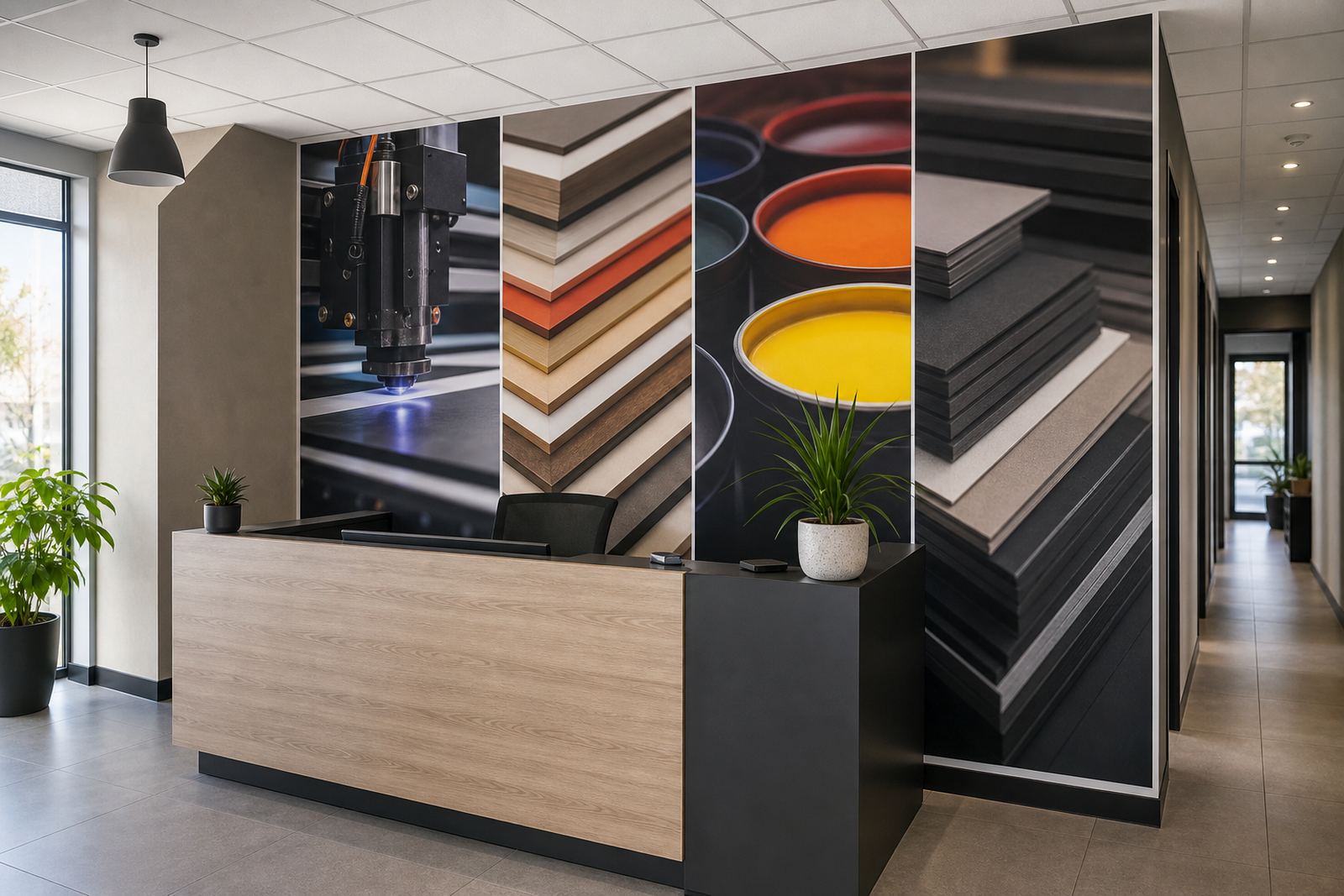
Reception spaces usually carry the most pressure from a branding point of view. Visitors see them first, staff pass through them all day and cleaners work around them after hours. For this kind of interior, flatbed UV printed rigid panels are often chosen for wall features, welcome walls, directional panels and branded backdrops. The finish has to look tidy in strong indoor light, with the edges cut properly and the mounting plan thought through before anything goes to print.
In Germiston, Johannesburg and Pretoria, many businesses ask for panels that can cope with air-conditioned offices, sun exposure through glass fronts and regular cleaning. In coastal areas like Durban, Gqeberha and Cape Town, humidity and temperature changes matter too, so the board choice and adhesive method should suit the site. Good planning avoids panel movement, curling or marks around joins. It also helps when the interior has fire exits, glass partitions or municipal tenancy rules that limit how and where materials can be fixed.
Typical Flatbed UV Set for Interior Panels
Interior branding jobs usually start with rigid sheet material, artwork prepared to size, print settings matched to the board and a finishing step such as cutting, drilling or edge trimming. Flatbed UV printing is well suited to boards because the ink sits on the surface and cures quickly, which helps with short turnaround work and layered colour applications. Depending on the job, the workflow may include white ink underlays, spot colour builds or double-sided panels for freestanding displays.
- Foamed PVC for lightweight wall panels and directional signage
- Acrylic for polished feature pieces and layered graphics
- Aluminium composite board for durable office and retail interiors
- Foamboard or similar lighter sheets for short-term campaigns
- Clear or coloured rigid materials where transparency or depth is needed
The right combination depends on weight, fixing method, fire considerations and how often the area is cleaned. A board that works in a retail store may not be ideal in a boardroom with controlled lighting or in a passage with frequent contact. Ink choice, surface prep and the handling of the sheet all affect the final result, so it is worth checking compatibility before production starts.
Planning the Layout Before Printing Starts
Interior branding works best when the wall, the artwork and the fixing method are planned together. A reception wall with a logo panel may need exact centre alignment, while office corridors often need repeated directional boards at clear sightline height. In boardrooms and meeting rooms, text must stay readable from across the table, so size and contrast matter more than decoration. If the room has patterned walls or strong lighting, the design should be adjusted to keep the message visible.
We usually advise measuring the site properly, confirming wall finish and checking for uneven plaster, tiles, glass or cladding. A panel that sits flush on one wall can look wrong on another if the surface is not level. Also consider cable routes, switches, skirting, access panels and any municipal or landlord restrictions that affect drilling or adhesive use. In some commercial spaces, removable fixing is the better choice, especially where lease conditions may change later.
- Confirm the final wall size with at least one on-site check
- Allow for trims, expansion gaps and fixing points
- Match colour expectations to the room lighting, not only to a monitor view
- Decide early if the panel must be removable or permanent
- Keep logos and key text clear of joins, switches and corners
Common Mistakes With Interior Rigid Panels
One of the biggest mistakes is choosing a board only because it is cheap. A low-cost sheet can bow, mark easily or show fixing points too clearly. Another common issue is printing too close to the edge, which makes trimming more difficult and can leave a thin white line if the panel needs to be cut after printing. For interior work, the quality is often decided in the small details rather than the headline artwork.
Another problem is overloading a space with too many messages. A reception area does not need every service listed on the wall. Offices work better when the branding is ordered and calm. If the room already has strong features, the printed panels should support the space not fight it. It also helps to avoid mismatched panel thicknesses across one wall, since uneven depth can make the installation look unfinished.
- Using the wrong board thickness for the fixing method
- Ignoring glare from windows, downlights or polished floors
- Skipping a test print on the actual media
- Placing text where it will be hidden by furniture or doors
- Leaving no allowance for cleaning access after installation
Cost Ranges for Interior Branding Projects
Budget depends on panel size, material, print coverage, cutting work and how the panels are fixed. Small interior pieces for a reception nook may start from a few hundred Rand per panel, while larger feature walls or multi-panel office installations can move into several thousand Rand. If the job includes site preparation, removal of old graphics, delivery, installation and after-hours work, the total will be higher. Remote sites or tight access buildings may also add time and labour.
As a broad guide, clients often budget separately for three parts: production of the printed panels, installation and ongoing support. That makes it easier to compare options and decide where the spend should go. A neat board with careful colour control can last well in a commercial interior, so it is usually better to spend on the right material and fixing method than to rework the job later. If the building runs on limited lighting during load-shedding, it also helps to check how the graphics read in both bright and dim conditions.
What Local Support Usually Covers
For interior branding work across Germiston, Johannesburg, Pretoria, Durban, Cape Town and Gqeberha, the support process usually starts with layout advice and ends with installed panels ready for use. The team may assist with printer installation, site preparation, operator training, workflow planning, colour guidance, preventive maintenance, breakdown support and remote support where needed. Ink handling help, media testing, spares coordination and production consulting also make a difference when a business is building a repeatable interior signage line.
When a client has more than one branch, it helps to standardise sizes, board types and file setup so that each site looks consistent. That is especially useful for corporate interiors, retail rollouts and commercial buildings with multiple floors. Sibusiso Mthembu leads the Germiston base, with support from Lerato Nkosi, Johan van der Merwe, Ayanda Dlamini, Michael Naidoo and Zanele Khumalo. Enquiries come through the contact page form, which keeps the brief clear and organised from the start.
- Germiston Support and East Rand Support for local call-outs
- Johannesburg Support, Pretoria Support and Centurion Support for Gauteng sites
- Durban Support, Cape Town Support and Gqeberha Support for national rollouts