Directional Boards That Keep People Moving
Wayfinding boards do a simple job, but they need to be planned properly. In hospitals, schools, factories, shopping centres, conference venues and municipal buildings, people are often looking for a room, bay, gate or office in a hurry. A clean sign system reduces confusion, cuts traffic at reception and helps visitors move through the site with less stress.
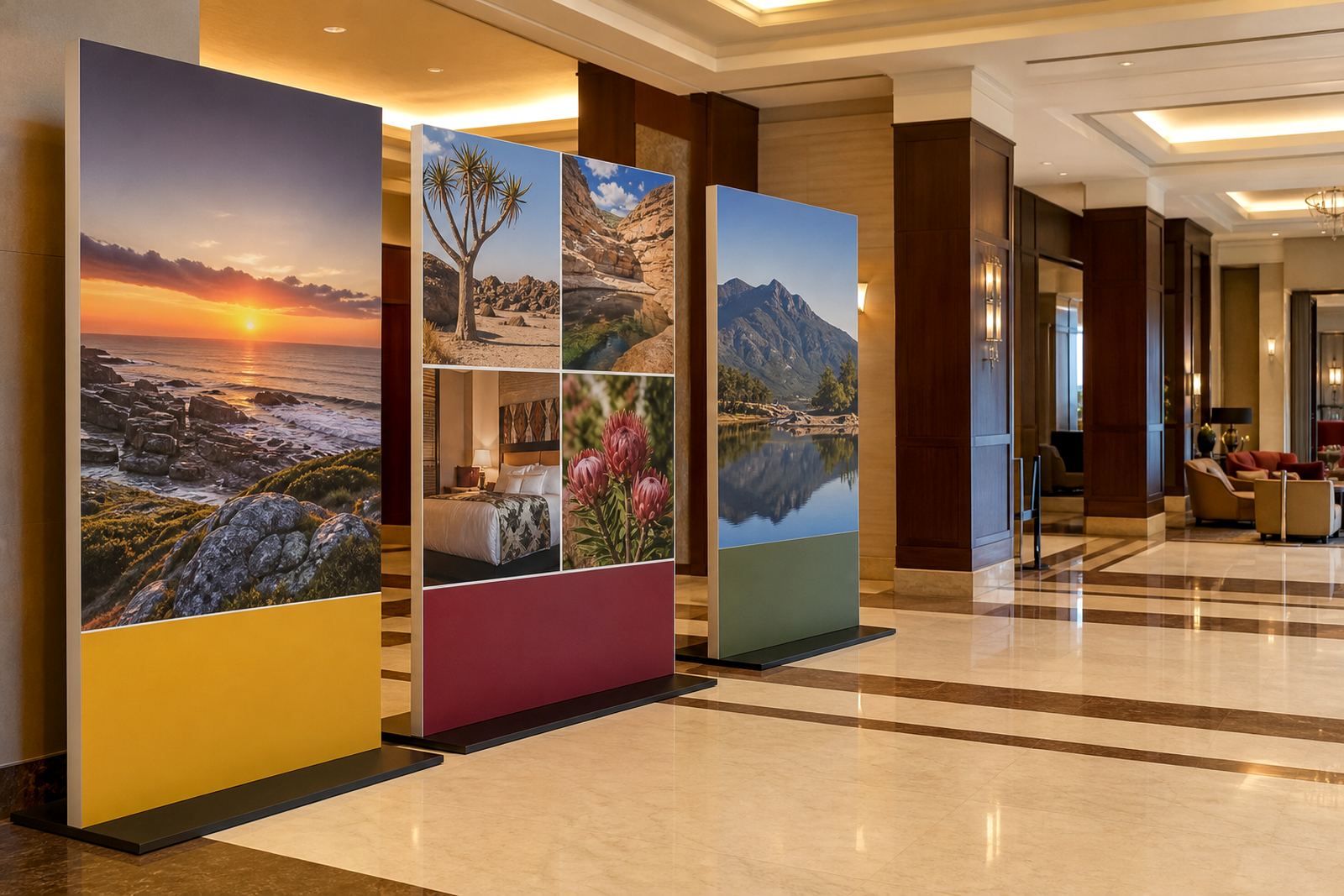
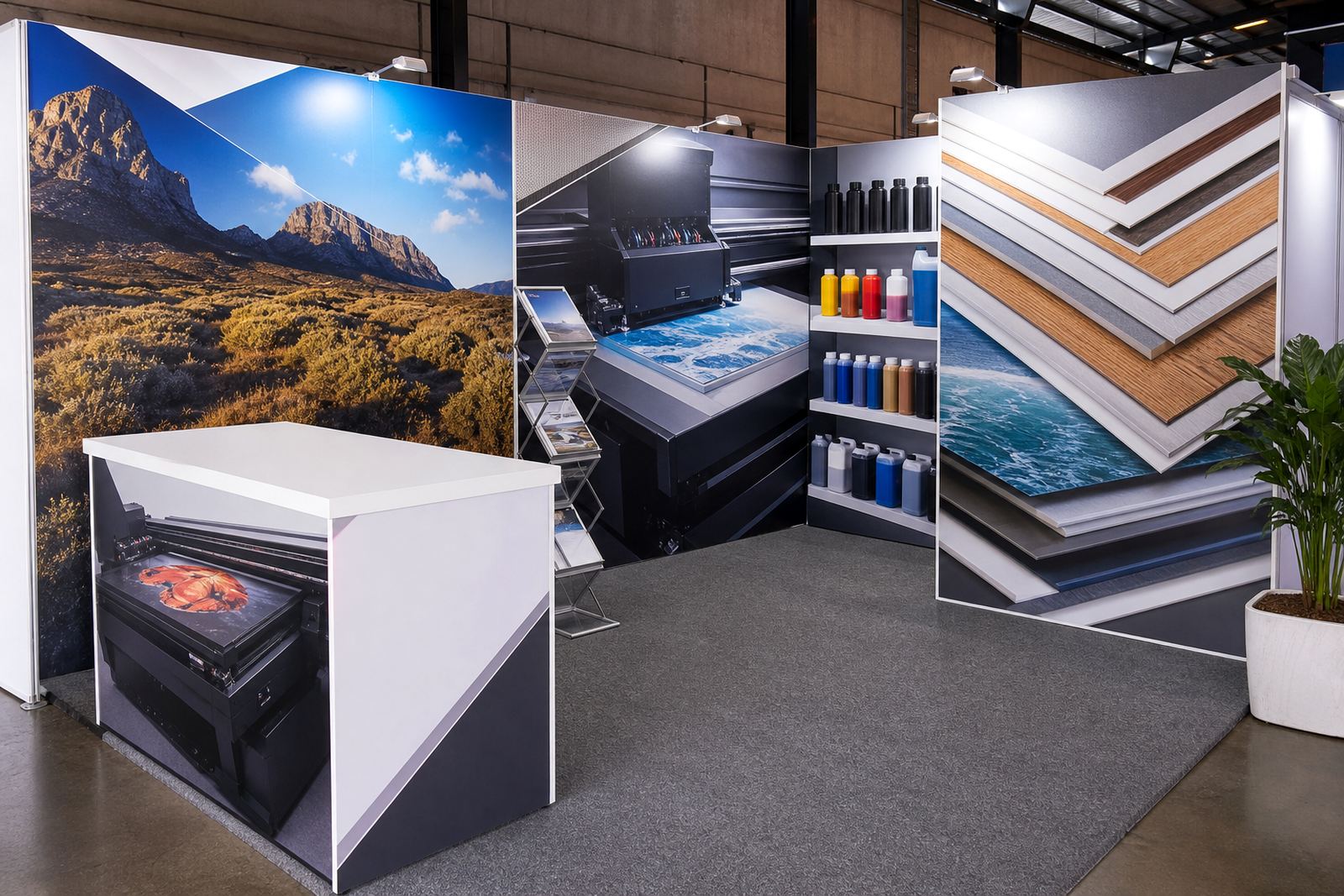
Flatbed UV printing works well for this use because it prints directly onto rigid boards used for arrows, maps, zoning notices and room markers. The result is a clean finish with sharp text and strong colour, suitable for repeated handling and changing light. For outdoor points, the right media choice matters too, especially where sun, wind and dust are part of the daily setup.
We work from Germiston and support clients across Johannesburg, Pretoria, Durban, Cape Town and Gqeberha, with setup and service across South Africa. The aim is not only to print a board, but to make sure it sits in the right place, uses the right size text and can be updated later if the site layout changes.
Choosing The Right Board Material And Ink
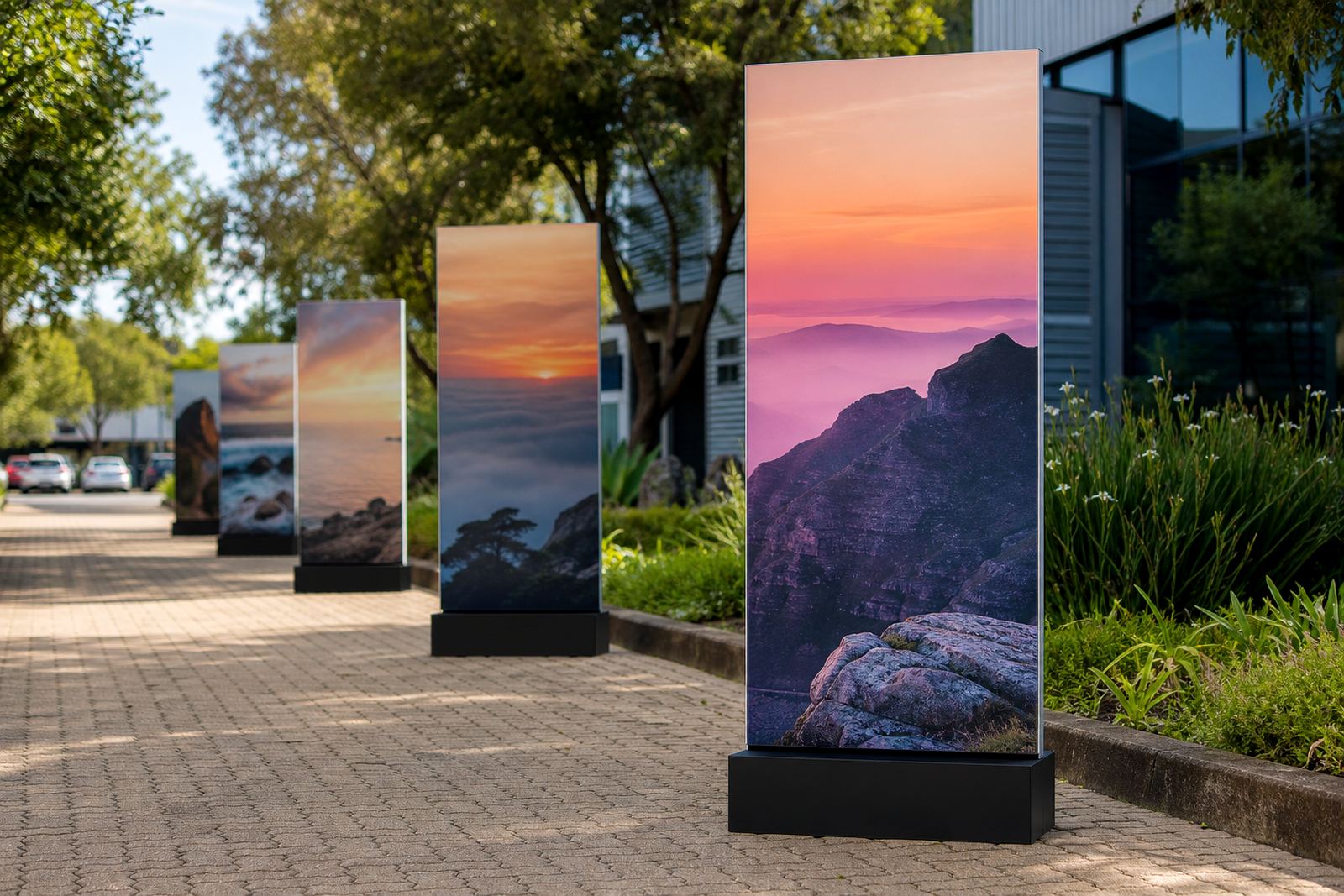
Wayfinding boards can be produced on a range of rigid substrates depending on where they will be used. Indoor corridors usually need a lighter board with a neat finish. Outdoor entrances, parking areas and exposed walkways need a tougher substrate that can handle weather, cleaning and everyday contact. In coastal areas like Durban or Gqeberha, moisture resistance is worth thinking about early in the process.
Flatbed UV inks cure onto the board surface and are commonly used for signage because they can hold fine detail and strong solids. For wayfinding, this helps with legibility on arrows, icons and small text. Colour choice matters too. High contrast is easier to read at a distance, and a consistent colour system across the whole site makes each sign easier to follow.
- Rigid boards for entrance signs, corridor markers and parking direction signs
- Printed layers for maps, arrows, icons and room numbers
- Optional finishes for glare reduction where lights sit directly overhead
- Boards sized for wall fixing, posts, freestanding frames or ceiling hanging
Layout Planning Before Anything Goes To Print
The best wayfinding systems start with a site walk. Before printing, we look at how people enter, where they pause, which paths they follow and where they tend to miss turns. A good board is not just about the words on it, but about whether it is placed at the right decision point. If someone only sees the sign after they have already passed the junction, it is too late.
For larger sites, the board set usually needs a hierarchy. First you guide people to the main zone, then to the section, then to the room or service point. That structure keeps the wording short and clear. Long lists of destinations can be hard to scan, especially in busy spaces. We often suggest using the same wording across all boards, so visitors do not meet one name at the gate and a different name inside.
- Keep text short and direct, with one clear action per board
- Place signs at eye level where possible, not hidden behind doors or plants
- Use arrows consistently, so left means left on every sign
- Leave enough open space around text for quick reading
- Check mounting height before final print sizes are approved
Common Mistakes That Make Boards Hard To Use
One common mistake is trying to fit too much onto a single board. When a wayfinding board carries too many destinations, the text gets smaller and people stop reading it. Another issue is poor contrast. Pale text on pale boards may look neat in a drawing, but it is weak on the wall, especially in bright Gauteng sunlight or in a foyer with strong overhead lighting.
Another mistake is mixing styles across the same site. A campus with five different arrow shapes and three different spellings becomes harder to navigate than one with simple, consistent signs. Boards also fail when they are planned without checking the wall material or fixing method. If the surface is uneven, exposed to vibration or cleaned often, the mounting needs to be chosen with that in mind.
We also see sites that forget about updates. A venue may change hall names, a school may rename blocks, or a company may rework departments. If the boards are printed in a way that allows replacement panels or grouped sections, the system is easier to maintain and less costly over time. That saves a lot of hassle later on.
Typical Workflow From Enquiry To Installation
Most wayfinding jobs move through a practical workflow. First, the client shares the site details, the list of destinations and any brand or colour rules that need to be followed. Then the board sizes, materials and placement points are confirmed. If needed, we help with layout planning, colour guidance and media testing before production starts.
After print approval, the boards are produced on the flatbed UV line, then checked for text clarity, alignment and finish. If installation is part of the scope, our team can handle site preparation, mounting and final placement. We also provide operator training, preventive maintenance and breakdown support where the print system is being run in-house. For sites that manage signs across several buildings, remote support and production consulting can help keep the process steady.
- Enquiry and site review
- Content check and board schedule
- Material and finish selection
- Print, inspection and packing
- Installation or handover with guidance
Budget Ranges For Wayfinding Projects
Wayfinding budgets depend on the number of boards, the size of each sign, the media used and whether installation is included. A small internal set for one building may stay in the lower range, while a full campus or venue system with outdoor boards, multiple updates and fixed mounting can move higher. Custom shapes, replacement panels and special finishes also affect the total.
As a working guide, simple directional boards can start from around R1 500 per board for smaller indoor pieces, while larger or more durable outdoor boards can move from around R3 500 per board and up, depending on the substrate and finishing. Site planning, installation and spare panels are usually quoted separately where required. If the job is spread across several locations, transport and rollout timing can also play a part.
For municipalities, schools and public-facing sites, it is worth planning the budget around the full signage cycle, not only the first print run. That means allowing for replacements, changes to room names and extra boards when a site expands. A clear budget from the start makes approvals easier and keeps the signage programme orderly.
Support Across South Africa From Germiston
Flatbed UV is based in Germiston, Gauteng and supports wayfinding board projects across South Africa. Our team includes Sibusiso Mthembu, Lerato Nkosi, Johan van der Merwe, Ayanda Dlamini, Michael Naidoo and Zanele Khumalo, and each part of the job is handled with practical site knowledge. From the East Rand to Centurion, and from Durban and Cape Town to Gqeberha, we work with sites that need clear signs and dependable follow-up.
Load-shedding, busy entrances and harsh coastal weather can all affect how a board system performs. That is why planning, material choice and fixing method matter just as much as the print itself. If you need direction boards for a single building or a larger site roll-out, clients can reach us through the enquiry form on our contact page.