
Why point of sale work needs a different print approach
Point of sale pieces are handled, moved, wiped down and looked at from very close range, so the print has to do more than simply look bright on screen. A good flatbed UV setup is used for rigid boards, foam board, acrylic, PVC sheet, composite panel and other display materials that need clean edges and steady colour across a store fit-out or campaign rollout.
In retail, the job is often to support a buying decision in a few seconds. That means the layout must be simple, the type must be readable from the aisle, and the finish must suit the environment. For coastal stores in Durban or Gqeberha, humidity can affect storage and handling, while inland sites in Johannesburg or Pretoria often deal with dust, heat and load-shedding related delays. The print plan has to account for all of that.
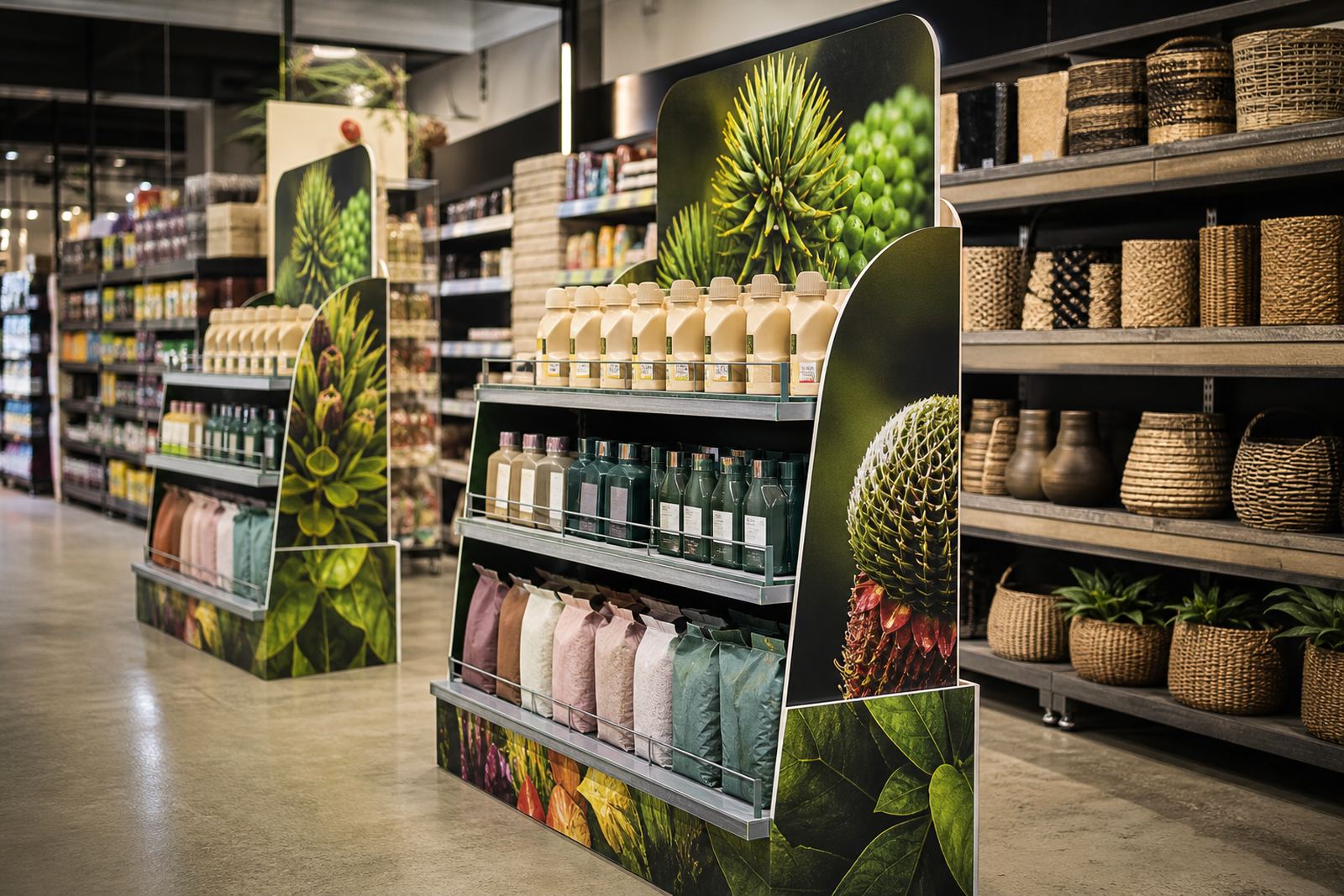
Point of sale is not only about the main sign. It includes shelf talkers, wobblers, hanging cards, counter cards, price blocks, window boards and branded display inserts. The best results come when the print team understands where the piece sits in the store and how it is going to be used, not just what it looks like on the art file.
Typical equipment set for countertop and in-store displays
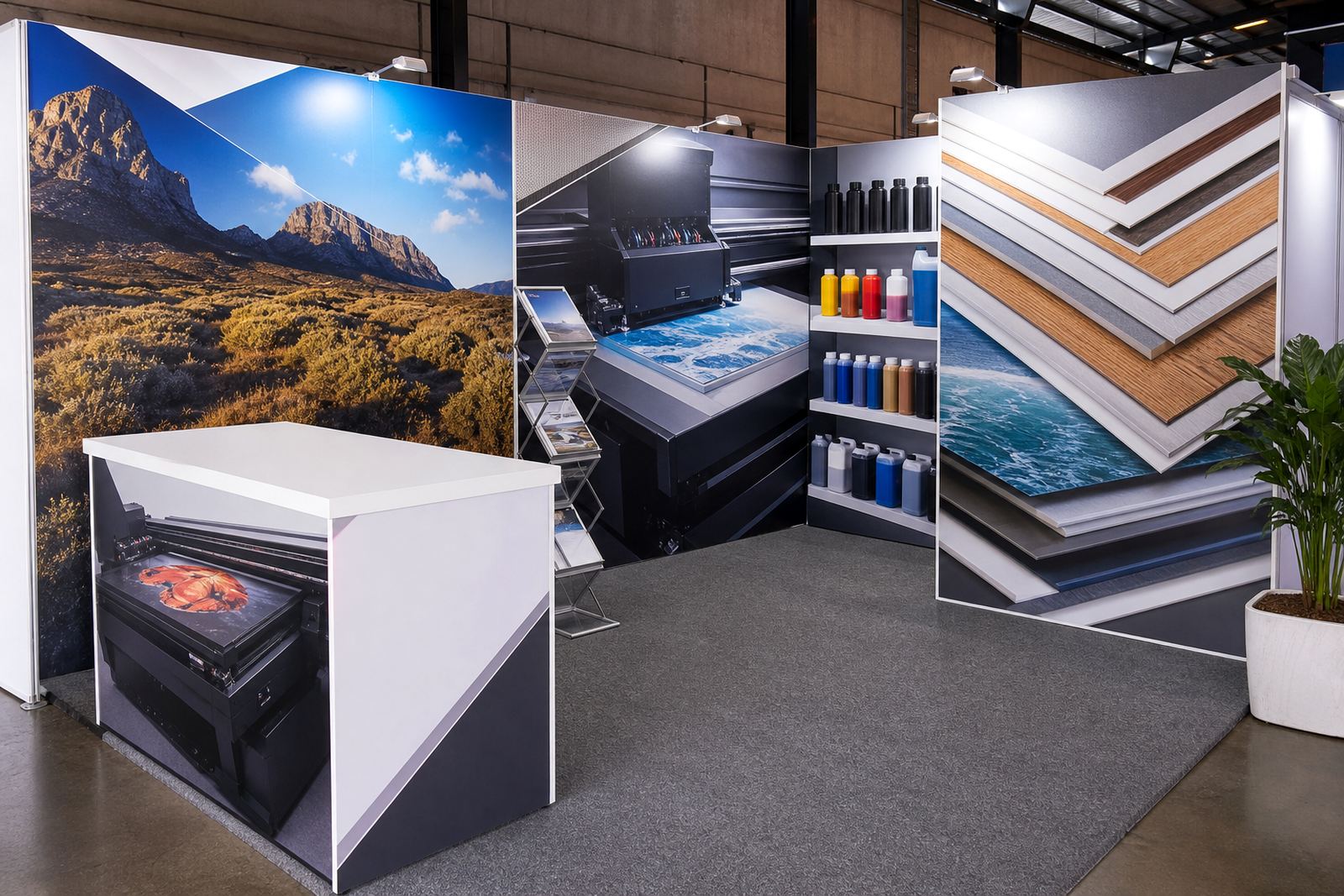
For point of sale production, most operations use a flatbed UV printer paired with a simple prep area, cutting tools, drying or curing space as needed, and a packing table. The workflow is usually straightforward: receive the brief, check the artwork, confirm the board size, test the media, print, finish and dispatch. When the production plan is clear, turnaround gets easier and waste drops.
A useful equipment set usually includes:
- Flatbed UV printer for direct print on rigid substrates
- Cutting and trimming tools for clean finishing
- Jigs or guides for repeat board placement
- Colour reference samples for approval and matching
- Storage for boards, inks and finished work in a dry area
- Basic packing materials for delivery to stores and warehouses
UV inks are chosen because they cure quickly on the media surface and can suit a range of rigid boards used in retail. That said, not every substrate behaves the same. Some boards need testing for adhesion, scratch resistance and edge finish before a full run is started. It is better to test one board first than to learn the hard way on a 200-unit rollout.
Layout planning that keeps counters and shelves tidy
Point of sale print must work inside the actual shop layout. A board that looks fine on a table can fail once it is next to a till, a shelf edge or a promo island. Before production, measure the usable space, check sight lines, and confirm whether the item will stand upright, hang, clip on or sit flat on a counter.
For branded display elements, proportion matters. Large blocks of colour can help from a distance, but too much information on a small piece makes it hard to read. Keep the offer, the logo or store message and the call to action in a clear order. If the job involves multiple stores, use one master layout and adapt only what changes from branch to branch, otherwise the campaign starts to drift.
Practical planning points for SA stores include:
- Allow for courier handling and stacked delivery without scuffing
- Use media thickness that suits the holder, frame or shelf edge
- Keep contrast strong for dimmer aisles and busy retail backgrounds
- Check whether the store wants double-sided or single-sided print
- Confirm if the board must be removable for cleaning or stock rotation
At Germiston, many buyers want a local team that can advise on board choice, installation and repeat ordering. That becomes important when a campaign changes every few weeks and the same format needs to be produced again without redoing the setup from scratch.
Common mistakes that push up cost and slow production
The biggest mistake is treating every point of sale item like a poster. Rigid boards, display inserts and countertop units need correct sizing, bleed, edge allowance and a clear plan for fixing or standing. If the artwork is set up only for a flat visual and not for the final board, there can be clipping, wrong margins or text that sits too close to the edge.
Another common issue is skipping media testing. Some boards look fine but take ink differently on the surface, especially when the job needs bright solids or white ink layers. If the surface is dusty, warped or stored in a damp area the finish can also become uneven. A bit of prep saves a lot of reprint cost later.
Other mistakes to avoid:
- Choosing the cheapest board without checking rigidity and finish
- Printing too much text for a small countertop piece
- Ignoring the actual store lighting, which can dull certain colours
- Not allowing time for approvals, finishing and packing
- Using the same file for every format without adjusting size or crop
Load-shedding can also affect production flow if there is no backup plan for curing, cutting or dispatch. A simple workflow schedule, with print batches and collection windows, keeps the job moving even when the power is unpredictable.
Budget ranges for point of sale projects in Rand
Point of sale budgets vary a lot because the material, finish, size and quantity all change the final figure. A small set of countertop cards or shelf units may sit in the low thousands, while a larger multi-store roll-out with repeated boards, install support and testing can move into a much higher bracket. It is better to budget by use case and material, not just by square metre.
As a broad guide, many businesses plan for a small pilot run, a medium campaign with multiple formats, or a larger retail programme with ongoing reprints. If the job includes installation, site preparation, operator training or colour guidance, those services should be allowed for from the start. The same is true for spares coordination and breakdown support if the print room is part of a live production environment.
Typical cost drivers include:
- Rigid board type and thickness
- Single-sided or double-sided printing
- Quantity and repeat frequency
- Finishing, cutting and packing requirements
- Delivery to Gauteng, coastal regions or national store groups
For a practical quote, the client should send the size, the intended use, the quantity and whether the piece sits on a counter, shelf or wall. That gives a much clearer picture of the budget than asking for a generic print price.
Support for stores, rollouts and recurring campaigns
Flatbed UV point of sale work is usually best handled as an ongoing process rather than a one-off print order. When the team understands the stores, the materials and the production rhythm, repeat jobs become faster and cleaner. Our Germiston base supports installation, training and service across Johannesburg, Pretoria, Durban, Cape Town and Gqeberha, with local area support for East Rand and Centurion as well.
Clients often need help beyond printing alone. That may include site preparation, operator training, workflow planning, colour guidance, preventive maintenance, remote support, ink handling help, media testing, spares coordination and production consulting. When these pieces are in place, the print room runs better and the point of sale output stays more consistent from one branch to the next.
If your counters, promo boards or branded display elements need to look right in the store and still hold up to daily use, flatbed UV printing offers a practical route. It suits short runs, repeated rollouts and custom pieces where colour and finish matter. The key is proper planning, careful media choice and a workflow that matches the pace of retail, not just the pace of the artwork.