
Start with the job, not the board price
Before you compare media, define where the print will live, who will handle it, and how long it must last. A point of sale panel for an indoor store in Johannesburg has different needs to a directional sign going up near the coast in Durban, where humidity and salt air can affect edges and storage. The right substrate supports the message, but it also needs to suit the printer, curing method, and finishing plan.
As a rule, rigid media should be chosen around three questions: will it stay flat, will the ink anchor properly, and can it be cut, drilled, or mounted without trouble. If any one of those answers is weak, the job becomes harder in production and more costly after install.
Match the substrate to the application
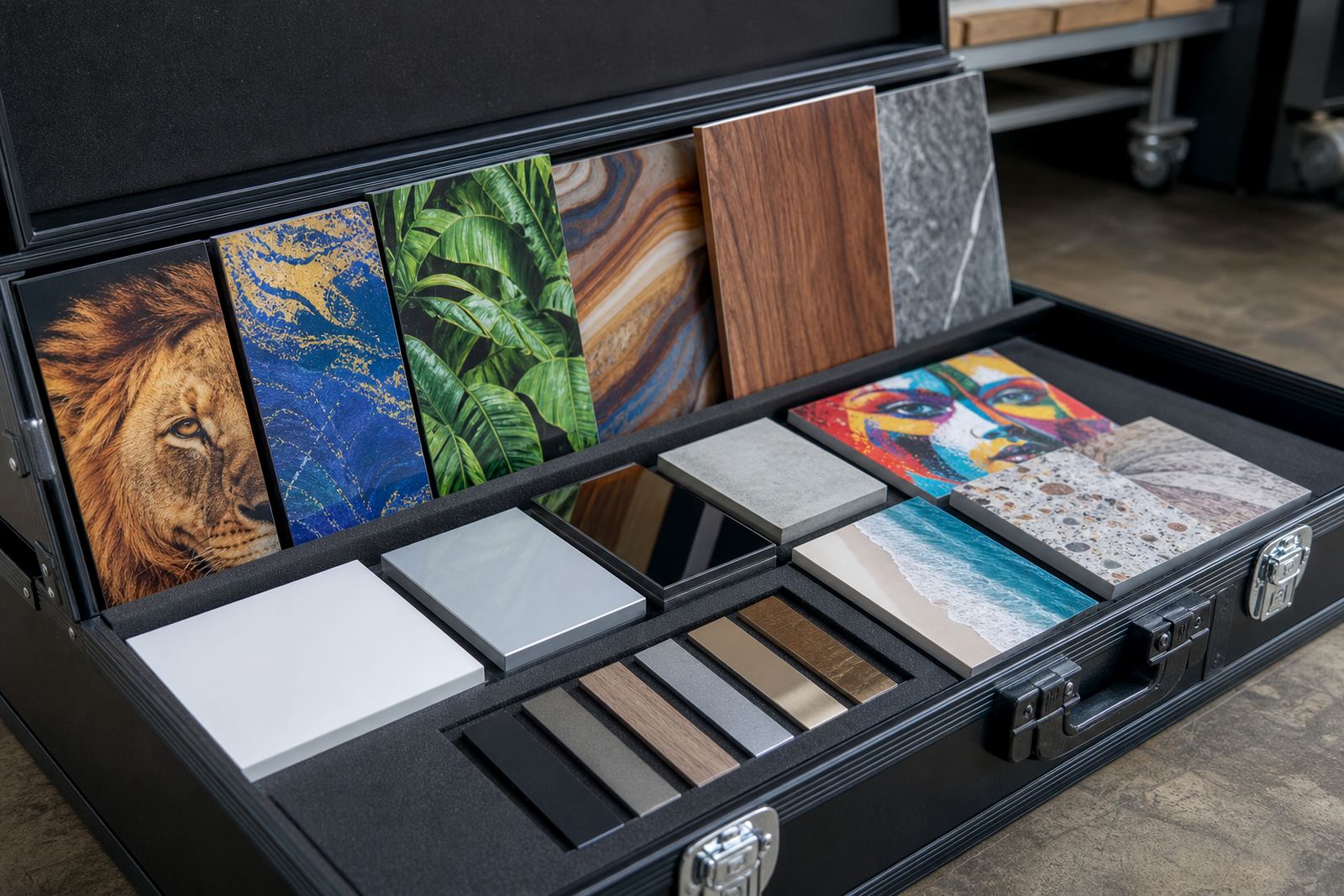
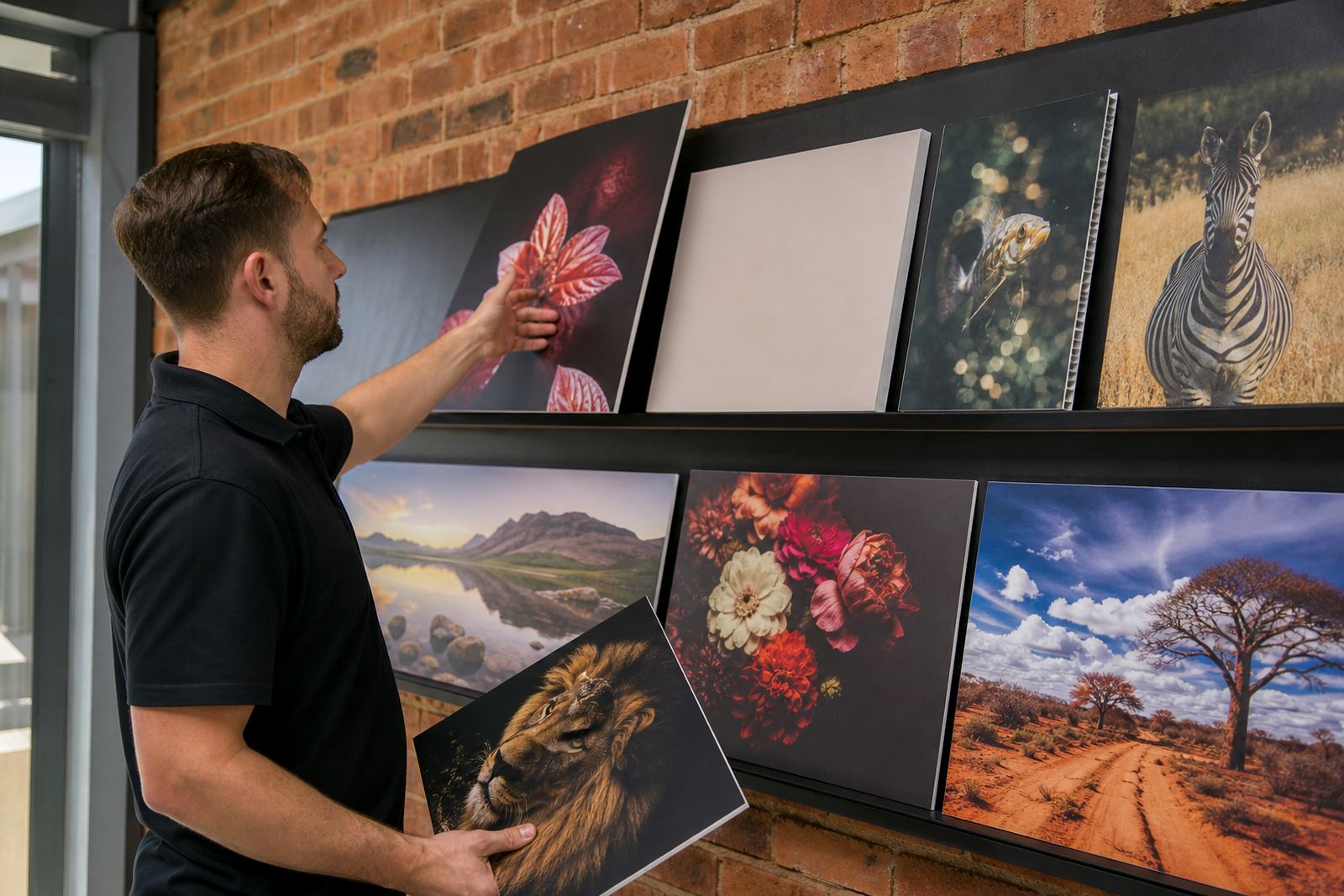
Different rigid boards behave differently under UV printing. Foam board is light and easy to handle for indoor displays, but it may not suit high traffic areas or long term outdoor use. PVC board gives better moisture resistance and a cleaner edge for many signage jobs. Corflute works for short term campaigns and site notices, while acrylic and other hard sheets are often chosen where a sharper finish is needed.
- Indoor displays: look for smooth, flat sheets with good print reception.
- Outdoor signage: favour moisture resistance, UV stability, and stronger edge durability.
- Short term promotions: choose media that is quick to cut, mount, and replace.
- Premium presentation: check clarity, surface finish, and how the board takes white ink.
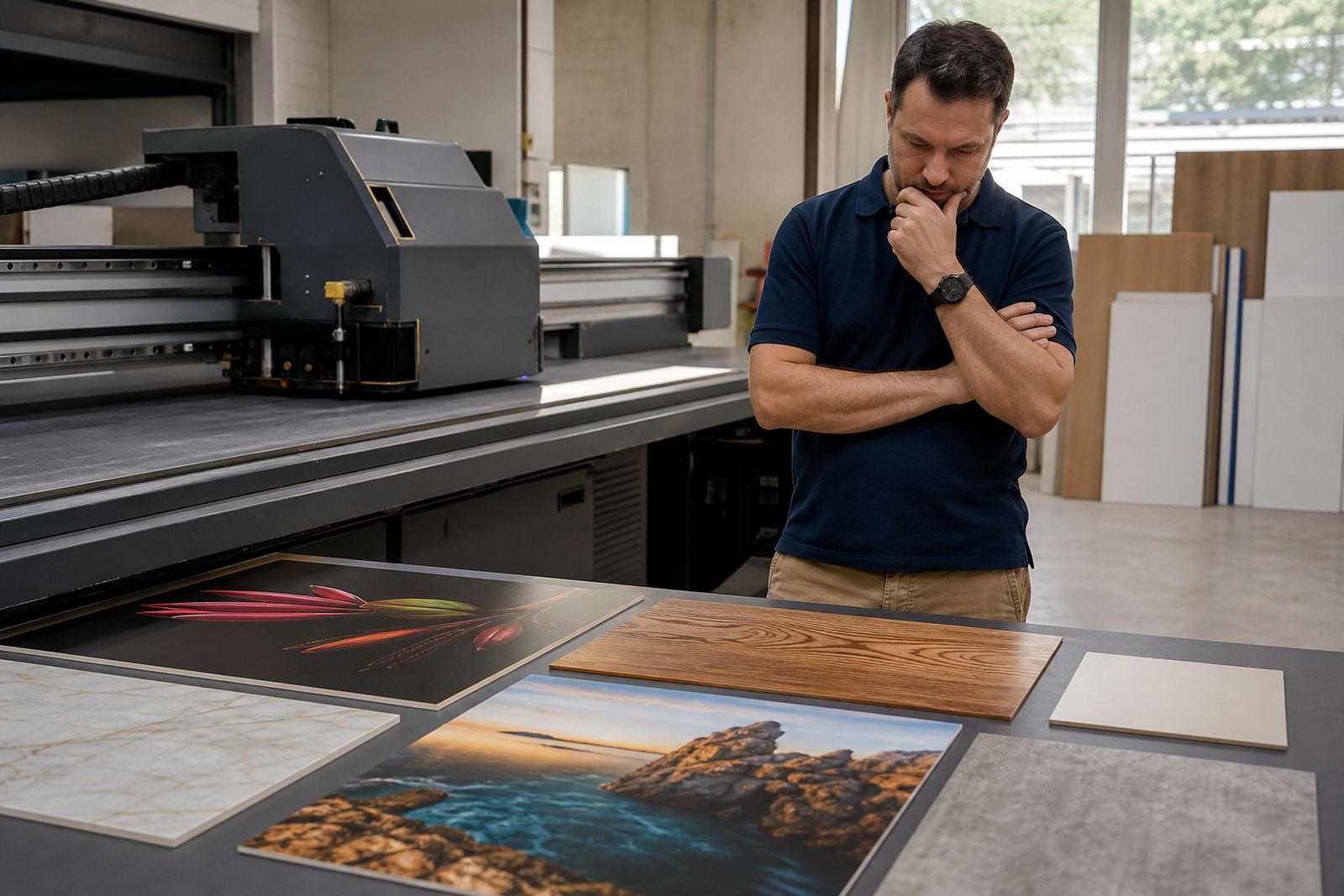
Do a sample run before committing to a large batch. Even two boards from the same supplier can behave differently if the surface has been stored badly or the sheets are warped by heat.
Check surface, thickness and flatness before printing
Flatbed UV printing relies on consistent board height and a clean surface. Dust, oil, release agents and fingerprints can all affect adhesion. Thickness matters too because it changes how the board sits on the bed and how you set head clearance. If the sheet is bowed, it can cause print quality issues or slow down your workflow while you correct each job one by one.
A quick receiving check saves time later. Look for edge damage, cup, warp, bow and visible contamination. If the media will be used for double sided work, check whether the board is stable enough to stay true after the first side has cured. A sheet that moves after printing is a headache no one needs.
- Inspect sheets as soon as they arrive.
- Store media flat, in a dry room, away from direct sun.
- Keep a record of which batches printed well and which did not.
- Allow boards to acclimatise to the room before production.
Think about ink adhesion and finish from the start
Not every surface takes ink the same way. Some boards need a primer or surface treatment, while others print well with direct UV ink and proper curing. White ink may be needed for colour work on dark or clear media, and gloss or matte finish will change how the final piece reads under light. In retail spaces, glare can be a problem, so a matte finish may be better than high gloss.
Ask how the board will be handled after printing. If it is going to be cut, routed, folded or mounted, the ink layer must stay intact at the edges. A good print can still fail if the media chips when trimmed or if the surface cracks around drilled holes.
Plan for installation, transport and site conditions
The best media for the printer is not always the best media for the job site. A lightweight board may be easy to print, but if it has to travel to Cape Town or Gqeberha and survive loading, offloading and fitting, it may need extra support. For municipal work, event signage, and mall installations, think through how the boards will be stacked, packed and carried by the fitment team.
Also consider the real conditions on site. A sign in a factory near Germiston may face dust and handling marks, while a board in a coastal shopfront may face moisture and temperature swings. Those details matter more than people admit.
- Check whether the finished piece will be indoors or outdoors.
- Allow for transport damage on long routes.
- Decide if the job needs extra mounting hardware or a frame.
- Confirm whether the site rules allow drilling, adhesives or stand off fixings.
Build a repeatable workflow for better production
Media choice works best when it fits the full workflow, from ordering through to delivery. If your team prints, trims, packs and installs on the same day, choose media that behaves predictably and does not need a lot of hand holding. If you run longer production cycles, you may be able to work with more specialised substrates and staged curing. Either way, keep your process simple enough for the team to repeat under pressure.
A practical checklist helps:
- Confirm the application, size and expected lifespan.
- Match the board surface to the ink system and finish.
- Test a sample before bulk production.
- Check storage space, handling method and delivery route.
- Record what worked so the next job starts faster.
Good media selection is part print knowledge and part common sense. When the substrate suits the job, production runs smoother, waste drops and the finished signage holds up better after install.