When Direct-to-Board UV Is the Better Choice
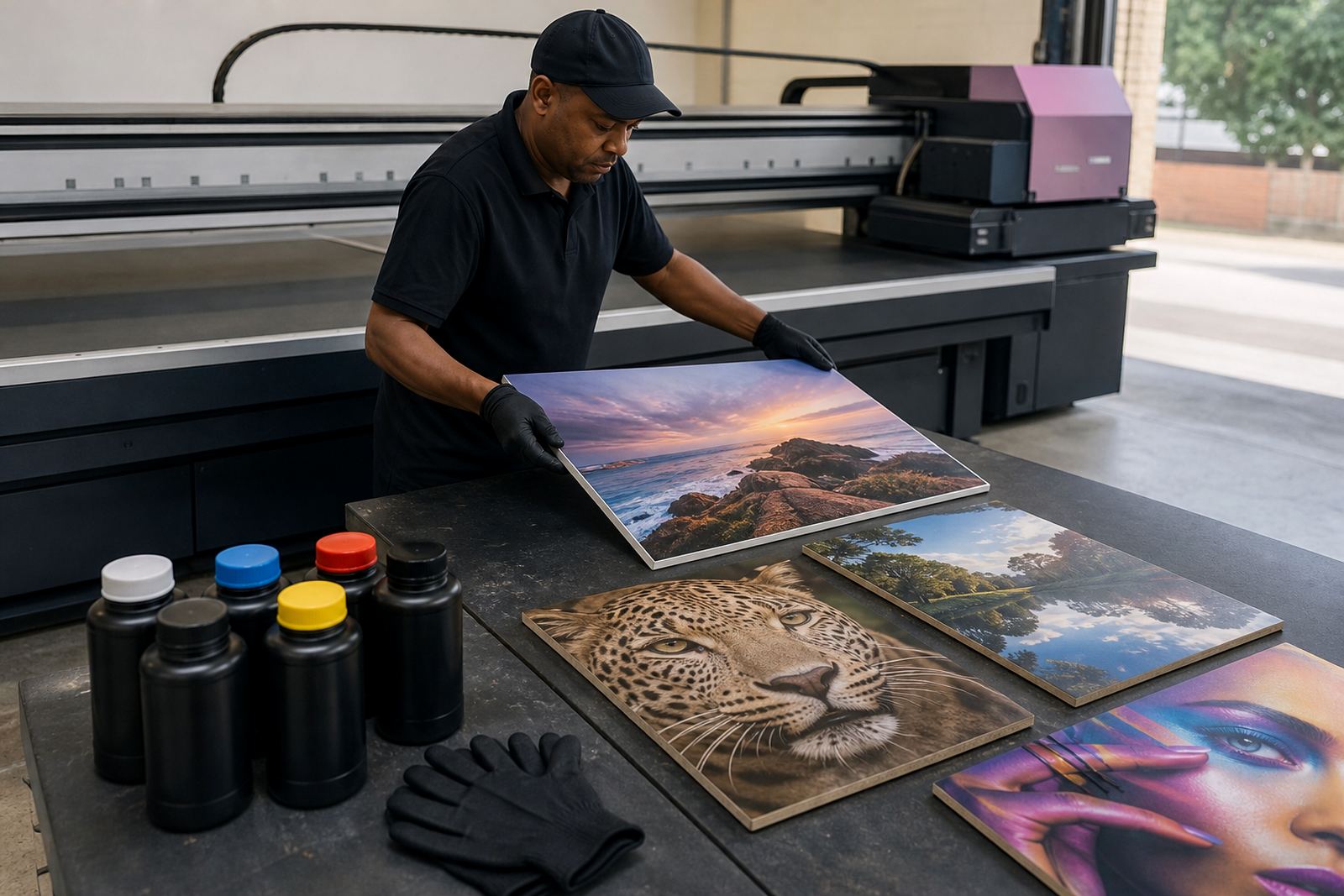
Flatbed UV printing suits jobs that go straight onto rigid media such as foam board, PVC sheet, acrylic, ACM, corrugated plastic and other sign boards. If the finished item must be ready for display with minimal extra handling, this method often makes more sense than printing onto a flexible substrate and then mounting it later.
It is a practical option for retail signage, event panels, point of sale displays, directional signs and indoor or outdoor boards where a sharp finish matters. Because the print lands directly on the board, the workflow is simpler for short runs and mixed jobs where each board may carry different artwork.
In South African conditions, that direct approach helps when turnaround is tight and a job needs to move from proof to production without waiting for extra laminating or mounting slots. It also helps on sites where panels are collected, delivered and installed across more than one branch or branch office, which can happen a lot on larger projects.
How It Compares with Vinyl, Lamination and Mounting
Other methods still have a place. Vinyl prints are useful when the surface is curved, uneven or temporary, and lamination can add protection on certain jobs. Mounting a printed face onto board works well for some display work, but it adds labour, adhesive steps and another chance for dust or edge lift.
Direct UV printing is usually stronger on jobs that need crisp text, solid colour blocks and a clean edge finish on rigid material. It is less about stretching a print around a frame and more about placing the image exactly where it must sit on the board.
- Choose direct-to-board UV when the substrate is rigid and flat.
- Choose vinyl when the shape is curved or the panel must be wrapped.
- Choose lamination when extra scuff protection or a specific finish is needed.
- Choose mounting when the board is oversized and the print has to be applied after output.
If the board will be handled often, placed near sunlight or used outdoors, the right ink set, cleaning routine and board type matter just as much as the print method. That is why media testing and colour guidance should happen before the full run.
A Simple Job Planning Checklist Before Printing
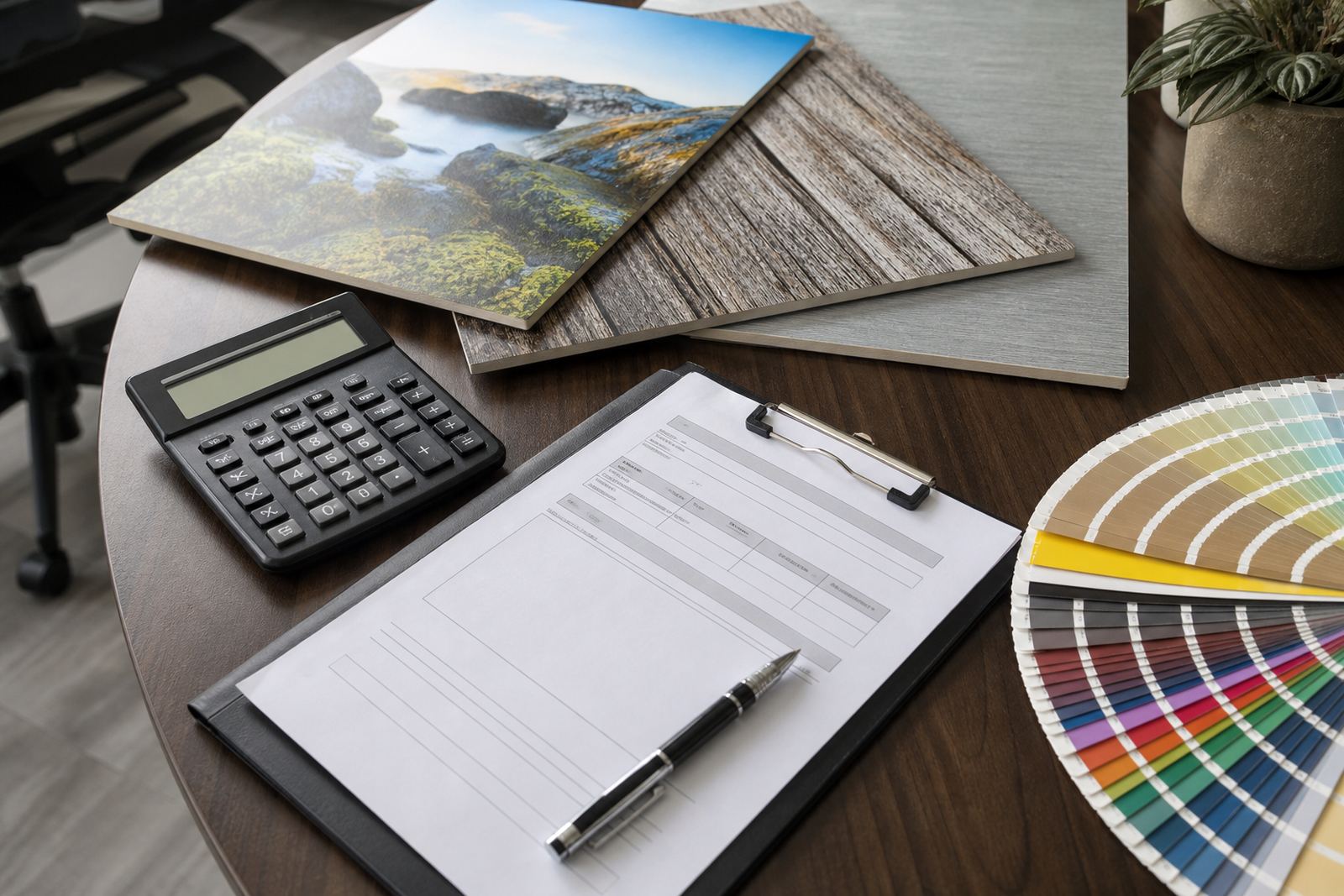
Before a flatbed job starts, the board size, thickness and surface need to be checked against the layout and the final use. A good workflow starts with the board itself, not only the artwork. If the substrate is dusty, warped or not suited to UV ink, problems can show up after printing and cost time later.
Use this checklist before release to production:
- Confirm the board material and thickness.
- Check whether the panel is for indoor or outdoor use.
- Decide if the finish should be matt, gloss or kept natural.
- Review artwork size, bleed and crop marks.
- Test the colour against the chosen media if the job is sensitive.
- Confirm how the board will be cut, packed and delivered.
It also helps to allow for drying, staging and handling space. In Germiston and across the East Rand, many sites work with limited floor area so the production path needs to stay tidy. Good site preparation reduces dust, damage and delays.
Ink, Media and Colour Points That Change the Result
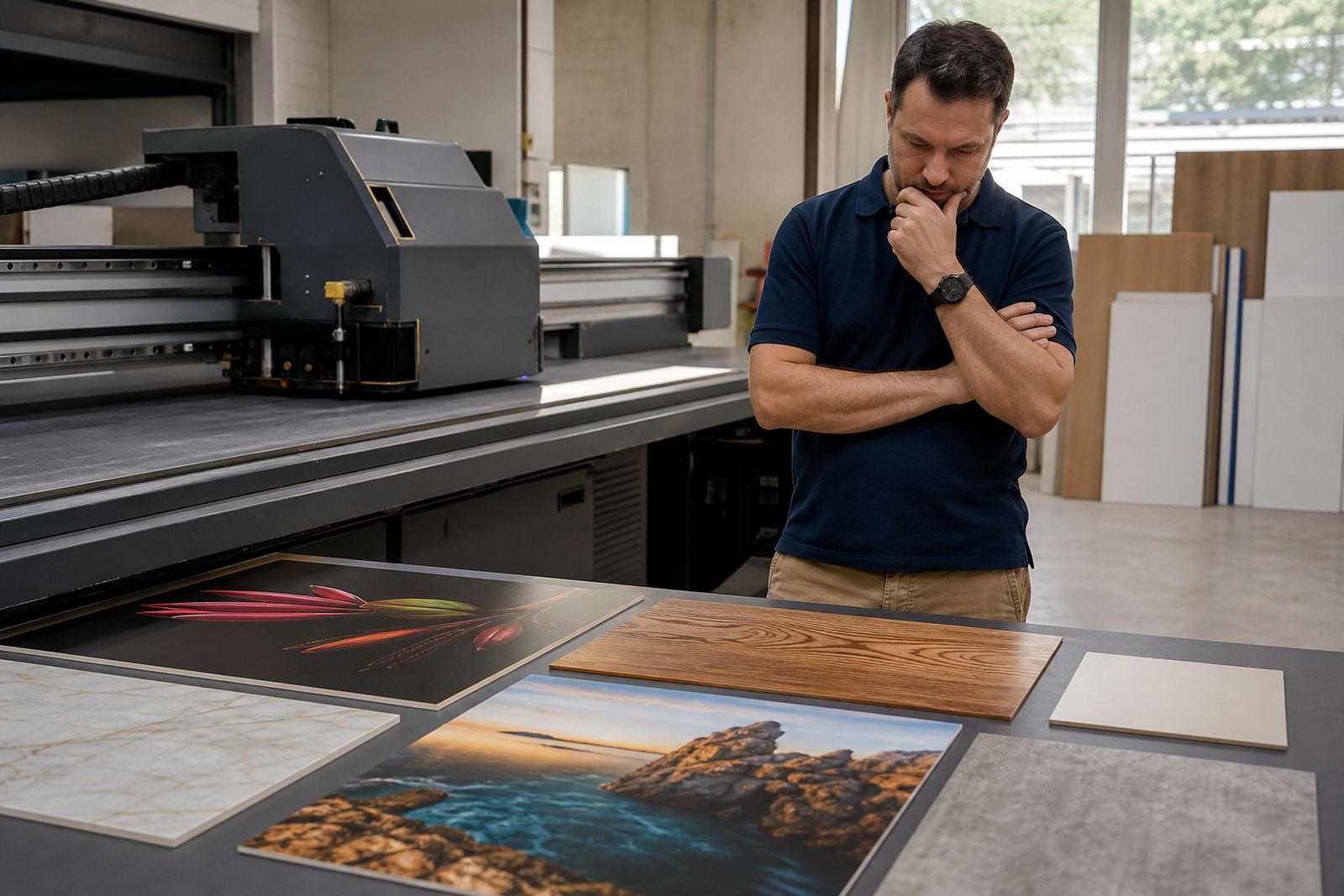
UV printing is only as good as the combination of ink, media and workflow. On rigid boards, the surface texture can affect colour density, edge sharpness and adhesion. Smooth sheets may give a cleaner result, while some textured boards need a different setting or a test panel first.
Colour guidance matters when a brand colour must stay consistent across several signs or when a job is being split between branches. Subtle shifts can happen if the board changes, the operator changes or the room temperature changes. That is common in Gauteng during hot afternoons and also on coastal jobs where humidity is higher.
It is worth checking these points:
- Will the media accept ink evenly across the whole sheet?
- Does the surface need cleaning before printing?
- Will the final sign face sunlight, rain or strong indoor lighting?
- Does the job need an underprint or white layer for contrast?
For boards that will stand outdoors, the right prep and a sensible handling process matter more than chasing a quick turnaround. The print should be handled with care from the first sheet to the final pack.
Where Flatbed UV Fits Better Than Other Signage Methods
Flatbed UV is a strong choice for rigid board signs that need clear graphics and a direct route to finishing. It works well where the board is the final display face, such as information panels, temporary site signs, retail placards, event boards and internal wayfinding.
It can also suit jobs that need local support, especially when sites are spread between Johannesburg, Pretoria, Durban, Cape Town and Gqeberha. If a client needs installation, training or service after the sale, keeping the print workflow, board handling and support chain in one place can make the job easier to manage.
Use this quick fit check:
- The job is on a rigid board, not a flexible banner.
- The artwork needs clean edges and solid colour blocks.
- There are short runs or many different versions.
- The finished piece must move quickly into installation or dispatch.
- The team wants one process instead of print, mount and finish.
When those boxes are ticked, direct-to-board UV is usually the more practical route.
Aftercare, Service and What to Ask for on the Job
A good result does not stop at print release. Ask how the boards will be packed, stacked and transported, especially if the job is going to another city or through a site with limited storage. Sharp corners, dust and moisture can spoil a good board before installation begins.
It also helps to know who will handle training, maintenance and backup support if the printer is part of an ongoing production workflow. Preventive maintenance, breakdown support, remote support and spares coordination are all part of keeping output steady. On busy production floors, even a short stoppage can push deliveries off schedule.
If a team is new to UV work, the first questions should be practical: how to clean the machine, how to handle ink safely, how to test new media and how to keep the workflow consistent from one shift to the next. That advice should be specific to the board, the room and the kind of work being run, not guesswork.
Final Check Before You Choose the Method
If the job is rigid, needs quick turnaround and must look crisp straight off the board, direct-to-board UV is often the better fit. If the surface is curved, temporary or needs extra finishing, another method may be more suitable. The best choice comes from the substrate, the environment and the finished use, not only the artwork.
For flatbed printer supply, installation, operator training and support across South Africa, the enquiry form on our contact page is the right place to start. That keeps the brief in one place and helps the team match the job to the correct setup from the beginning.