
Start With The End Use Of The Sign
Before you choose a board, think about where it will sit, how long it must last, and whether it will be drilled, routed, folded or fixed with adhesive. A retail display for a mall in Johannesburg has different needs from a wayfinding panel in Durban, where humidity and salt air can affect some materials more quickly. If the sign is going outside, we also look at wind load, sun exposure and whether the client needs a short-term promotion or a longer service life.
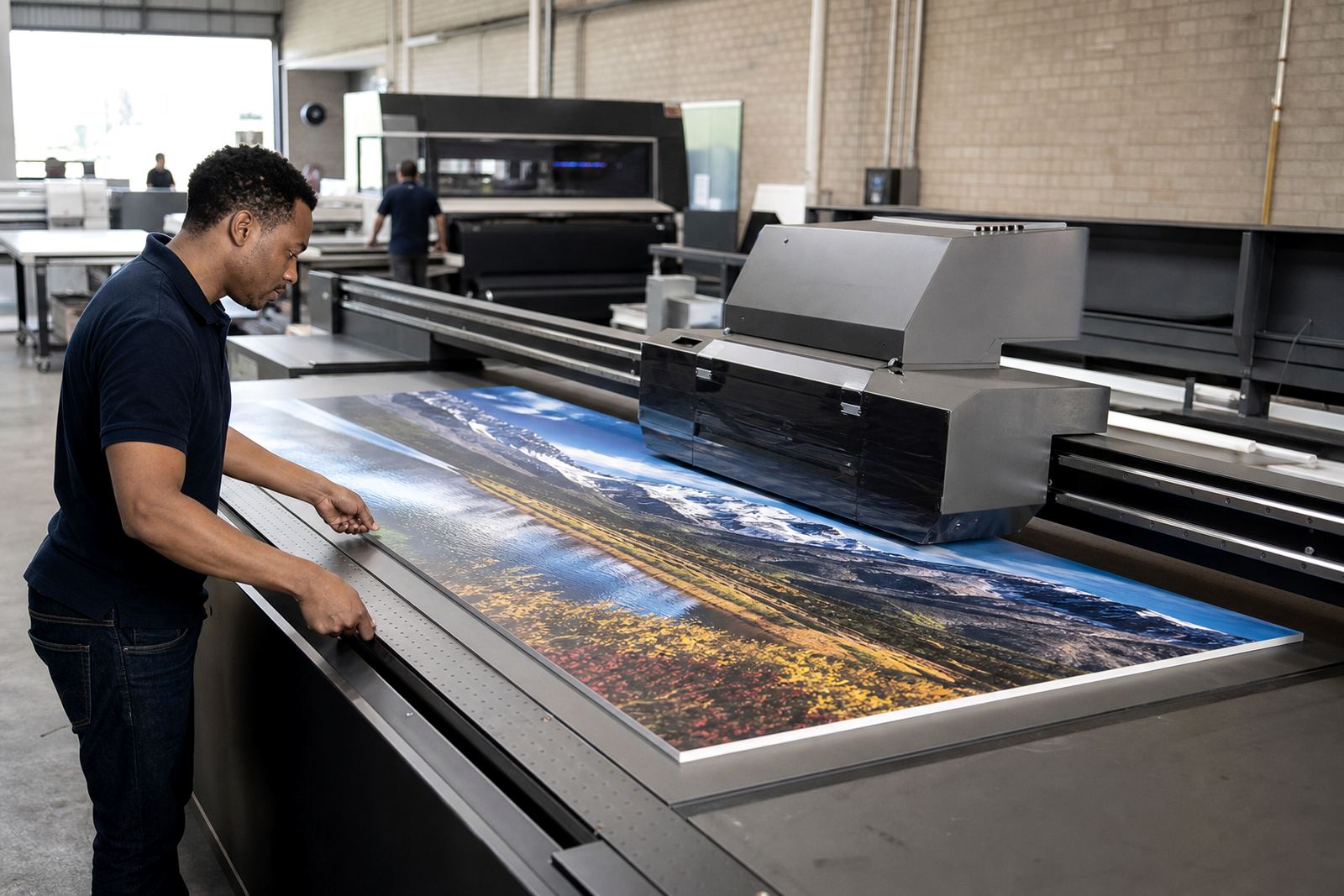
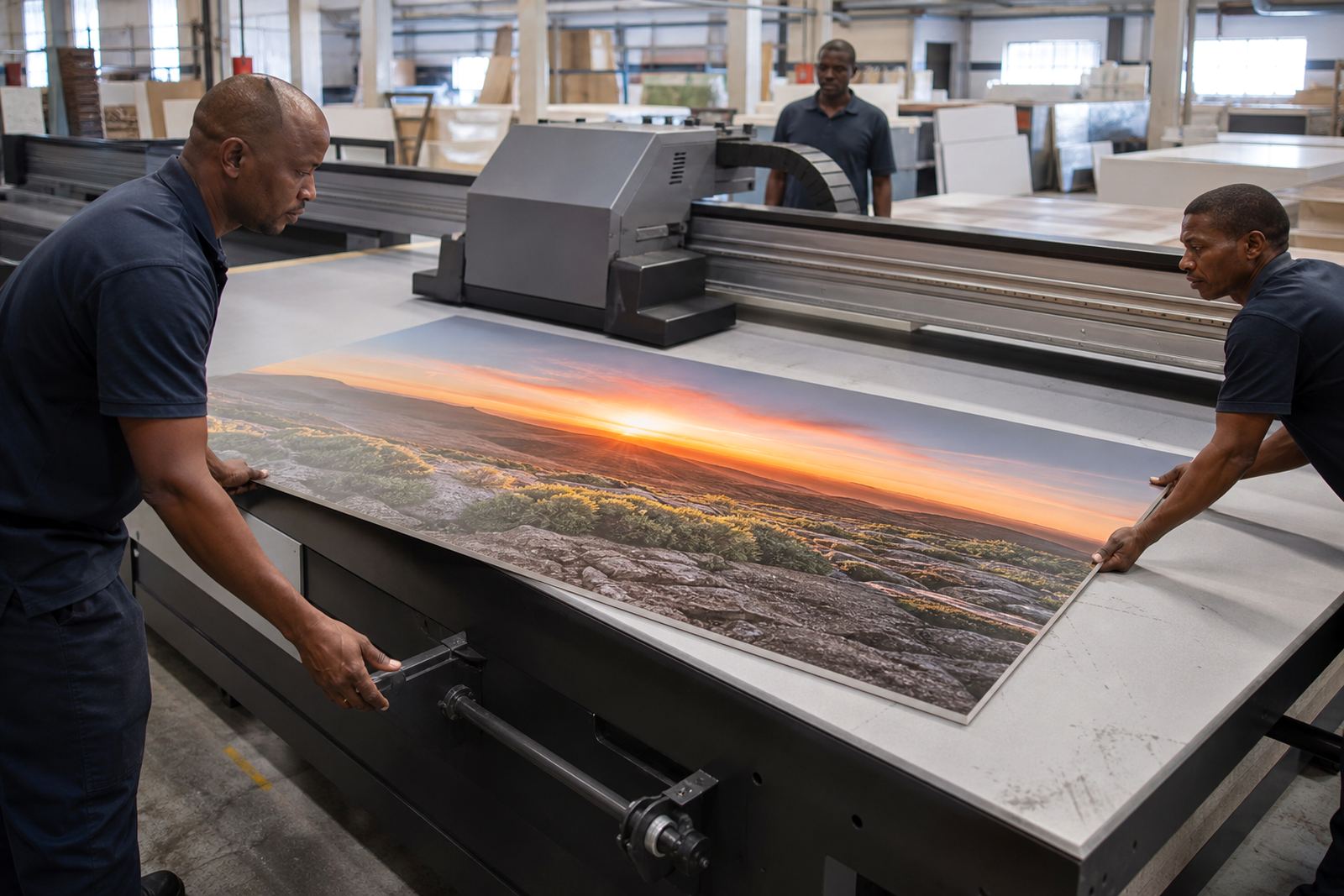
For flatbed UV printing, the substrate must stay reasonably flat and stable during print and after curing. If a board bows easily or carries surface dust it can affect alignment and adhesion. We often advise clients to bring a sample or request a test print before placing a full order, especially when the material comes from a new supplier or the job must match existing signage on site.
Common Rigid Substrates We Review With Clients
Different substrates suit different finishes, budgets and fixing methods. Some boards are better for clean indoor display work, while others are suited to tougher outdoor use. The key is to balance weight, flatness, print adhesion and the kind of cutting or drilling needed after printing.
- Acrylic for clear, polished presentations, back panels and premium display work
- PVC foam board for lighter indoor signage, promotional panels and short to medium term use
- Aluminium composite panel for outdoor signage, fascia signs and projects that need good rigidity
- Corrugated plastic board for temporary notices and event signage where weight matters
- Timber panels and coated boards for decorative pieces, point of sale items and custom applications
- Glass and mirror surfaces where the application calls for specialty handling and careful preparation
Not every rigid material is suitable for every job. Some boards need extra cleaning before printing, some need edge sealing, and some work better if the ink laydown is reduced. We help you decide what will print cleanly and what will hold up once the sign is moved, mounted or exposed to weather.
Ink, Surface Prep And Adhesion Matter
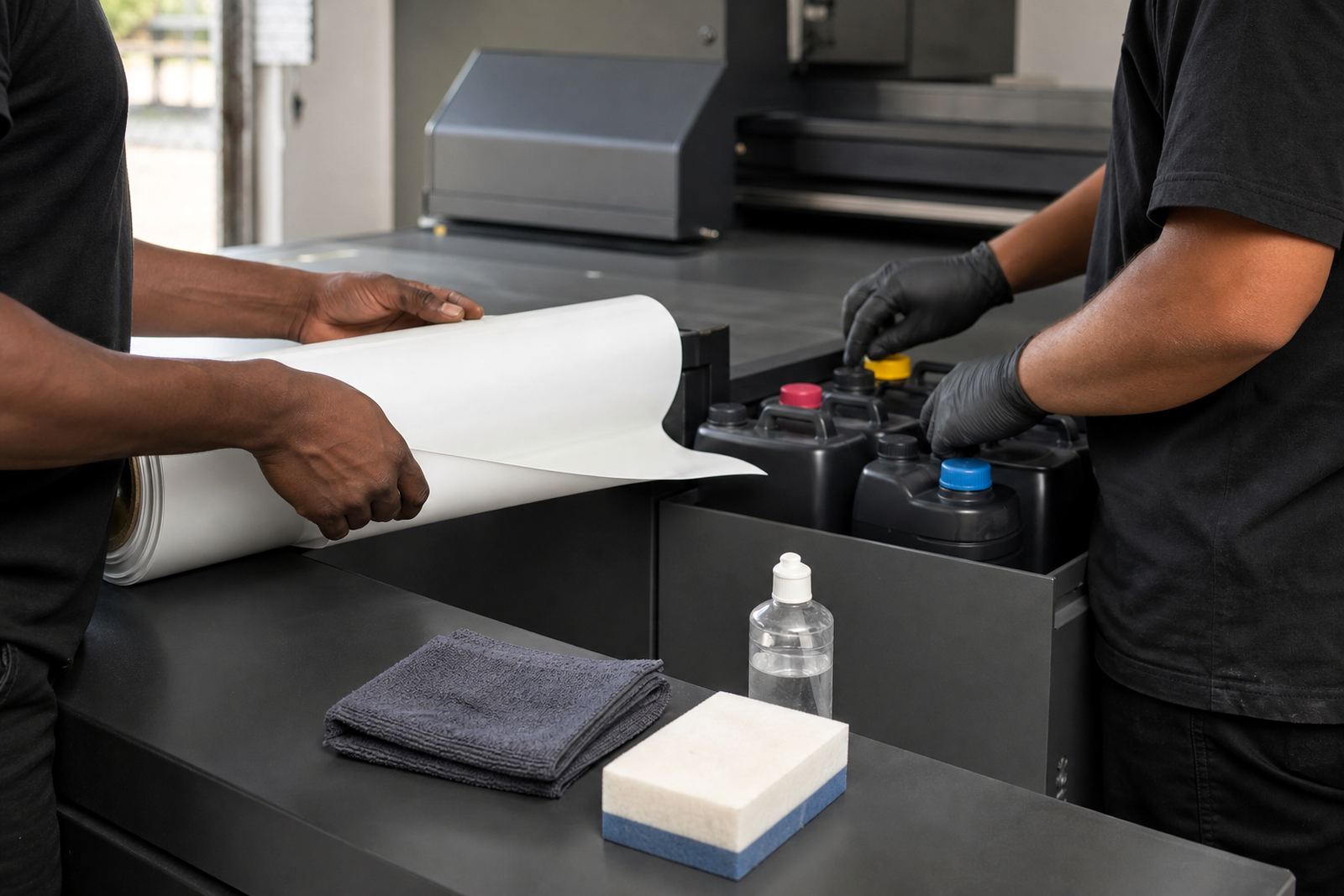
Flatbed UV printing depends on good surface preparation as much as the printer setup. Dust, grease and release agents can interfere with adhesion, so cleaning is part of the workflow from the start. In some cases a surface may need to be wiped down, dried fully and checked for static before printing begins. On very smooth or non-porous materials, a test panel is often the safest way to confirm adhesion.
The ink must suit the substrate and the final use. For example, a board that will be handled often may need stronger scratch resistance, while a decorative panel can be set up for a different finish. When a client asks for outdoor use in places like Gqeberha or Cape Town, we also look at sun exposure, wind and local moisture. That helps prevent peeling, fading or premature wear.
How We Test A New Board Before A Full Run
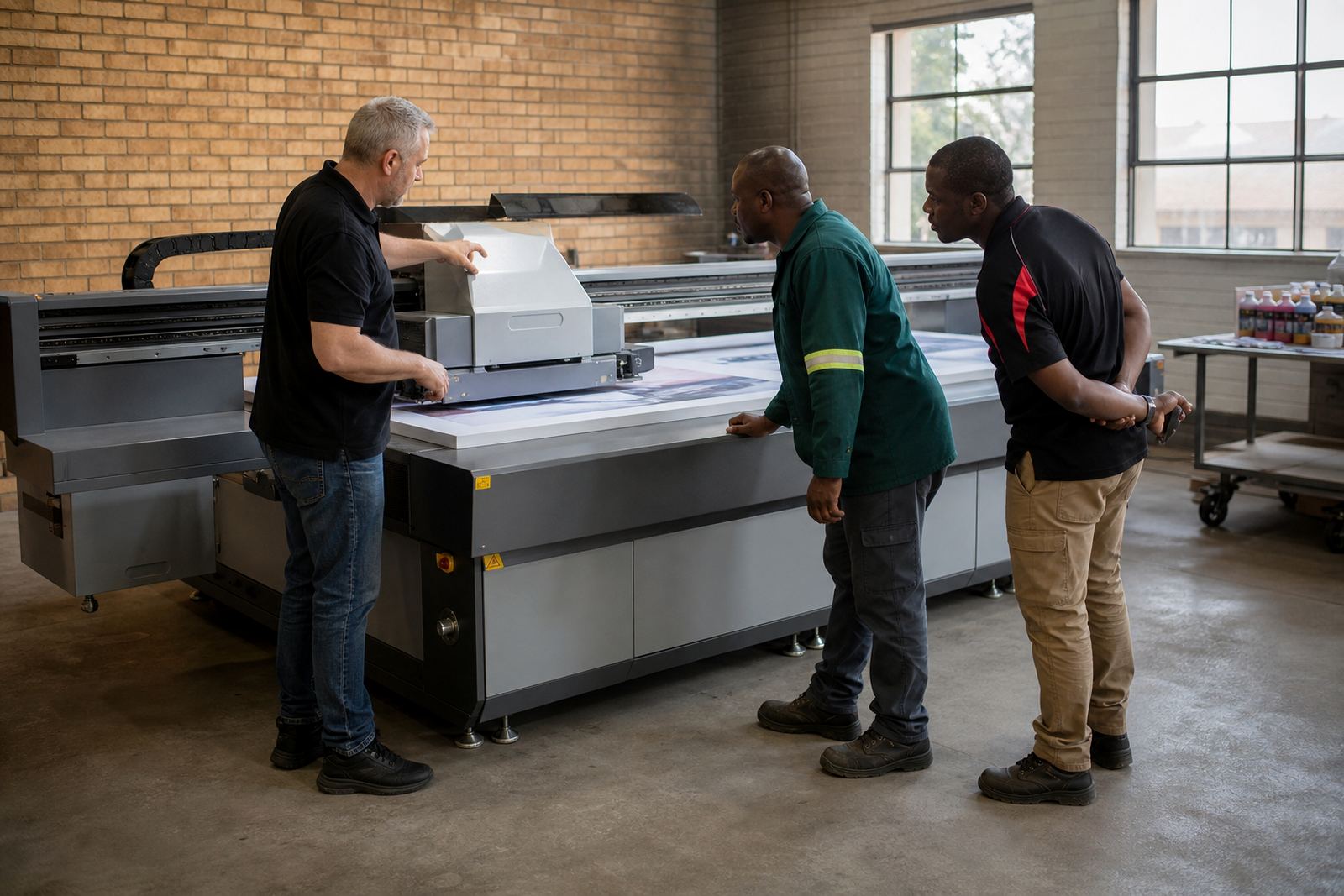
We prefer a practical step-by-step approach when a substrate is unfamiliar. That keeps waste down and gives the client a clear view of the finished result before production starts in full. A test also helps us spot issues with board flatness, ink density and cutting behaviour, which can save time later on site.
- Confirm the application, size and fixing method
- Inspect the board for dust, warping and surface defects
- Run a sample print or small test area
- Check colour, cure, adhesion and finish
- Review any cutting, drilling or routing needs
- Adjust the workflow before the full run begins
If the material needs special handling we explain it before production. That might include extra drying time, gentler stacking or changes to the order in which pieces are printed. During load shedding periods, planning also matters because consistent power helps protect both print quality and turnaround times.
Storage And Handling For Gauteng And Coastal Conditions
Storage can change how a board behaves on press. In Germiston and the wider East Rand, dust and temperature shifts can affect how materials sit in store. Near the coast, humidity is often the bigger issue, especially for coated boards, timber-based panels and adhesive-backed items. We recommend keeping sheets flat, off the floor and away from direct sunlight or wet areas.
- Keep boards wrapped until needed
- Store sheets flat on a level surface
- Avoid placing heavy items on top of printed stock
- Let material acclimatise before printing if it has travelled far
- Protect finished work from rain, dust and direct heat during transport
Good handling protects the print and the substrate. It also reduces the chance of edge damage, surface marking or curling when work is moved between the factory, the installer and the final site.
When To Ask For Production Advice Before Ordering
If the job has tight deadlines, unusual sizing or municipal display requirements, it is worth asking for guidance before you place a material order. Some signs need specific mounting heights, reflective properties or safe edge finishing. Others may need to meet property manager rules, event site conditions or indoor fire expectations, depending on where they will be used.
Our Germiston team supports clients across Johannesburg, Pretoria, Durban, Cape Town and Gqeberha, with installation, training and service available in surrounding areas too. If you are not sure which rigid board to choose, send the job details through the enquiry form on our contact page and we will help you narrow it down. A short discussion upfront often prevents reprints, missed deadlines and avoidable material loss.