Why Printed Boards Scratch So Easily
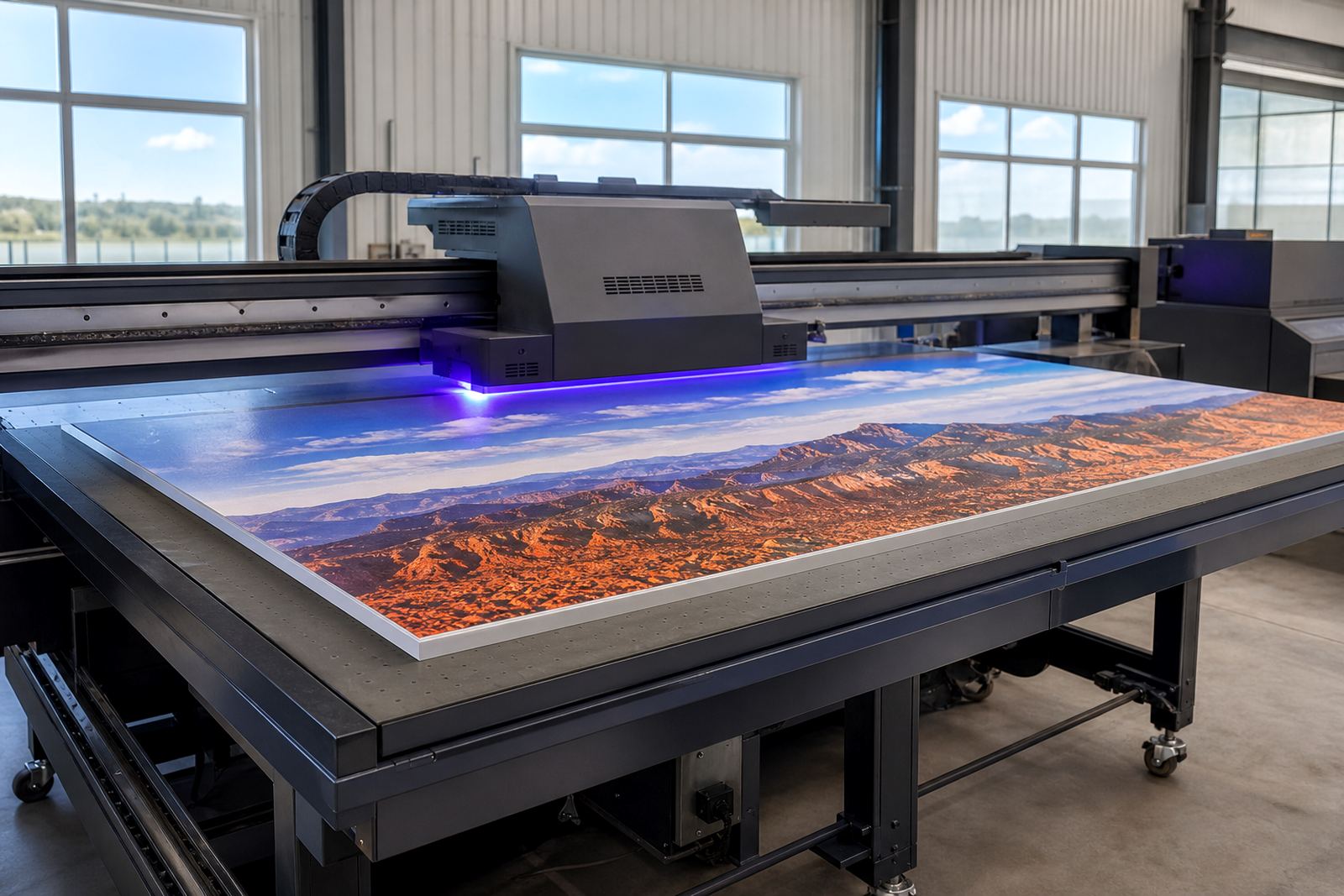
Flatbed UV prints can look dry and ready within minutes, but the surface still needs careful handling. On rigid boards, scuffs often come from stacking, sliding, dust, packing tape or rough gloves rather than from the print itself. If the board is still warm, or if the ink has not fully settled for the job type and media used, the surface can mark more easily.
In Gauteng, dust from loading bays and workshop floors is a common problem. Near the coast, moisture and salty air can make board surfaces tacky enough to pick up grime during storage. That is why the first rule is simple: treat every printed sheet as if it is already a finished sign.
- Do not drag boards across each other
- Keep cut edges from scraping the face of the print
- Separate fresh work from older stock
- Use clean hands or gloves with a good grip
Set Up A Clean Handling Route In The Workshop
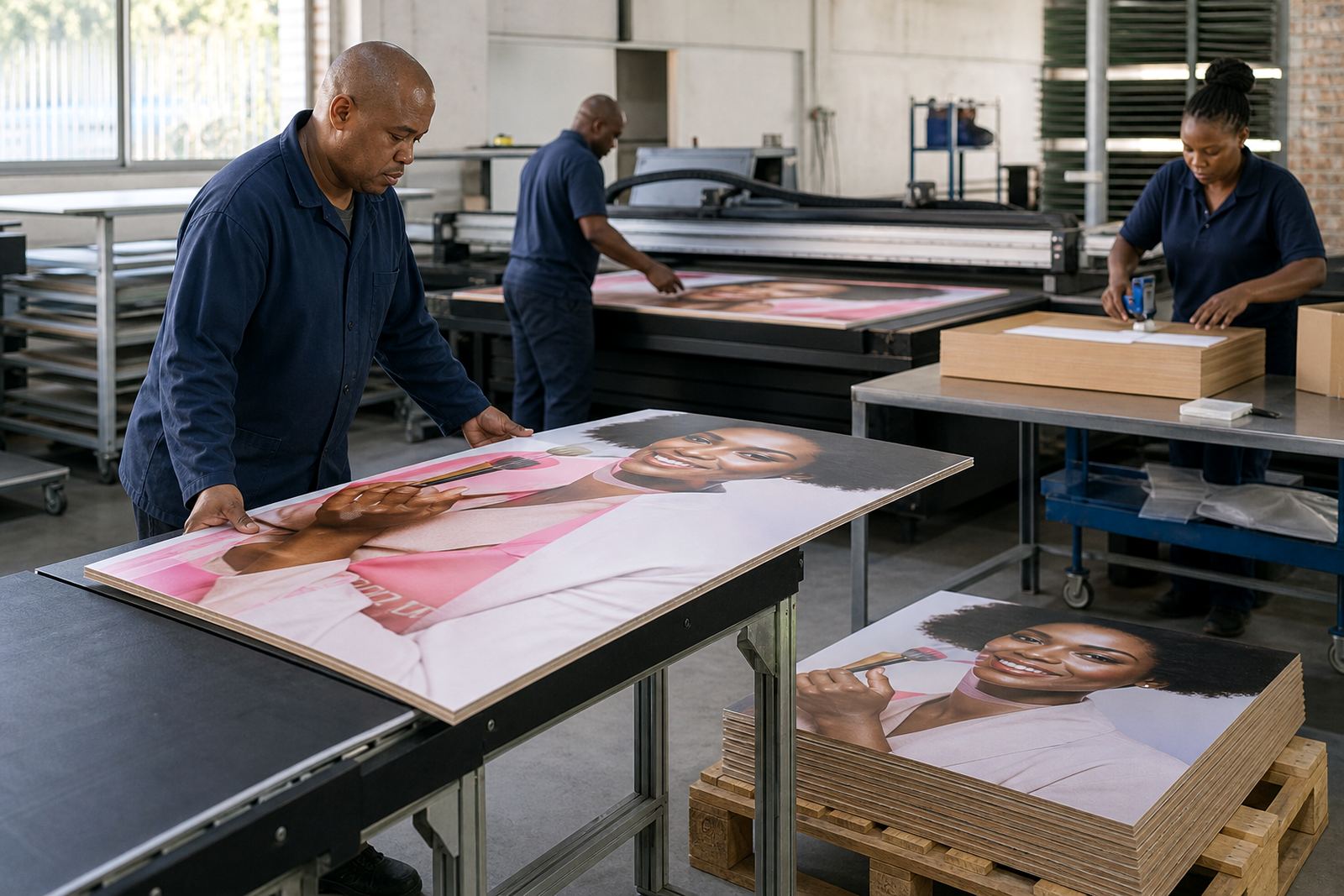
The shortest route is often the safest route. If boards travel from printer to trimming table to packing area over a clear path, there is less chance of corner knocks and surface rub. A painted floor is better than bare concrete if possible, but even a clean, marked route helps. In Germiston and the East Rand, many busy shops move between production and dispatch all day, so the walkway must stay free of offcuts, open blades and loose straps.
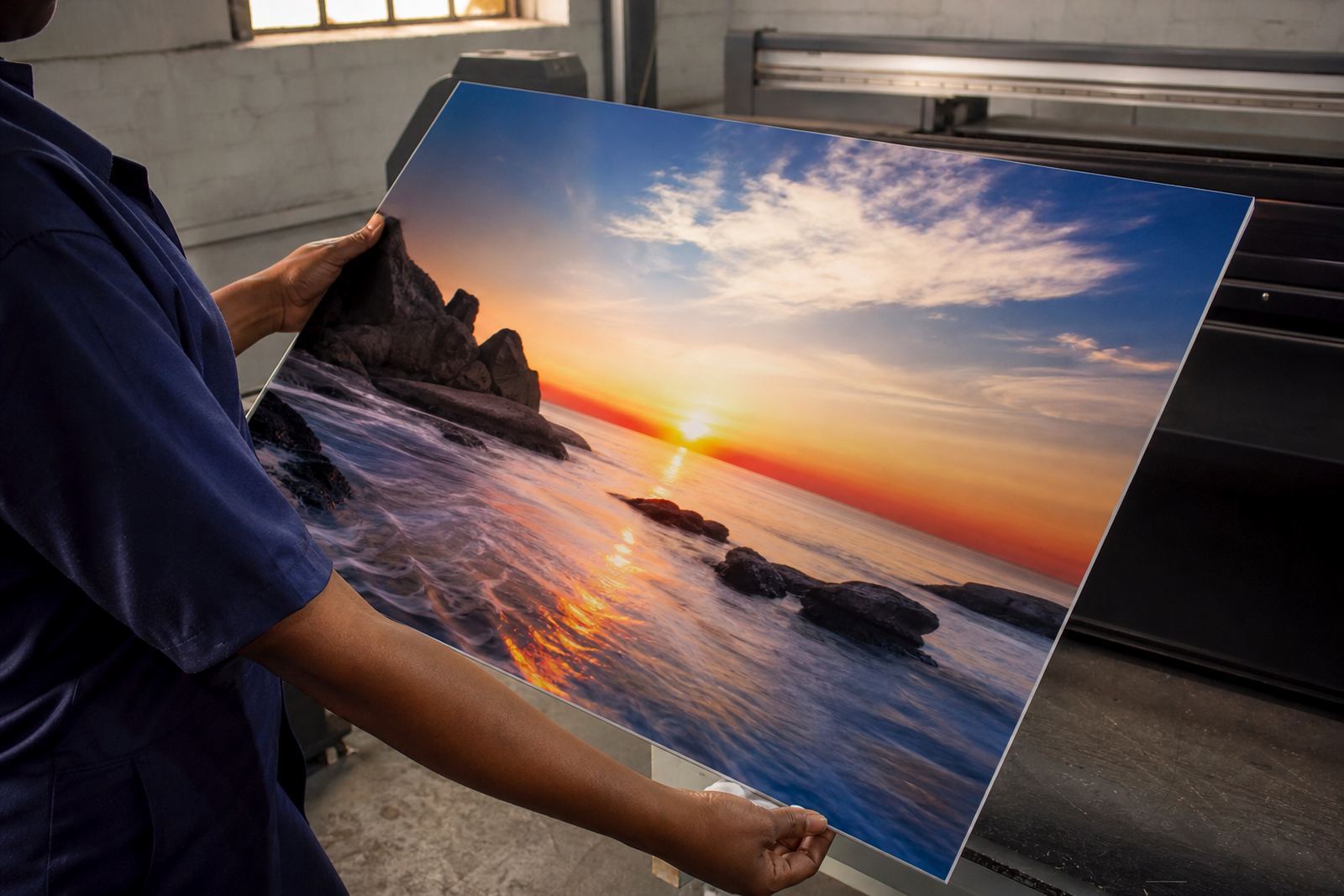
Make one person responsible for moving each batch, especially on larger boards. Two people are better for full sheets or heavier rigid material. If a board must be turned, lift it, dont slide it across a table edge. A slight corner chip can turn into a visible scratch once the sign is installed.
- Use a clean staging table near the printer
- Keep trimming tools in one place only
- Mark a packing zone away from cutting dust
- Assign one handler per batch for smaller runs
Choose Packing Methods That Do Not Mark The Print
Packing is where many good jobs pick up damage. Avoid rough cardboard directly on printed faces if the board will shift in transit. Use clean interleaving sheets, soft foam or suitable surface protection between stacked boards. The aim is to stop movement. If sheets rub against each other on a bumpy road to Pretoria or Durban, even a light rub can leave a shiny line or a dull patch.
Corner protection matters too. Corners get knocked first when boards are lifted into bakkies, vans or site storage rooms. Tape should never touch the printed face unless it is designed for that use and removed carefully. Loose wrap can trap grit, which then acts like sandpaper. It sounds simple, but plenty of complaints start with one box packed in a rush.
- Use clean interleaving between printed faces
- Protect corners before loading vehicles
- Keep straps away from printed surfaces
- Do not let boards slide inside the vehicle
Let The Ink And Media Finish Settling Before Stacking
Different boards and inks behave differently, so the workshop should follow a set wait time before stacking or wrapping. Some jobs can be moved soon after printing, while others need a longer rest on racks. That small pause helps the surface stabilise and reduces marking when the stack is lifted later. It also gives the team time to inspect for raised edges, dust nibs or any wet spots that need attention.
Operator training should include a simple rule: if in doubt, wait. Moving a board too early can leave edge rub marks, especially on smooth signage material. Media testing helps too, because some surfaces are more sensitive than others and may need a different handling method. A quick check on the first few sheets can save a full batch.
- Keep fresh prints on a separate rack
- Allow suitable settling time before stacking
- Check for dust or tacky spots before packing
- Record which media needs extra care
Store Boards Flat, Dry And Off The Floor
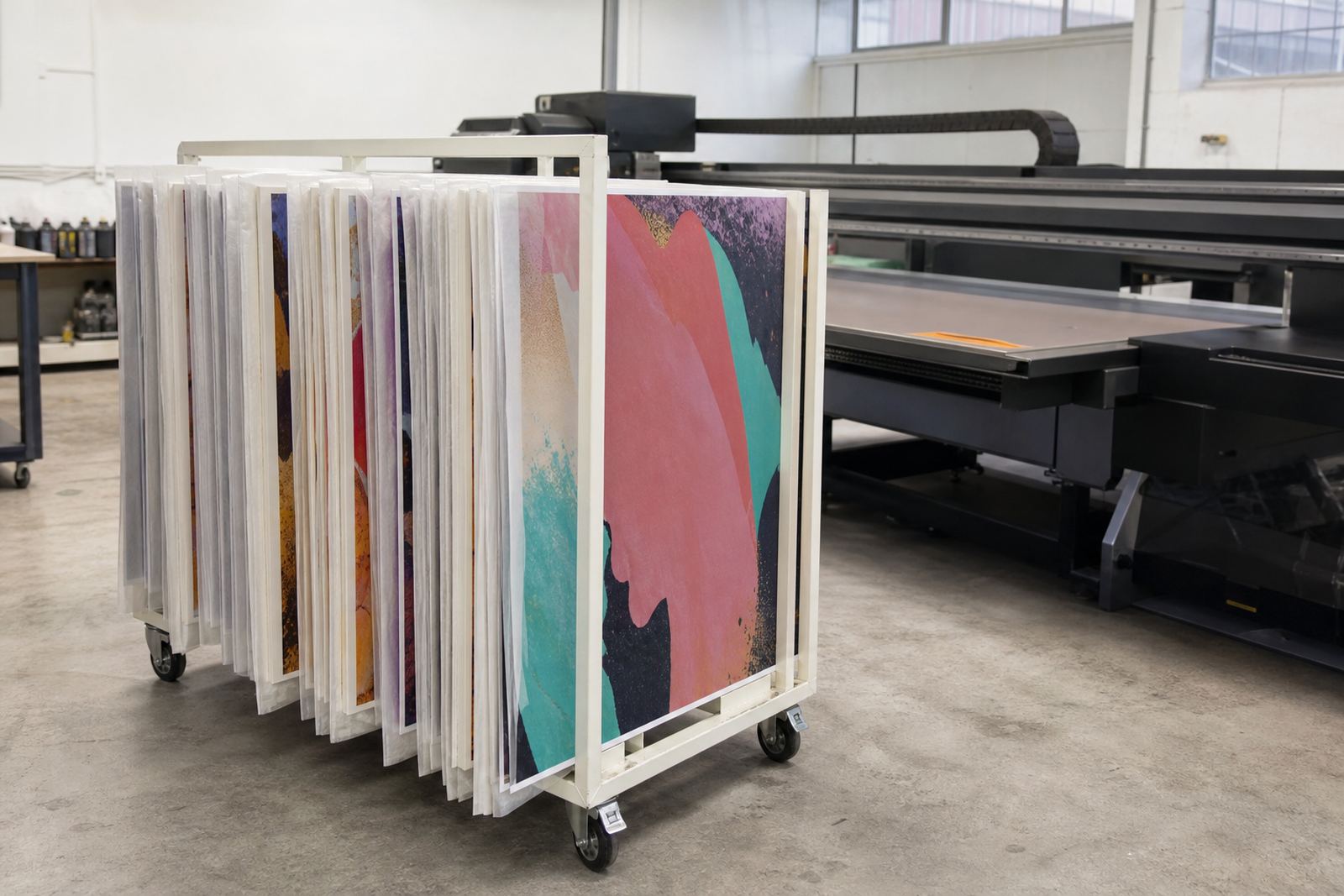
Storage is often where scratch damage begins slowly. A board stored against a rough wall or leaned too tightly against another panel can take pressure marks that only show later. Flat storage is best for most printed rigid boards, with clean supports that spread the weight. If boards must be leaned, use a proper rack and keep the angle consistent so edges do not dig in.
Keep all stock off the floor. That protects against dust, spills and the kind of minor flood damage that can happen after heavy rain or a burst pipe. In coastal areas, moisture can also soften packaging and make boards harder to keep clean. A dry room with regular airflow is much safer than a damp corner near a roller shutter. Simple, but it works.
- Use flat racks or proper leaning support
- Store stock away from walls that carry moisture
- Keep packaged boards off the floor
- Separate completed work from raw media
A Germiston Example: Preventing Rereprints Before A Site Delivery
A sign shop in Germiston may print a batch of rigid boards for a retail rollout in Johannesburg, then need them delivered the same afternoon. If the boards are packed too tightly and loaded without separation, the first stop or sudden brake can create a light rub on the top sheet. That one mark may not look serious in the workshop, but on a shopfront sign it stands out straight away.
The safer approach is to inspect each board, add interleaving, protect the corners and load the stack flat. When the team also keeps a small note of which media was used, future reprints are easier to avoid because the handling method can be repeated. This is the kind of practical routine that saves time for printers working across Gauteng and other provinces, especially when service calls, site prep and production all happen on the same day.
If a board still gets marked, breakdown support and production consulting can help work out whether the issue came from packing, transport or storage. The fix is usually in the process, not the printer itself.