
What curing does on a flatbed print
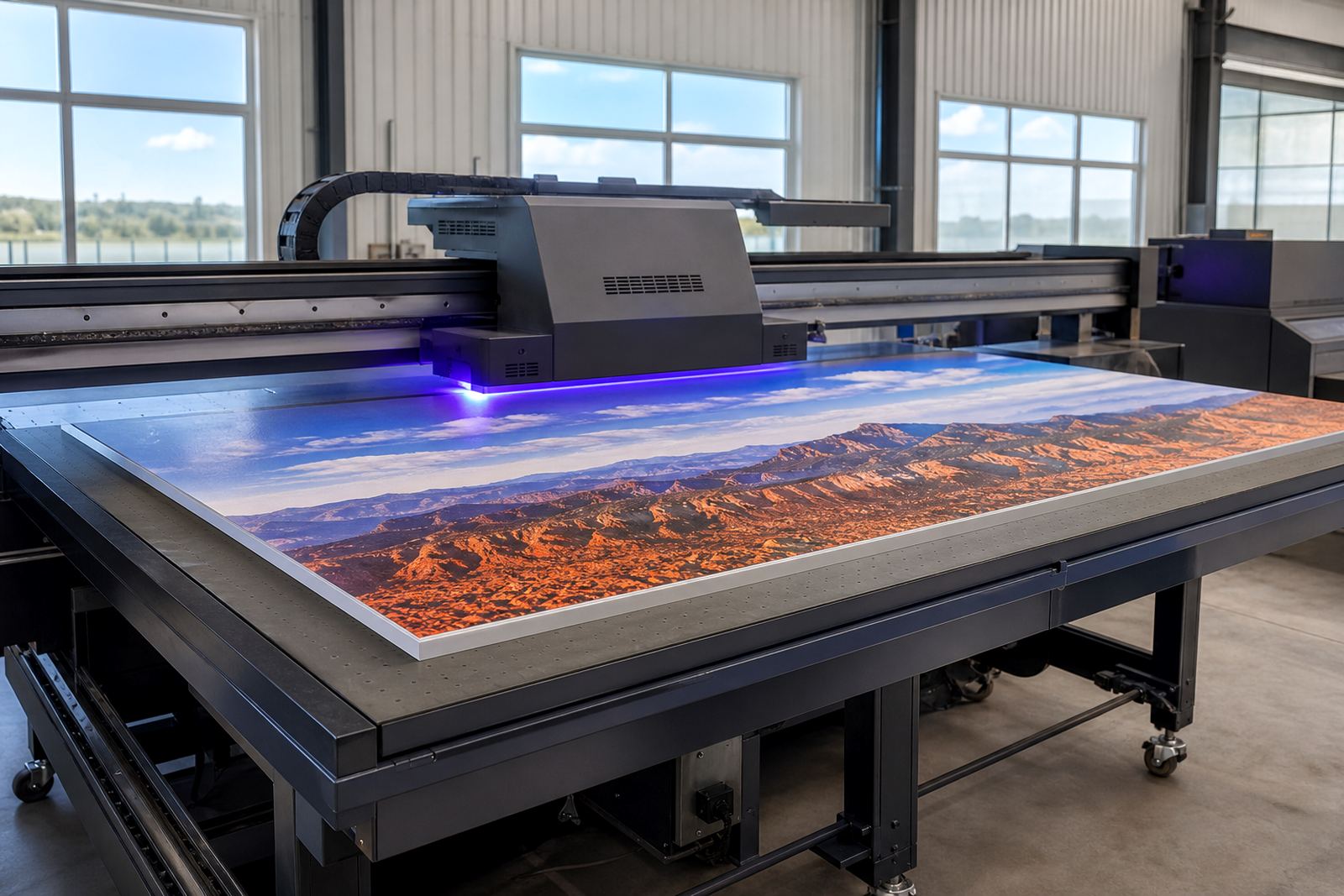
When UV ink is laid onto a rigid board, it does not dry by evaporation like solvent or water-based inks. Instead, the ink is exposed to ultraviolet light, which starts a chemical reaction in the ink layer. The result is a cured surface that is ready for handling much sooner, with far less waiting around before trimming, packing or fitting.
That matters when you are printing on foam board, PVC board, corrugated plastic, acrylic or other rigid media. A good cure helps the ink sit where it should, hold detail and stay put during transport. If the cure is weak, you may see tacky patches, smudging or a finish that marks too easily when the board is stacked.
Why cure quality affects board durability
People often talk about colour first, but cure quality has a big effect on how the print performs in the real world. A board that looks bright on the machine but feels soft or uneven can create problems later. Edge scuffing, poor adhesion and surface scratching often start with an incomplete cure.
- For retail signage, a proper cure helps prints survive handling by store staff.
- For event graphics, it helps boards cope with packing, trucking and repeated setup.
- For indoor display work, it reduces the risk of marks from cleaning or contact.
- For short-term outdoor use, it improves resistance to weather changes and moisture.
In coastal areas like Durban or Gqeberha, humidity can add extra pressure on the production room. In Gauteng, dust and temperature swings can do the same. The cure has to be consistent if the board is going to leave the workshop looking clean and stay that way.
How ink chemistry and lamp output work together
UV ink contains ingredients that react when exposed to the right light energy. The printer has to deliver enough ink, the light has to reach that ink, and the board surface has to allow the cure to set properly. If any part of that chain is off, the job can lose quality.
Different inks, colours and media can behave differently. Dark colours may need more attention because they absorb more light. Glossy boards can reflect light in ways that change how the surface cures, while textured boards may need careful setup so the ink reaches the low points evenly. It is not only about pressing print and hoping for the best.
- Ink layer thickness affects how quickly the surface sets.
- Board colour and finish can change how much energy is needed.
- Heat in the room can alter how the media behaves during production.
- Dust on the board can interfere with adhesion and final appearance.
The practical workflow before the first sheet goes through
Good curing starts before the print run begins. The operator should check that the board is clean, flat and suitable for the job. A quick media test can save a lot of grief later, especially when a client wants a mix of large panels, small directional signs and cut-to-size pieces in the same batch.
In Germiston, we often see jobs where the board choice is the real issue, not the print settings. A surface that looks fine in the sample room can behave differently once it is on a pallet, in a warmer production bay or under load-shedding conditions. Planning for the actual site conditions, not just the artwork, is part of the job.
Before production starts, it helps to confirm:
- Board type and thickness
- Whether the surface is coated, uncoated or textured
- How the finished boards will be cut, stacked or mounted
- How much handling the job will need after printing
What happens when curing is not right
Poor curing often shows up in small ways first. A print may feel slightly soft to the touch, or the surface may show finger marks when moved too soon. On some jobs the colour looks acceptable, but the board scuffs during packing or the ink flakes when the edges are trimmed. That is where time and money get lost.
Operators should watch for uneven gloss, sticky patches, dull zones or an odour that suggests the ink has not settled fully. If the job is going to a site in Johannesburg, Pretoria or Durban, the transport stage can expose weak curing very quickly. Vibrations, stacking and heat inside the vehicle are enough to show whether the print was properly set.
Apart from reprints, weak cure can also mean more cleaning on rollers, trays and handling tables. That slows production down and puts pressure on the next job in line.
Keeping cure consistency during South African production conditions
Local conditions matter. Load-shedding can interrupt a run, and if the workflow is restarted without checking the media and print heads, the next boards may not cure the same way as the first ones. Power changes, room temperature and delayed production all affect the final result. A stable routine helps, even when the day is not stable.
Preventive maintenance, ink handling help and operator training all make a difference. The aim is to keep the printer, lamps and media path in a steady condition so that curing stays predictable. That includes checking the board feed area, keeping dust under control and making sure the operator knows what to do if the finish starts to look off.
For teams supplying board signage across Gauteng and beyond, a clear workflow reduces waste and keeps turnaround times under control. When the cure is right, the board leaves the shop ready for the next step, not waiting for a rescue. It sounds simple, but that is often where the value sits.