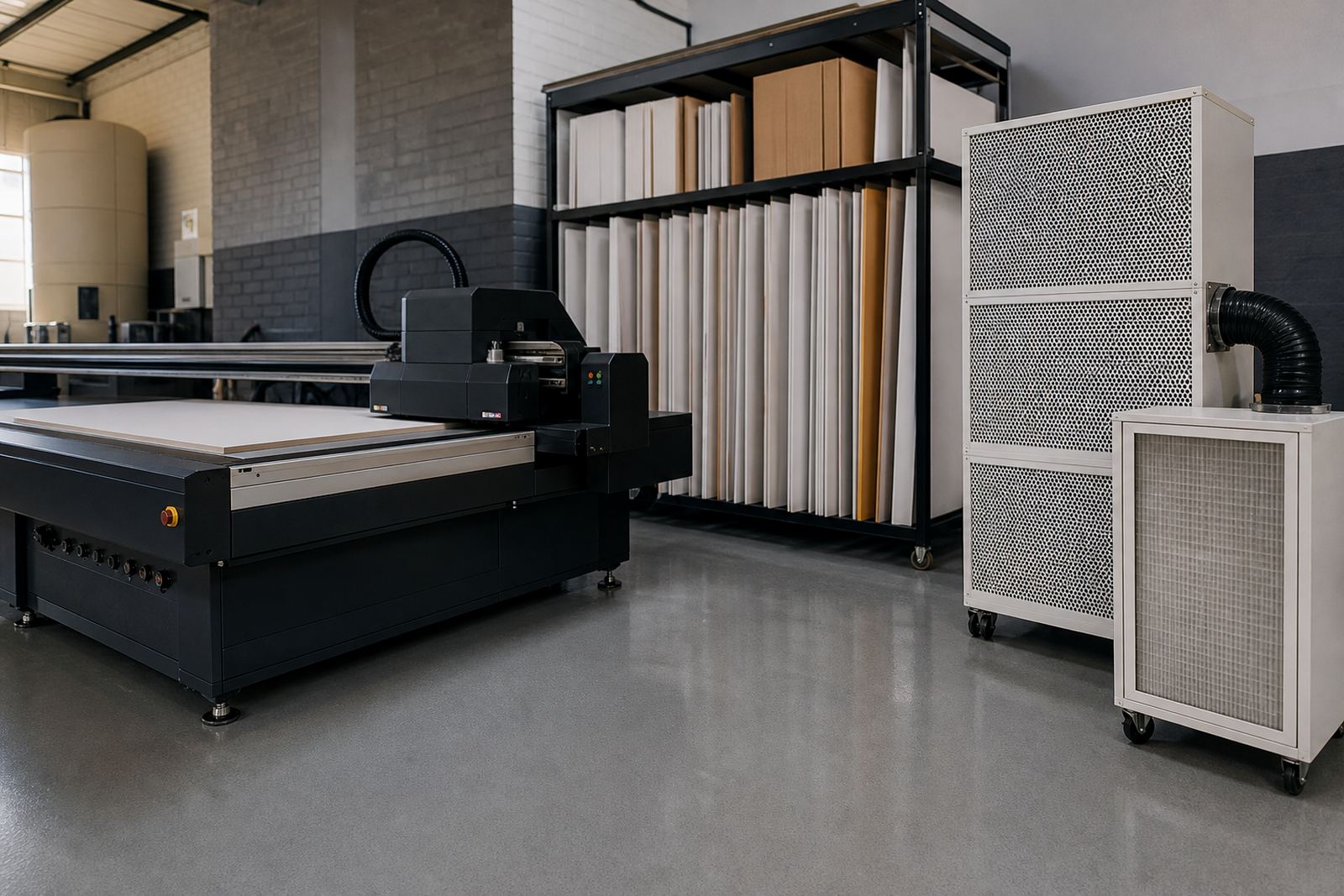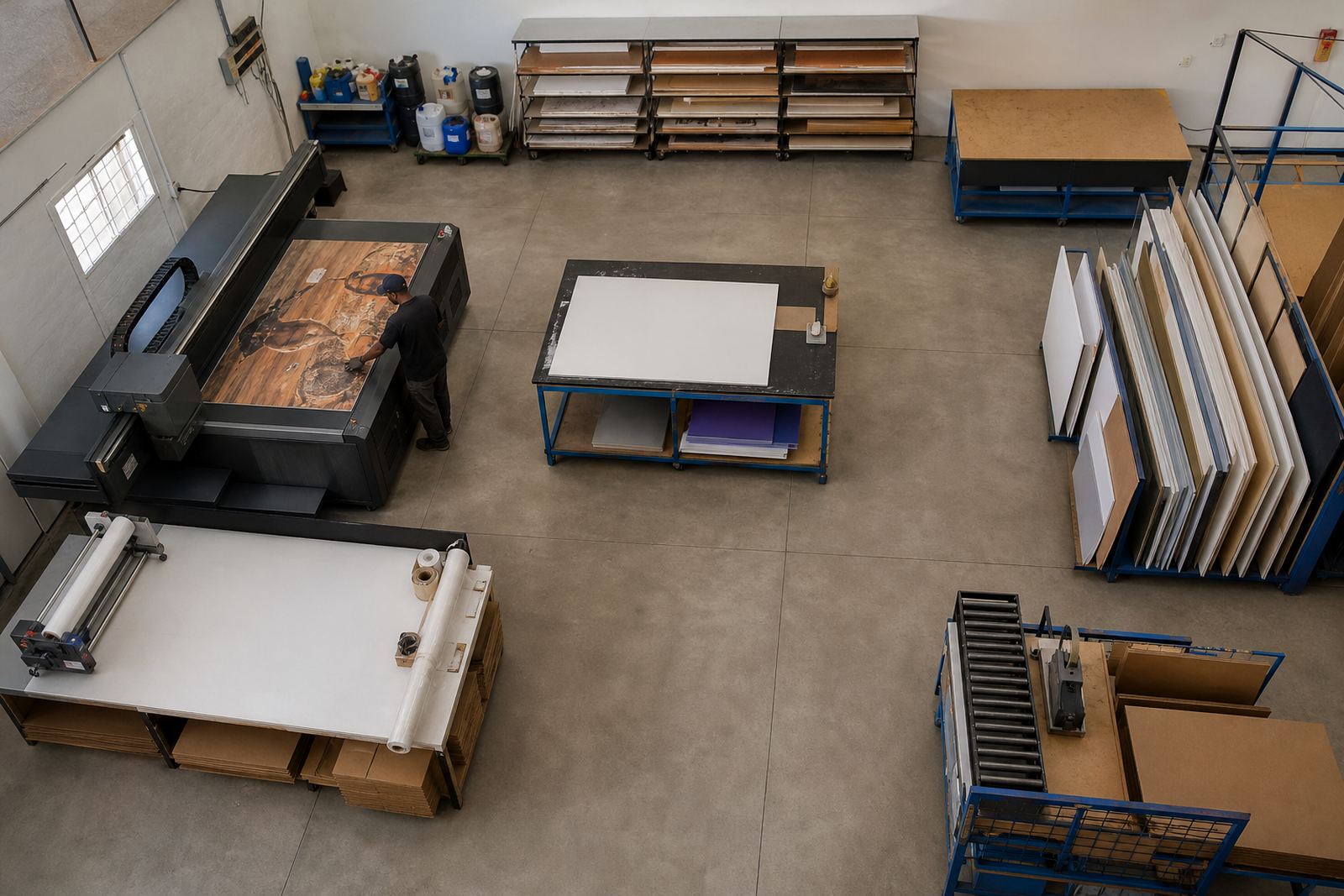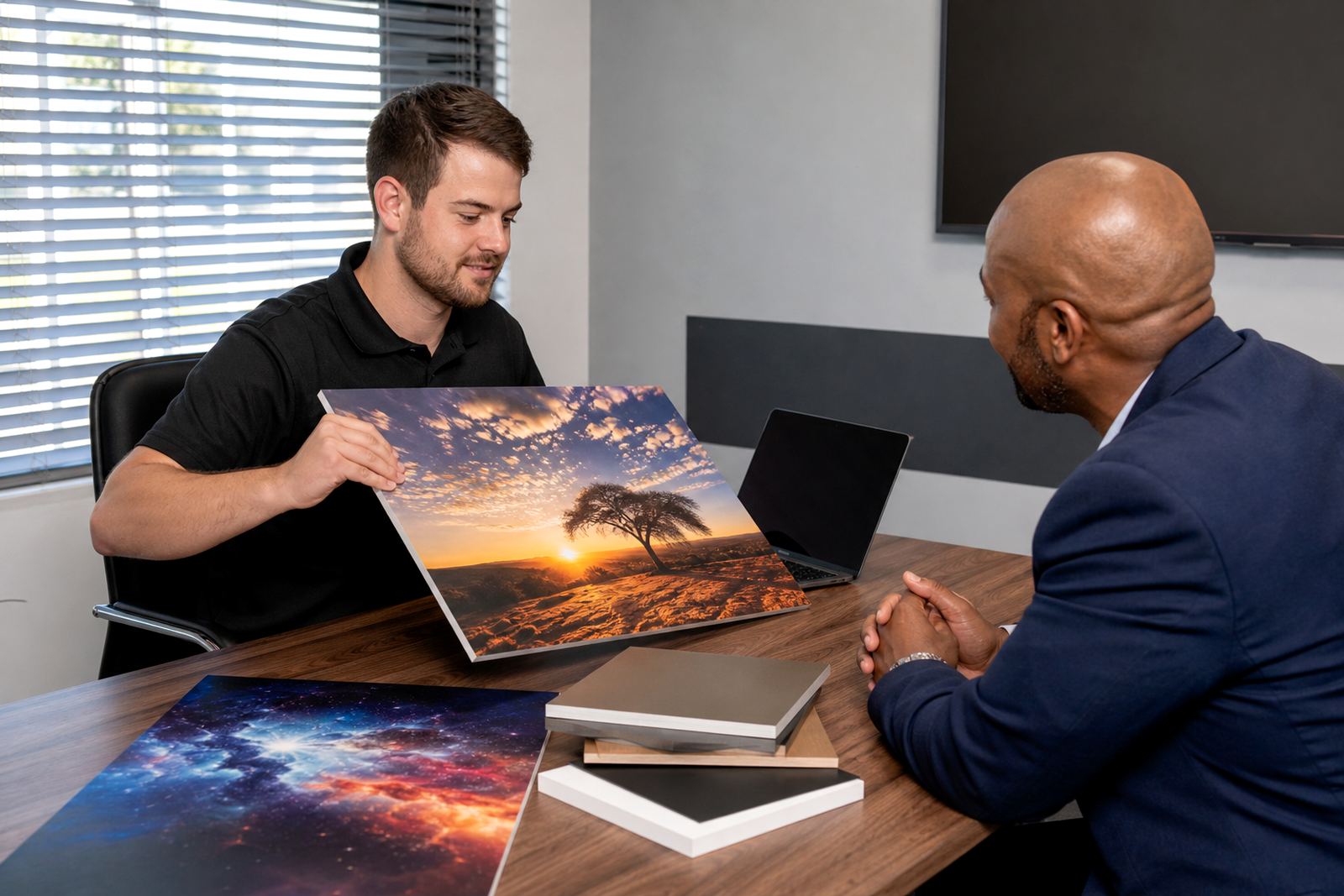

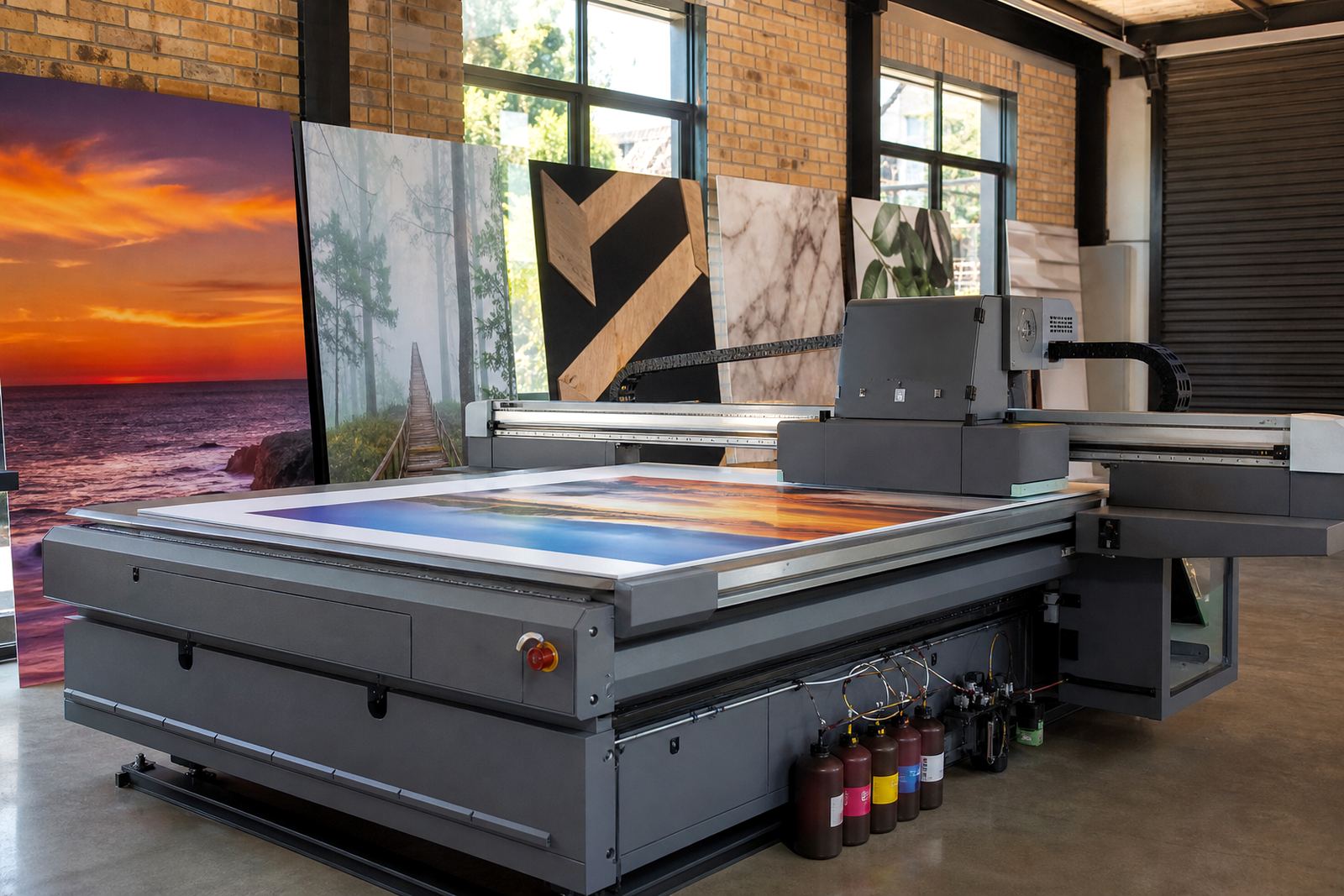
Why Flatbed UV Works Well Inside Buildings
Interior work asks for a different approach from outdoor signage. Panels are closer to people, so finish quality matters, and the material often has to suit wall mounting, frames, freestanding displays or cabinet fronts. Flatbed UV printing is suited to these jobs because the print goes straight onto rigid sheets and does not need the same long curing or handling delays that some other methods do. That helps when you are working to a fit-out programme or replacing dated panels during trading hours.
For interiors, the real value is consistency. Colour can be kept steady across a batch of panels, which matters when you are matching wall graphics, directional signs, menu boards and feature pieces in one space. It also helps that you can print on many common rigid surfaces used in local fit-outs, provided the board is prepared properly and tested before production starts.
In Gauteng, where many projects are rushed between tenant handover and opening day, that kind of predictability saves time. It also helps in coastal areas like Durban and Gqeberha where humidity can affect storage and handling if boards are left open for too long.
Best Interior Uses For Rigid Boards
Flatbed UV suits decorative and functional panels that need a clean face and a firm structure. In retail, it is often used for branded wall panels, shelf toppers, promotional boards and window-facing displays. In offices, it works well for reception graphics, wayfinding panels, meeting room signs and branded feature walls. In hospitality, the same process can be used for menu boards, room identifiers and decorative artwork that must be easy to clean.
The material choice matters as much as the print itself. Some boards are better for short-term display, while others are chosen for longer service life and better edge finish. A proper workflow starts with media testing so the board, ink and intended mounting method are checked together, not separately. That avoids problems later with lifting, pinholing, poor adhesion or colour shift.
- Reception wall panels and foyer graphics
- Wayfinding signs and door markers
- Retail feature walls and shelf branding
- Menu boards and hospitality interior signs
- Exhibition panels and reusable display boards
Ink, Finish And Indoor Durability
Interior clients often focus on colour first, but the ink and finish are just as important. Flatbed UV inks are chosen for fast curing and firm adhesion on suitable rigid media. For indoor work, that can mean a clean, sharp face with reduced handling time, which is useful when panels must move from print to installation quickly. The output should be checked under the same lighting the client will see on site, because warm shop lighting and cooler office lighting can change how colour reads.
Durability indoors is not only about sunlight. It is also about cleaning, scuffing and contact from people walking past or touching the surface. In high-traffic areas, the print should be planned around the way the space is used. If a panel is near a corridor, reception counter or restaurant queue, the edge finish, mounting method and board thickness become part of the job, not an afterthought. A printed panel that looks good on the machine can still fail if it is not protected or fixed properly.
Load-shedding also needs to be taken seriously. A stable workflow helps when print shops have to manage power interruptions. Planning the job sequence, curing steps and handling windows can prevent wasted stock and rushed reprints.
What Good Workflow Looks Like On Interior Projects
Interior printing runs smoothly when the workflow is planned before the first sheet is loaded. That includes checking artwork size, panel dimensions, fixing points, site access and whether the final piece must be cut, drilled or edge-finished after printing. On larger interior projects, it is useful to separate production into clear steps so the team can track what has been printed, what still needs testing and what is ready for installation.
Colour guidance matters here too. A branded feature wall in a Germiston showroom may need to match a reception sign in Pretoria or a retail board in Cape Town. If the client wants consistency across branches, the process should include sample approval and notes on lighting conditions. That is especially useful where municipal rules or building managers control installation times and access, because delays on site can affect the finish if panels are stored incorrectly.
- Confirm board type, thickness and final size
- Test adhesion on the exact media before full production
- Check colour against the room lighting where possible
- Plan cutting, drilling and mounting after print
- Store finished panels flat and covered before delivery
A Local Example From Germiston To Pretoria
A practical interior job might start in Germiston, where a fit-out contractor needs rigid panels for a small chain of offices. The brief could include a branded reception wall, door signs and directional boards for each floor. The same set then needs to be repeated for a Pretoria branch with the same look and feel, but the site conditions are slightly different. One building may have more glass and daylight, while the other has narrow corridors and cooler artificial light. Those differences change how the print is viewed, so the team must check the artwork against real conditions, not only on screen.
For projects like this, installation support and training are part of the value. A site may have its own maintenance crew or signage installer, and they need clear guidance on handling, fixing and cleaning the panels. If a board is scratched in transit or a colour looks dull after a change in lighting, it is easier to catch that early with a tested workflow. That is why many interior jobs benefit from a production consultation before the first run.
Sibusiso Mthembu and the team in Germiston work with clients across Johannesburg, Pretoria, Durban, Cape Town and Gqeberha, as well as the East Rand and Centurion. For interior branding, that reach matters because the same print standard may need to be repeated across several branches with different site teams and different building conditions.
When To Ask For Installation, Training Or Support
Not every interior project needs the same level of help, but certain signs show when support will save time and stock. If the media is new, the artwork is being scaled up for the first time, or the site has tight handover dates, it is wise to bring in installation planning, operator training and colour guidance early. The same applies when a client wants decorative panels for a space with high traffic or humidity, because the wrong choice of media can lead to rework.
Flatbed UV printing is practical for interiors when it is treated as part of the full job, from media testing through to final mounting. The print itself matters, but so does the handling, storage and fixing method. When those parts are planned properly, the result is cleaner, lasts better and avoids unnecessary disruption during trading hours.
Clients usually reach the team through the enquiry form on the contact page, which keeps the project details in one place and helps with follow-up on installation, maintenance or spares coordination.
- Printer installation and site preparation
- Operator training and workflow planning
- Preventive maintenance and breakdown support
- Remote support and ink handling help
- Media testing and production consulting
Interior Work That Holds Up In Real Use
Good interior branding should do more than look neat on day one. It should sit flat, read clearly and handle daily use without constant attention. Flatbed UV suits that brief when the material is chosen carefully and the workflow is kept practical. For retailers, offices and hospitality spaces, that usually means fewer delays, better consistency and a cleaner finish on rigid boards.
Whether the project is a single reception panel or a full roll-out across several branches, the same rule applies: test the media, match the colour, plan the install and keep the handling sensible. That is how interior UV work stays useful long after the fit-out crew has left the building.