
Start With the Full Job Path, Not Just the Printer
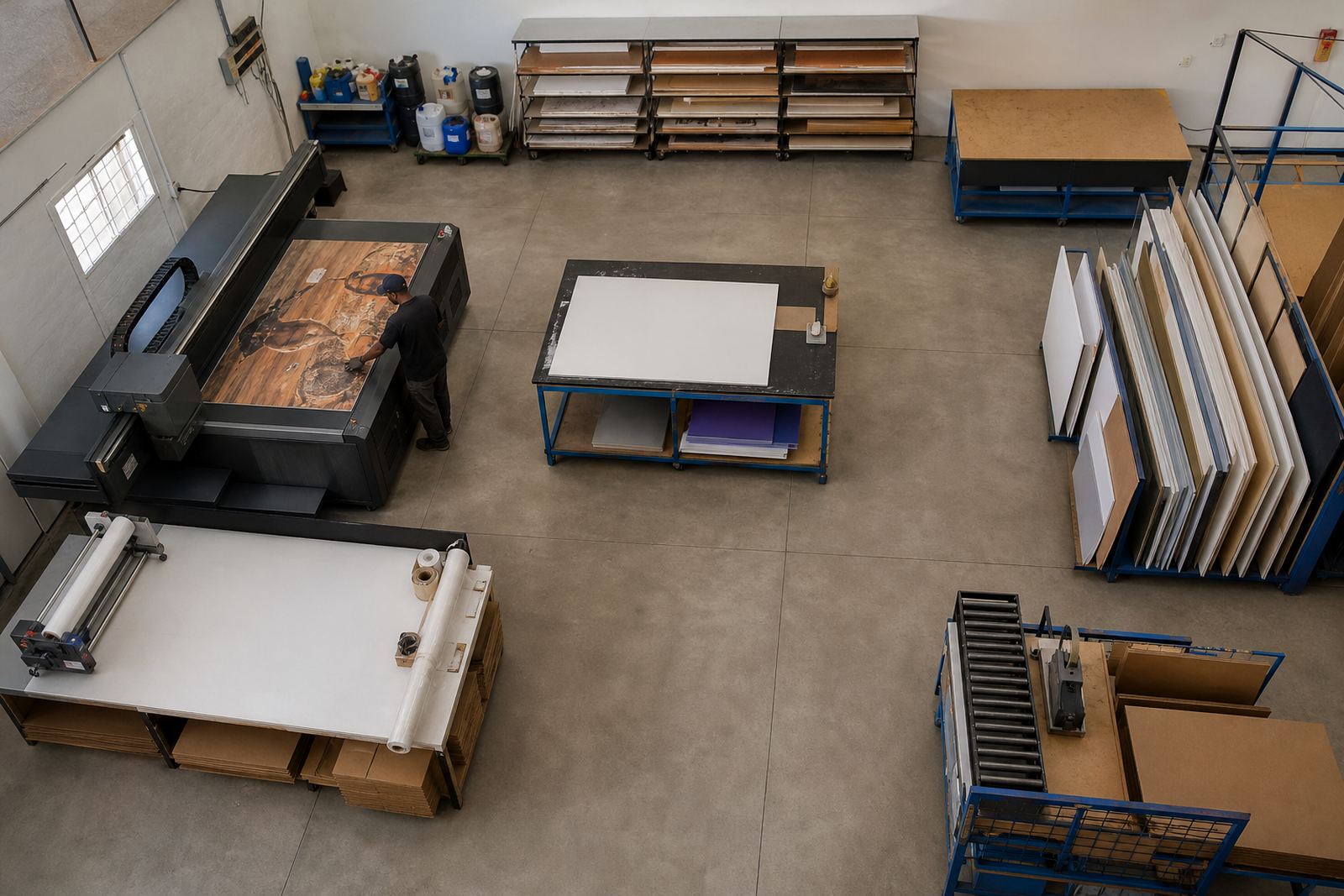
When a rigid board job lands in the workshop, it follows a clear path: receiving, checking, cutting, printing, curing, drying, packing and despatch. If that path crosses itself too often, staff end up walking around boards, stepping over stock or waiting for a clear space. That slows production and creates avoidable damage. A sensible layout keeps each stage close enough to work well, but far enough apart to avoid collisions.
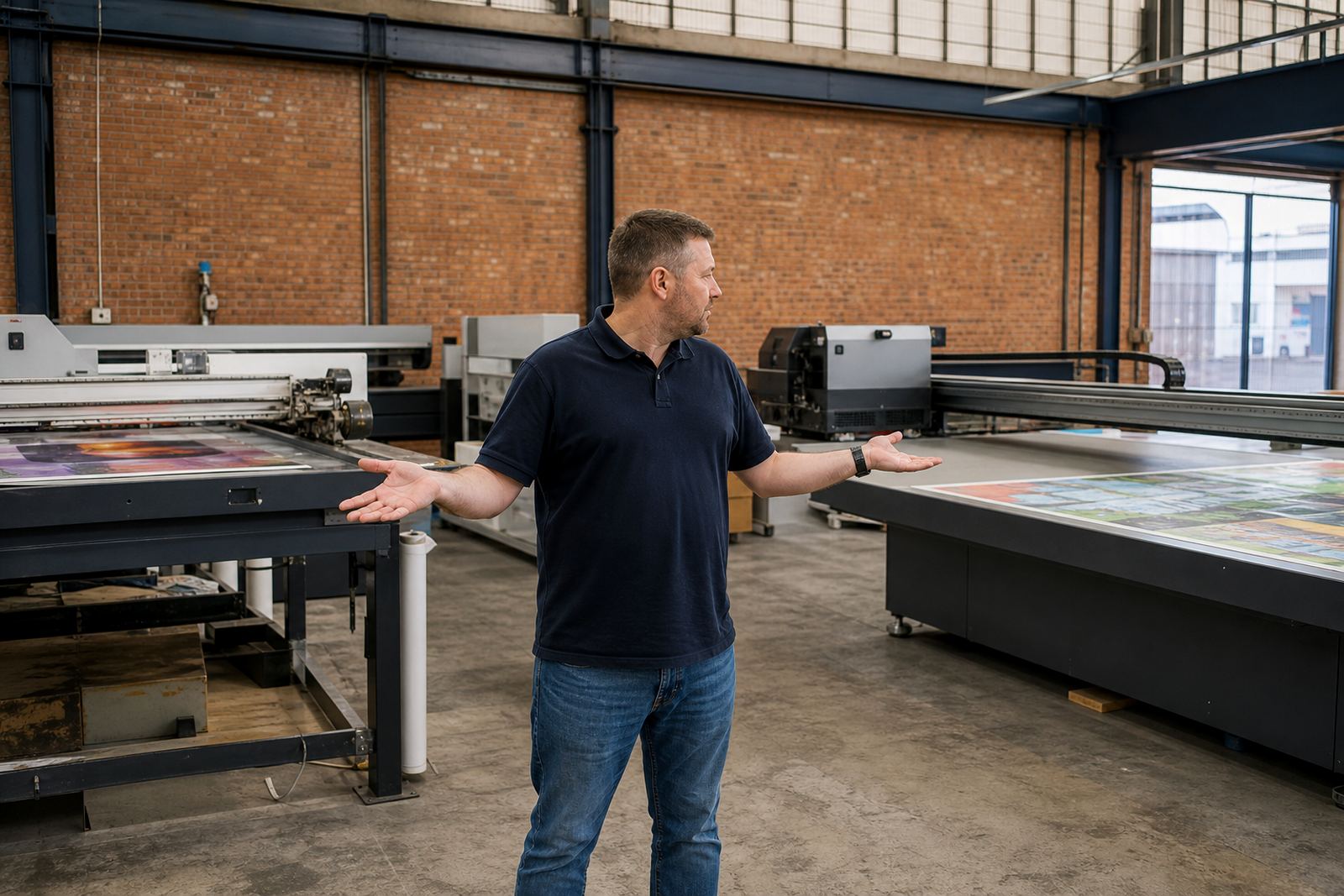
In Germiston and the wider East Rand, many shops work in mixed spaces where storage, prep and finishing share the same floor. That can work, but only if the flow is planned. Keep incoming boards near the entry point, place the printer where there is room to load and offload from both sides if possible, and set finishing tables where cured work can move straight through without doubling back. It sounds simple, but it saves time every single day.
Give Rigid Boards Proper Space to Move
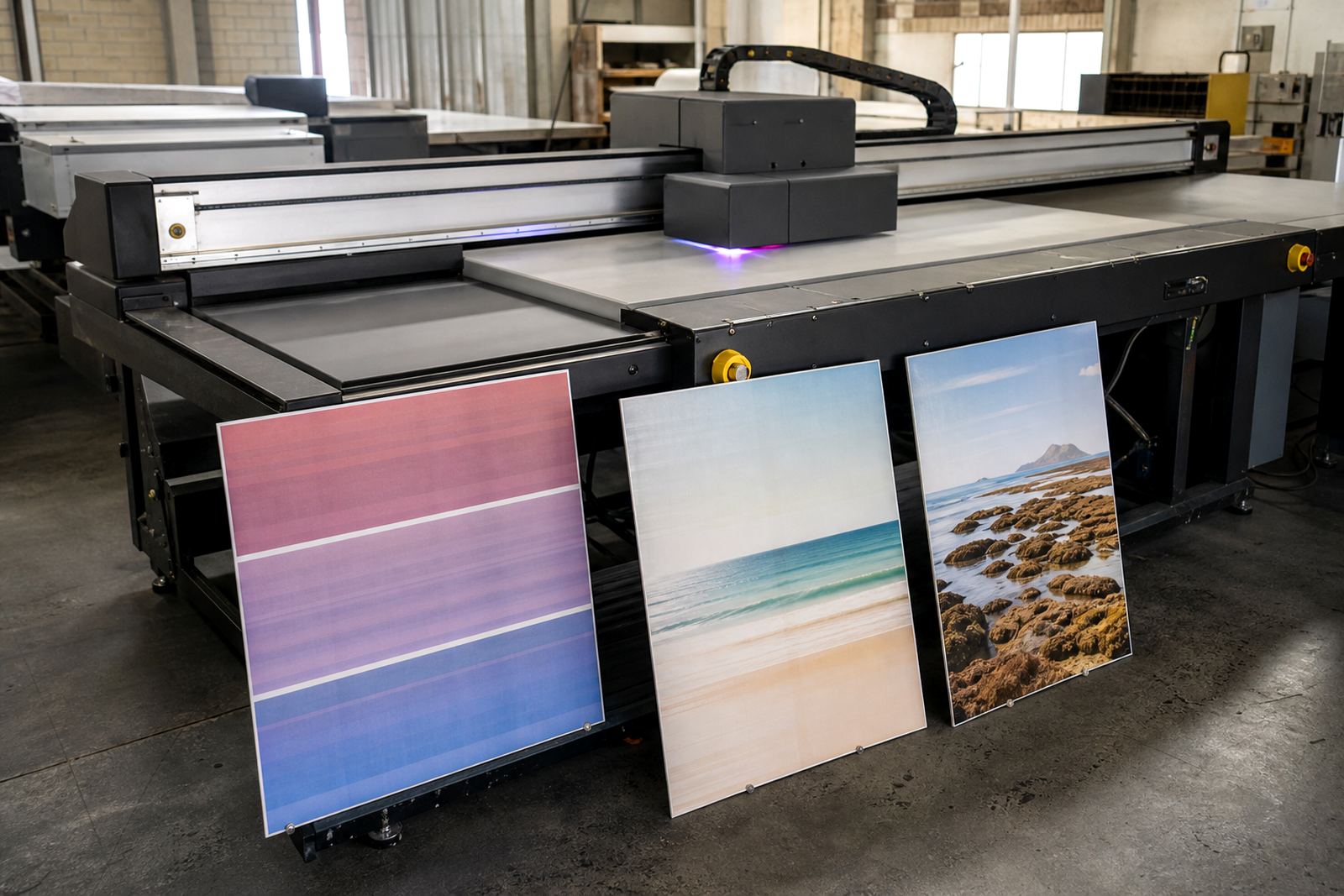
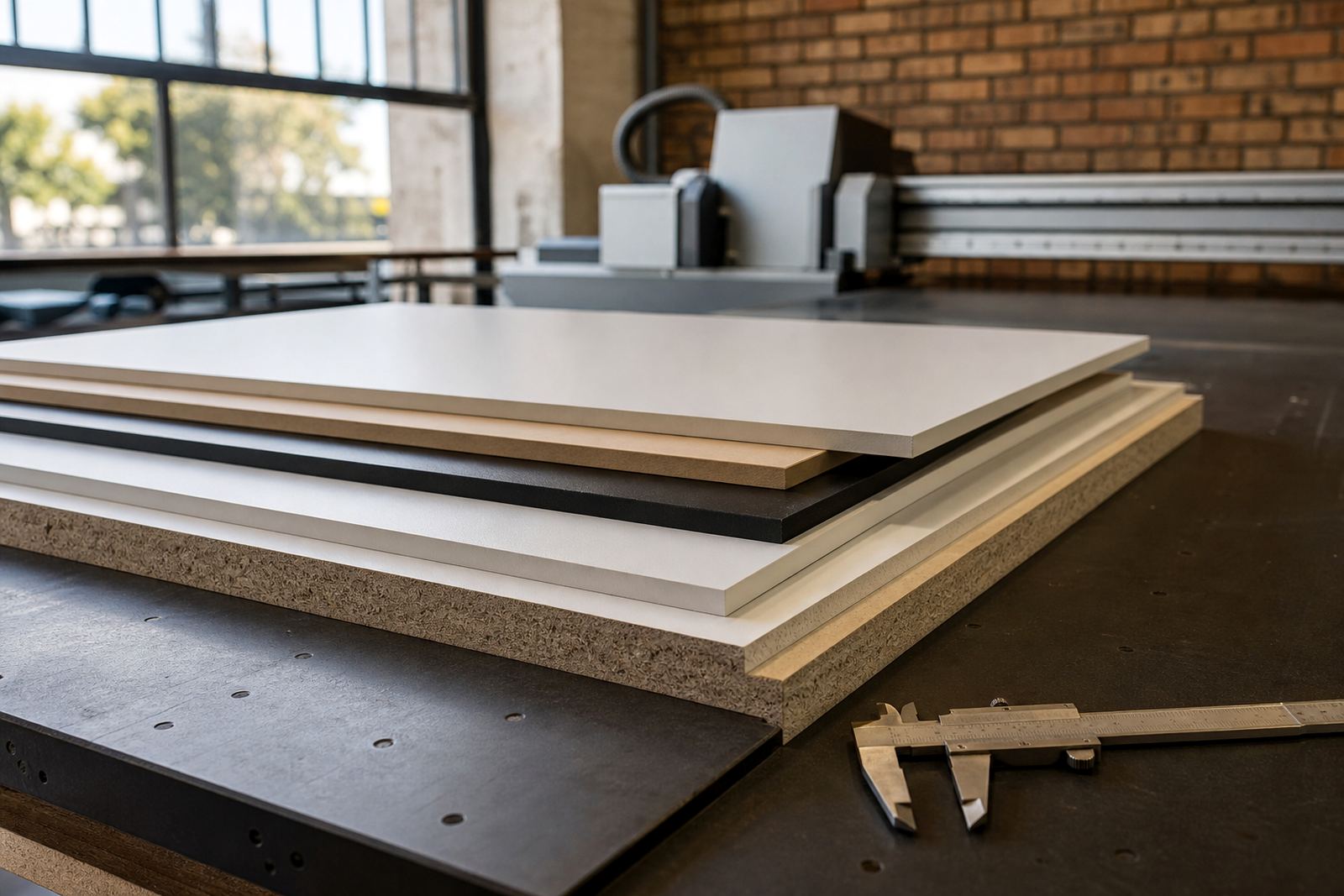
Flatbed UV work is not only about the machine. Boards need space to rest flat, to acclimatise and to be handled safely. If sheets are stacked too tightly, they can pick up dust, bend slightly or get edge damage before they even reach the print bed. A clear staging area also helps with smaller runs, where operators may need to sort different sizes and substrates at the same time.
- Leave a clean receiving area for boards, offcuts and return stock
- Keep a flat staging table or rack near the printer for short term holding
- Separate unprinted, printed and rejected stock so nothing gets mixed up
- Allow enough turning space for larger sheets and pallet movement
- Keep walkways free of stretch wrap, tools and trim pieces
For workshops near busy roads or construction zones, dust control matters too. A board can look fine at a glance, then show marks after printing if the prep area is not kept clean. Even a small layout change, like moving cutting and sanding away from the printer, can help keep work cleaner.
Place Inks, Tools and Cleaning Points Where They Are Used
Ink handling should never feel like a squeeze. Operators need a steady place for storage, mixing checks, wipes, gloves and cleaning materials. If these items are kept too far from the printer, people start taking shortcuts. If they are kept too close to the print path, they get knocked over or contaminate the work area.
A practical setup keeps consumables nearby but controlled. The best spot is usually a dedicated side station, away from direct traffic and away from open boards. On humid coastal days in places like Durban or Gqeberha, keeping materials sealed and off the floor helps reduce moisture issues. In hot inland workshops, a shaded, stable storage area is useful too. It is a small detail, but it helps keep the whole process steadier.
- Use one marked point for inks, caps, gloves and wipe materials
- Store items off the floor to reduce dust and moisture exposure
- Keep waste containers close enough for use, but not in the main walk path
- Separate clean tools from used cleaning cloths and maintenance items
Build Around Operator Safety and Load-Shedding Reality
Good layout is also about safety. Operators should not have to twist around moving boards or carry heavy sheets through tight gaps. Poor spacing raises the chance of strain, dropped stock and mistakes during loading. Clear walkways, good lighting and sensible cable routing all help. In many South African workshops, this is extra important during load-shedding when backup power, lights and equipment change the normal routine.
Plan for the moments when power changes mid shift. Emergency lights should cover loading and exit routes, and backup systems must not block access to the printer or the main walkway. If you use extension leads, chargers or control gear, keep them off the floor where possible and avoid crossing them through board movement areas. A neat floor is not only nicer, it is safer and easier to work in. That is especially true during busy periods when the team is moving fast and there is no room for mistakes.
Set Up the Room for Training and Daily Discipline
Operator training works better in a layout that supports the lesson. If trainees must keep stepping out of the work area to fetch tools or wait for space, they lose focus. A workshop should allow a trainer to demonstrate workflow clearly, with enough room for one person to observe, one person to handle stock, and another to manage printing without crowding. That kind of arrangement also helps when a new job type is introduced.
At our Germiston base, we see that the best shops usually have one thing in common: everyone knows where things belong. That does not happen by luck. It comes from clear marking, repeat routines and practical placement. A layout that is simple to follow also makes preventive maintenance easier, because technicians can get to the machine, clean around it and inspect key points without moving half the workshop out the way.
- Mark storage and staging zones clearly
- Keep training space close to the printer, but outside the loading line
- Leave access for maintenance on all sides that need service
- Make it easy for a new operator to follow the same route every time
Use One Local Example to Test the Layout Before You Commit
A small signage shop in Centurion may not need the same layout as a large production floor in Cape Town, but the planning logic is the same. Before changing the room, map one full job from entry to despatch. Note where people stop, where boards wait and where dust, noise or traffic cause delays. Then adjust the floor plan around those pressure points. Even moving a cutting table or shifting storage by a few metres can improve the whole flow.
If a workshop is taking on more board work, the layout should be tested with real jobs rather than guessed from memory. Put a few sample sheets through the normal route, watch for bottlenecks and check whether the printer, curing area and packing zone are all easy to reach. A better layout should make the work feel calmer, not more crammed. That is the point: less wasted movement, fewer mistakes and a smoother day for the whole team.
When to Review the Layout Again
Shop layout is not a once-off job. It should be reviewed when volumes change, when new rigid media are added or when the team starts losing time in the same place over and over. If operators are constantly moving around one corner, or stock is piling up near the printer, the layout has already started to fight the workflow. That is usually the time to step back and reset it.
For businesses serving Johannesburg, Pretoria, Durban, Cape Town and Gqeberha, the best results often come from a layout that is simple, tidy and easy to maintain. It should support installation, training, service access and daily production without confusion. A well arranged room makes flatbed UV printing easier to manage and gives the team a better chance of keeping output steady from week to week.