
Why transport planning starts before the board is printed
When a board is flat, wide and finished in UV ink, the job is not complete when it comes off the printer. The next risk is transport. A rigid panel can crack at a corner, pick up a scratch across the face, or arrive with a bowed edge if it is moved badly or stacked under pressure. That is why delivery planning should be part of the workflow from the first quote, not something added at the end.
In Germiston and the wider East Rand, many jobs move between production sites, sign shops and client premises in the same day. A board that is fine for short handling can still suffer on a longer trip to Durban, Cape Town or Gqeberha, especially where road vibration, heat and loading delays come into play. The print may be right, but if the board is not packed and routed properly the job still lands badly.
Choose the right board size for the route, not only the final display
One of the easiest ways to reduce delivery problems is to think about transport while selecting the panel size. Oversized boards may save joins on site, but they can be awkward on bakkies, enclosed vans and lifts. They can also be harder to turn through doors, stairwells and narrow service passages at retail centres or office parks.
For many projects, a slight change in panel layout makes the difference between a clean delivery and a damaged one. Where a site has limited access, split panels may be easier to move and install. Where the board must stay in one piece, plan the route first and confirm that the vehicle, loading bay and on-site access all suit the size.
- Measure the board and the vehicle load area together
- Check door widths, lift sizes and turning space at site
- Allow for wrapping, edge protection and tie-downs
- Confirm whether the board will be carried flat or on edge
Packaging should protect the print face and the edges
Flatbed UV prints are used on rigid boards because they can hold detail and colour on a solid surface, but the finish still needs protection. Packaging should stop rub marks, pressure points and moisture contact. In humid coastal areas, boards left open during loading can pick up surface issues if they are not covered properly. In dusty inland conditions, the print face can also collect grit that scratches during handling.
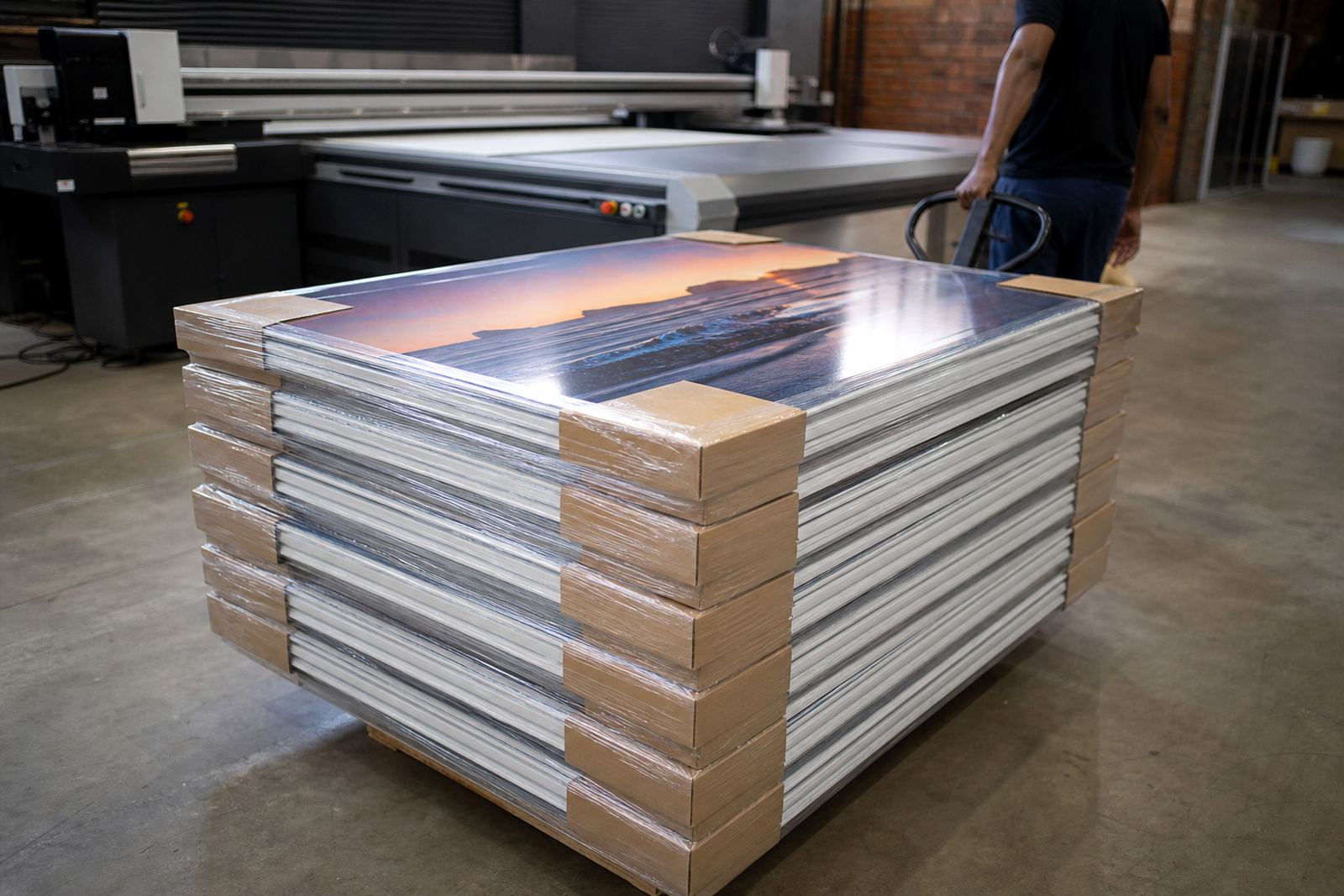
Good packing is simple, but it must be consistent. Use clean interleaving material where needed, protect corners, and avoid placing weight directly on printed faces. If a board has gloss areas, extra care is needed because gloss shows handling marks very quickly. If the board is going to be stored overnight before delivery, keep it in a dry area with support that prevents bending.
- Keep printed faces separated from rough surfaces
- Use corner protection on all exposed edges
- Avoid over-tight strapping that can dent a panel
- Store boards flat and off the floor where possible
Loading and offloading should match the material used
Different media behave differently once they are printed. Foamed board, acrylic, PVC sheet and composite rigid boards all need their own handling approach. Some panels are light but scratch easily. Others are heavier and need two or more people to lift without flexing. If a board is lifted from one end only, the centre may dip and the print can suffer long before the client sees it.
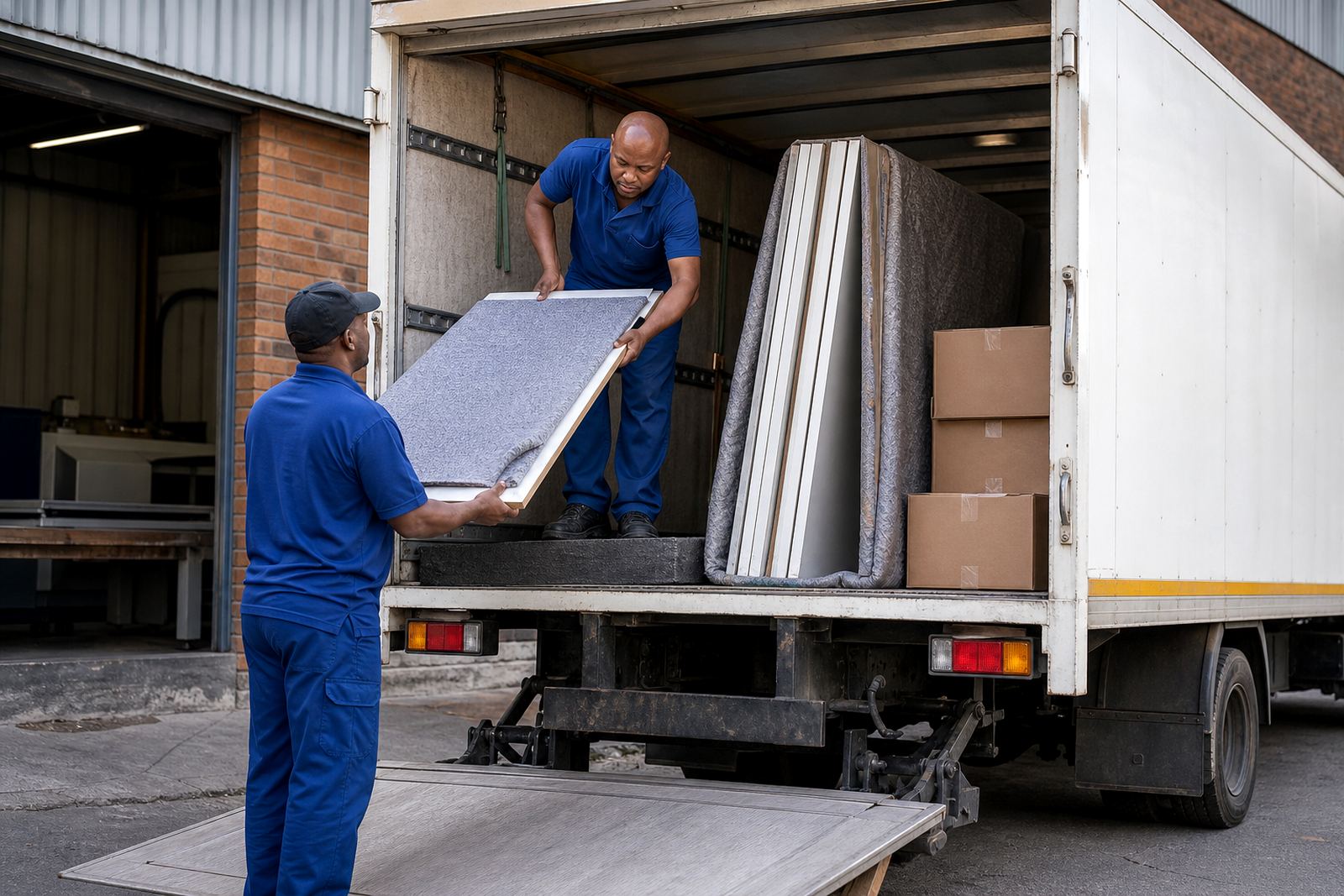
A clear loading plan should say who handles the board, how it is lifted, where it is placed in the vehicle and in which order it comes off. That sounds basic, but rushed offloading is where many jobs go wrong. A board that slides against another panel, or is leaned against a dirty wall, can lose the value of a careful print run in seconds, nogal.
For multi-board deliveries, separate the panels by job and by installation order. This keeps the team from unpacking the wrong piece and reduces time on site. It also helps if the site team has to hand over multiple sets of boards to different departments or branches.
Local routes, weather and municipal rules affect the plan
A delivery plan in Gauteng is not the same as one for a coastal route or a site in a busy CBD. In Johannesburg, traffic and loading restrictions can change the offloading window. In Pretoria, access to office parks may depend on security bookings. In Durban and Cape Town, coastal moisture means boards should be protected from damp air and sudden weather changes. For outdoor signage, even the short walk from the vehicle to the wall matters if wind picks up.
Some municipal or site rules also affect timing. Estates and shopping centres may only allow deliveries during certain hours. A client’s building manager may require booking a lift or loading bay in advance. If the board is for a public-facing installation, the route should also avoid peak trading periods where possible so the team can work without pressure.
Planning these details early reduces loss, prevents rework and keeps installers focused on the actual fit. It also helps the client know when the board will arrive, who will receive it, and what space must be ready for the handover.
A Germiston example: one board, three decisions
Take a rigid board made for a storefront in Centurion. The print is finished in Germiston, but the delivery needs three decisions before it leaves the workshop. First, does the board travel flat or vertically supported. Second, is the route through a shopping centre loading bay or a side access gate. Third, who is responsible for unpacking and checking the print face on arrival.
If those three points are clear, the job is easier to manage from start to finish. The client gets a clean board, the installation team arrives with the right expectations, and the production team avoids a last-minute scramble. That is the kind of planning that keeps a board looking professional when it reaches site, not just when it leaves production.
At Flatbed UV, delivery planning for boards sits alongside printer installation, workflow planning, training and service support across South Africa. Sibusiso Mthembu and the team work with businesses that need practical help on handling, media testing, maintenance and production decisions, so the final board does not lose quality before it is mounted.
Build the handover into the production workflow
Strong delivery planning is really about control. It connects print, packing, vehicle loading, route choice and site readiness into one simple process. When that chain is clear, the job is easier to quote, easier to manage and easier to install. It also reduces the small delays that cost money, such as waiting for a lift key, replacing a damaged corner or reprinting a board that was marked in transit.
For rigid board work, the best habit is to check the route before the board is finished, not after. That one step can save time, protect the print and help the client receive a board that is ready to use the same day.
- Confirm the site access and delivery time early
- Match packing method to the board type
- Assign clear responsibility for offloading and inspection
- Keep a backup plan for weather, traffic or site delays