What a service plan actually covers
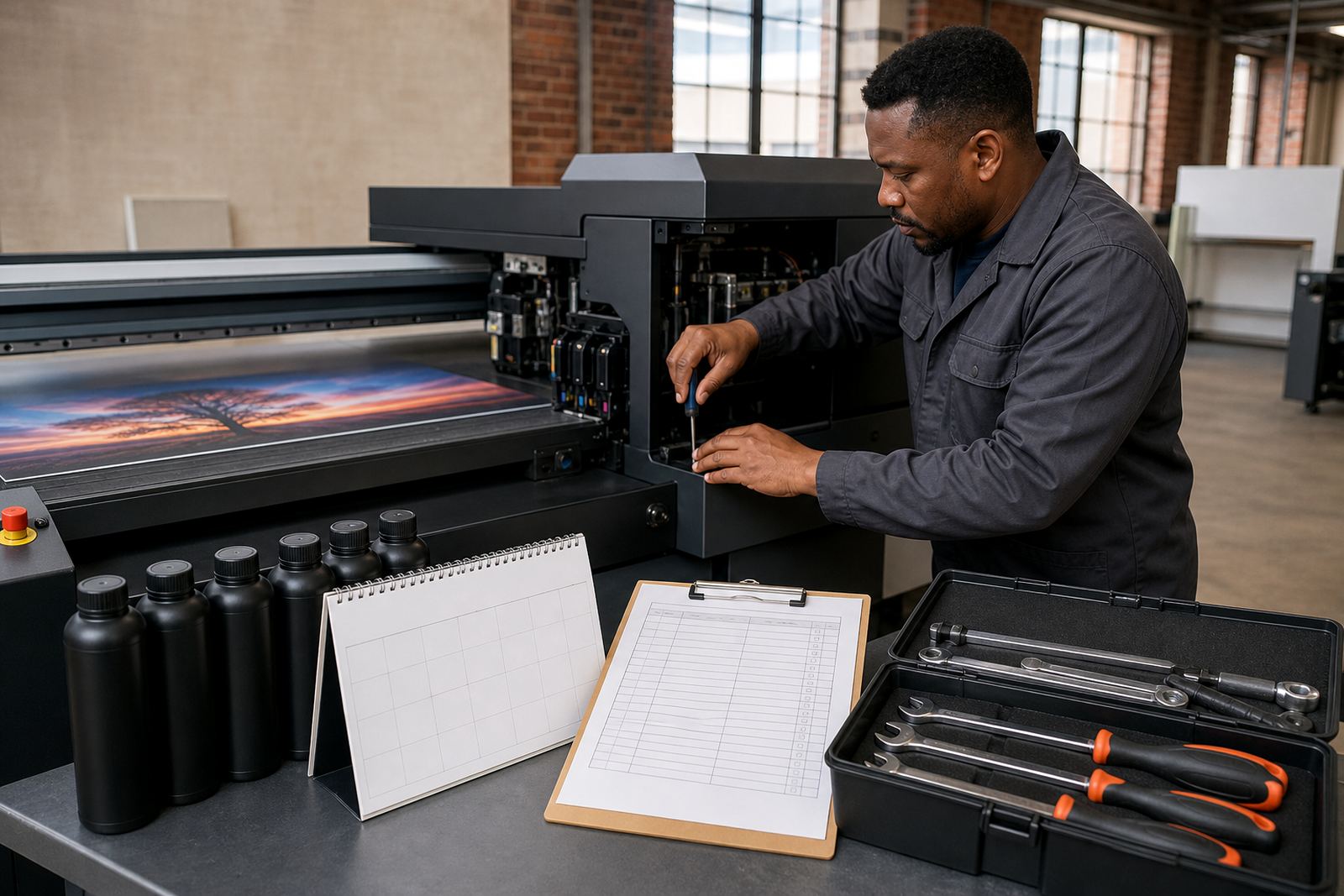
A proper service plan gives your print team a clear support routine for the printer, the operator, the ink system and the media workflow. It should cover scheduled checks, cleaning, calibration guidance, remote support, breakdown response and practical help with day to day running. For businesses in Germiston and across Gauteng, that matters because lost hours quickly turn into missed deadlines, reprints and unhappy customers.
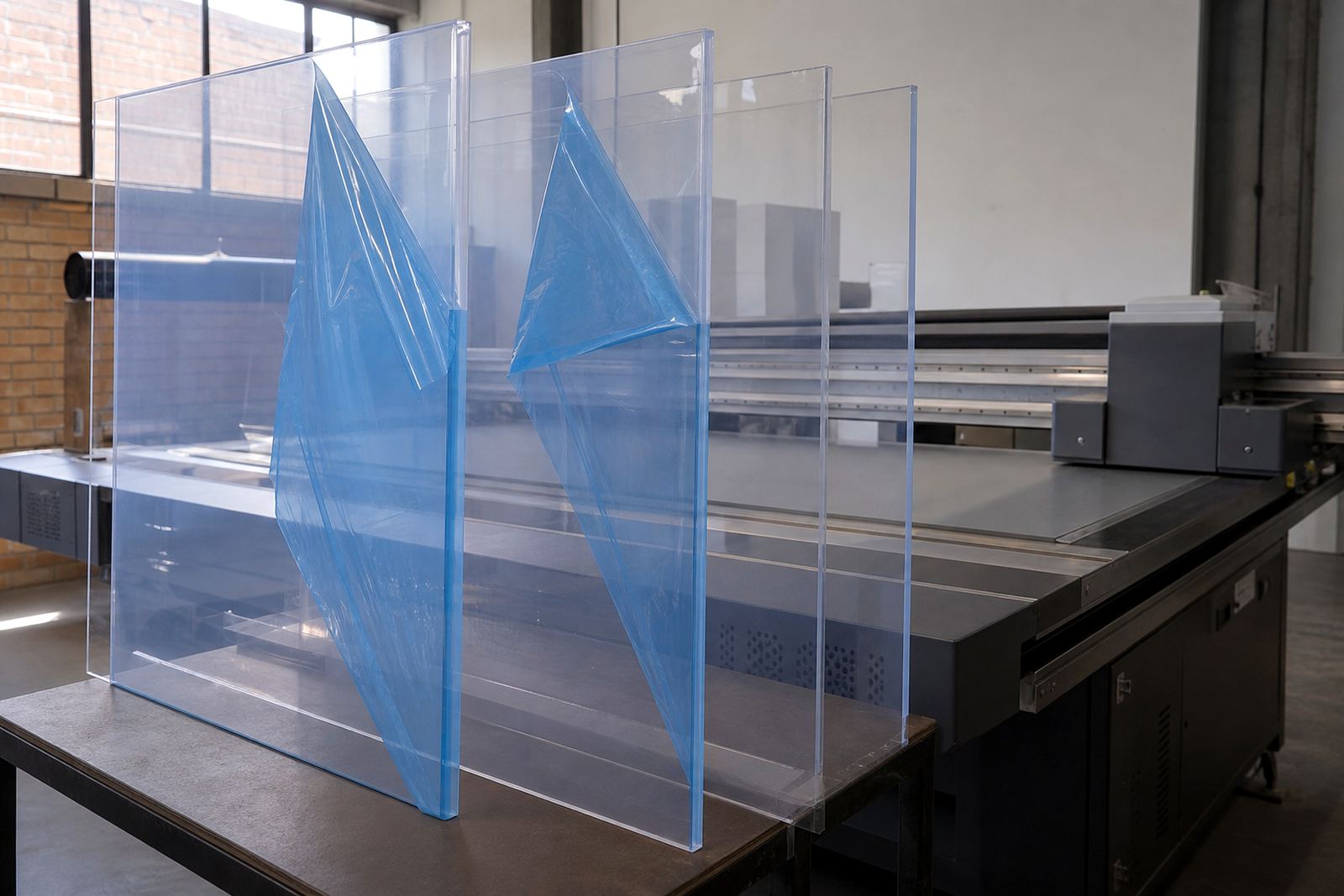
At Flatbed UV, support is shaped around the way rigid board and signage work is actually done. One week it may be Correx for a quick campaign, the next it may be ACM, foam board or acrylic for a retail fit-out. The service plan should help your team handle those shifts without guessing. That is where clear guidance on inks, media and workflow makes a real difference.
Why planned support reduces downtime
Most print stoppages do not begin with a major fault. They start with small issues like blocked nozzles, poor surface prep, dust on boards, weak curing, or an operator using the wrong setup for the job. Planned support catches those issues early, before they become costly interruptions.
In South Africa, downtime also gets worse when load-shedding interrupts work, especially if the machine is restarted in a rush or left standing with uncured ink in the system. A service plan gives your team a calmer process for shutdown, restart and inspection. It also helps with supplier-side planning, so spare parts, consumables and service visits are arranged before the problem gets worse.
- Regular checks reduce surprise breakdowns.
- Training keeps different operators working the same way.
- Preventive cleaning helps print quality stay consistent.
- Remote support can solve smaller faults faster.
The parts of a sensible support schedule
A useful plan should be practical, not complicated. It should fit the pace of a print shop in Germiston, Johannesburg, Pretoria or further afield, and it should work around real production pressure. The aim is to keep the printer productive without waiting for something to fail first.
Typical parts of a sensible support schedule include printer installation checks, site preparation advice, operator training, workflow planning, colour guidance, media testing and preventive maintenance. If the team changes, refresher training should be part of the plan as well. That helps keep standards steady when a senior operator is out or when a new person joins the floor.
- Installation support: confirming the machine is set up correctly on site.
- Operator training: showing staff how to run jobs, clean safely and handle interruptions.
- Media testing: checking how different boards and finishes behave before production.
- Breakdown support: responding when the line stops and a fix is needed quickly.
- Spare coordination: helping source the right parts without delays.
Why consistency matters more than speed alone
Fast printing is useful, but consistent output is what keeps customers coming back. When the same file looks different from one run to the next, it creates waste and extra labour. A service plan helps standardise the small things that affect quality, such as board handling, ink handling, print order, drying and inspection.
That is especially important for signage jobs where colour must stay close across a full batch. If a retail client in Sandton reorders six weeks later, they expect the same red, black or brand tone. Consistency also matters in coastal areas like Durban and Gqeberha, where humidity can affect some rigid media and handling conditions. Good support helps your team adapt before the job goes off track.
A local example from a busy print floor
Take a Germiston print shop producing display boards for a regional promotion. The team has a tight turnaround, a mix of indoor and outdoor signage, and staff working different shifts. One operator notices that a board edge is not finishing cleanly. Without a support plan, that issue might be ignored until the next urgent job fails as well.
With planned support, the team can contact the support counter through the enquiry form, get advice on the likely cause, check the media, inspect the workflow and arrange help if needed. If the issue needs a site visit, the response can be coordinated with production rather than after the deadline has already passed. That practical approach saves time and keeps the job moving, even when the schedule is tight.
We work from Germiston with support across Johannesburg, Pretoria, Durban, Cape Town, Gqeberha, East Rand and Centurion, so the plan has to suit different sites and different pressures. A suburban board supplier and a busy trade printer do not need the exact same support routine.
How to judge whether a plan suits your business
Before you sign up for any support arrangement, ask whether it matches your actual production needs. A good plan should be easy to follow and clear on what happens when there is a fault, a quality issue or a training gap. If the wording is vague, the support will probably be vague too.
Use these checks when comparing options:
- Does it include preventive maintenance, not only emergency call-outs?
- Is operator training part of the plan, or only a once-off session?
- Will remote support be available when a small issue appears after hours?
- Can the plan help with workflow planning and media testing for new jobs?
- Is there a clear process for spares coordination and breakdown support?
If the answer is yes to most of these, you are likely looking at a plan that supports production rather than just repairs. That is the difference between always reacting and actually staying in control.
Why planned support pays off over time
Service plans make sense when a printer is part of daily production, not an occasional backup. The more often you run rigid boards and signage, the more you benefit from routine checks, clear training and fast response when something slips. Even a small improvement in consistency can save material, rework and stress over the course of a month.
At Flatbed UV, the goal is simple: keep your flatbed UV printing stable enough that the team can focus on output, not constant firefighting. If you need printer installation, colour guidance, maintenance, training or production consulting, a planned support arrangement gives you a better starting point and a steadier result.
For many print shops, the real value is not in having support available someday. It is in knowing that when the line starts acting up, there is already a process in place and your team knows what to do next.