
Why ink storage matters in a South African print room
UV inks are sensitive to heat, light, dust and poor handling. In a shop that runs rigid boards, signage and short turnaround work, the way you store ink can affect adhesion, curing response and colour stability from one job to the next. If the drums or cartridges are left standing in a hot prep area near a roller door, the ink can age faster than it should.
In Germiston, where many production spaces deal with dust from yard traffic and wide temperature swings between morning and afternoon, it pays to keep ink in a clean, shaded area away from direct sun. Coastal branches in Durban or Gqeberha also need to think about humidity, because damp air can affect caps, seals and opening routines. Storage is not a side issue, it is part of daily production control.
- Keep ink in the storage zone listed by your internal procedure, not on the floor beside the printer.
- Use sealed containers only, and check every cap before moving stock.
- Separate fresh stock from opened stock so first-in, first-out is easy to follow.
Keep temperature steady and avoid direct light
UV inks do best in a stable indoor space. Sudden heat can thicken some components, while cold storage can make the ink harder to handle and slow your setup time. A room with steady airflow, shaded windows and no direct exposure to sun is a better choice than a corner near a loading bay or rooftop hatch.
If your plant experiences load-shedding, try not to leave ink next to equipment that traps heat once power returns. A warm, unventilated room can cause the contents to age unevenly. The aim is simple, keep the storage room cooler than the production floor if you can, and avoid repeated temperature spikes.
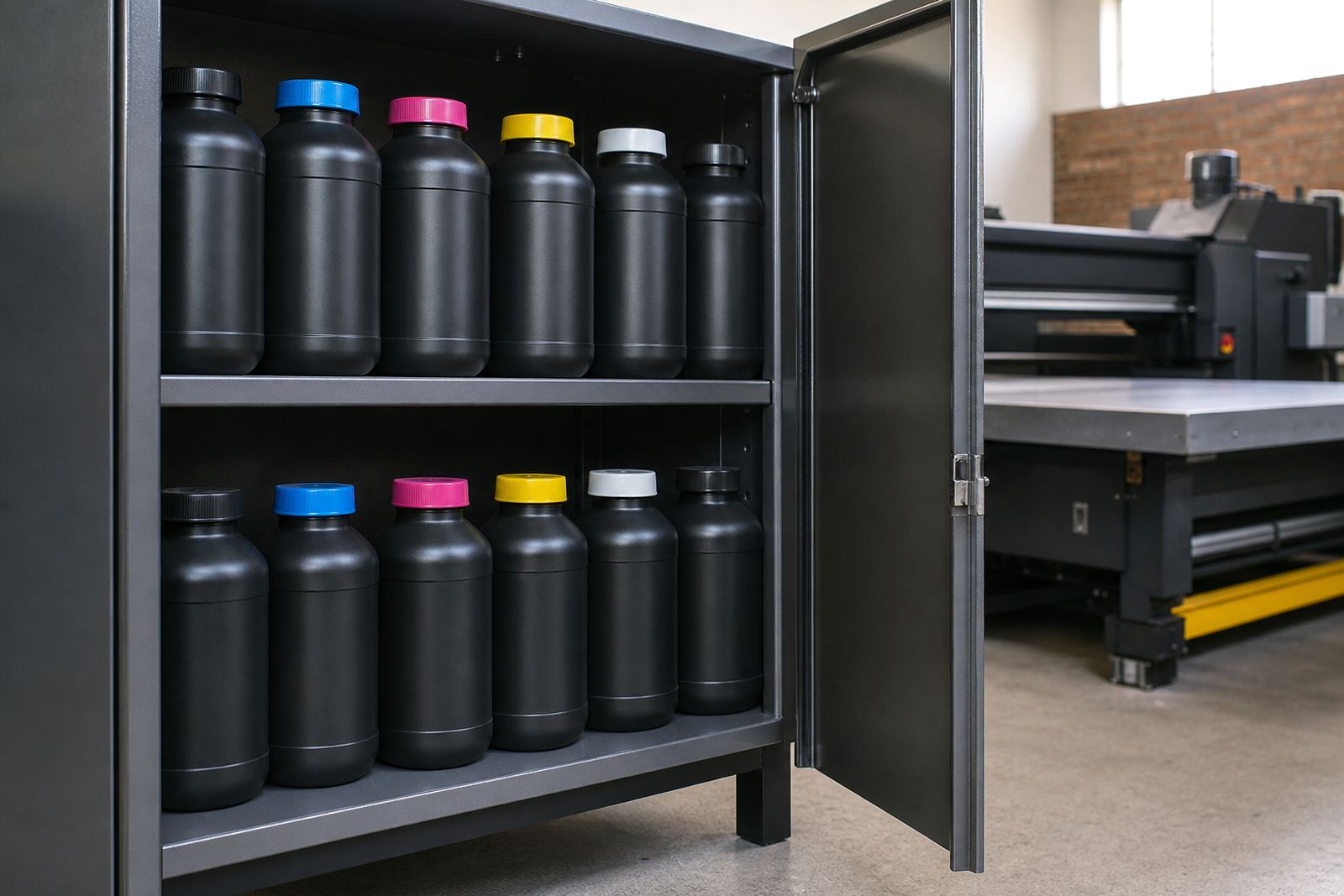
- Store containers upright on shelving, not on their sides.
- Do not place ink near heaters, compressors or direct sunlight.
- Leave enough space between stock items for labels to stay visible.
When teams work across Johannesburg, Pretoria and Centurion, it helps to set the same storage rule in each branch so operators do not guess where to keep opened and unopened stock.
Open bottles with a clean routine
The way ink is opened matters just as much as where it is kept. A dirty cap, a dusty funnel or a rag left open on the bench can introduce particles into the ink path. Once contamination enters the system, it can show up as blocked nozzles, unstable colour or extra cleaning time. That means more downtime and more wasted media.
For small and medium production rooms, a simple opening routine is usually enough. Wipe the outside of the container before opening it. Check that the neck is clean. Use clean, dedicated tools for that ink type only. If a drum is partly used, close it properly after every pour and return it to the storage shelf straight away, not after tea or after the next job is queued.
- Use a marked fill area with paper towels, gloves and a waste bin.
- Never pour ink back into the original container once it has been decanted.
- Keep cleaning cloths away from open ink to reduce lint and dust.
Labelling and stock rotation save time later
Ink stock control does not need to be complicated. A clear label with the opening date, batch or lot reference if supplied, and the operator initials makes it easier to track what was used and when. This is especially useful where more than one shift handles the same machine. It also helps when you need to trace a colour issue or a curing concern back to a specific container.
Many shops think they are organised until they have three opened containers of the same colour, one nearly empty and two half used. That leads to guesswork. A simple stock rotation rule keeps things moving in the right order and avoids old material sitting at the back of a shelf for months.
- Mark every opened container as soon as it is used.
- Use the oldest opened stock first unless the supplier gives a different instruction.
- Separate active stock from reserve stock so nothing gets forgotten.
Protect ink from dust, moisture and poor sealing
Dust is a real issue in many industrial areas around Germiston and the East Rand. Even fine dust can find its way into caps, funnels and storage trays. In humid areas such as Durban and parts of Cape Town near the coast, moisture control matters too. A cap that is not seated properly can let in damp air and can affect the condition of the ink over time.
Store ink in closed cupboards or on covered shelving where practical. Keep lids tight and check gaskets or seals before returning stock. If a container has been left open longer than it should have been, do not assume it is fine because it still looks normal. Small contamination problems often only show up once the job is under way.
Good habits here are not expensive, but the cost of ignoring them can be high. A spoiled board run or a day spent cleaning heads is far more costly than a few extra minutes spent closing and checking stock properly.
Match storage habits to your workflow and maintenance plan
Ink storage works best when it fits the whole production workflow. That includes printer installation, operator training, colour guidance, preventive maintenance and breakdown support. If your team knows where the ink lives, how to handle it and who checks it, the machine has a better chance of running consistently. It also reduces confusion when a service technician visits and needs to inspect the ink path or discuss media testing.
A practical example: a signage shop in Germiston receives rigid board work for retail displays, but the same room also stores unopened ink for a satellite site in Pretoria. If those containers are not clearly marked and rotated, the oldest stock can sit untouched while new stock is opened. A simple register and a fixed shelf order solves that problem quickly. It keeps the production area tidy and makes replenishment easier too.
For shops that operate across Johannesburg, Durban, Cape Town and Gqeberha, it is worth building one storage standard that every branch follows. The same rule should cover ink handling help, spares coordination and remote support so no one is working from memory.
- Keep an ink register with dates, storage location and notes on opened containers.
- Link storage checks to your weekly maintenance routine.
- Review stock before a busy production period so you do not open damaged or aged material at the last minute.