
Start With the Board, Not the Artwork
When a client asks for a quote on rigid signage, the first question is not how many colours are in the artwork. It is what the board needs to do. Indoor point-of-sale, shop fascia panels, estate signage and event boards all ask different things from the material and the print process. A foam board for an indoor display is a very different job from a heavier sheet that must sit outside in Johannesburg sun or coastal humidity in Durban.
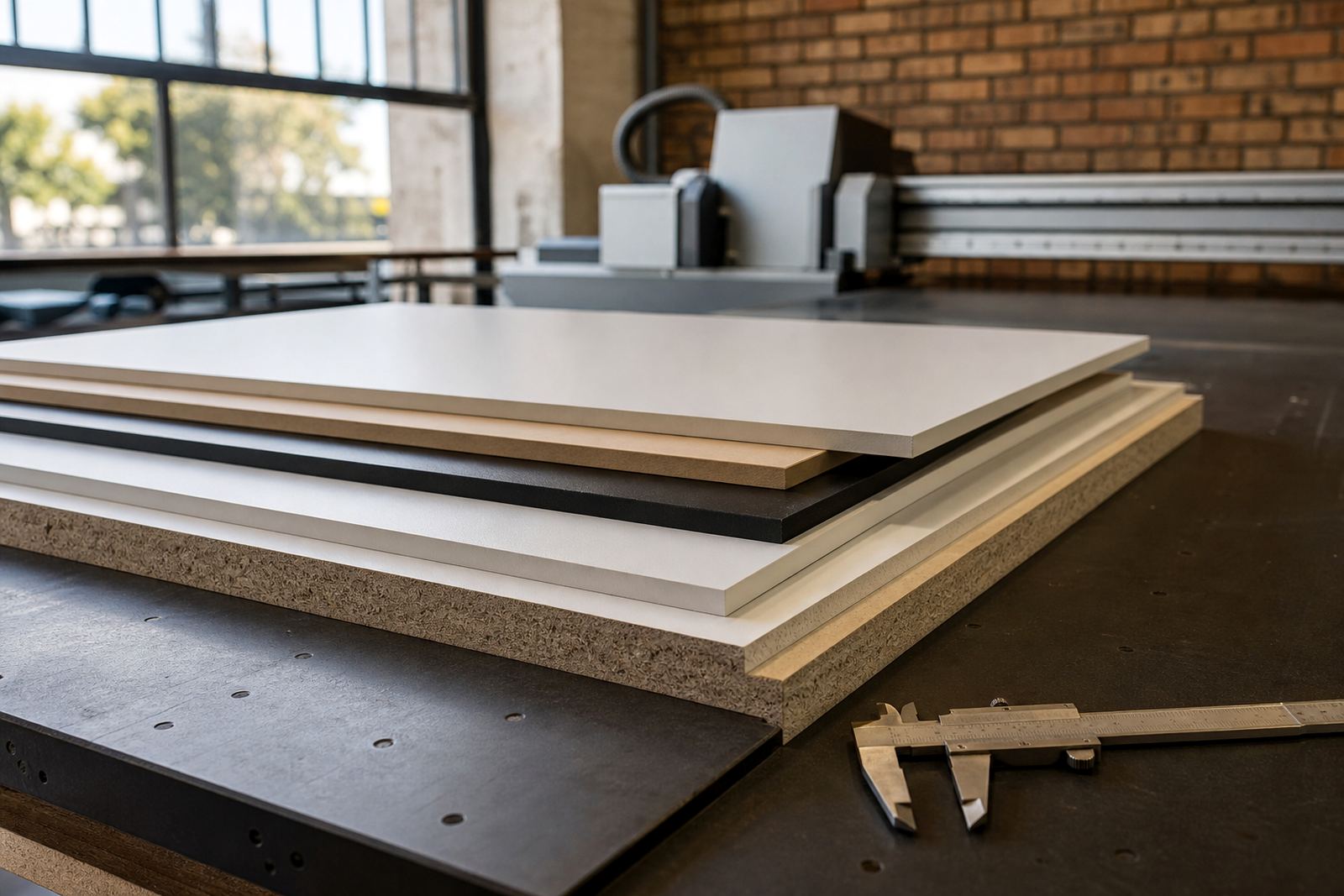
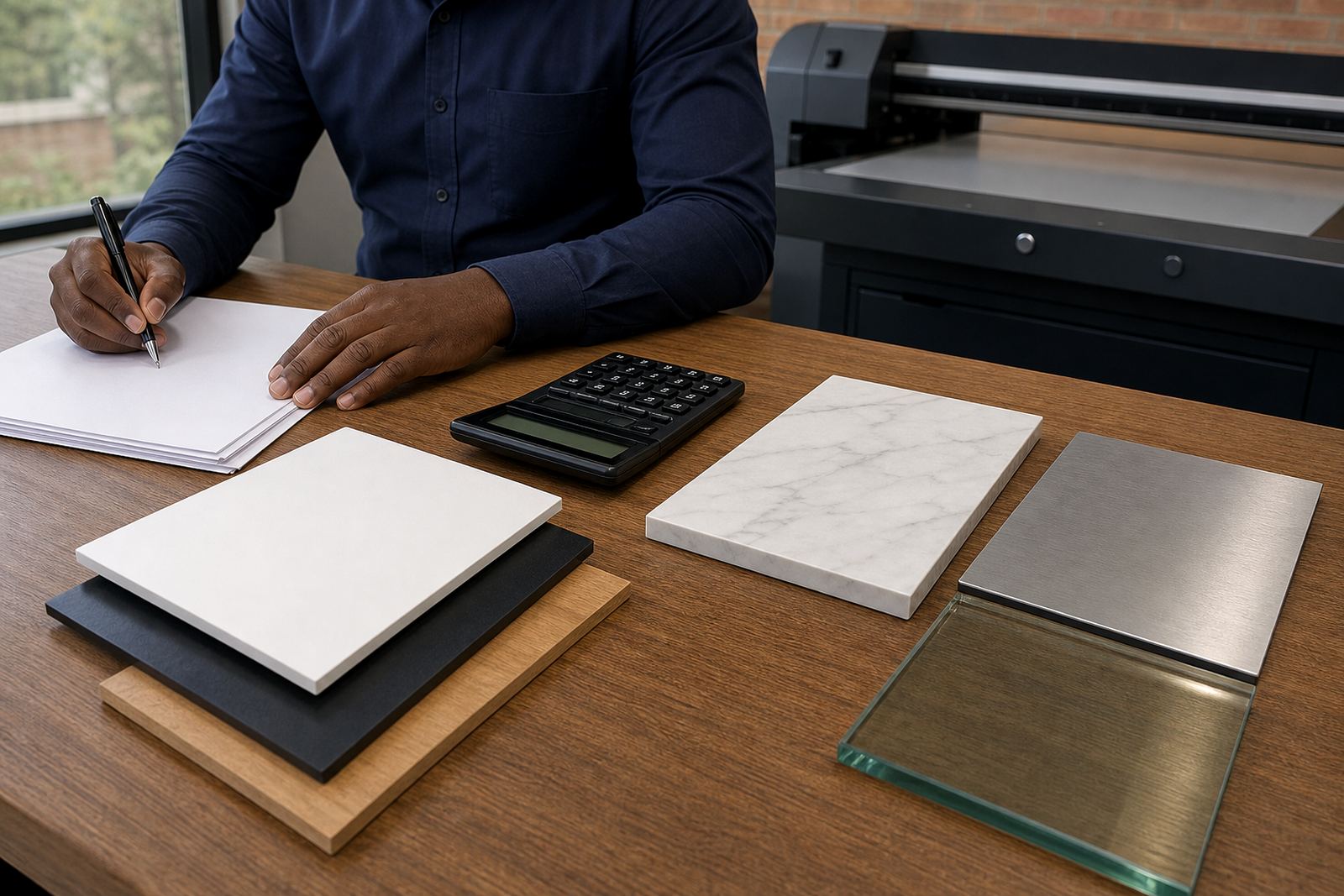
Good quoting begins with the substrate. You need to know the board thickness, sheet size, whether the material is flat enough for direct printing and whether it will need trimming after print. If the client has not chosen the board yet, the quote should show options. That avoids the common problem where the price looked fine on paper, but the selected board pushes the job into a higher cost bracket.
It also helps to ask where the sign will live. A board going into a shopping centre passage in Sandton has different requirements from a temporary event panel in Pretoria or a roadside notice in Gqeberha. Exposure, handling and lifespan all matter. If the quote ignores the end use, you usually end up eating the extra work later.
Build the Quote Around the Real Production Steps
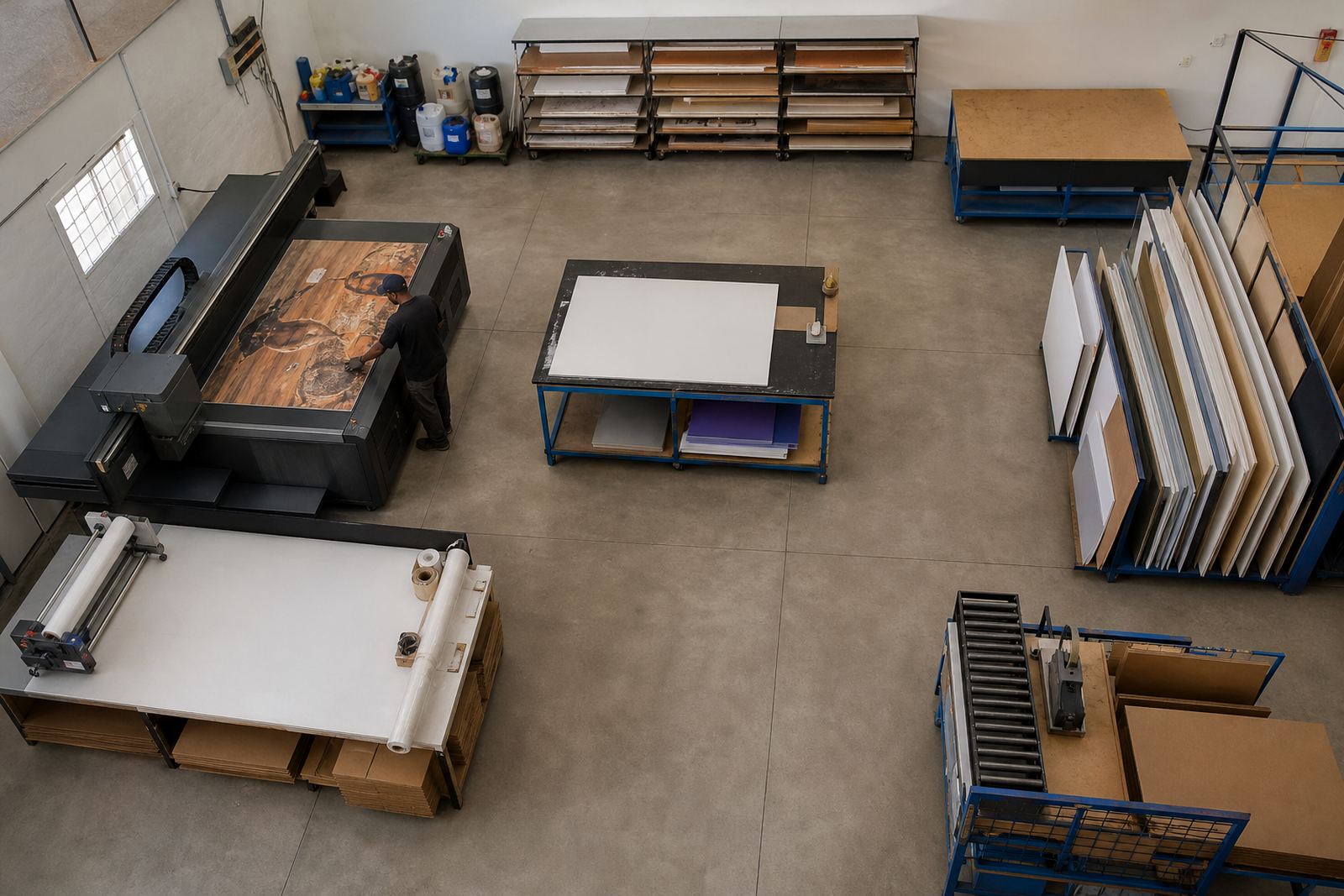
Rigid printing has a workflow. If you skip a step in the estimate, your margin disappears quickly. The safest approach is to cost the job from intake to dispatch, not only from print start to print finish. That means counting artwork checks, file fixing, board prep, print time, curing or drying where relevant, cutting, packing and delivery or collection.
For many jobs, the hidden cost is setup. One-off boards often need alignment checks, colour matching and a test pass. If the layout is simple but the board count is low, setup can take longer than the print itself. That is why small jobs are not always cheap jobs.
- Artwork check and file correction
- Substrate selection and board handling
- Printer setup and test alignment
- Ink use and print pass time
- Cutting, trimming or finishing
- Packing, delivery and admin
When you price each stage properly, you can explain the quote clearly. Clients usually accept a fair number when they can see what is included. What they do not accept is surprise extras after the work has started.
Factor in Ink Coverage and Colour Expectations
Not every printed square metre uses the same amount of ink. Solid blacks, rich brand colours and full-coverage backgrounds can use more ink than a light design with open space. If the artwork has large dark areas, the job may take longer and cost more than a cleaner layout with limited coverage. This is especially important on light-coloured boards where underlayers or multiple passes may be needed for clean colour.
Colour expectations matter as well. Some clients want a close match to an existing sign, packaging or internal brand reference. That can mean extra time for colour guidance, proofing and adjustment. If the job is going to be viewed under fluorescent retail lighting, daylight, or bright outdoor sun, you need to consider how the colours will read in that setting. A board that looks perfect in the workshop can appear different once installed.
For quoting, the safest rule is to separate standard production from colour-sensitive work. If a client wants a specific shade matched, say so in the estimate. That way the time spent on testing and checking is paid for properly instead of being absorbed as free labour.
Don’t Underquote Finishing, Mounting and Delivery
Rigid jobs often look simple until the finishing starts. A clean edge, drilled holes, taped backer, stand-off fixing or face mounting can add a fair amount of time. If the board needs to be ready for immediate installation, finishing becomes part of the core job and not an afterthought. Many underquotes happen because the print side is costed, but the install-ready side is forgotten.
Delivery is another area where money slips away. A board may be light but awkward, and a larger sheet can need careful loading, extra packing and a vehicle with enough space to carry it flat. Transport across Gauteng is one thing. Getting the same job to Cape Town or Durban with proper protection is something else entirely. If the quote includes transport, specify whether it covers door-to-door delivery, offloading, or only collection from your workshop.
- Edge trimming and clean-up
- Drilling, fixing points or mounting preparation
- Protective packing for transport
- Local delivery or national freight
- Installation if the client needs it
A quote that clearly states what is excluded saves arguments later. If installation is not included, say so. If the board must be signed off before dispatch, say that too. Good quoting is as much about boundaries as it is about price.
Use Job Size to Set a Fair Minimum Charge
Small rigid jobs can be the trickiest to price. A single board may only use a little material, but it still needs the same basic setup, file check and handling as a larger run. If you quote only by area, you end up losing money on small orders. That is why many suppliers work with a minimum charge for board printing, even when the square meterage is low.
This is sensible in South African conditions, where labour, electricity and transport costs all move the final price. Load-shedding can slow production planning, and a tight turnaround may require extra coordination to keep a job on time. If the order is urgent, the quote should reflect that urgency. Rush work is rarely just print work, it is schedule work too.
For repeat clients, it helps to keep a simple structure. Base price, setup charge, material cost, finishing, and optional delivery. Once the client understands the formula, they are less likely to question every line item. They may still ask for a better rate, but at least the discussion is grounded in facts instead of guesswork.
A Local Example From Germiston to the Coast
Take a simple example. A client in Germiston wants rigid boards for a short-term promotion, while another client in Durban wants the same look for a display that must hold up in humid conditions near the coast. On paper the artwork may be identical, but the quote should not be. The board choice, handling, packing and expected lifespan all change the cost. The Durban job may need more careful media testing and stronger finishing, while the Germiston job may be quicker to produce but still needs a proper setup charge.
That is the sort of detail that saves money and avoids rework. If a board is going to sit in a bright retail space in Johannesburg, or outside a venue in Centurion, the print should be costed for the real environment, not just the file supplied by the client. The best quotes are practical. They tell the client what they are getting, what they are not getting, and why the price is what it is.
When rigid jobs are quoted properly, the printer protects the margin and the client gets a job that fits the brief. That is the point. A fair quote is one that covers the material, the labour and the responsibility of sending out something that must stand straight and look right the first time.