
Why wood works well for UV printed signage
Wood is still one of the most useful substrates for indoor displays and certain sheltered outdoor signs because it feels natural, takes detail well and can be cut into many shapes. For shops, offices, restaurants and events, a printed wood panel can carry a logo, menu, directional message or decorative image without looking too clinical. It also suits South African interiors where timber tones, textured finishes and practical fittings are common.
Flatbed UV printing is a good fit for wood because the ink cures quickly on the surface and can build colour on darker panels or show through on pale timber depending on the artwork style. On sealed boards, the result is usually crisp and easy to work with. On raw or very porous wood, though, the surface may drink in the ink unevenly, so the board must be chosen with care.
In Germiston, where workshops and sign makers often work to tight turnaround times, wood panels are popular for custom pieces that need a proper finish but not the weight of metal. They can be routed, drilled or mounted after printing, as long as the workflow is planned before the first sheet goes through the machine.
Choosing the right wood panel for the job
Not every wood product behaves the same way under UV ink. Plywood, MDF, chipboard, hardwood veneer and laminated panels each have different surfaces, edges and movement. If the board is too rough, too oily or prone to warping, the print can suffer. For that reason, media testing matters before a large run, especially where the client wants a clean branded finish on a reception wall or retail feature.
- MDF: smooth and even, good for solid blocks of colour and indoor branding.
- Plywood: useful for sign panels and display pieces, but the grain can show through.
- Veneered board: better for a warmer look, though the veneer must be sealed properly.
- Laminated board: often gives the cleanest print surface for fine detail and text.
For coastal areas like Durban or Gqeberha, moisture movement is a real factor. A panel that looks flat in the workshop can bow later if it is stored badly or fitted in a humid space. That is why proper sealing, edge treatment and acclimatisation before printing are worth the effort. It saves rework and keeps the job looking straight.
Preparing the surface before the first pass
Good UV print on wood starts before the printer is switched on. Dust, loose fibres and oil marks can interrupt adhesion, and even a small patch of contamination may show up in the final finish. Panels should be cut, sanded where needed and wiped down carefully. If the board is raw, a suitable primer or sealer may be needed depending on the intended use and the look the client wants.
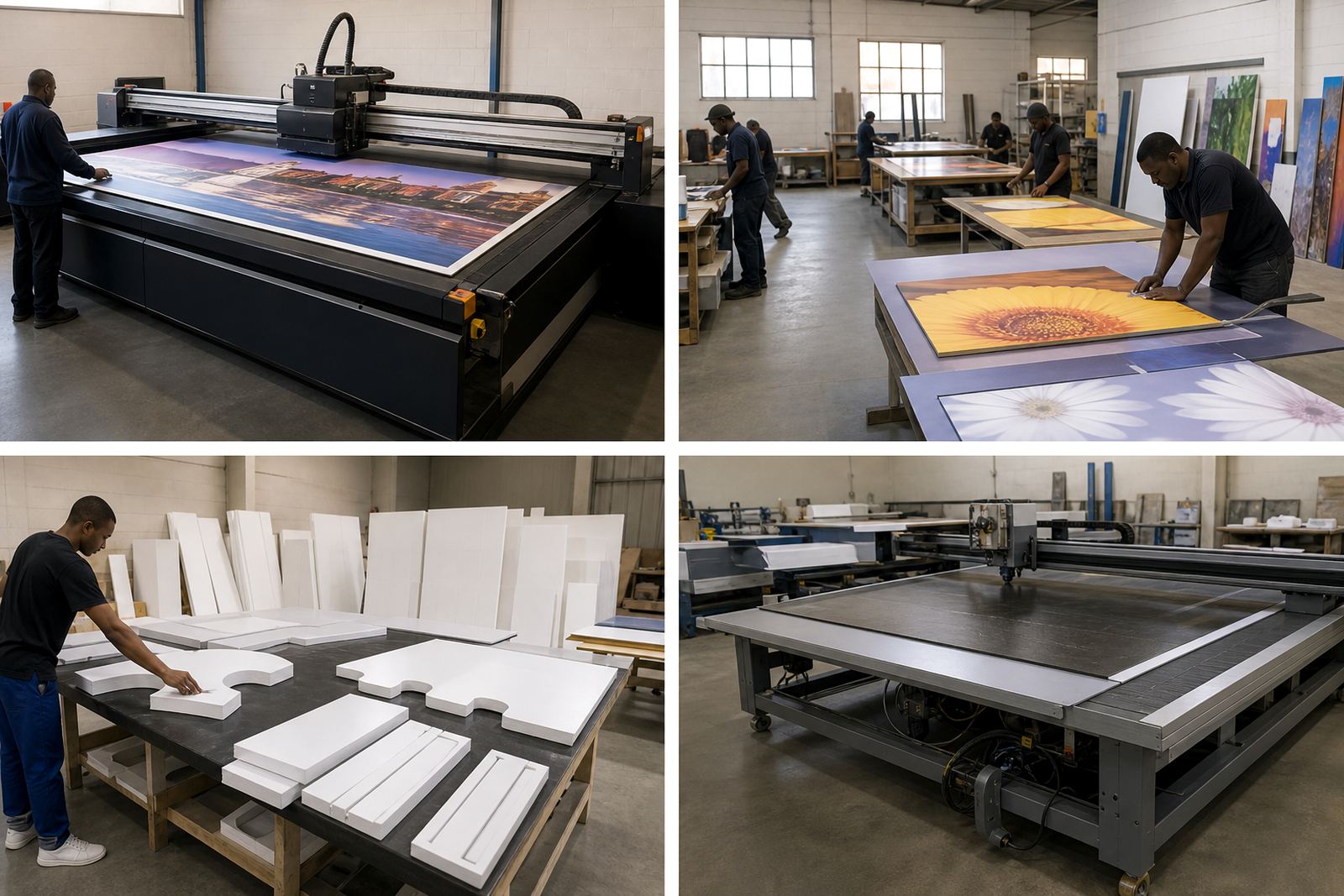
The file also needs planning. Dark wood may need a white underlayer, while pale boards might allow a more natural look with the grain left visible. Small text should be checked against the board texture because very fine detail can lose clarity if the grain is heavy. In production terms, this is where workflow planning matters. It helps to know whether the piece will be handled in one print, printed in sections, or finished with cut-outs after curing.
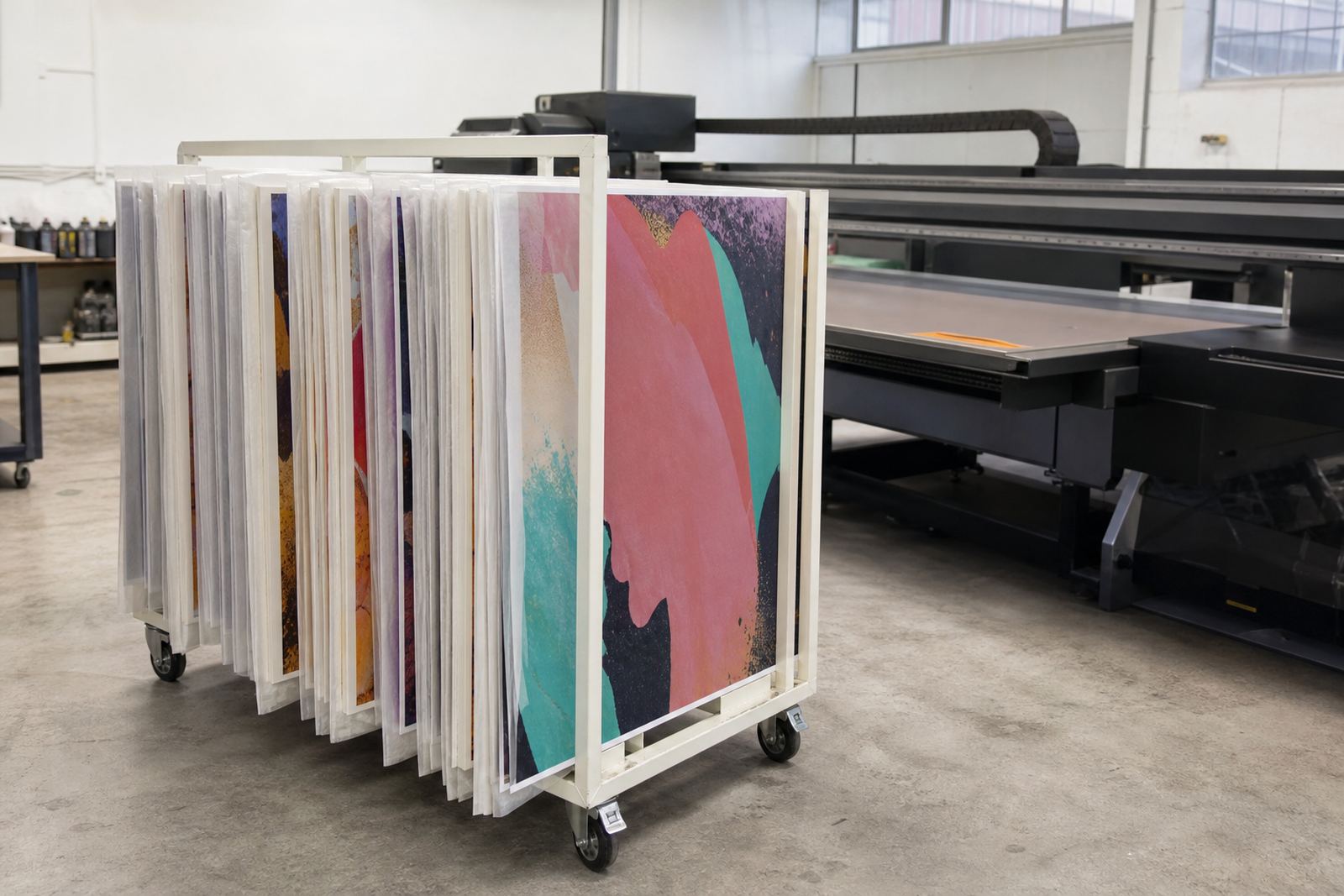
Load-shedding and site delays can affect schedules, so it helps to store boards flat and dry until the job is ready. A panel left leaning against a wall can move, and once a board moves, the alignment on repeat work becomes harder to keep right.
Decorative uses that make wood printing worthwhile
Wood print is not only for signs. It is often used for decorative interiors where the aim is to bring warmth and branding together. A printed wood panel can sit behind a counter, mark a meeting room, act as an event feature or form part of a retail wall display. Because the material has a natural feel, it works well where a client wants a less shiny, more grounded look.
- Reception walls with logo panels and directional text
- Menu boards for restaurants, cafés and tasting rooms
- Retail display plinths and shelf fronts
- Event backdrops and photo feature panels
- Decorative wall art for hospitality spaces
For a local example, a Germiston business park might use printed timber wayfinding boards for entrances, parking and tenant directories. If the panels are sealed and fitted well, they can hold up nicely indoors and still look smart after months of daily use. That is where practical design beats fancy language every time.
Ink, finish and handling after printing
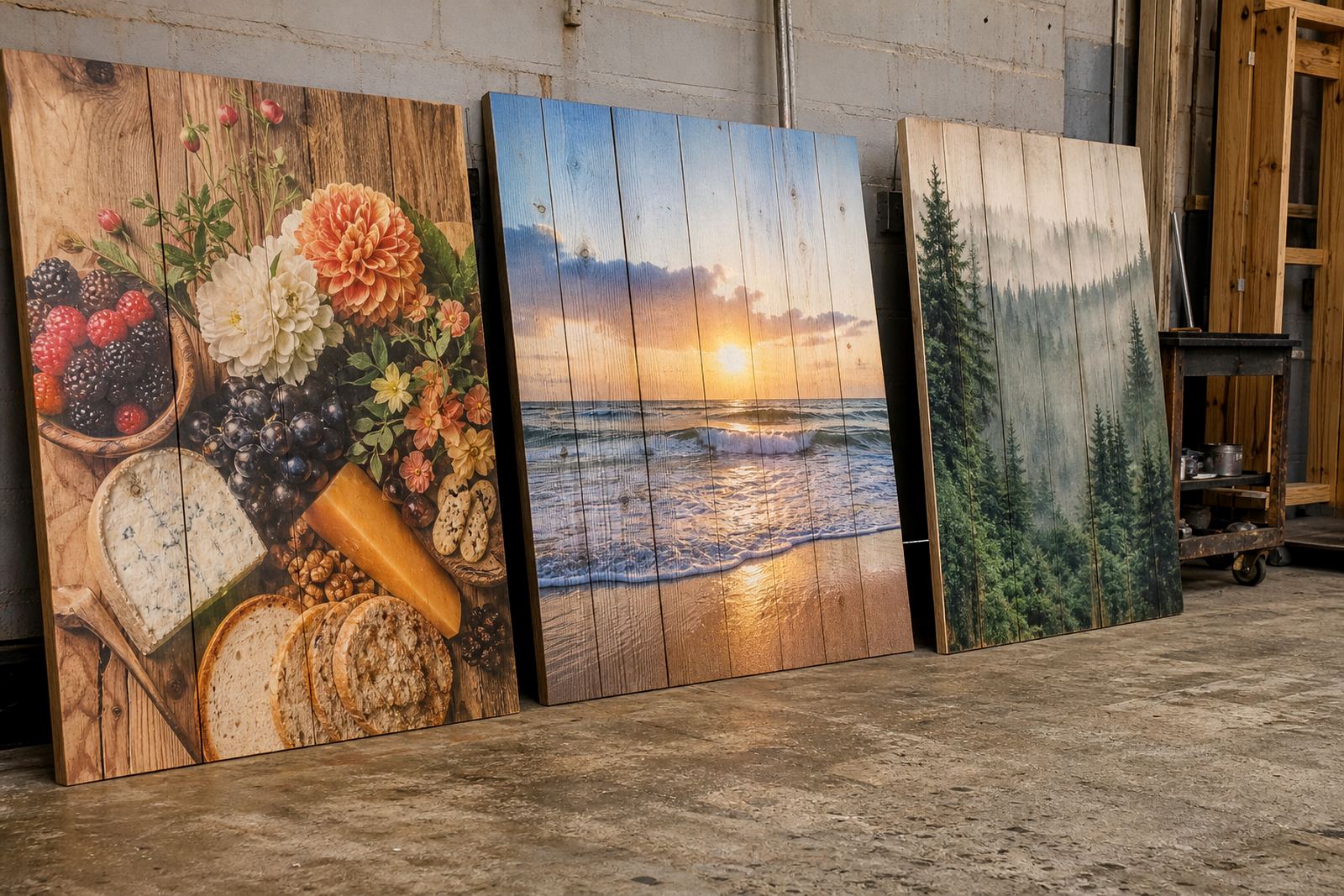
UV inks are valued because they cure quickly and can stay sharp on rigid media. On wood, the finish depends on the board surface, the colour density and whether the client wants a glossy, satin or matt appearance. Some jobs need a fully covered printed face. Others look better with grain showing through, especially on lifestyle, décor or hospitality pieces.
After printing, handling matters. Fresh panels should be moved carefully, stacked with protection if needed and left to cool before trimming, drilling or fitting. If the printed panel is going out to a site in Johannesburg, Pretoria or Cape Town, packaging should protect the corners and edges because timber corners chip more easily than many people expect. A small knock can spoil an otherwise clean job.
For outdoor exposure, clients should ask the right questions early. Not every wood panel is suited to direct sun or driving rain. Even with UV print, the board itself may need extra protection, and regular maintenance can be part of the plan. That is especially important for municipal or semi-public spaces where signage must stay legible and presentable.
A practical workflow for South African print shops
The best results come from a simple, repeatable workflow: check the board, confirm the finish, test the colour, print, inspect and only then move to installation. That process reduces waste and keeps the job consistent, whether the work is a single feature panel or a run of repeated signs. It also helps when clients ask for changes late in the job, which happens often enough.
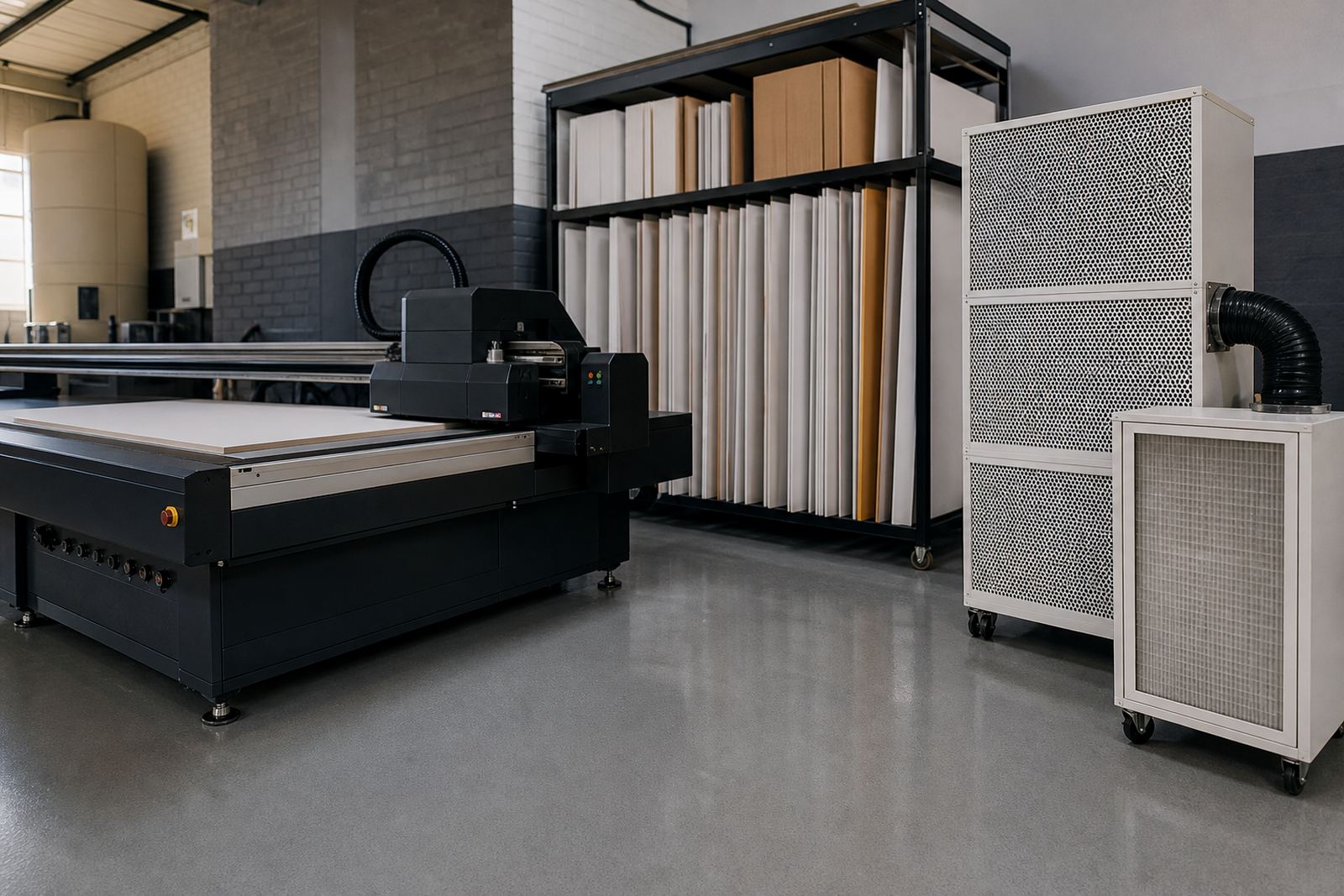
Flatbed UV printing on wood is particularly useful when the job needs both image quality and a physical presence. A board can be cut to shape, mounted with standoffs, fixed flush to a wall or built into a larger display. For businesses supplying Johannesburg, Pretoria, Durban, Cape Town and Gqeberha, that flexibility matters because sites vary widely and access conditions change from one job to the next.
When the process is managed properly, printed wood panels can be durable, clean and commercially useful. They do not suit every brief, but for decorative and branded applications they offer a good balance of appearance and practicality, especially when the material is chosen properly from the start.
What to ask before you approve a wood print job
If you are ordering printed wood panels, ask these questions before approval so there are no surprises later:
- Is the wood sealed, laminated or raw?
- Will the grain show through, or should the print cover fully?
- Is the panel for indoor use only or for a sheltered outdoor area?
- Will the board be drilled, routed or mounted after printing?
- Does the final site have heat, humidity or direct sunlight exposure?
These details help with colour guidance, media testing and the right handling plan. They also make it easier to quote sensibly and avoid costly rework. For teams that need installation, operator training, preventive maintenance or breakdown support, a clear job brief from the start is worth more than rushing to print and hoping for the best.