Why Corflute Keeps Showing Up On Campaign Jobs
Corflute is still one of the first materials many people choose when they need a sign that can go out fast, do a job for a set period, and come down again without drama. It is light to carry, easy to cut, and simple to mount on fences, frames, poles or temporary structures. For election messaging, property marketing, school events and retail promotions, that matters more than trying to over-spec the job.
The other reason it stays popular is cost control. When a sign only needs to last a few weeks or a few months, a rigid board with a higher price tag may not be the best use of the budget. Corflute gives you a practical middle ground. It looks neat from a distance, stacks well in transit, and can be used in standard sizes that suit common site layouts. A clean print on the right flute direction makes a bigger difference than people often think.
In Germiston and across Gauteng, we often see corflute used where timing is tight and access is not ideal. That includes roadside promotions, estate notices and contractor signage where the board needs to be put up quickly and removed without leaving much behind. It is a no-nonsense material, and for many jobs that is exactly the point.
What Flatbed UV Printing Changes On Corflute
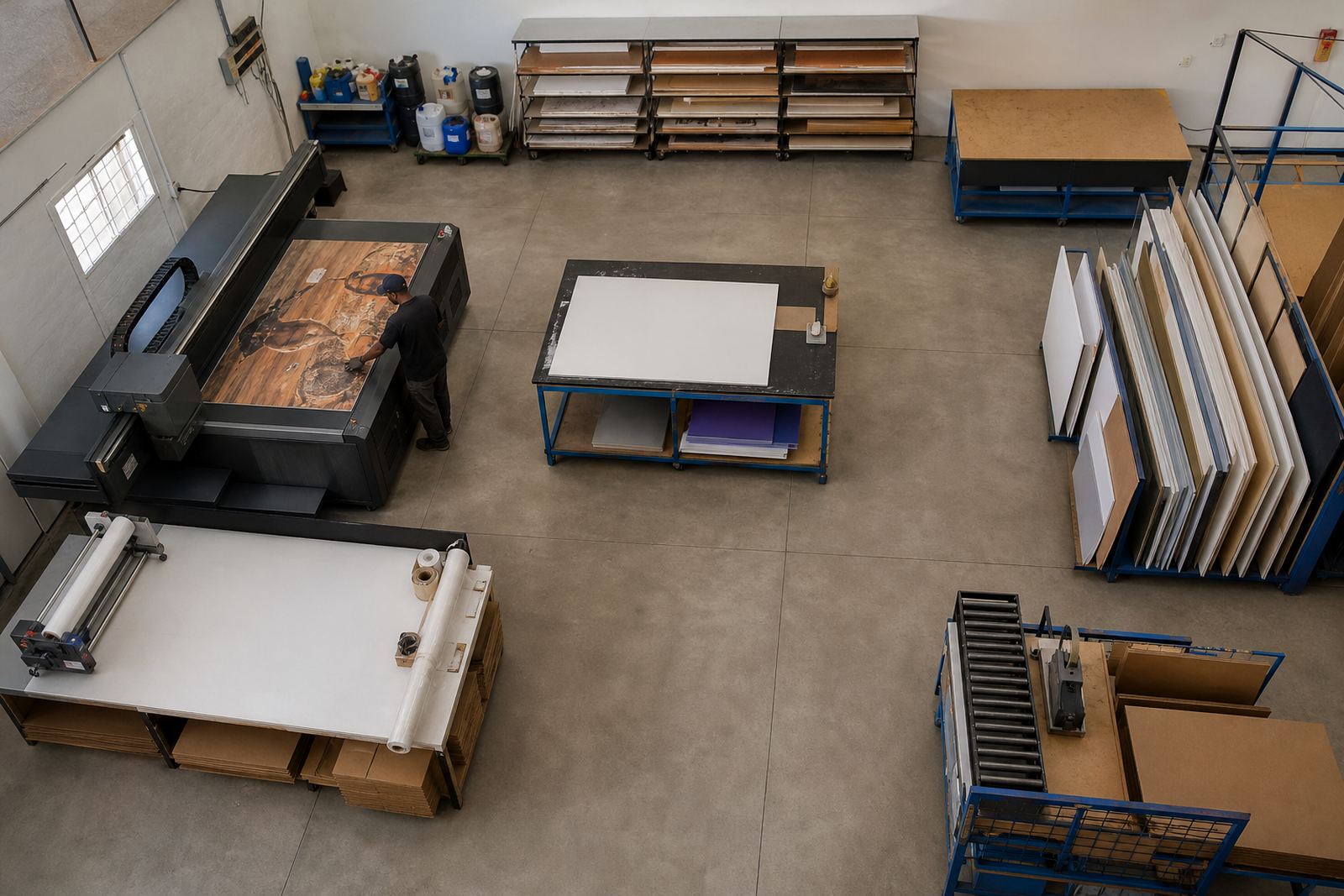
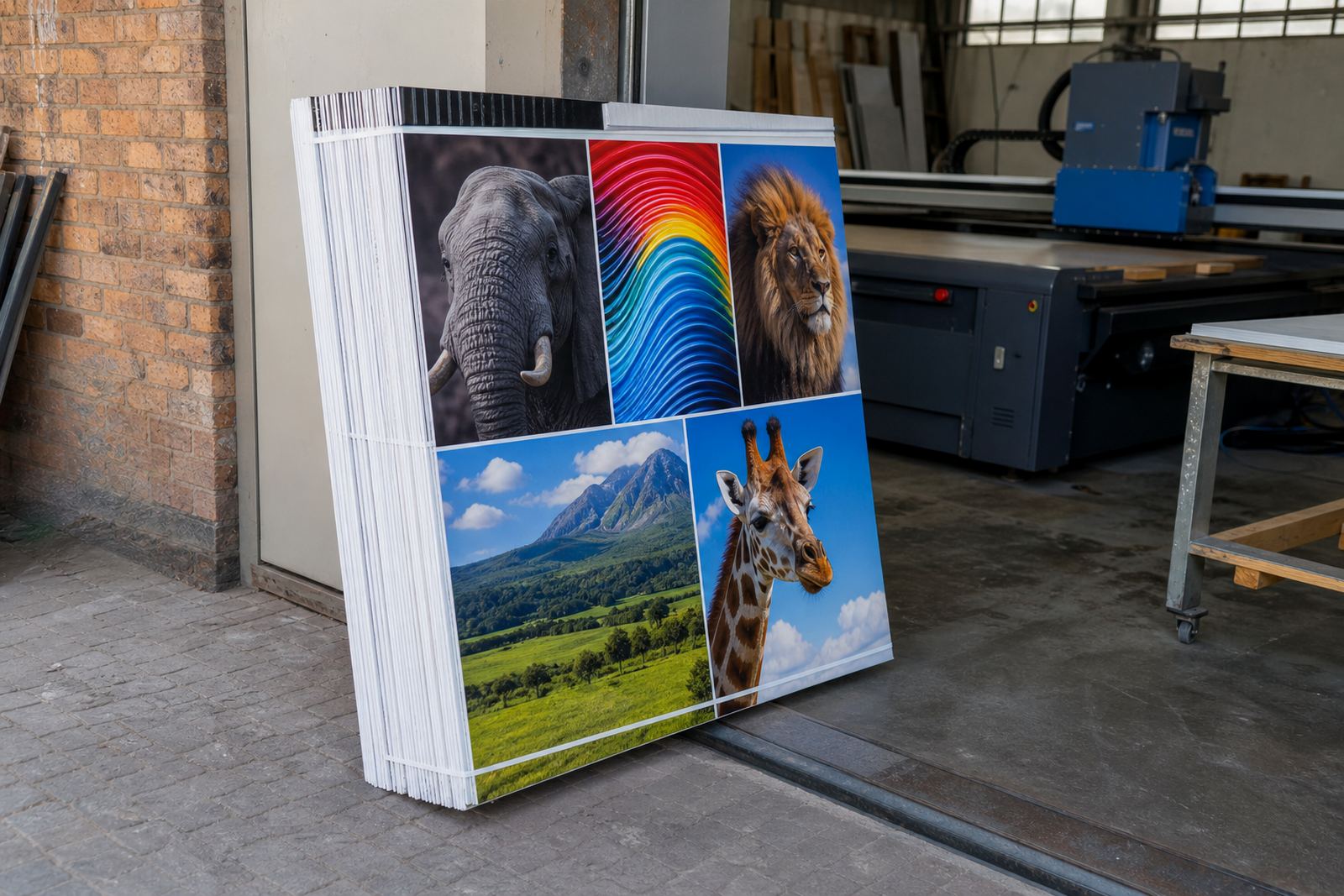
Flatbed UV printing is well suited to corflute because the print is applied directly onto the sheet and cured as it goes. That helps with sharper text, cleaner solid colours and better handling during production. For signage with logos, directional arrows, dates or pricing, the finish is usually more consistent than jobs that rely on loose adhesive graphics or last-minute overlamination.
The ink choice matters too. UV inks used for rigid boards are selected for adhesion, colour stability and outdoor use, but the result still depends on the condition of the board. Dust, moisture and warping can affect the outcome. If the sheet is stored flat and handled properly, the print process is much more predictable. On a windy site in Durban or near the coast in Gqeberha, that becomes even more important because moisture and salt air can be hard on sign material.
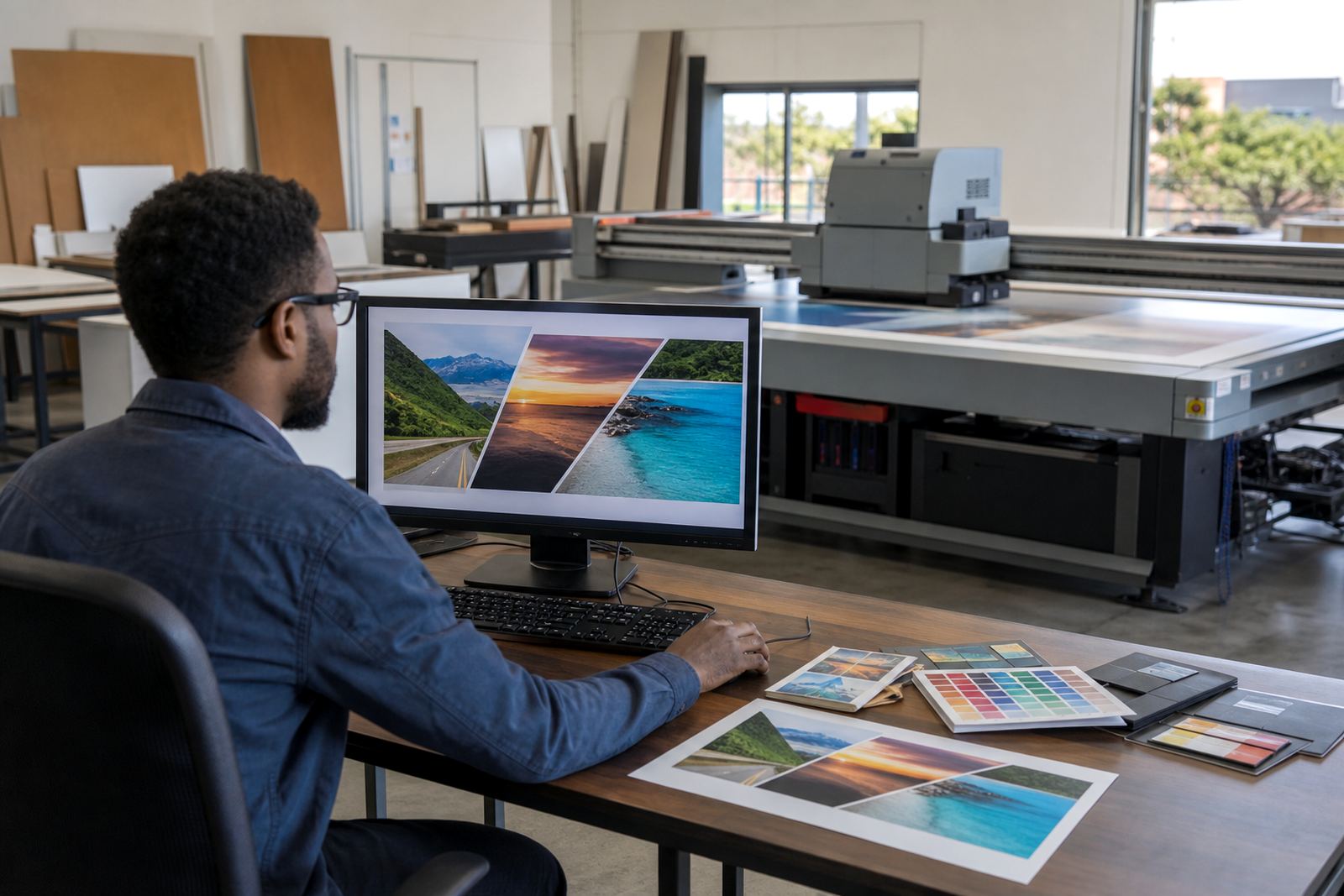
Good workflow also helps. File setup, colour guidance, board orientation and print sequence all influence the final result. A simple corflute panel can become a messy job if the artwork is not prepared for the size, viewing distance and fixing method. That is why proper planning saves time later, especially when a client needs repeated reprints or a batch of signs with slight changes.
How To Prepare Corflute For A Cleaner Finish
Corflute is forgiving, but it is not a material you can treat carelessly. The sheet should be clean, dry and stored where it will not take on a bend. If boards are left against a wall in a hot storeroom, they can warp or develop surface marks. Once that happens, print quality and installation both become harder.
Before printing, it helps to check a few basics:
- Keep sheets flat and away from direct sun before production
- Wipe off dust, oil and any handling marks
- Match the artwork size to the actual board size
- Decide whether the sign will be drilled, cable tied, taped or framed
- Check if the job needs single-sided or double-sided printing
Those details sound small, but they save time on the day of installation. A corflute panel with neat drill points and correct orientation is much easier to put up than one that has to be trimmed, turned or redone on site. Small errors add up fast when there are twenty boards to fit before opening time, and nobody wants to reprint because a hole landed too close to the edge.
Where Corflute Works Best And Where It Does Not
Corflute is a strong choice for short-term outdoor work, indoor promotions, event wayfinding and temporary property boards. It is often used for sale boards, construction notices, directional signs, exhibition panels and campaign material that needs to be moved around. In those settings, the balance of weight, price and speed is hard to beat.
It is less suitable for long-term exposure where the sign must stay in place for years without maintenance. Strong wind, constant sun and rough fixing points can shorten its life. If a board is going onto a busy roadside in Pretoria or a windy corner in Cape Town, the fixing method matters almost as much as the print itself. The board may look fine at first, but poor support can cause bending or tearing at the holes.
For this reason, we usually advise clients to think about the full use case before deciding on corflute. If the sign must be temporary, it is a sensible option. If it must stay up for a long time, another rigid board may be better. The right answer depends on the site, the viewing distance and how often the message will change.
A Local Example From Germiston To The Highway
A practical corflute job might start in Germiston, where a business needs a batch of signs for a short campaign across Johannesburg and the East Rand. The artwork may be consistent, but each site can have a different size requirement, fixing method or deadline. One branch may need boards for a fence line, while another needs smaller signs for a roadside entrance. That is where planning saves a lot of trouble.
If the boards are printed in batches, the workflow has to allow for checks before the run starts. Colour guidance, media testing and a quick review of the mounting method can prevent waste. The client then receives signs that are ready to use, rather than a pile of material that still needs adjustment. For temporary campaigns, that turnaround is often more important than chasing fancy extras.
In a city where weather can change quickly and load-shedding can interrupt production times, good scheduling matters too. A simple corflute order can still go wrong if the handover is rushed. When the boards leave the workshop with the right finish and the right fixing points, the team on site has one less thing to worry about.
Keeping Temporary Signage Working Until The Job Is Done
Once corflute signage is installed, it still needs a bit of care. Loose ties, bad edges and badly placed fasteners can shorten its life. If the sign is meant to stay up through a few weeks of rain and sun, the safest approach is to check it after the first storm and again after any strong wind. That simple step avoids many call-backs.
For clients with repeat campaigns, maintenance is usually less about repair and more about consistency. The same board size, same print setup and same fixing method should be used each time where possible. That makes reordering easier and keeps the look tidy across different sites. It also helps with storage and handling, because the team knows exactly what to expect.
Corflute works because it is practical. It is not trying to be a permanent display solution, it is there to get a message out quickly and clearly. When the print is handled properly and the installation is done with care, the result is good value and a sign that does its job without making a fuss.