
Why glass needs a different print approach
Printing on glass is not the same as printing on board or plastic sheet. The surface is smooth, non-porous and often handled before and after installation, so adhesion, cure and edge protection all need attention. If the glass is for interior décor, retail display or a protective panel, the print must look good under bright light and still stay put when cleaned.
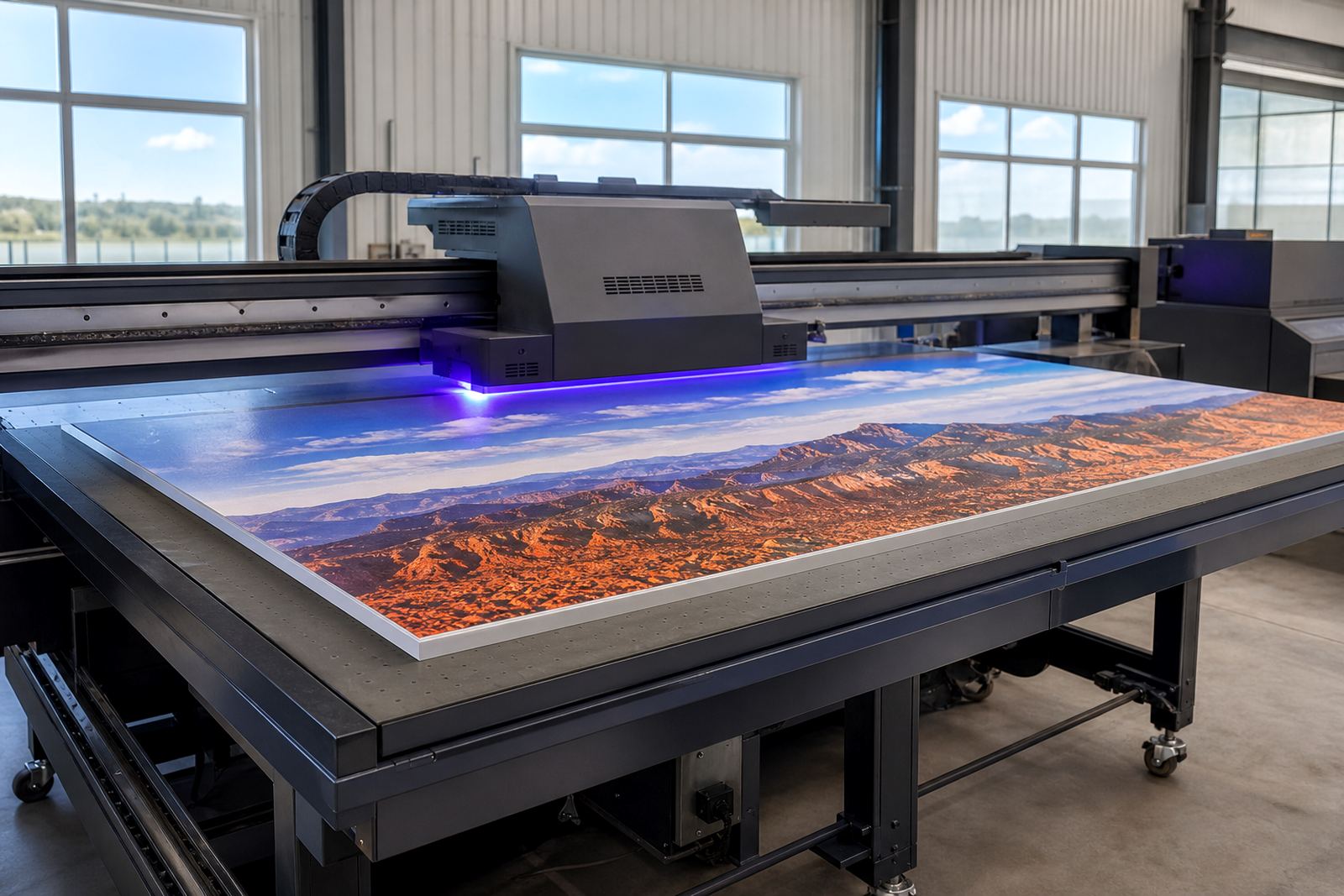
UV printing is often used on glass because the ink is cured by light as it lands on the surface. That helps with speed and handling, but it does not remove the need for proper surface preparation. Finger marks, dust, polishing residue and moisture can all affect the finish. In coastal towns like Durban or Gqeberha, humidity can also play a part if panels are stored poorly before printing.
Choosing the right glass and finish for the job
Not every glass panel should be treated the same way. Clear glass, frosted glass, tinted glass and laminated glass all behave differently. Some jobs need direct print on the back side so the image reads through the front. Others need a white underlayer so colours hold their strength, especially where light passes through the panel.
For shopfitting and office work, the choice usually depends on where the panel will sit, how it will be cleaned, and whether the print is decorative or functional. A printed glass panel at a reception area in Sandton faces very different wear from a small feature panel in a home office in Centurion. If the panel is going into a food prep area or public building, check the local safety and building requirements before production starts.
- Clear glass works well where light transmission matters.
- Frosted or etched-look glass can soften strong graphics.
- Tinted glass may need stronger colour control.
- Laminated panels are often chosen where added safety is required.
Ink, cure and adhesion on smooth surfaces
On glass, ink adhesion is the main issue. The print can look excellent straight off the machine but still fail if the surface is not ready or the cure is not consistent. A well set workflow uses cleaning, testing and controlled curing before a full run goes ahead. In some cases a primer or adhesion aid may be used, depending on the glass and the intended use.
UV inks are selected for their ability to cure quickly and hold detail on rigid media. Even so, the operator must manage layer build-up, colour density and curing settings carefully. Too little cure can leave the print soft or vulnerable to scratching. Too much can affect finish or create unwanted heat stress on the panel. This is where experience counts, especially on larger sheets where the print field needs consistent coverage from corner to corner.
- Clean the panel with suitable glass-safe methods before printing.
- Test adhesion on an offcut or sample panel before production.
- Use a white layer where opacity is needed.
- Allow proper handling time after curing and before packing.
Artwork setup for readable glass graphics
Glass panels can look sharp and minimal, but that also means the artwork must be prepared with care. Fine text, pale tones and low-contrast images may disappear when the panel is backlit or viewed through reflections. It helps to plan the design around the final viewing position, the amount of daylight, and whether the panel will be seen from one side or both.
For one-way viewing, artwork may need to be mirrored and printed on the reverse side of the glass. For two-sided visibility, the layout often needs a different approach altogether. Small registration errors show up fast on glass, so file setup should be checked before printing starts. A local retailer in Germiston wanting a feature panel for a street-facing window, for example, may need different colour treatment than a boardroom screen in Pretoria. That kind of planning saves costly rework.
- Set artwork in the correct viewing direction before output.
- Use strong contrast for text and logos.
- Leave safe margins near drilled holes, edges and fixings.
- Confirm whether the print is for internal or external viewing.
Handling, mounting and site conditions across South Africa
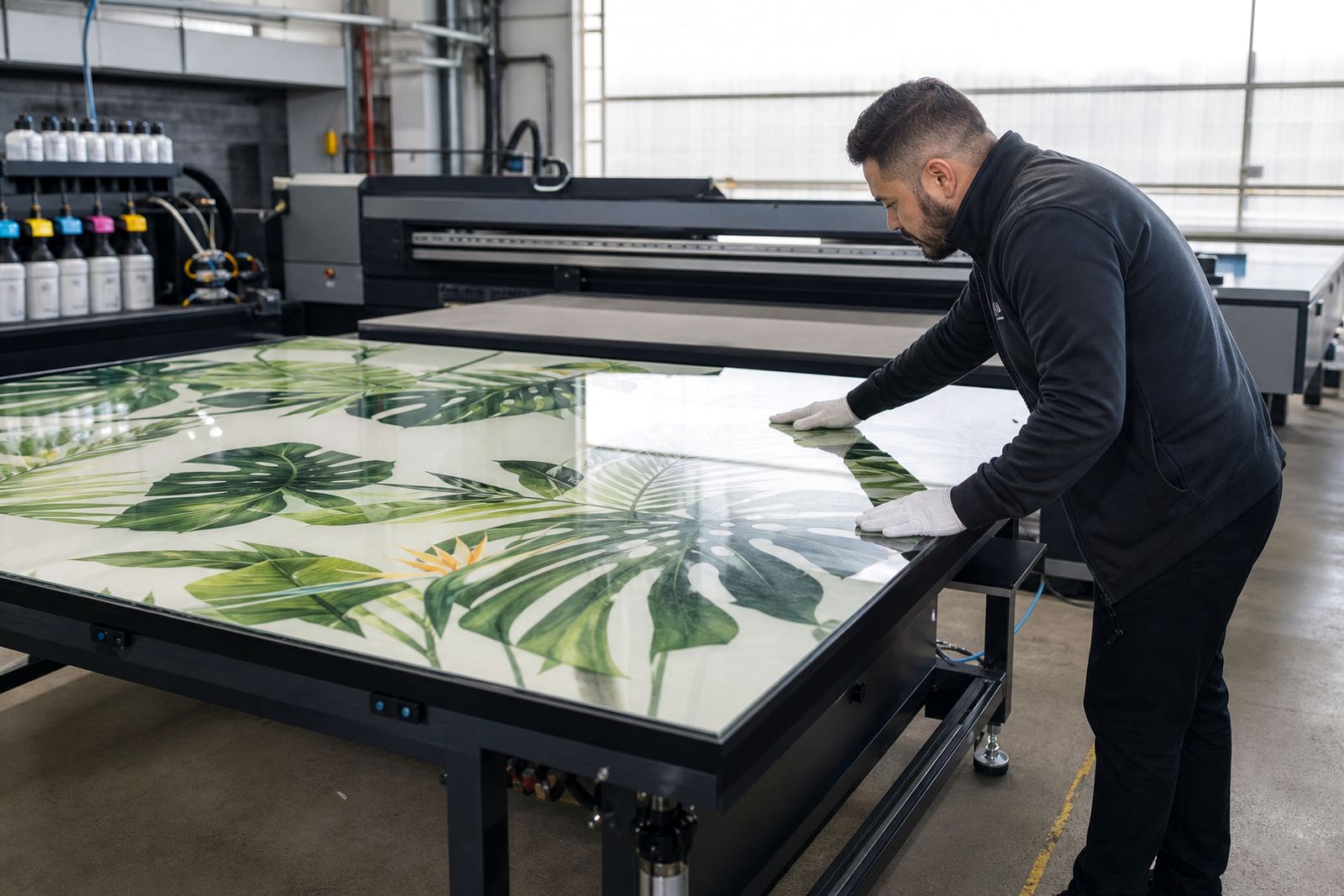
Glass panels are heavy, fragile and unforgiving of rough handling. Transport and installation need proper protection, clean gloves and secure packing. On site, the mounting method must suit the panel size and the building conditions. A panel installed in a sealed office environment may have fewer issues than one fitted in a coastal retail space where salt air and cleaning chemicals are part of daily life.
Across South Africa, site conditions vary a lot. In Johannesburg and Pretoria the dust load can be high, while on the coast moisture and salt can affect fittings over time. In factories or warehouses, vibration and forklifts can also become a problem. Before print and installation, it is worth checking wall flatness, fixing points, lighting and access for the installation team. That avoids delays and helps the finished panel sit correctly from day one.
A practical workflow that keeps the job moving
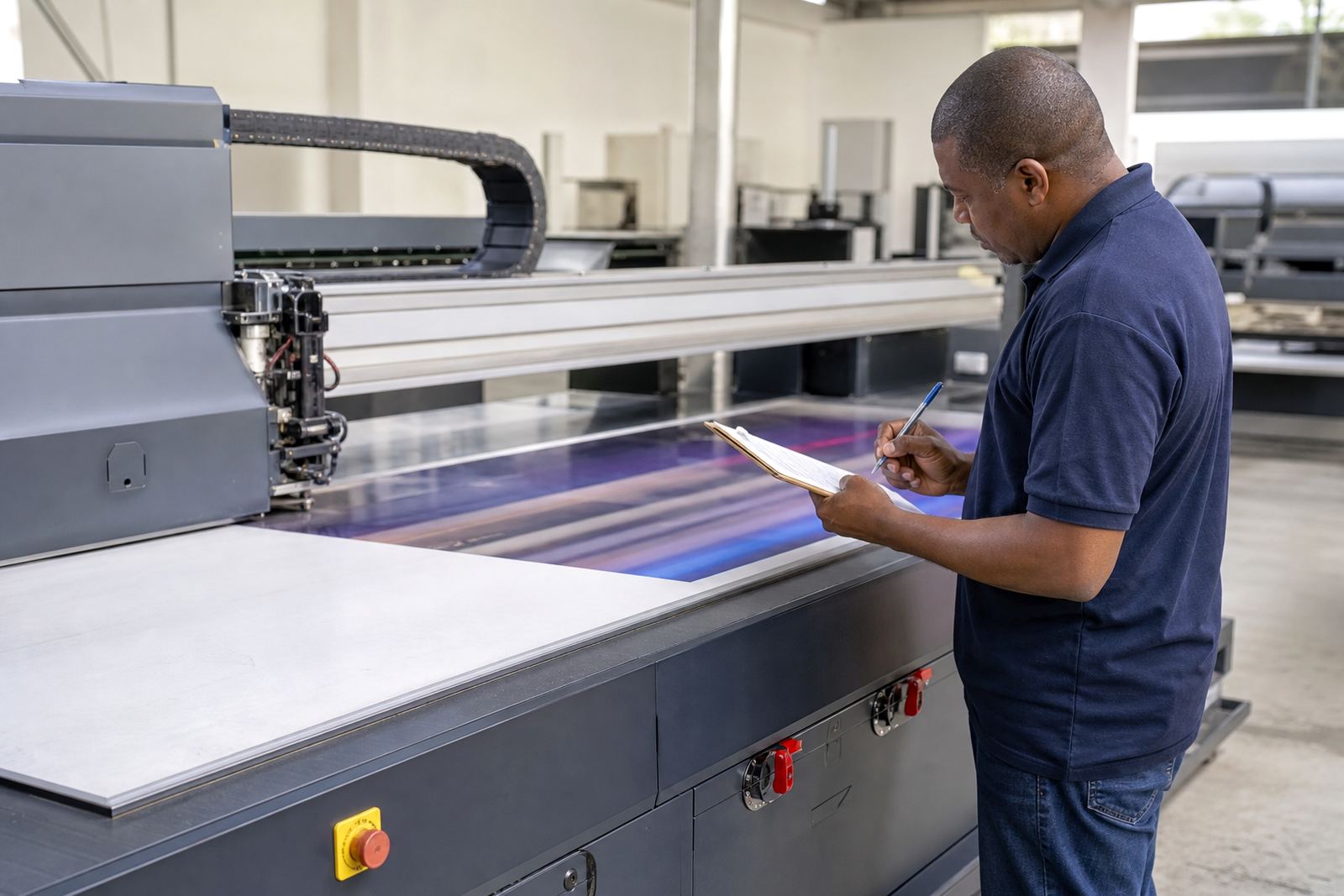
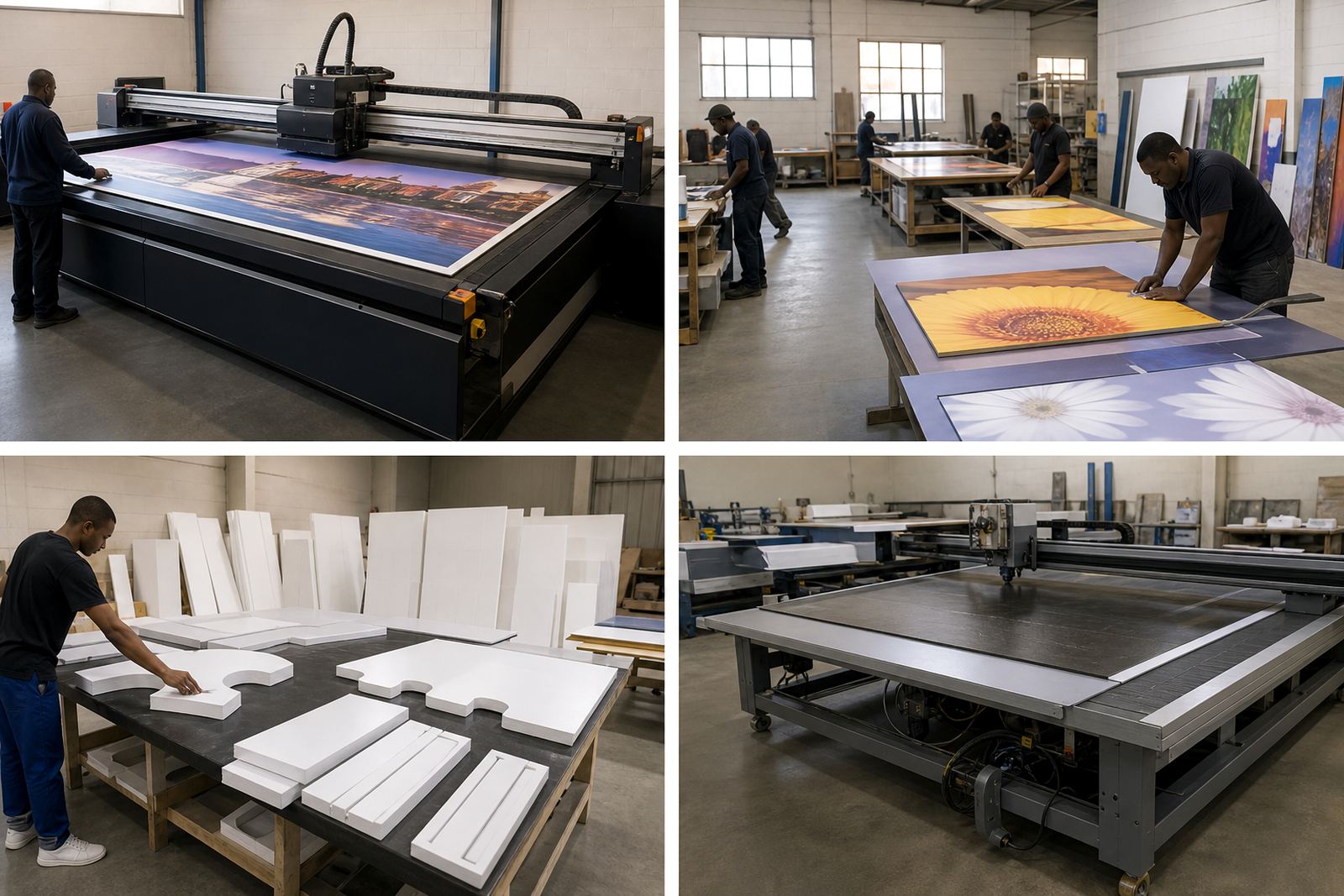
A good glass printing job follows a clear sequence. First comes the site brief and measurement. Then the artwork check, material selection and a print test if needed. After that, the panel is cleaned, printed, cured and inspected before packaging or installation. If the job involves several panels, numbering and layout control become important so each piece lands in the right place.
At Flatbed UV, our Germiston base supports projects across Johannesburg, Pretoria, Durban, Cape Town and Gqeberha, with installation, training and service available nationwide. The team includes Sibusiso Mthembu as Managing Director, Lerato Nkosi in sales, Johan van der Merwe on technical support, Ayanda Dlamini for training, Michael Naidoo in service and Zanele Khumalo in production support. That matters when a customer needs help with printer installation, site preparation, operator training, workflow planning or preventive maintenance. For glass work especially, a steady process reduces waste and keeps production moving even when load-shedding or delivery delays complicate the day.
- Measure the panel and confirm the fixing method first.
- Check ink compatibility and test cure on sample material.
- Plan packing, lifting and installation before printing starts.
- Keep spare media, cleaning supplies and a backup workflow ready if production is tight.
When to ask for support before the print run
Glass printing often looks simple from the outside, but one small error can spoil a full panel or a full set of panels. If the job is for a shopfront, a hotel reception, a boardroom screen or a public-facing space, it is worth asking for support early. That is especially true when the project has tight deadlines, mixed panel sizes or a need for exact colour matching across multiple pieces.
Support can include colour guidance, media testing, remote support, spares coordination, ink handling help and breakdown support. For a customer in East Rand or Centurion, that can mean less downtime and fewer production surprises. When the right checks are done upfront, printing on glass becomes a controlled process rather than a gamble. The result is a clean finish that holds up in daily use, which is what the end client actually needs.