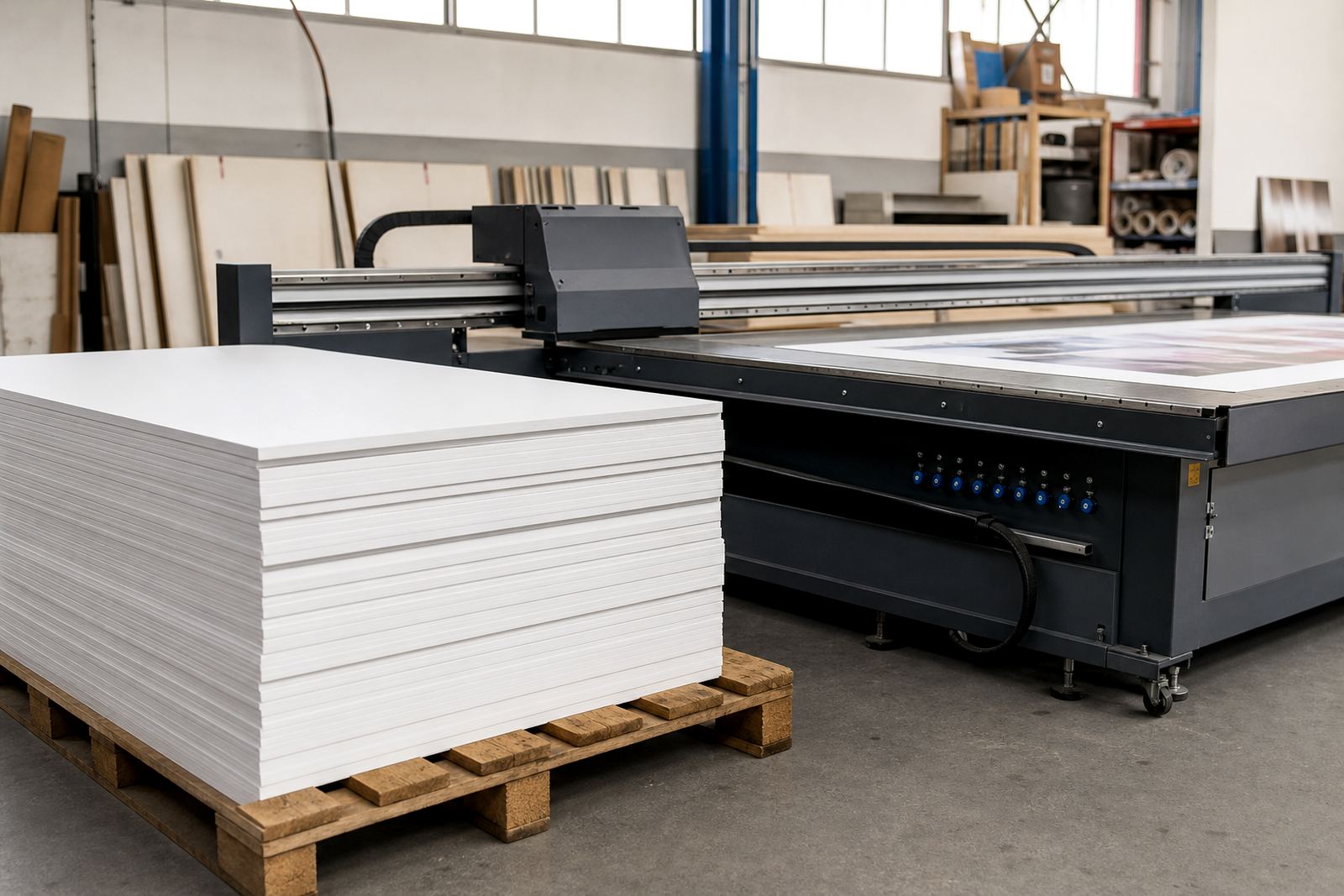
Why PVC Works For Everyday Signage
Rigid PVC is used widely for shop signs, safety boards, price boards, directional signs and short-run promotional displays. It is easy to mount, can be routed into shape and gives a clean flat surface for direct print. In places like Germiston, where a sign may need to go up fast and still hold up to dust, sun and daily handling, PVC is often chosen because it is practical rather than fussy.
The board should match the job. Thicker sheets are generally better where the sign will be handled often or mounted outdoors, while lighter boards can work for indoor notices and temporary displays. A good print result starts with straight material, proper storage and a clean surface. If the board has bends, scratches or surface contamination, the print will show it.
For businesses that replace signage regularly, PVC also helps keep production simple. Cuts are predictable, routing is clean and the material accepts clear graphics without needing extra laminating steps in many cases.
What To Check Before Printing
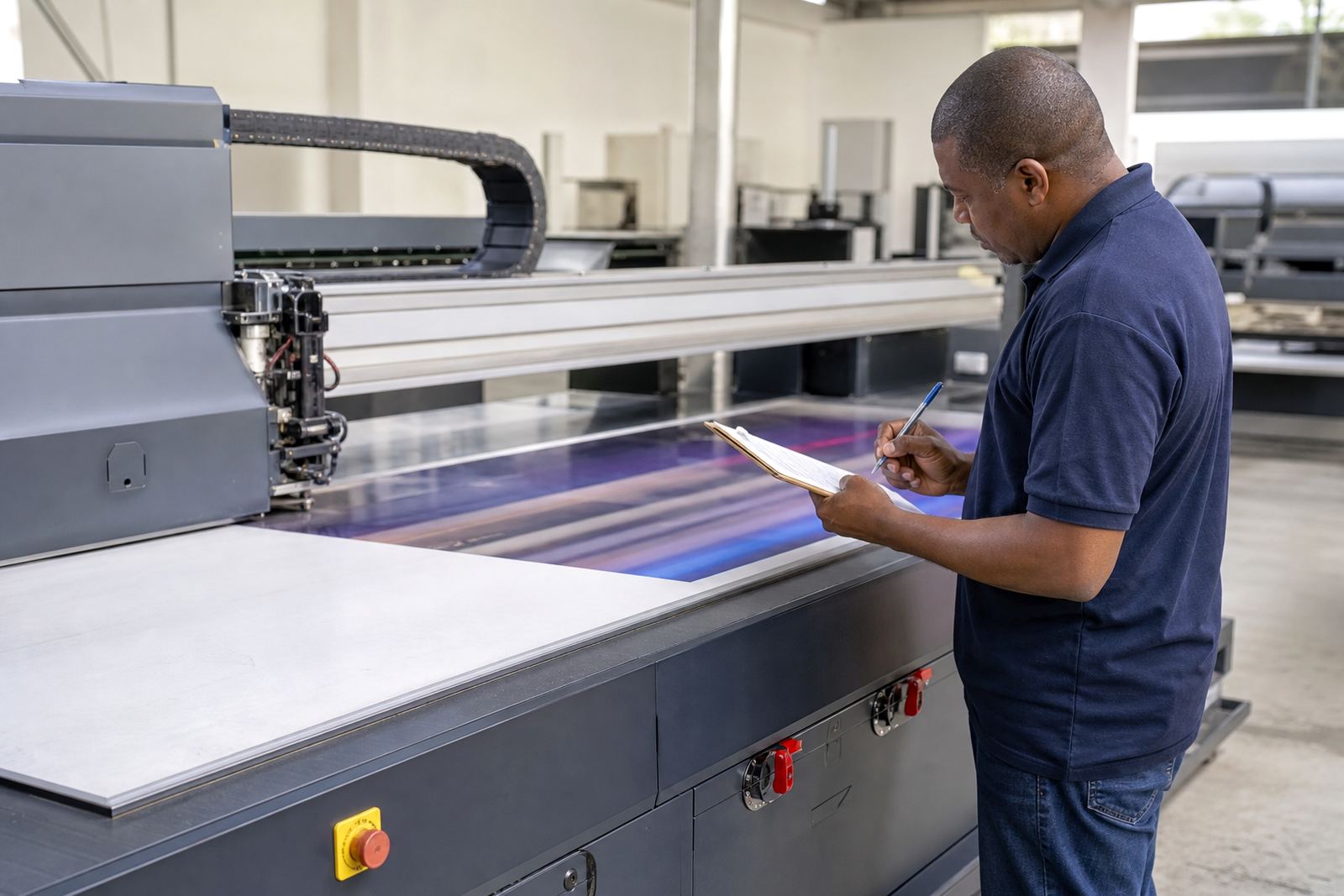
Before a board goes on the printer, check the surface, size tolerance and how the sign will be used. Not every sheet is the same. Some have more dust on the face, some carry slight curl from storage and some need extra cleaning before ink is laid down. This is where small prep steps save time later.
Flatbed UV printing works best when the media is flat, dry and free from oil or release residue. Wiping the surface gently with a suitable cleaner can help, but aggressive solvents may damage the board. If a sign is going into a coastal area like Durban or Gqeberha, it helps to plan for humidity and heat as well because those conditions can affect both storage and installation.
- Store sheets flat and off the floor to avoid dust and warping.
- Keep boards out of direct sun before printing.
- Check cut sizes against the artwork, especially for panels with drilled holes or rounded corners.
- Confirm whether the job needs single-sided or double-sided print before production starts.
Ink, Curing And Surface Adhesion
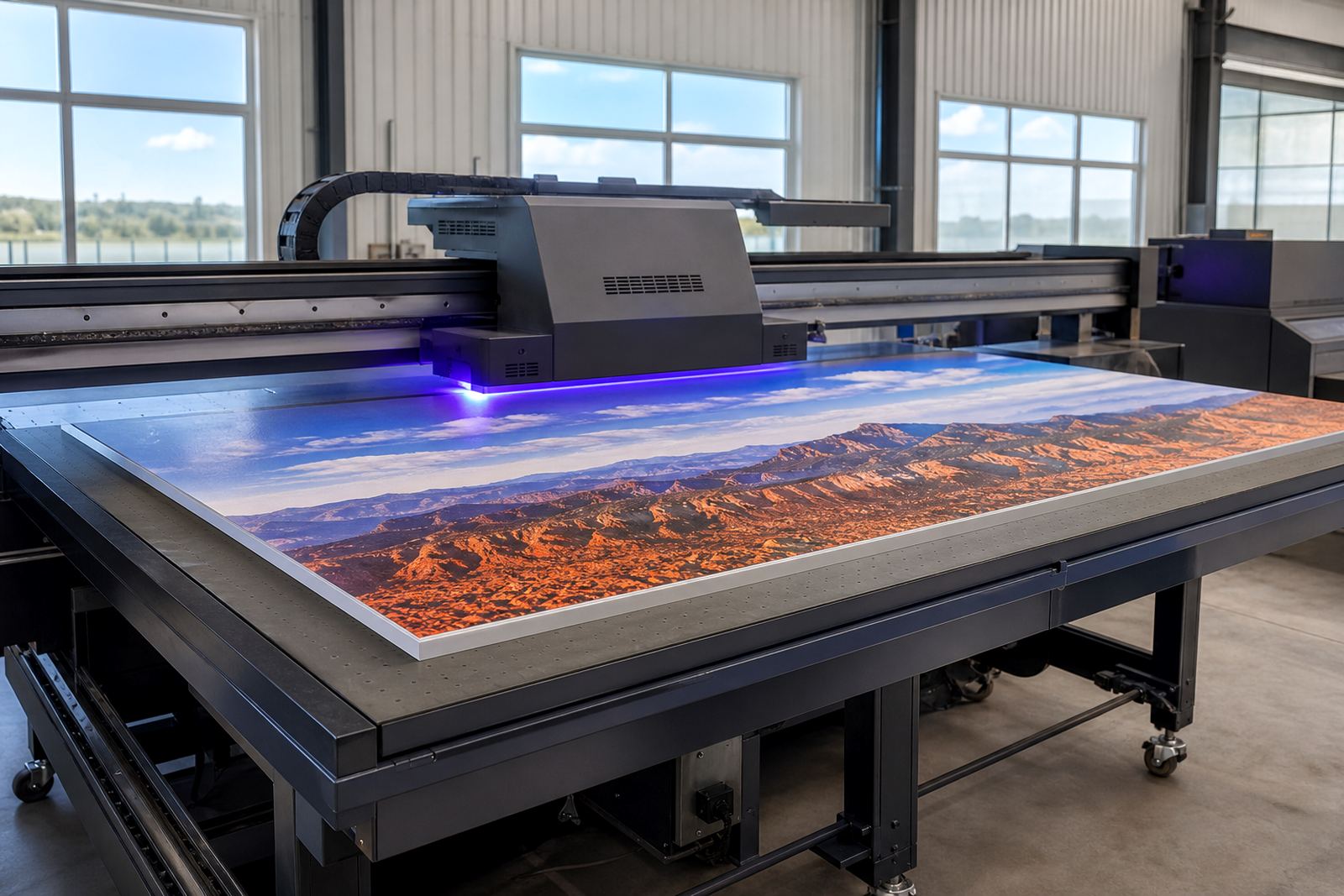
UV-cured inks are commonly used on PVC because they cure quickly and create a durable printed surface. The printer lays down the image, then the ink is cured with UV light so the print can be handled sooner. That does not mean the job is finished in a rush. Adhesion still depends on clean media, proper settings and the right amount of ink for the board being used.
On some PVC surfaces, especially those with a smoother or less receptive finish, the ink may need careful testing before full production. A small sample print can show whether the colour sits correctly, whether fine text holds detail and whether the surface needs any adjustment. Where boards will be exposed to frequent touch, cleaning or outdoor weather, a more cautious workflow is worth the time.
In busy sign shops, one missed setting can lead to poor curing, tacky prints or weak edges. That is why colour guidance and workflow planning matter as much as the board itself.
Design Choices That Help The Sign Last Longer
Good PVC signage is not only about bold colour. The artwork must suit the size and the distance from which people will read it. A safety board in a factory yard has different needs from a retail promotion in a mall passage. The sign should stay legible at the intended viewing distance and not rely on tiny details that disappear once printed and mounted.
Keep in mind how the board will be finished. If it will be drilled, routed or fastened with screws, leave enough safe margin around the edge. If it will be installed outdoors, avoid placing critical text too close to the trim line. This gives installers room to work and lowers the chance of damaged copy.
- Use bold type for short messages and directions.
- Allow bleed where trimming or routing is required.
- Place fine detail away from edges and fixings.
- Match the colour profile and artwork to the output method from the start.
Handling Boards In Gauteng Weather And Coastal Conditions
South African conditions vary a lot, and that matters when printing on PVC. In Gauteng, strong sun, dry air and dust can affect storage and installation. In coastal areas, humidity can cause boards to move slightly or collect moisture before they are printed. A sign that looks fine in the storeroom may behave differently once it is out on site.
For this reason, it is worth letting material settle in the print room before production, especially after delivery. If boards arrive from a cold truck or a humid depot, give them time to acclimatise. That small delay can prevent surface issues and help with accurate registration. It also makes a difference when printing multiple panels that must line up across a run.
Businesses in Johannesburg, Pretoria, Durban, Cape Town and Gqeberha often work on tighter turnaround times than they expect, so the best approach is to plan for weather, transport and installation together. A sign is only useful once it is on the wall or stand, not just once it leaves the printer.
A Local Workflow That Saves Rework
A practical PVC workflow usually starts with the enquiry and ends with install-ready panels. At our Germiston base, support often begins with checking the intended use, the substrate and the finish needed. That leads into media testing, colour guidance and a clear production plan. If the job is for a retail chain, a municipal notice, a contractor site or an event board, the sequence should be simple and repeatable.
For example, a regional contractor may need multiple safety boards for sites around the East Rand and Centurion. Those boards need to print cleanly, cut accurately and hold up after transport between sites. If the artwork is supplied late or the board type changes at the last minute, the risk of reprint goes up fast. A defined workflow reduces those problems.
- Confirm board type and finish before print approval.
- Test one panel when the material is new or unfamiliar.
- Plan installation fixings before final trim.
- Keep spare sheets aside for urgent replacements.
When To Get Support Before The Job Goes Wrong
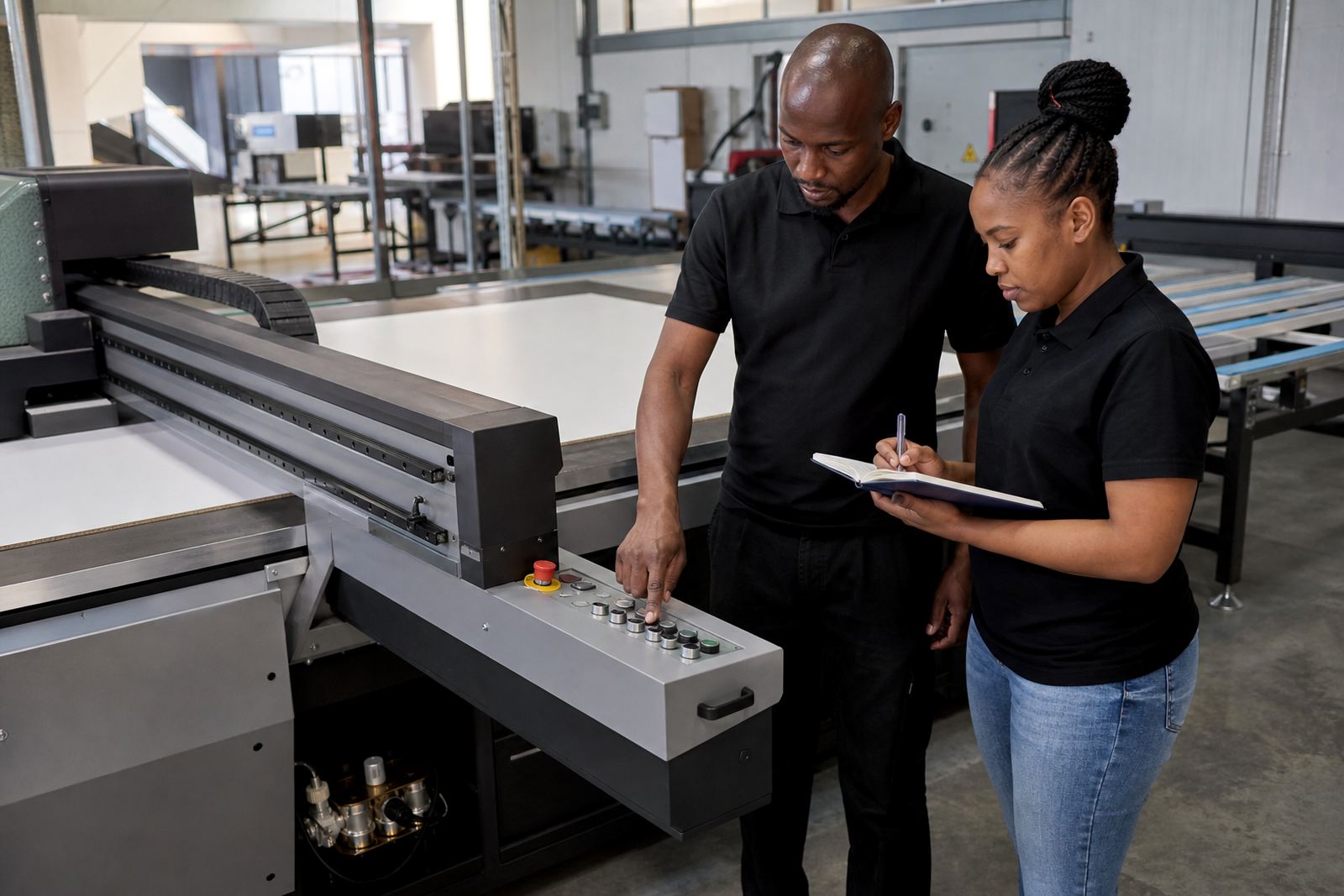
Some PVC jobs are straightforward, but others need a bit more planning. If you are dealing with outdoor exposure, unusual board sizes, frequent changeovers or signs that must match an existing set, it is worth getting support early. That can include printer installation, operator training, preventive maintenance, remote support, spares coordination and production consulting.
Flatbed UV printing on PVC works best when the whole process is under control, not just the print file. Small things like ink handling, storage and machine calibration can have a direct effect on the final result. If you need help with a sign program across multiple branches, or you are setting up a new production line, it helps to have practical input before the first sheet goes through.
Clients reach us through the enquiry form on our contact page, and the team supports jobs from Germiston to Johannesburg, Pretoria, Durban, Cape Town and Gqeberha. That keeps the focus where it should be: clean output, reliable handling and signage that does the job once installed.