
Start With The Printroom Rules, Not The Machine
Before anyone loads a board or clears a print queue, they need to understand how the printroom works. That means where boards are stored, how to move heavy sheets safely, which surfaces must stay clean, and what to do when a job is urgent but not yet ready. In many South African print shops, the costly errors happen before the first pass, not during it.
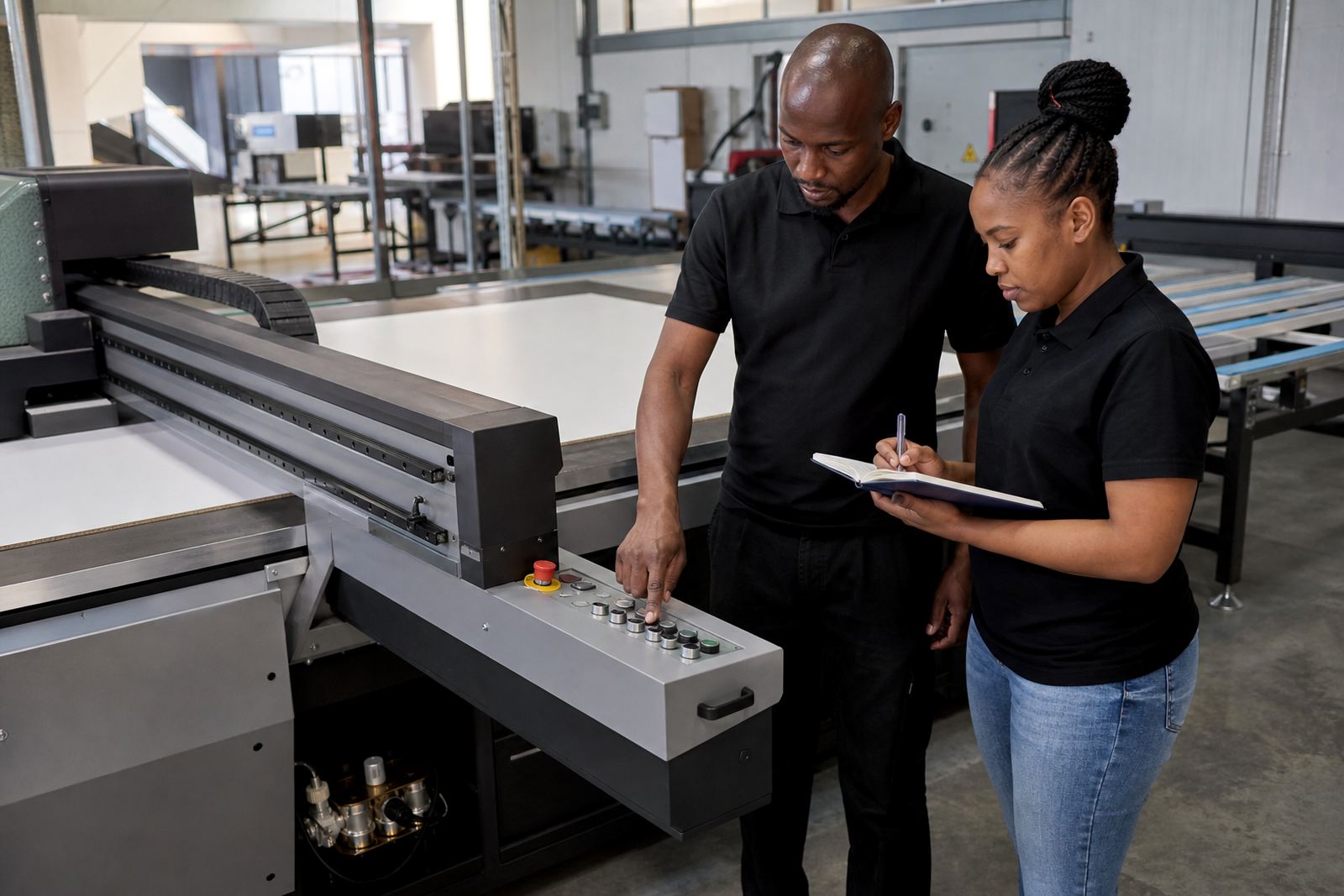
Good training starts with the practical routine. New operators should know the order of checks, where to find consumables, and who signs off a job when the colour or finish must be exact. A clear system helps on busy days when one person is covering more than one task and load-shedding has already thrown the schedule off.
Teach The Basics Of UV Inks And Board Handling
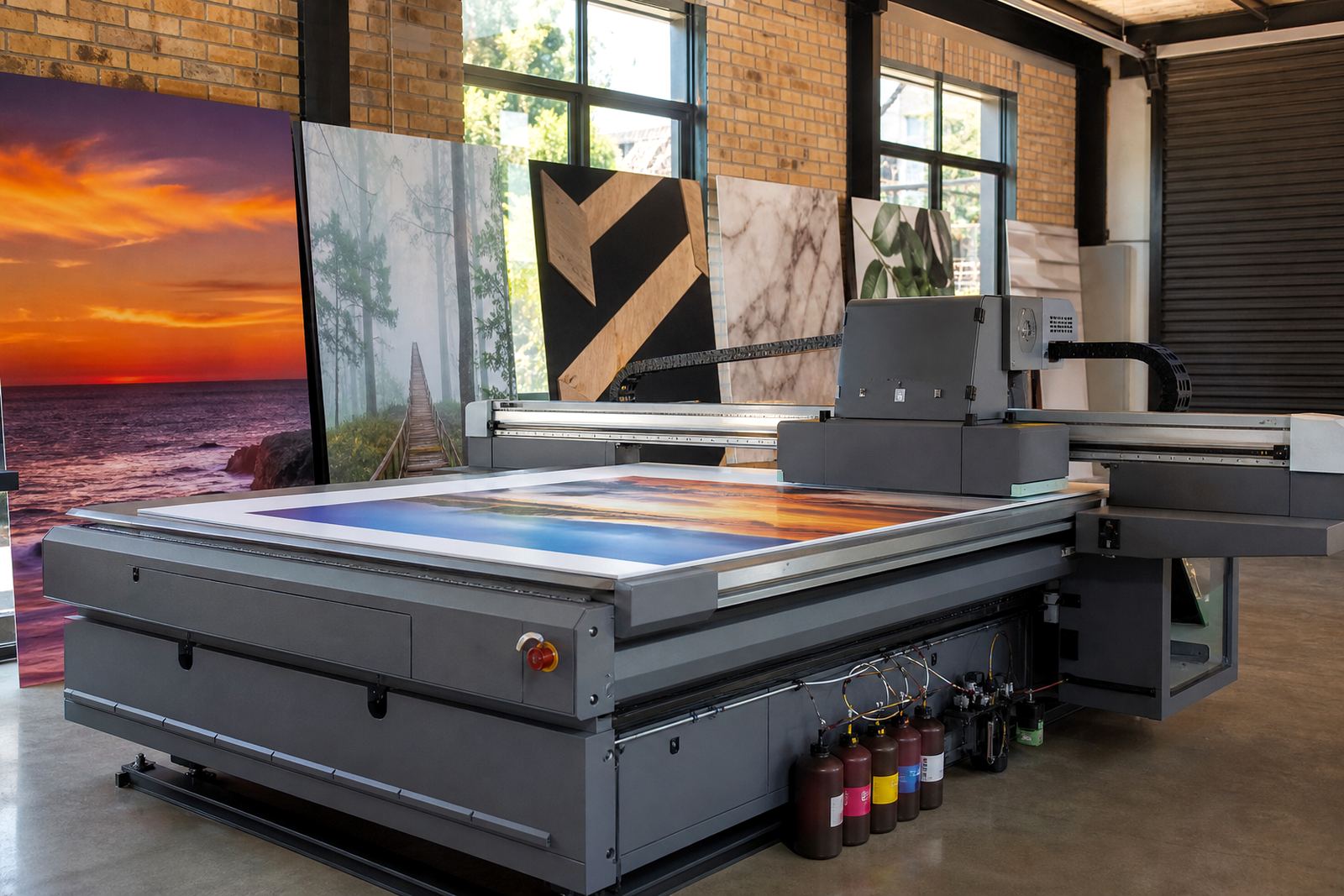
Flatbed UV printing depends on clean handling. Operators need to understand how UV inks behave on different rigid boards, why surface dust can affect adhesion, and why some media need testing before full production starts. The goal is not to overload a new staff member with theory. The goal is to show what matters on the floor and why.
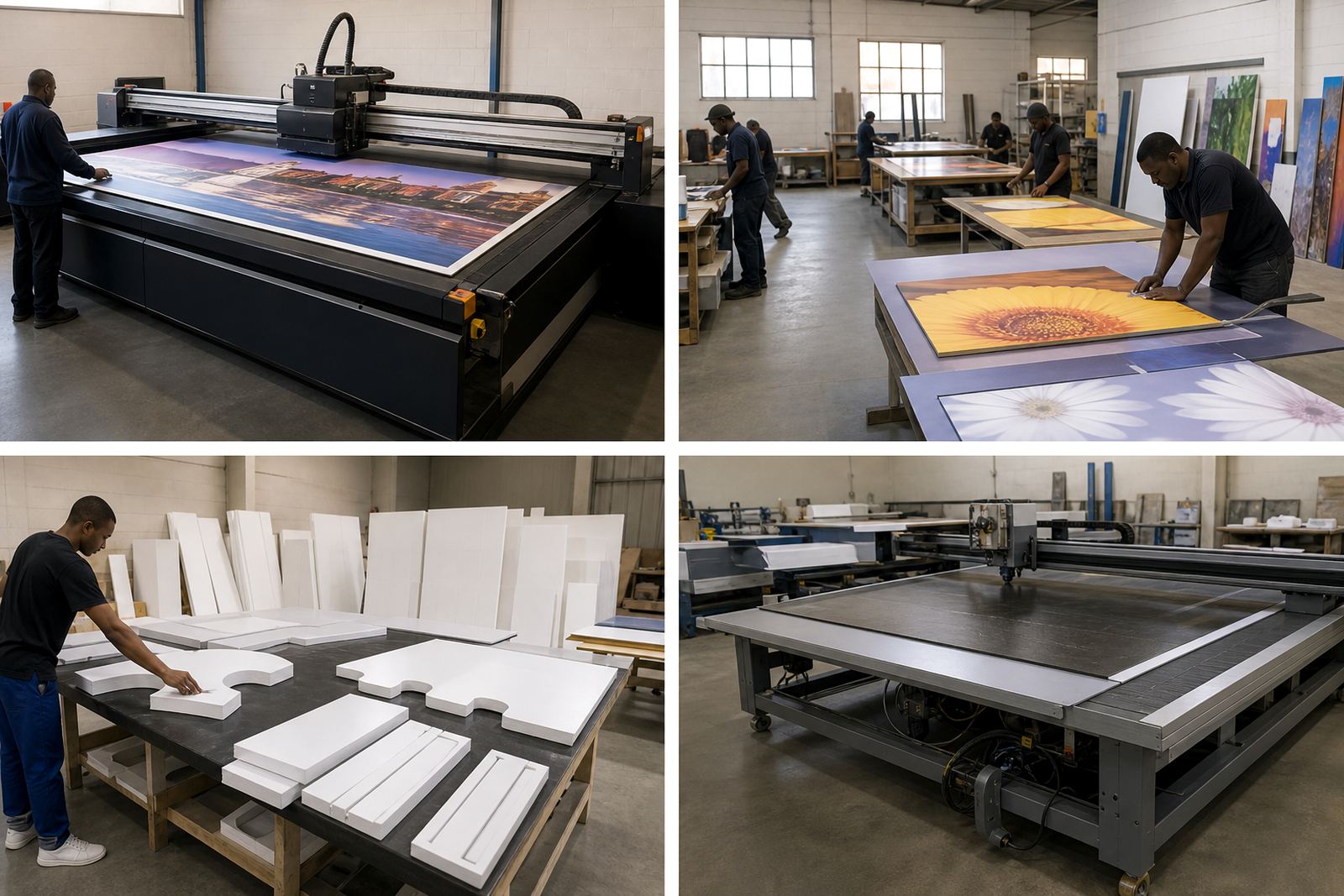
Board handling is where damage often happens. A sheet that bends, picks up grit or arrives with moisture on the surface can lead to marks, adhesion problems or wasted stock. In coastal towns this matters even more, because humidity can affect storage and drying conditions. Simple habits such as checking the board edge, wiping down the bed and keeping offcuts separate can save time and money.
- Check media condition before loading
- Keep hands, tools and cloths clean
- Store boards flat and off the floor
- Test unfamiliar media before production
Build A Repeatable Workflow For Every Job
A structured workflow gives a new operator a pattern to follow. It should cover file handover, job naming, board selection, colour checks, test output, print approval and packing. When the steps are consistent, the operator is less likely to skip something important when the workshop gets busy.
Many printing errors come from rushing. A board might be loaded the wrong way round, the print height may not be checked, or the wrong media profile might be used. Training should show how to pause, check and ask before running a job. That is not slowing the job down, it is preventing a reprint.
- Receive the job with clear instructions
- Confirm size, quantity and substrate
- Run a test if the media is new or unusual
- Get approval before the full run starts
- Inspect the finished boards before dispatch
Colour Control Needs Hands-On Practice
Colour matching is one of the hardest parts of flatbed UV work for a new operator. Printed colour can shift because of media type, ink laydown, file preparation or lighting in the viewing area. A short explanation is not enough. Operators need to see how a printed sample compares to a proof, and how small changes can alter the result.
Training should cover the basics of colour guidance without overcomplicating the process. Teach the operator to spot obvious issues early, to understand when a correction is needed, and to know when a job must be escalated to production support. It also helps to keep a printed reference set in the room so staff can compare jobs under the same light. That small habit can prevent a lot of back-and-forth later on.
Safety And Maintenance Keep Production Moving
A well trained operator is also a safer operator. They should know how to move boards without strain, how to keep clear of moving parts, and what to do before cleaning or maintenance starts. In a busy Gauteng printroom, one careless shortcut can stop production for hours. Preventive habits are not extra, they are part of the job.
Basic maintenance awareness should cover cleaning routines, ink handling, checking for dust build-up, and knowing when to call for service support. Operators do not need to repair every fault themselves, but they should recognise the signs that something is changing. If a nozzle issue, a board alignment problem or unusual print mark appears, the sooner it is reported the better. A little attention at the start saves a bigger headache later, as many shop owners will tell you.
- Follow shutdown and start-up steps in the same order every day
- Keep the print area free of dust and offcuts
- Report unusual noise, marks or alarms immediately
- Never guess when a fault needs escalation
A Germiston Example That Shows Why Structure Matters
Consider a signage shop in Germiston taking on a run of rigid boards for a retail promotion in Johannesburg. The job is time sensitive, the boards are bulky, and the team has to work around power interruptions. Without proper training, a new operator might load the board badly, miss a media check, or rush the colour approval. That can mean wasted material and a late delivery.
With a structured introduction, the operator knows the sequence. The board is checked, the workflow is followed, the test print is reviewed and the job moves ahead with less stress. The result is not just fewer mistakes, but better confidence across the printroom. And once the basics are in place, the team can handle more work without losing control of quality.
That is why training new operators should never be treated as a quick fix. It is part of building a printroom that can cope with daily pressure, local power challenges and the demands of clients who want reliable results.