How flatbed UV printing puts ink onto rigid boards
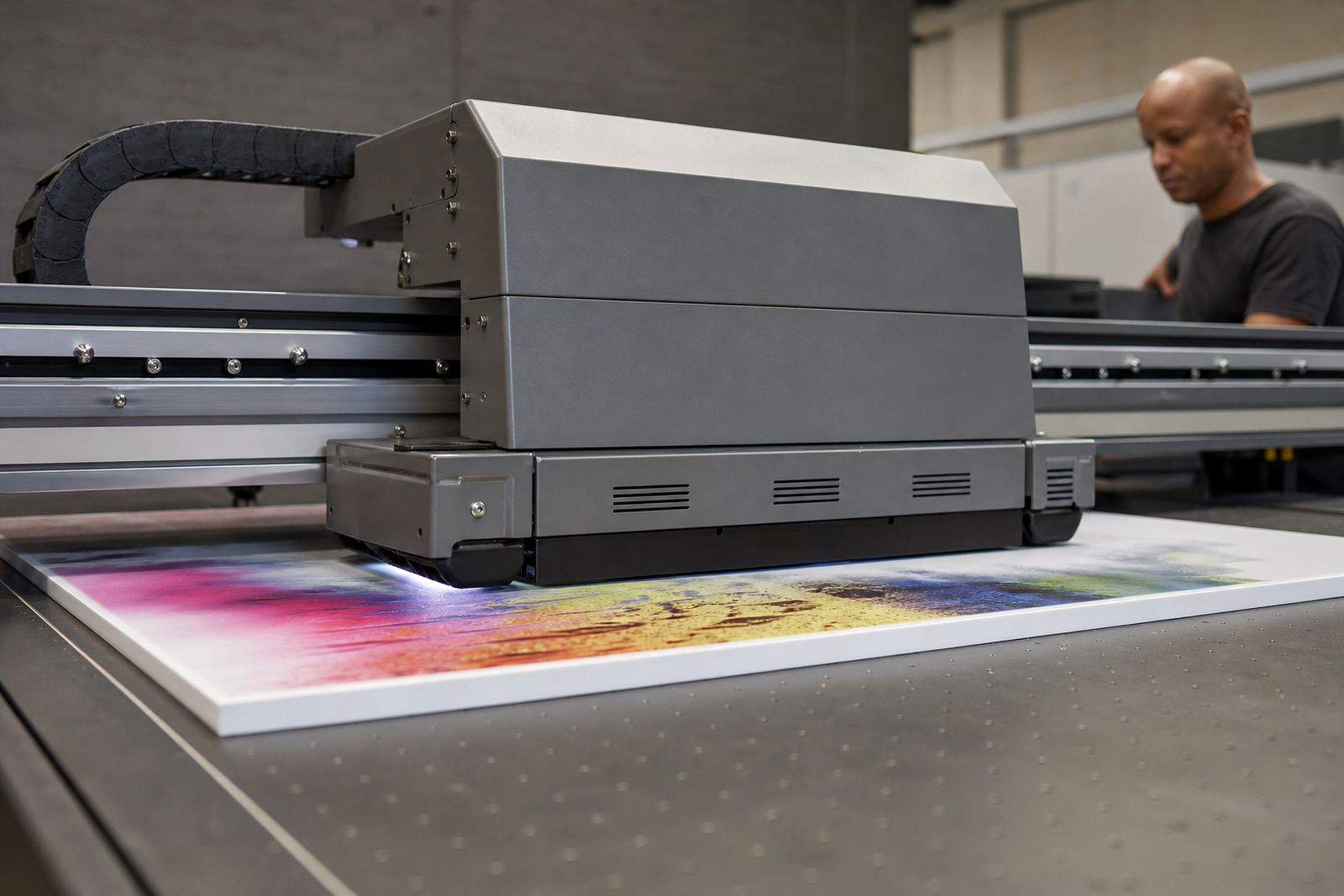
A flatbed UV printer works with a flat table and a moving print carriage. The board stays still on the bed while the printer places ink directly onto the surface in controlled passes. The ink is then cured with ultraviolet light, which means it dries as it prints rather than needing a long drying bay.
That direct printing method is useful for signage because the image sits on the board itself. There is no need to print on vinyl first and then laminate and mount it. For many jobs that saves time, reduces handling, and keeps the finished panel cleaner at the edges.
In practical terms, the process suits shops that produce shopfront boards, interior signs, directional panels and presentation displays. The key is not only the printer, but the way the board is prepared, loaded and checked before the job starts.
Which media is usually printed on
Flatbed UV printing is commonly used on rigid media that can sit safely on the printer bed and stay flat during production. The right choice depends on where the sign will be used, how long it needs to last, and whether it will face sun, moisture or regular handling.
- PVC foam board for short to medium term indoor signs
- Correx type flute board for temporary site notices and event boards
- Acrylic for display panels, decorative signs and clear backed work
- Aluminium composite panel for exterior and corporate signage
- Wood panels for decorative work, retail features and custom pieces
Not every board behaves the same. Some surfaces need cleaning before print, some need better ink adhesion and some need test prints before a full run. A board that looks fine to the eye can still carry dust, release agents or surface tension issues that affect the finish.
Why UV ink matters for signage work
UV inks are made to cure quickly under the printer lamps, so they are suited to production where speed and handling matter. For sign work, that means the print can often be moved on sooner, trimmed sooner and installed sooner than many traditional wet ink jobs.
The finish can be adjusted depending on the job. Some work needs strong colour for retail graphics, while other jobs need a more muted look for office and wayfinding signage. White ink is often used as a base on dark or clear boards, and clear effects can be used for selective finish work when the application calls for it.
Ink choice and curing settings need to match the media. Too much heat, poor curing or weak adhesion can lead to cracking, marking or premature wear. This is where a proper test print matters, especially on boards that will be handled by installers or exposed to weather near the coast.
The workflow from file to finished panel
A good flatbed UV workflow starts before the printer is switched on. Files should be checked for size, resolution, bleed, layout and colour setup. If the board is being cut after printing, the printer operator and cutter process must be planned together so that crop marks, registration and final size all line up.
The usual sequence is simple, but each step needs attention:
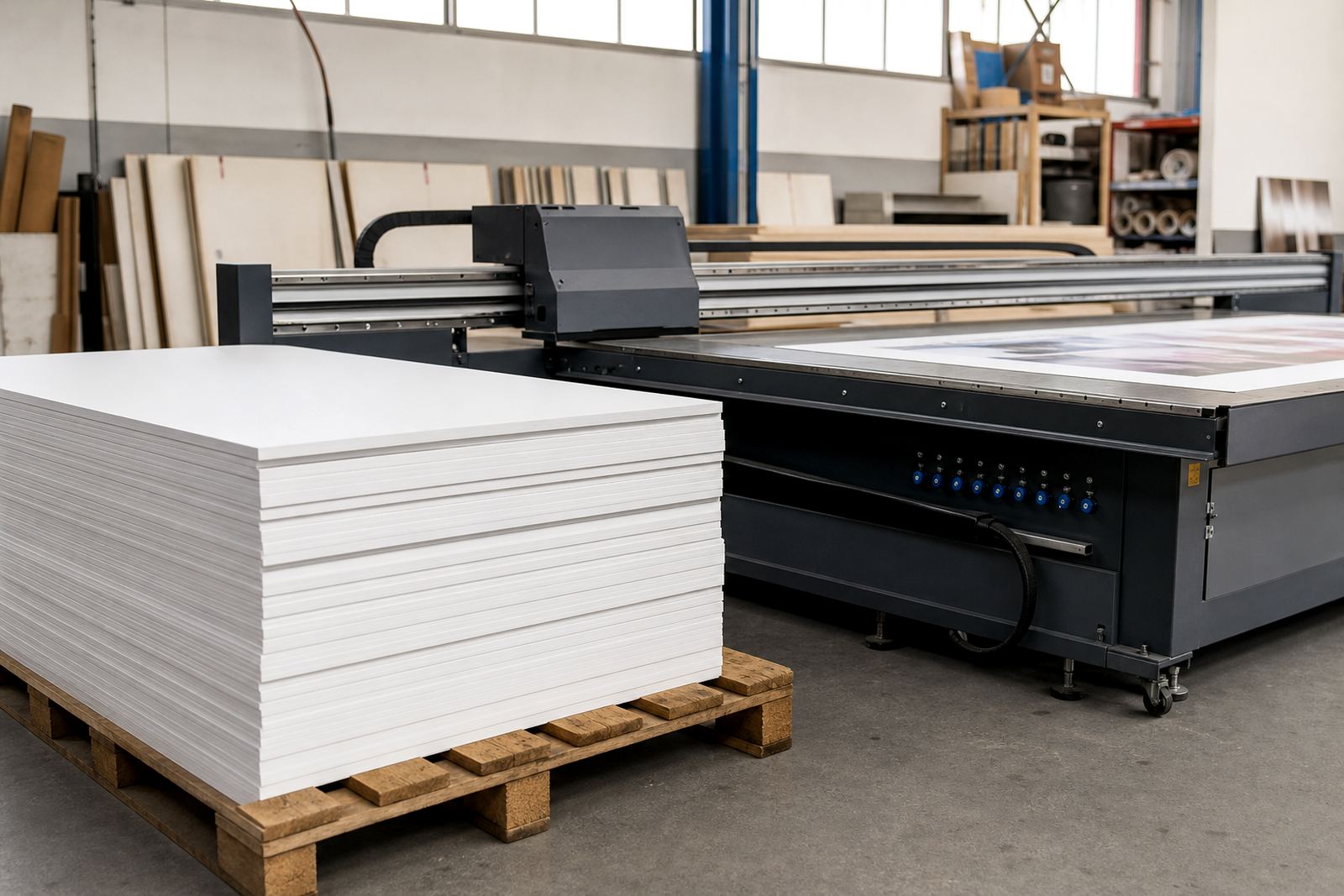
- Confirm the board size and thickness
- Clean the surface and remove dust
- Check print direction and image placement
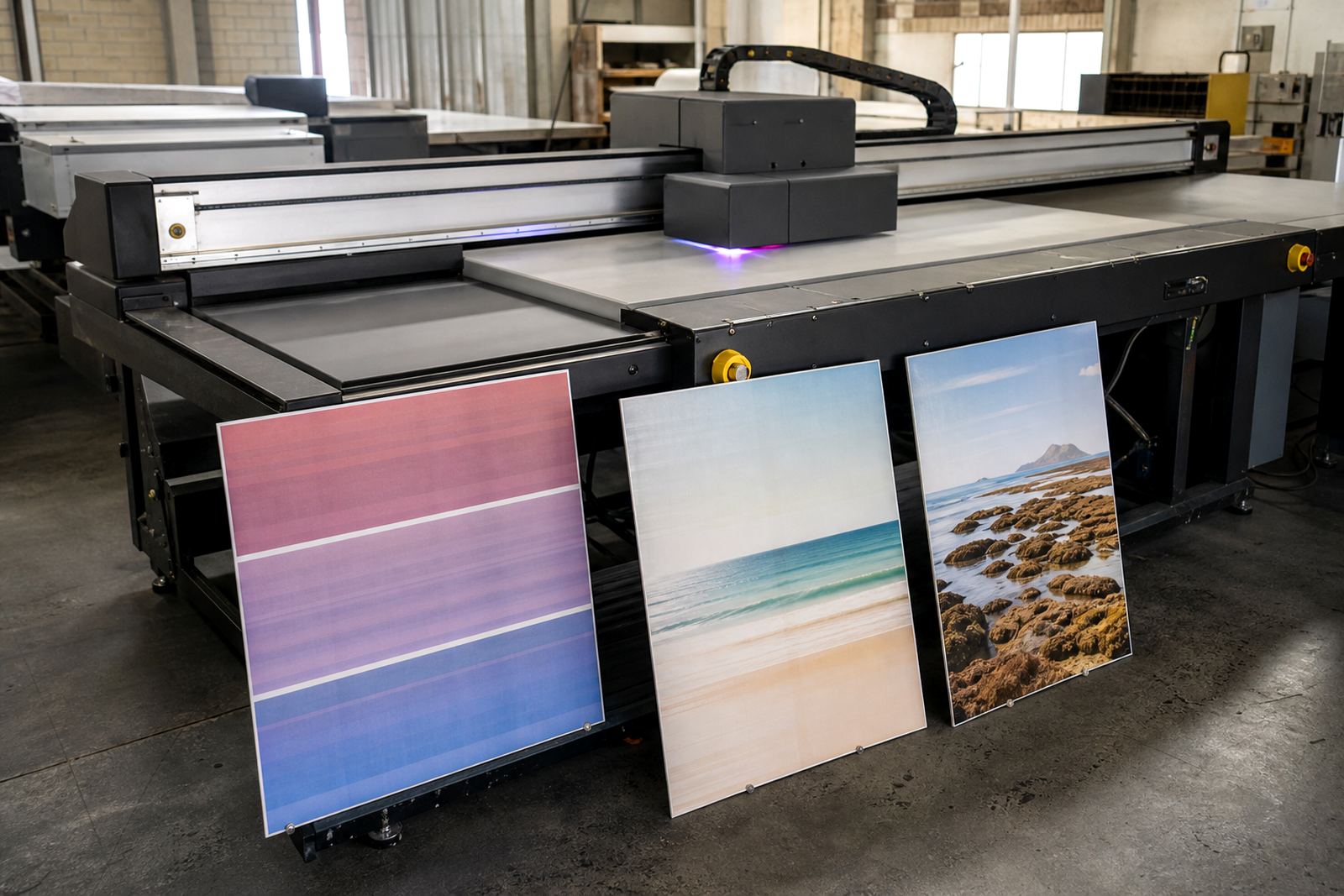
- Do a sample strip or test board
- Run the production job with the correct cure settings
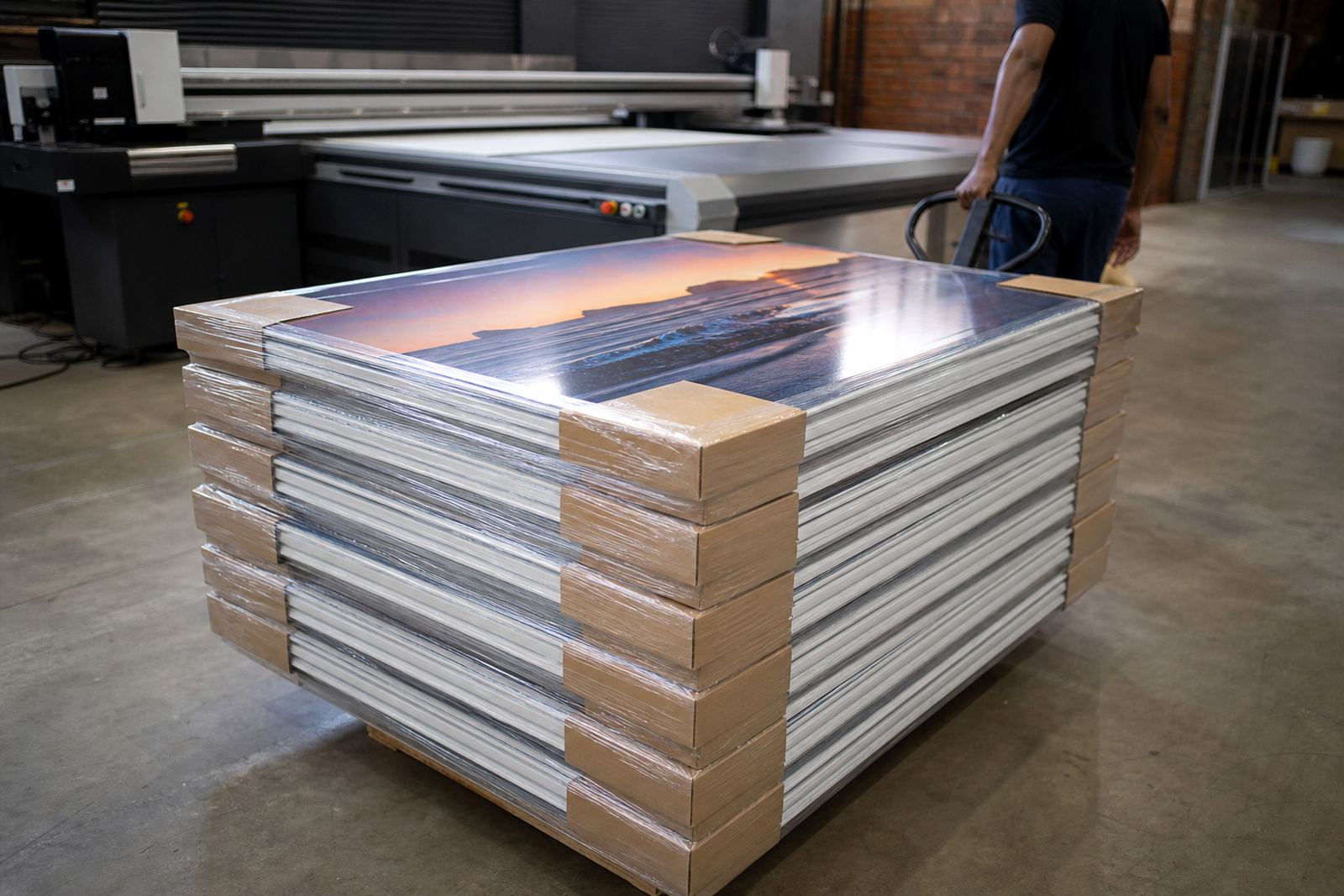
- Inspect the board before packing or trimming
Small errors at the start can create expensive waste at the end. A file that is off by a few millimetres or a board that is slightly warped can slow the whole day down. On busy production floors, that matters even more when electricity interruptions or changing job lists already put pressure on timing.
What South African print shops should check before investing
In South Africa, a flatbed UV printer has to fit the way the business actually works. A shop in Germiston may have different needs to one in Durban or Cape Town, because of space, humidity, dust, power stability and the kind of boards being supplied locally. The printer should suit the workload, but the support around it matters just as much.
Before buying, ask practical questions about installation, training, maintenance and parts support. If the team is new to UV work, operator training should cover bed setup, daily cleaning, ink handling, media testing and basic fault finding. That is often what keeps the machine productive after the first few months.
- Is there enough floor space for loading boards safely?
- Can the workshop manage dust control and board storage?
- How will the printer cope during load shedding?
- Are there local service options when a fault stops production?
- Will the inks and media work with the finish you need?
A local example from a Germiston production floor
Picture a sign shop in Germiston that prints for retail stores, small contractors and office fit outs. On Monday it receives a set of rigid boards for a store opening in Pretoria, plus a few replacement panels for a client in Johannesburg. The boards are different sizes, the designs use different colour balances, and one of the substrates needs a quick test before full production.
With a flatbed UV setup, the team can prepare the boards, run a test print and move into production without waiting for long drying time. If the operator knows how to manage the file, the media and the cure settings, the job can move through the shop in a sensible order. That is especially useful when deadlines are tight and the courier has a fixed collection time.
That same workflow can be adapted for installations in Durban, Cape Town or Gqeberha where sunlight and moisture are more of a concern. The print itself is only one part of the job. The board choice, the edge finish and the installation method all affect how long the signage stays presentable.
When to ask for support before production starts
It is usually easier to solve a problem before the board goes onto the printer bed than after the ink has already cured. If a shop is uncertain about media compatibility, colour balance, board handling or layout planning, it helps to ask for production guidance first. That can prevent costly reprints and give the operator a better starting point.
Support is also useful when a business is setting up a new site, changing media suppliers or bringing new staff into the print room. Printer installation, site preparation, preventive maintenance and breakdown support all play a part in keeping the workflow steady. For many shops, the real value of flatbed UV is not only the print quality but the way the whole process is managed from start to finish.
If you want to understand what flatbed UV can do for rigid boards and signage, the best next step is to speak through the enquiry form and describe the kind of work you produce. That makes it easier to match the printer setup to the job, and to avoid surprises once production begins.