
What white ink does in flatbed UV printing
White ink is used as a base, highlight or underprint layer when printing on coloured, clear or dark media. In flatbed UV work, it helps full-colour artwork stand out instead of disappearing into the board underneath. On rigid signage, that can mean a cleaner logo on black foam board, a brighter panel on tinted acrylic, or a crisp window graphic that still reads from a distance.
For many print shops the main value is control. White ink lets you decide where colour should sit, where it should pop and where the substrate should stay visible. That matters when jobs move between retail displays, site boards, directional signage and event panels, because each application asks for a different finish and level of opacity.
When white ink is the right choice
Not every job needs white, but there are clear cases where it makes the difference between an average result and a proper one. If the board has a strong colour, if the surface is transparent, or if the client wants a premium look with sharp contrast, white ink should be part of the plan.
- Coloured rigid boards where standard process colour would look dull
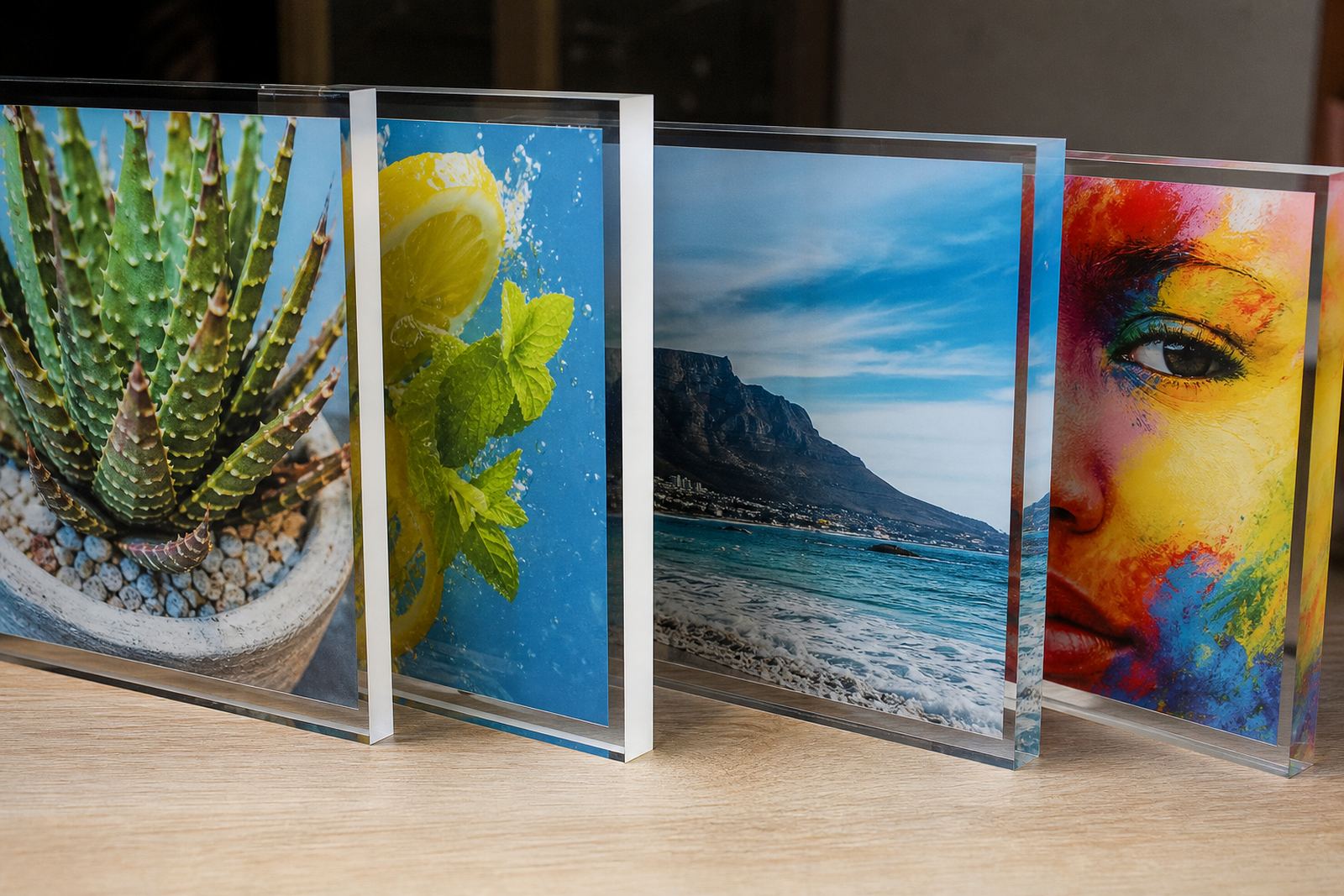
- Clear acrylic or polycarbonate where artwork needs a white backing
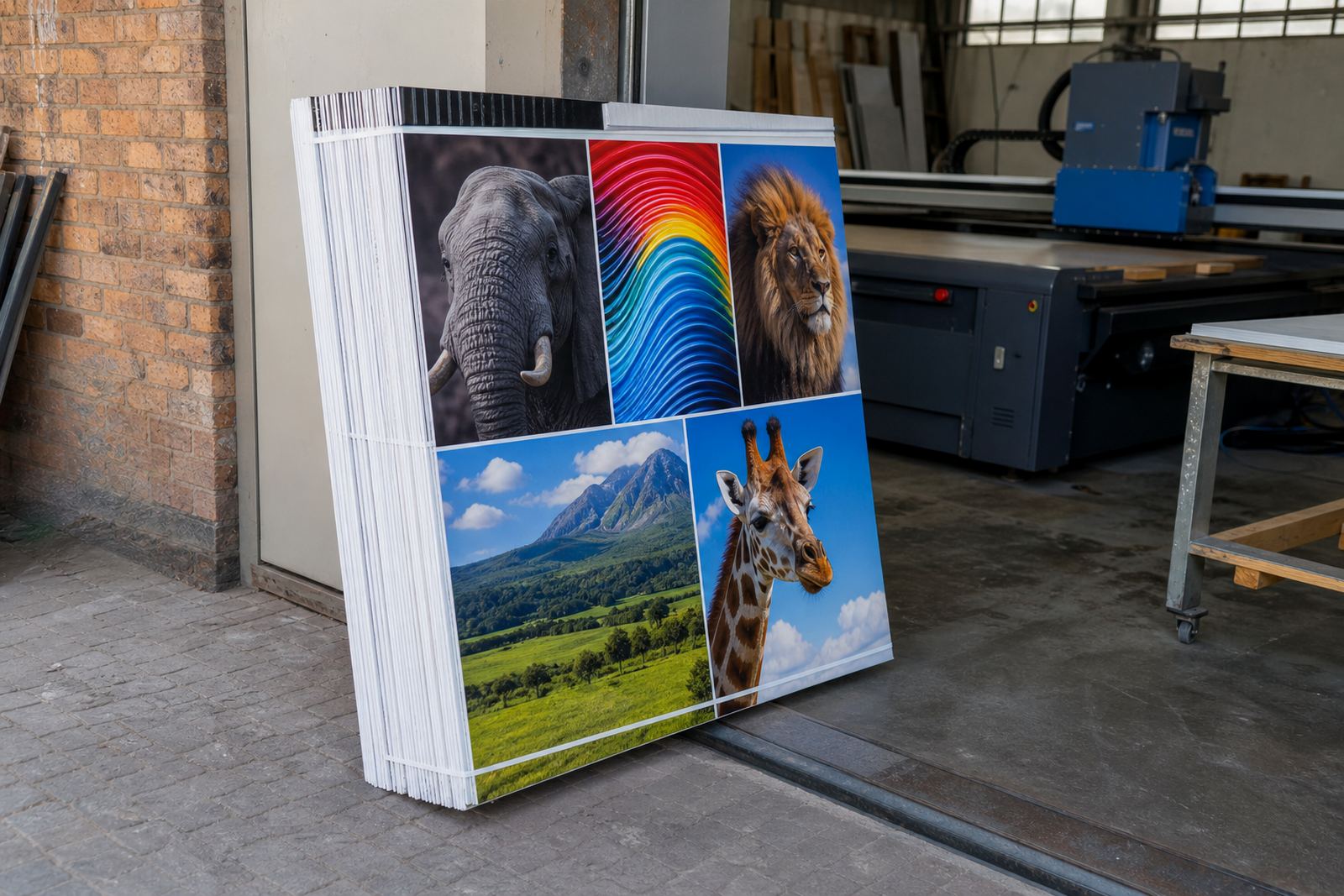
- Dark display panels for retail, exhibitions or branded features
- Reverse printed signs where white is needed behind the image
- Short-run promotional items that need strong visual impact
In practice, a printer in Germiston may run a white underlay for indoor retail panels one day and use white as a spot highlight for a custom display the next. The point is not just brightness, it is control over how the final piece reads in the room.
How white ink behaves on different media
White ink does not behave the same way on every material. Some substrates hold the layer cleanly, while others need more testing because of surface tension, dust, handling marks or coating issues. That is why media testing matters before production starts, especially on jobs that need a specific gloss level or edge definition.
Rigid boards used for signage can include foamed PVC, acrylic, composite panels, corrugated board and other flat materials. Each one reacts differently to ink laydown and cure. On clear media, good cleaning is essential, because fingerprints and residue can affect adhesion and appearance. On rougher boards, the issue is often coverage, and whether the white layer hides the substrate well enough without getting too heavy.
- Clean the sheet before printing to remove dust, oil and storage marks
- Test adhesion on the exact batch of media, not just a sample
- Check opacity in natural light and under indoor lighting
- Allow for handling and finishing after cure, especially on clear sheets
Coastal humidity in Durban or Gqeberha can also influence how media is stored and handled, so sealed storage and proper acclimatisation help avoid surprises. It sounds small but it can save a lot of rework.
Workflow planning for white ink jobs
White ink jobs need a tighter workflow than ordinary full-colour printing. Once the artwork is approved, the print plan should define where white sits, what order the layers print in and how the sheet will be handled after printing. If that is not set properly, you can end up with wasted media or a finish that looks uneven from panel to panel.
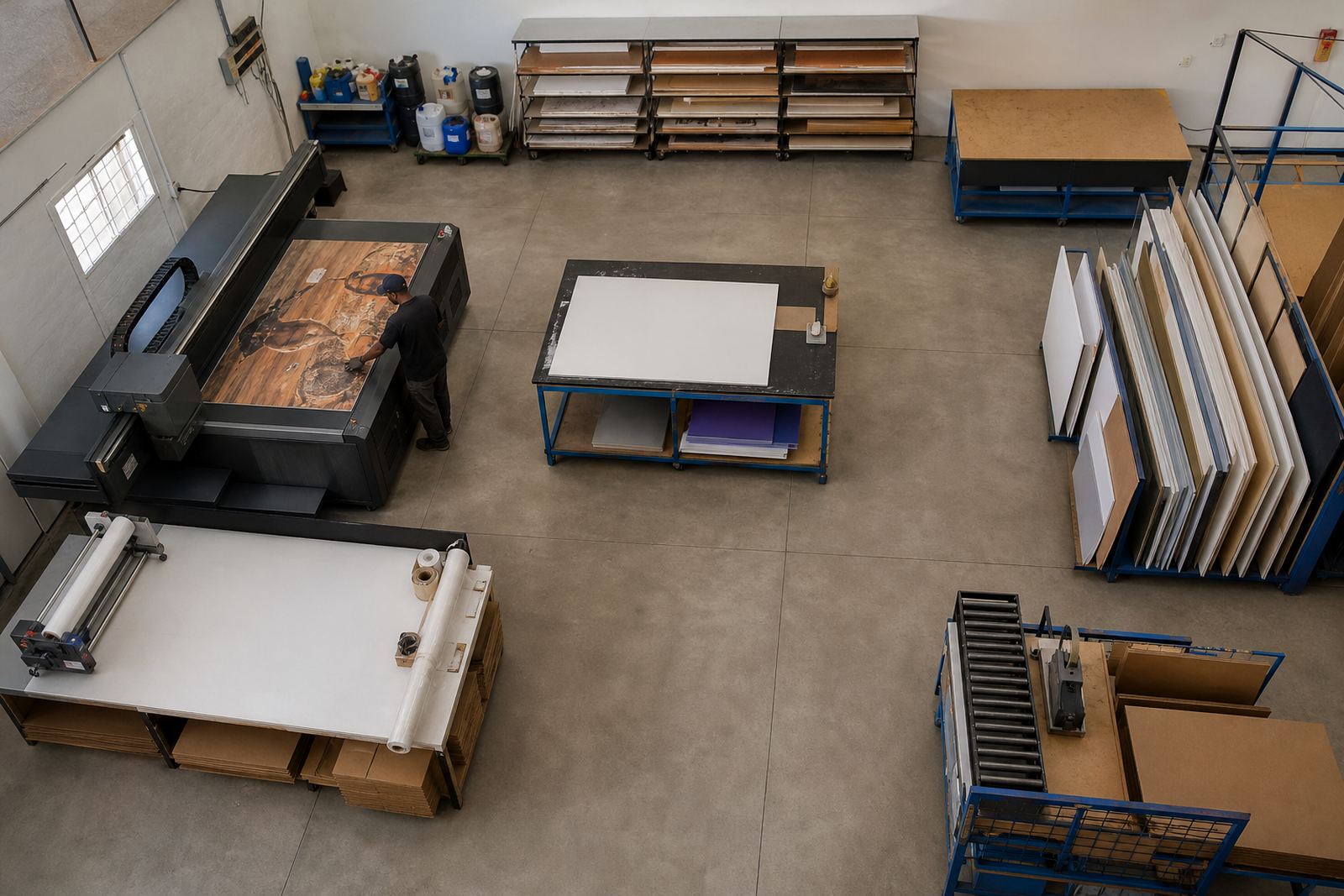
A practical workflow usually starts with artwork separation, then a proof check for registration and opacity. After that comes media testing, printer setup, and a quick review of curing and drying behaviour. In busy shops around Johannesburg or Pretoria, this sort of planning helps keep jobs moving when urgent boards come in for retail rollouts or event work.
- Confirm whether white is a flood coat, underprint or spot layer
- Set the correct file prep so the white layer matches the artwork
- Test colour over white before the full run starts
- Keep a record of which media and settings worked best
Good workflow planning also helps when power is unstable. During load-shedding, a job with white ink may need extra care around interruption points so the sheet is not spoiled halfway through a run.
Common mistakes that cost time and money
White ink can produce excellent results, but only if the basics are handled properly. The most common problems are poor file setup, rushed cleaning, weak adhesion and underestimating how much test work is needed. A board may look fine from a distance but fail close-up if the white layer is too thin or the registration has drifted.
Another issue is expecting the same result on every substrate. Clear acrylic, coloured board and coated rigid media all need a slightly different approach. If the team skips media testing, production can drift, especially on repeat jobs where the supplier changes the board batch without warning. That is when a quick sample print becomes a useful habit, not a luxury.
There is also the simple matter of ink handling. White ink needs regular attention in the system so settling does not affect print quality. If a print room leaves it sitting too long, the next job may start with inconsistent results and slower recovery time.
A practical Gauteng example
A retail client in Germiston needed a set of branded panels for a store refresh, with some pieces printed on coloured rigid board and others on clear sheets behind shelving. The artwork used the same logo across all panels, but the substrate changed from one area to the next. White ink was needed on the darker boards so the logo would hold its colour, while the clear pieces needed a white backing to stop the graphics from washing out against the store lighting.
The job worked because the team planned for it properly. Media testing came first, then the workflow was set for the different panel types, and the finishing sequence was adjusted so each piece could cure and be handled without marking. That sort of job is common across Johannesburg, Centurion and Pretoria where retailers want clean, repeatable signage, but the same thinking applies in Durban or Cape Town where site conditions and transport can be different.
For shops handling white ink regularly, training and preventive maintenance matter just as much as the printer itself. When operators understand the process, white becomes a useful production tool rather than a source of stoppages.
What to ask before you commit to white ink production
If you are planning more work with white ink, ask a few practical questions before the first run. The answers will tell you whether your production setup is ready, or whether you need more support with installation, operator training or workflow planning.
- Which media will need white, and how often will they be used?
- Do we have a tested method for cleaning, curing and handling?
- Can the file workflow support underprint and spot white clearly?
- What maintenance and ink handling routine will keep output consistent?
- Who will handle breakdown support, remote support and spares coordination if needed?
White ink is not only about brighter print. It is about making sure the right message lands on the right surface, with the right finish, every time.