What an acrylic print printer does on rigid signage
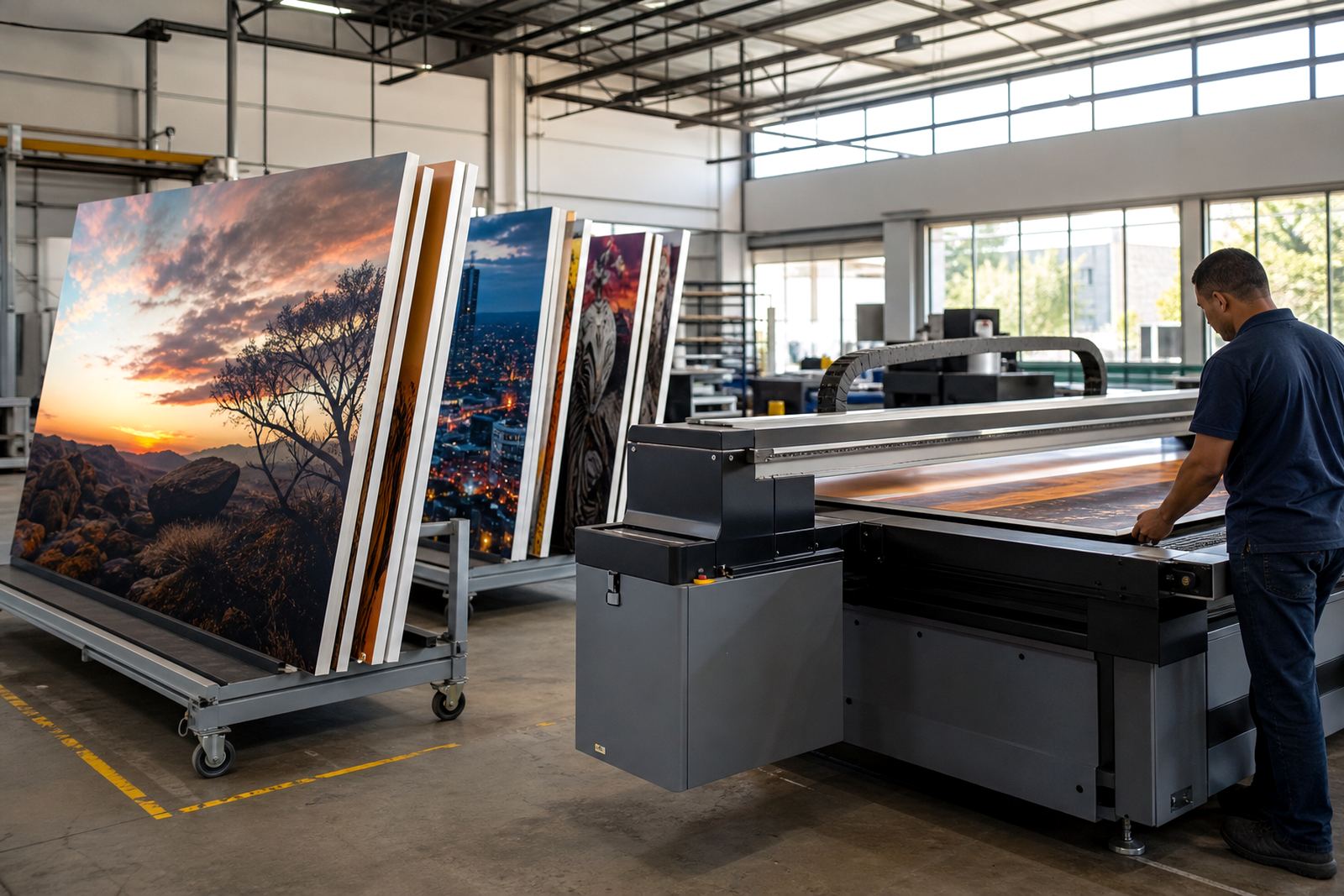
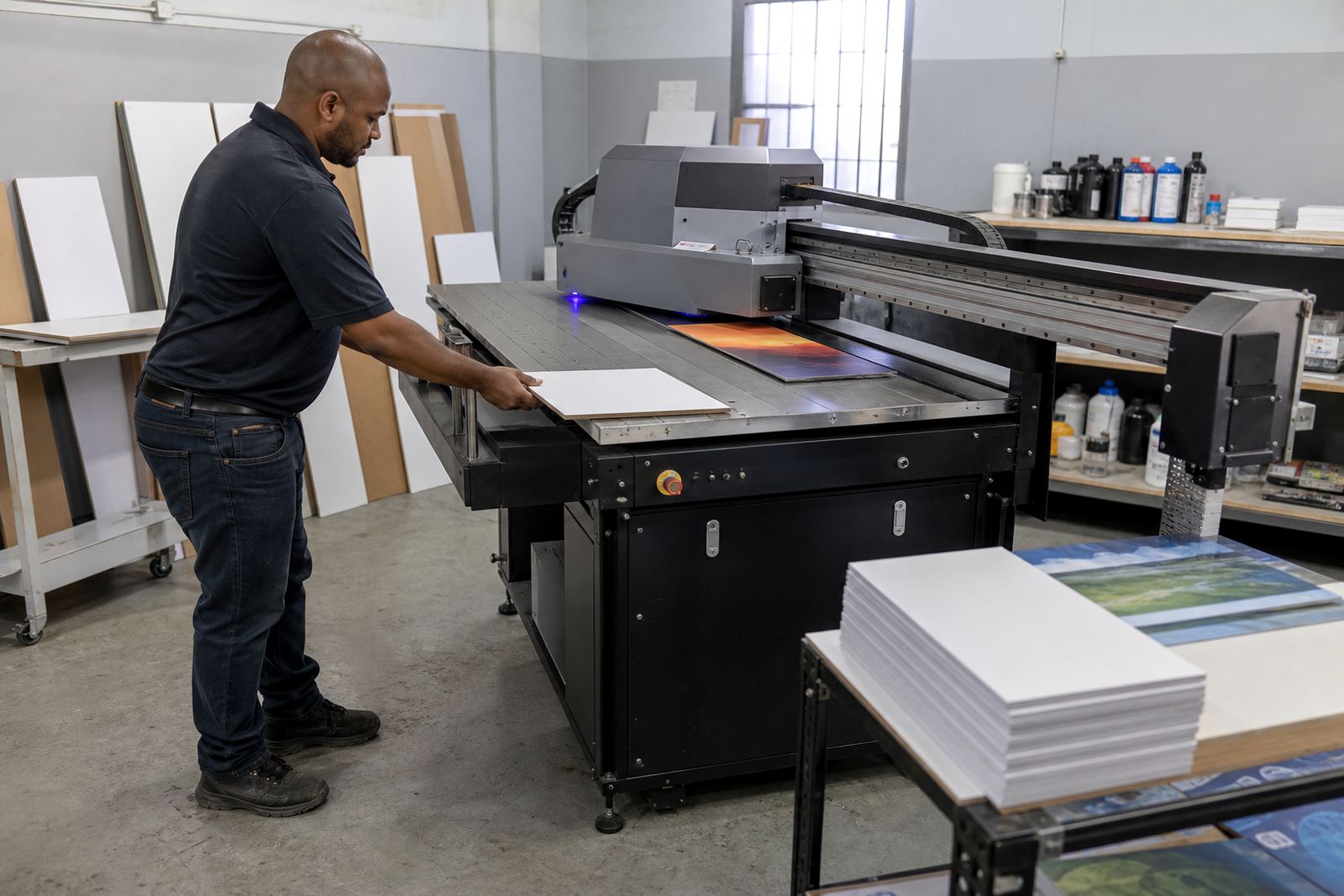
An acrylic print printer lays down UV ink directly onto acrylic sheets and similar rigid media, then cures the ink with UV lamps so the print is dry enough to handle soon after production. That makes it a practical choice for sign shops, exhibit builders, retail fit-out teams and print businesses that need sharp graphics on clear, coloured or white acrylic panels.
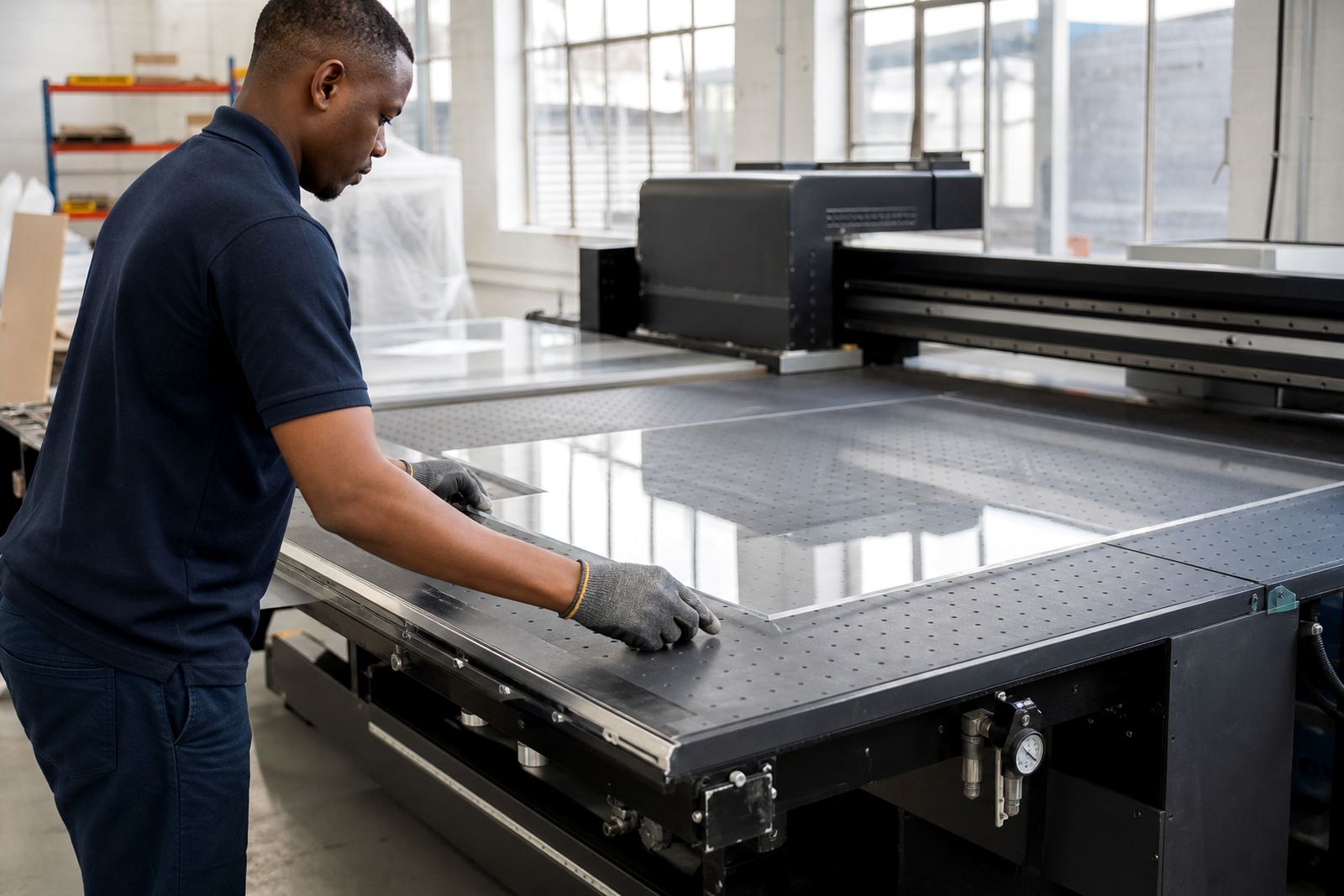
For acrylic work, the main goal is clean output without smudging, lifting or uneven adhesion. The printer must handle the panel flat, keep registration steady and place ink in controlled passes. On display pieces, that matters for lightboxes, menu boards, directional signs, branded panels and premium interior signage where the finish is part of the job. The machine is also used for short-run work where each panel may be different, so setup and workflow matter as much as speed.
In South African production spaces, this is useful when jobs must move through quickly between load-shedding interruptions, or when the workshop is handling mixed materials in the same shift. A well-planned flatbed UV workflow helps keep that production line moving with less rework and fewer handling marks.
Sizes, configurations and media handling options
Acrylic print printers are typically configured around the sheet sizes and board thicknesses that the business handles most often. Some operators work with smaller display panels and sample pieces, while others need larger rigid boards for retail signage, wall features and exhibition graphics. The right setup depends on bed size, vacuum hold-down, print width and how often the team changes media.
- Entry and mid-size flatbeds for short-run acrylic panels, samples and sign blanks
- Wider beds for larger signage pieces, multiple panels and batch production
- Optional white ink support for clear acrylic and backlit work
- Clear coat or layered printing for depth, texture and visual contrast
- Vacuum hold-down and registration aids for steady panel placement
Media handling is important with acrylic because clean surfaces show every fingerprint and dust mark. Boards need to be stored flat, wiped properly and loaded with care. In humid coastal areas such as Durban, extra attention to surface prep and storage helps reduce moisture-related handling issues. For inland shops in Germiston, Johannesburg and Pretoria, dust control is still a daily concern, especially where acrylic sheets are cut, moved and stacked often.
Where acrylic UV printing suits best
This type of printer suits businesses that need rigid, good looking signage with a direct print finish. It is commonly used for reception signs, branded panels, directional signs, retail displays, corporate branding, menu boards, exhibition graphics and decor pieces. Acrylic is chosen when the client wants a polished finish and a cleaner look than standard board print alone can give.
It also works well where print needs to be durable enough for regular handling. UV cured ink can be used for indoor and many semi-outdoor applications, depending on the artwork, surface prep and final placement. For Cape Town and Gqeberha jobs near the coast, the team should consider exposure to moisture, salt air and sunlight when choosing media and finishing methods. Outdoor placement near municipal entrances, shopfronts or public areas may also need permits or signage approval, so the job should be checked before production starts.
- Retail signage and point of sale displays
- Office, reception and corporate branding pieces
- Exhibition and event panels
- Directional and wayfinding signs
- Decorative wall panels and short-run custom pieces
Installation, power and workshop setup
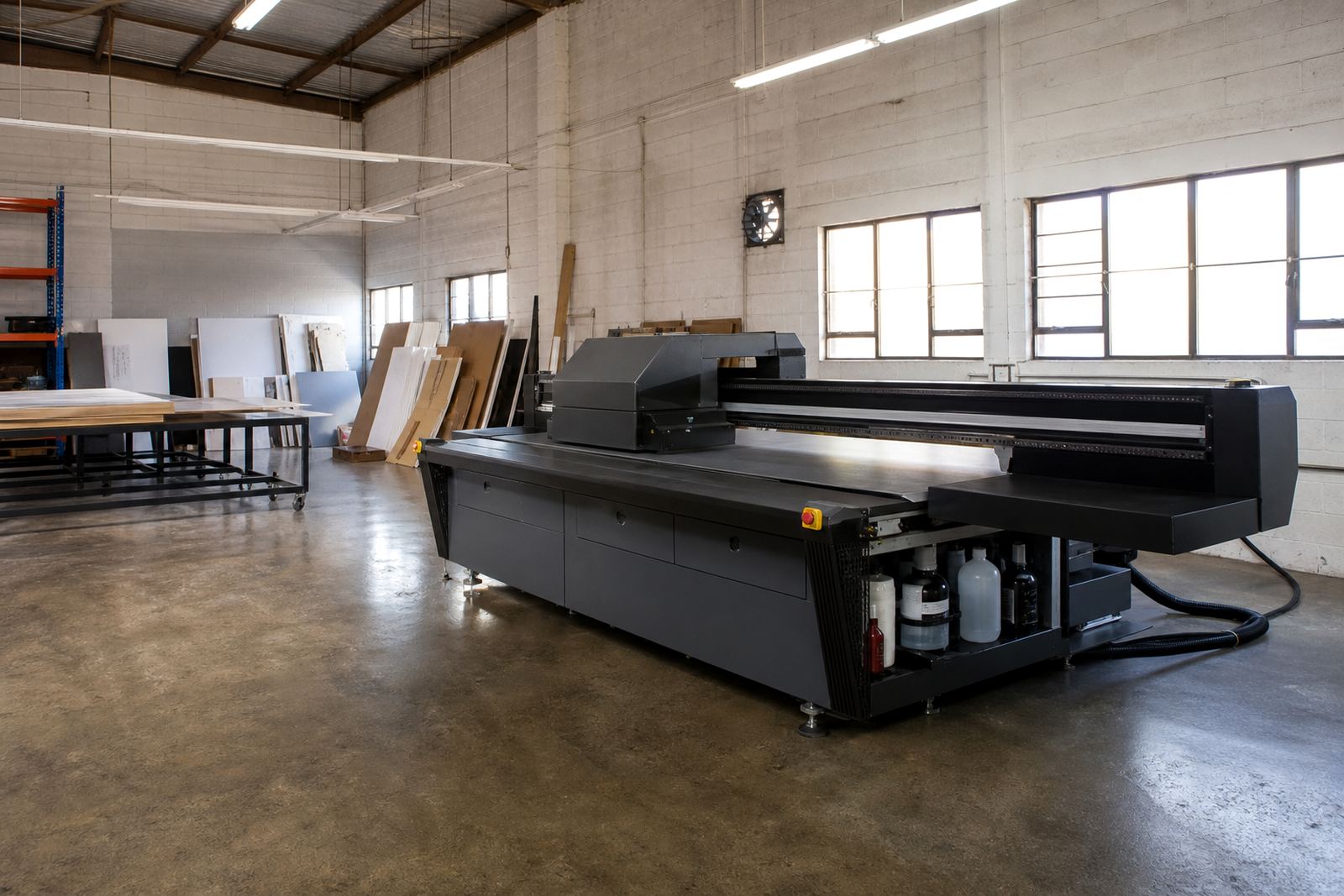
Installation starts with site preparation, access checking and the right floor space for loading boards safely. The printer should sit on a level surface with enough room for material staging, maintenance access and operator movement. If the shop handles larger panels, the route from receiving to printing to finishing should be planned so sheets do not flex or pick up damage on the way through.
Power needs depend on the configuration, but the workshop should have stable supply, proper earthing and protection against voltage swings. In areas affected by load-shedding, backup planning is important because interrupted power can affect curing, workflow timing and board handling. A business may also need air management, extraction or basic ventilation depending on the inks and room layout. There is no gas requirement for standard flatbed UV printing, but the room must be kept clean and dry, with enough space for ink handling and media testing.
When we support installation from Germiston into Johannesburg, Pretoria, Durban, Cape Town, Gqeberha and Centurion, the first check is always whether the site can support reliable production, not just whether the machine fits in the room.
Inks, colour control and production workflow
Flatbed UV printing uses specialised inks that cure under UV light and bond to suitable rigid surfaces once the surface is properly prepared. For acrylic, the ink choice and print sequence should match the job intent. Clear sheets may need white ink underprint for opacity, while coloured or frosted panels may need a different layer order to get the right colour result. The aim is to get consistent density, clean edges and no unwanted pooling.
Colour guidance matters because acrylic can change how artwork appears, especially on clear or tinted stock. A print that looks fine on screen may read differently once it is backlit or placed behind glass. That is why workflow planning, media testing and operator training are part of the job, not an add-on. Good workflow also helps reduce waste when a job has multiple panels with repeated numbering, logos or cut lines.
- Check the acrylic grade and whether it is clear, tinted or opal
- Confirm whether the artwork needs white, colour only, or layered print
- Test adhesion on the actual sheet before running the full order
- Allow for curing, cooling and safe handling before packing
- Plan the finishing step if the panel will be cut, drilled or mounted
Care, servicing and what to confirm before ordering
Like any production printer, an acrylic print printer needs regular cleaning, nozzle checks, preventive maintenance and proper ink handling. Keep the bed free of dust, avoid touching prepared surfaces with bare hands and store acrylic flat so it does not bow. If the workshop is busy, a simple cleaning routine between shifts can prevent streaks and reduce downtime. Small issues on rigid media can become bigger problems fast, so it is worth keeping spares and service support organised before peak periods.
Before ordering, check the sheet sizes you use most, the thickness range, the type of finish expected and whether you need white ink, varnish effects or layered output. Also confirm installation access, power stability, daily volume and who will run the machine. If the business does not have a trained operator yet, training should be built into the rollout from the start. That saves time later and reduces avoidable mistakes. For many shops, the right printer is the one that fits the real workload, not just the spec sheet.
Clients can reach us through the enquiry form on our contact page for installation, training, service, media testing, spares coordination and production consulting across South Africa. Our Germiston support team works with print businesses in Johannesburg, Pretoria, Durban, Cape Town, Gqeberha, East Rand and Centurion, and we keep the advice practical and site specific.
Key facts
| Print method | Direct flatbed UV printing on rigid acrylic and similar boards |
|---|---|
| Media range | Acrylic panels, display boards, signage pieces and other rigid substrates |
| Ink options | UV cured colour inks with white ink support where required |
| Workflow support | Installation, operator training, colour guidance and media testing |
| Power and site needs | Stable electrical supply, level floor space, clean handling area and suitable room ventilation |
| Service coverage | Germiston base with support across South Africa including Johannesburg, Pretoria, Durban, Cape Town and Gqeberha |