What Large Format Flatbed UV Printing Is
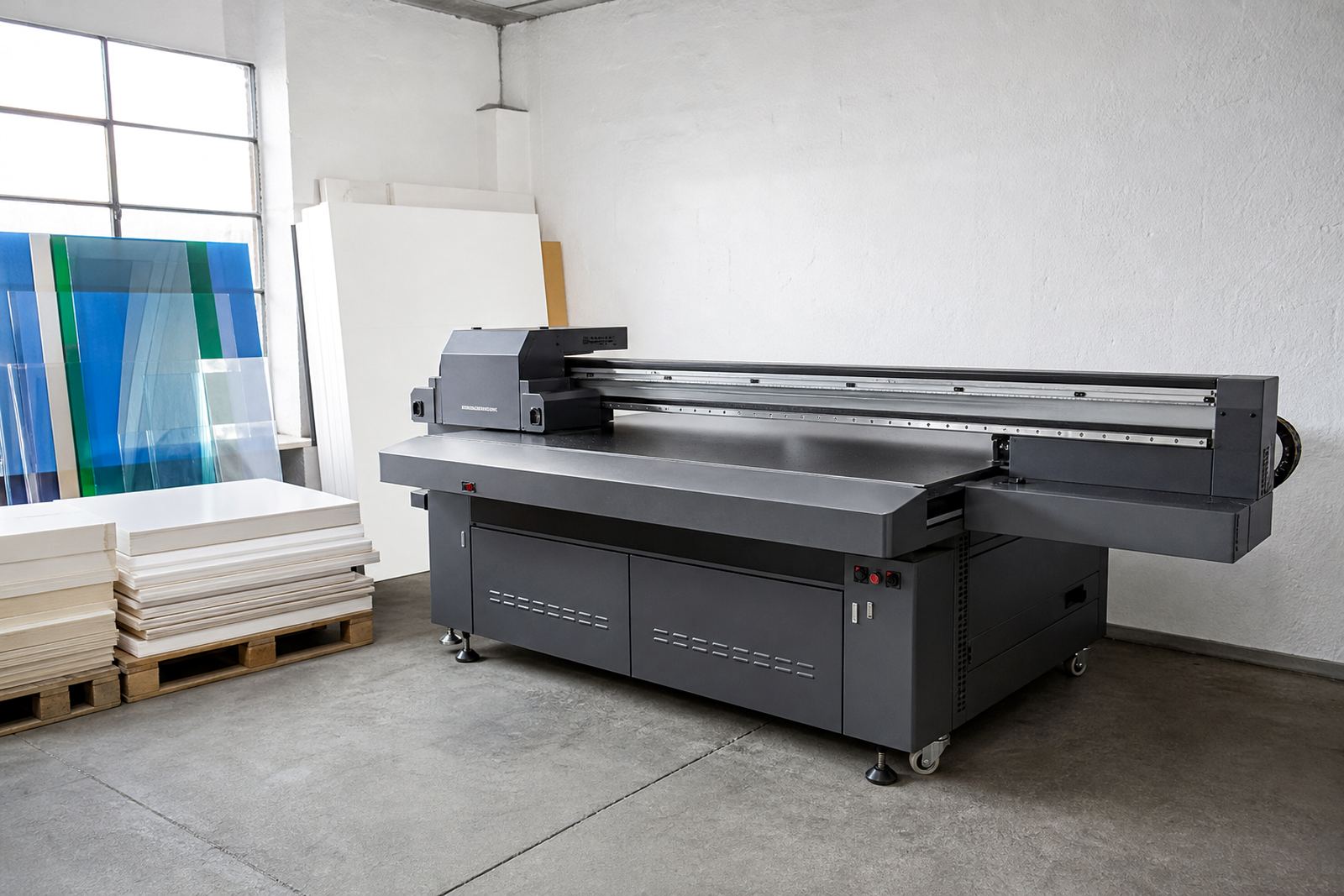
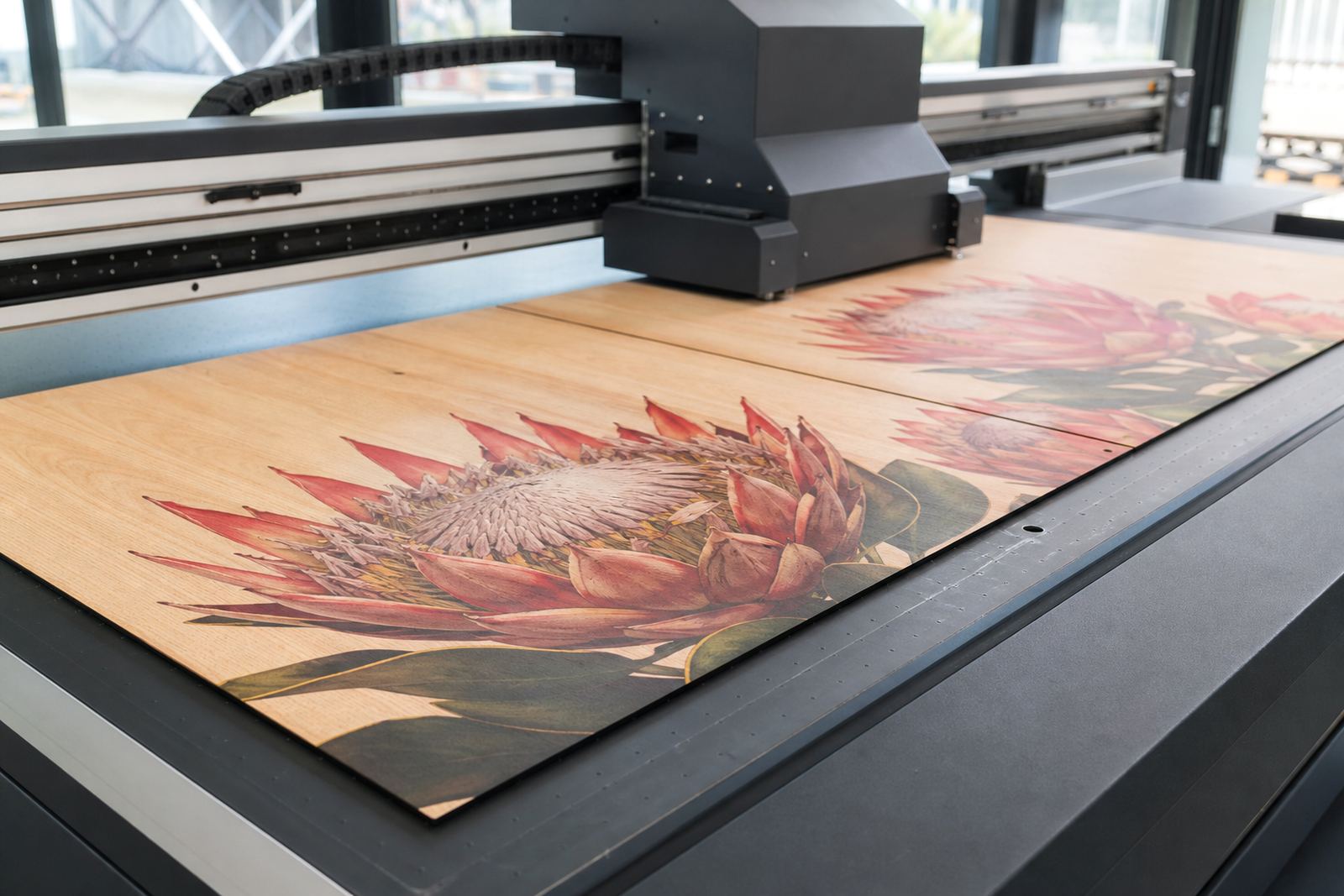
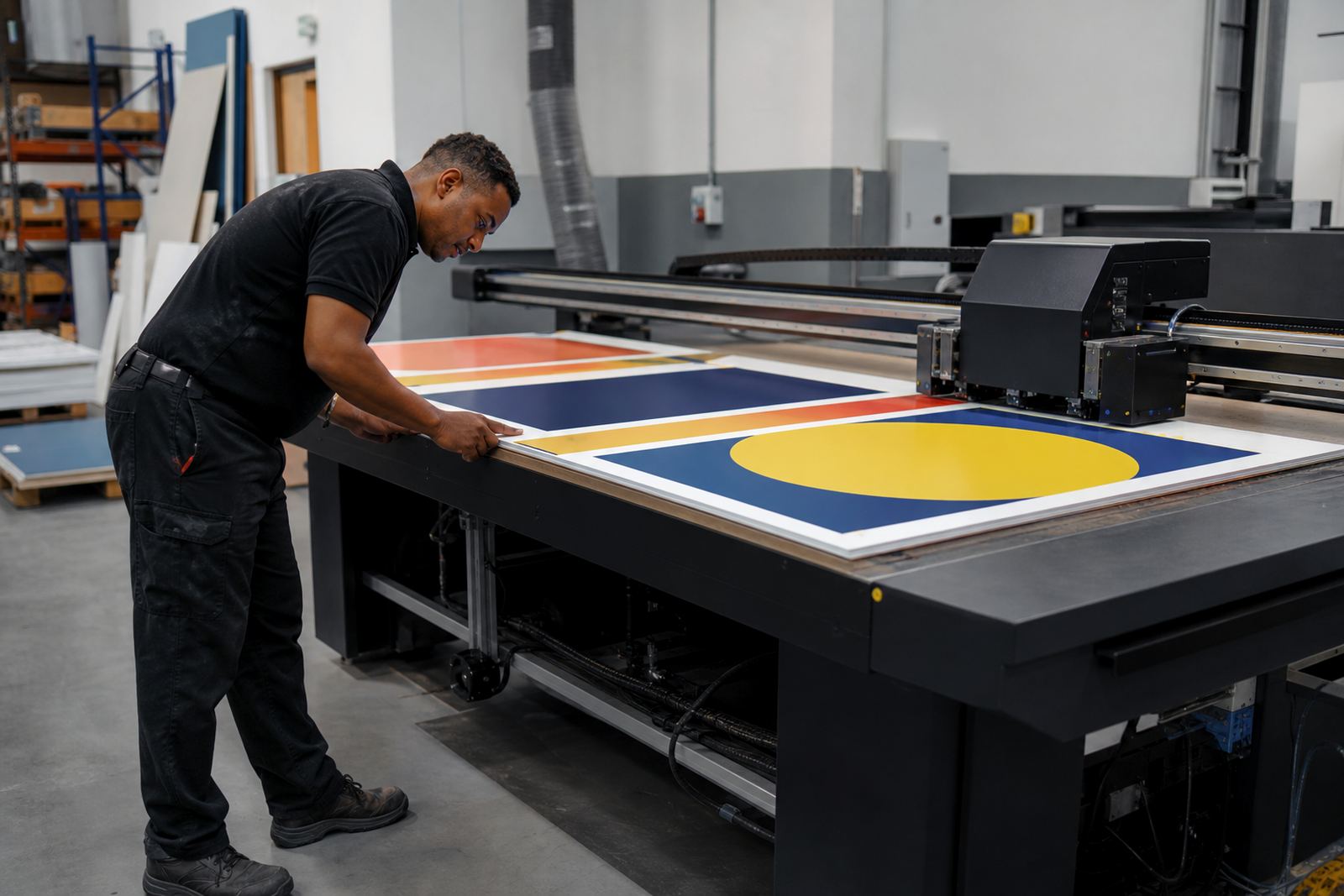
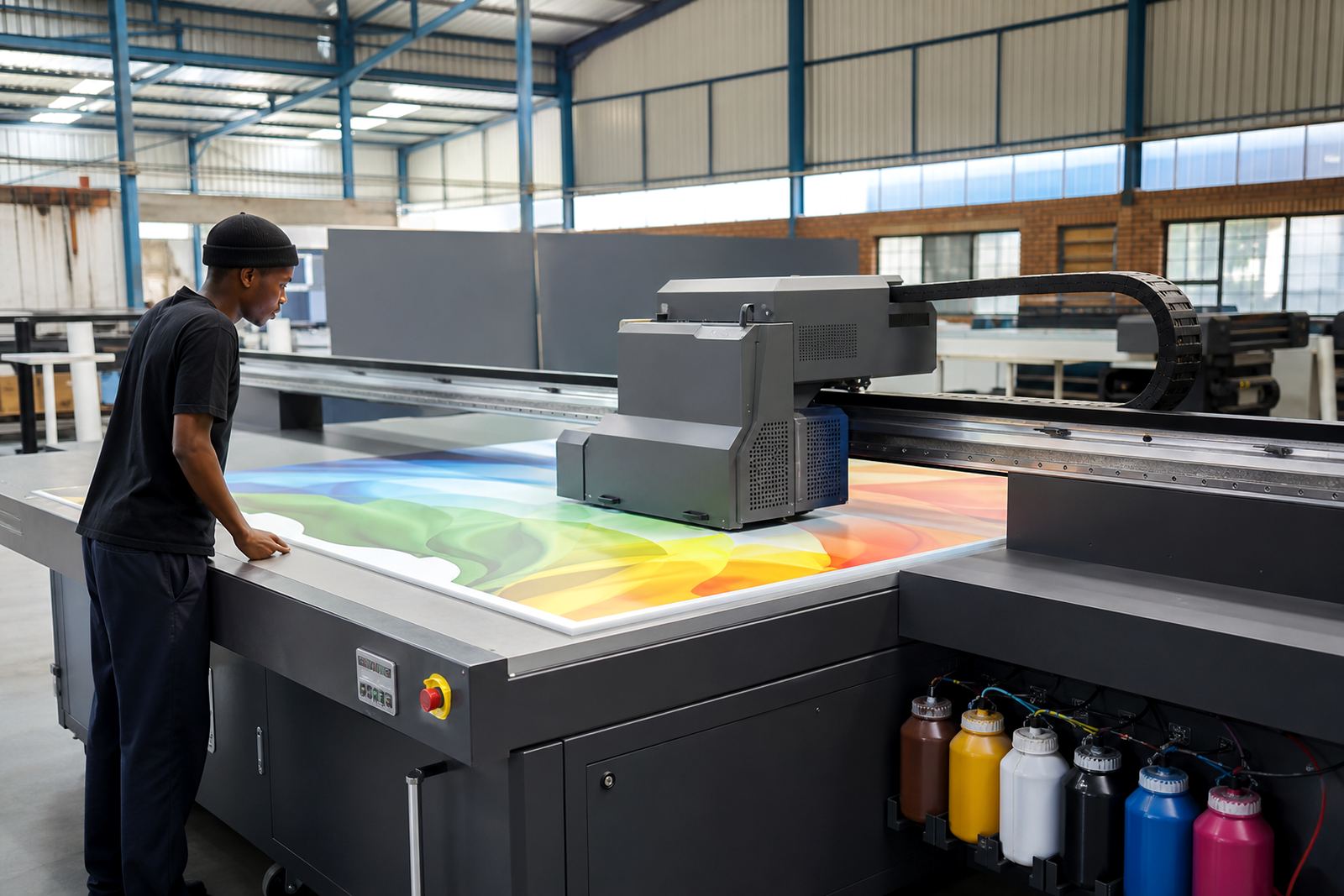
Large format flatbed UV printing places rigid sheets on a flat bed and prints directly onto the surface in one pass. It suits work where the material does not roll, bend or feed well through a standard printer, such as signage boards, display panels, shopfitting panels and exhibition pieces. The UV ink is cured during printing so the surface can be handled soon after output, which helps when the job must move quickly from print to cutting, mounting or delivery.
This type of production is often chosen by print houses, sign makers and fit-out teams that need colour, white ink options and neat edge-to-edge coverage on a wide range of boards. It is also useful where repeated handling is part of the workflow and a tougher print surface is needed. For many businesses, the big benefit is control. You can print directly onto the final substrate rather than laminating a separate face, which saves time and reduces extra steps.
Where It Suits Best in the Market
Large format flatbed printing works well for indoor and outdoor signage, retail display panels, point-of-sale boards, directional signage, promo boards and event graphics. It is a strong fit for shops and production rooms in Johannesburg, Germiston, Pretoria, Durban, Cape Town and Gqeberha where board work is common and turnaround matters. It also suits businesses serving schools, property developments, factories and municipal notice work, where durable output and clear lettering are needed.
Because the process accepts rigid media, it is practical for jobs that need a flat finish and accurate registration. That makes it a good choice for layered artwork, repeated branding and panels that must look the same across a full run. In coastal areas, the right ink and media pairing helps when humidity is part of daily production, and in Gauteng many teams value the speed during load-shedding planning and after-hours work blocks.
- Retail display boards and window-facing signage
- Exhibition panels and event graphics
- Directional signs and wayfinding boards
- Interior fit-out panels and branded partitions
- Short-run promotional boards and custom displays
Table Sizes, Media Options and Print Setup
Flatbed systems are chosen according to the sheet sizes a business handles, the thickness of the media and the level of detail required. Some operations focus on compact panels and quick changeovers, while others need a broader bed for larger signage boards and multiple-up layouts. The print workflow should match your daily job mix, so the right setup is often the one that fits your board sizes, cutting method and finishing sequence.
Common media include foam board, PVC board, acrylic, aluminium composite, corrugated sheet, wood panels and other rigid display materials. The machine setup should support clean board placement, proper vacuum hold where needed and accurate alignment across repeat jobs. White ink can be part of the workflow for colour holdout on dark or clear substrates, while varnish or layered printing may be used for added effect. If you print on mixed media, testing is worth doing before a full run so there are no surprises with adhesion, drying or surface reaction.
- Rigid board printing for signage and display work
- White ink for dark, clear or coloured substrates
- Variable table sizes to suit short-run or larger panel jobs
- Support for different board thicknesses depending on the setup
- Registration checks for repeat panels and cut-ready output
Installation, Power and Site Preparation
Installing a flatbed UV printer takes planning. The floor must be level and the room should allow enough access for loading boards, servicing and operator movement. A clean print room matters because dust can mark the surface or affect the bed. Good ventilation is also important, especially where production runs are long or where several machines share the same space. In busy Gauteng sites, it helps to plan the layout so the printer, trimming area and storage racks all work together.
Power supply should be checked before delivery, including the required electrical connection, stabilisation and backup planning for load-shedding. Some sites use inverter backup or generator support, depending on the rest of the workshop setup. There is no gas requirement for this type of printing, but the site should still be ready for safe ink handling, waste control and a clear cleaning routine. We also look at board storage, pallet movement and safe access for staff so the installation runs properly from day one.
Before the machine is placed, it is worth checking door widths, turning space, ceiling height where relevant and the path from loading bay to print area. That saves time on installation day and reduces handling risk.
Ink, Colour and Print Quality Care
UV printing depends on the right balance between ink, media and workflow. Good colour work starts with clean files, correct image preparation and a stable production process. For signage boards, even colour, sharp text and consistent white coverage are often more important than fancy effects. If the printer is used on both indoor and outdoor jobs, the operator should know how the chosen ink set behaves on different surfaces and what curing settings suit the material.
Routine care keeps output steady. Print heads, caps, wipers and the working area need attention, and the room should stay free of excessive dust. Ink handling should be tidy and measured, with proper storage to prevent waste. In humid coastal towns like Durban or Gqeberha, storage and room conditions deserve extra attention. Inland, temperature swings and power interruptions can affect workflow, so it pays to keep a simple checklist for start-up, shutdown and daily cleaning.
- Check nozzle health before long runs
- Keep media clean and dry before printing
- Match colour settings to the substrate being used
- Allow for curing and handling time in the job schedule
- Keep spare parts and consumables planned before busy periods
What to Check Before You Order
Before ordering a large format flatbed printer, it helps to look closely at your average job size, the board materials you use and the finishing steps that follow printing. If most of your work is short-run signage, you may need different features to a business that runs steady production for retail or exhibition clients. The best choice is the one that fits your real output, not only the biggest sheet size on paper.
Ask about the media thickness range, board support, white ink workflow, curing method, vacuum hold, maintenance access and the availability of training for your staff. It is also sensible to ask how the printer will fit into your current process, from file setup to cutting and delivery. If you are comparing options, request a practical test on your own substrate or a similar board. That will show how the print lays down, how the colour behaves and whether the job moves through your workshop without extra fuss.
Flatbed UV is based in Germiston, Gauteng and supports installation, training and service across South Africa, including Johannesburg, Pretoria, Durban, Cape Town and Gqeberha. Support also reaches East Rand and Centurion. Our team assists with printer installation, site preparation, operator training, workflow planning, colour guidance, preventive maintenance, breakdown support, remote support, ink handling help, media testing, spares coordination and production consulting.
Key facts
| Printing method | Direct-to-substrate UV flatbed printing |
|---|---|
| Typical media | Rigid boards, signage panels and display substrates |
| Ink set | UV-curable inks with optional white ink workflow |
| Supported workflow | Print, cure, inspect and proceed to cutting or finishing |
| Site needs | Level floor, clean room, electrical supply and ventilation |
| Support coverage | Installation, training and service across South Africa |