
What a Wood Panel Printer Does
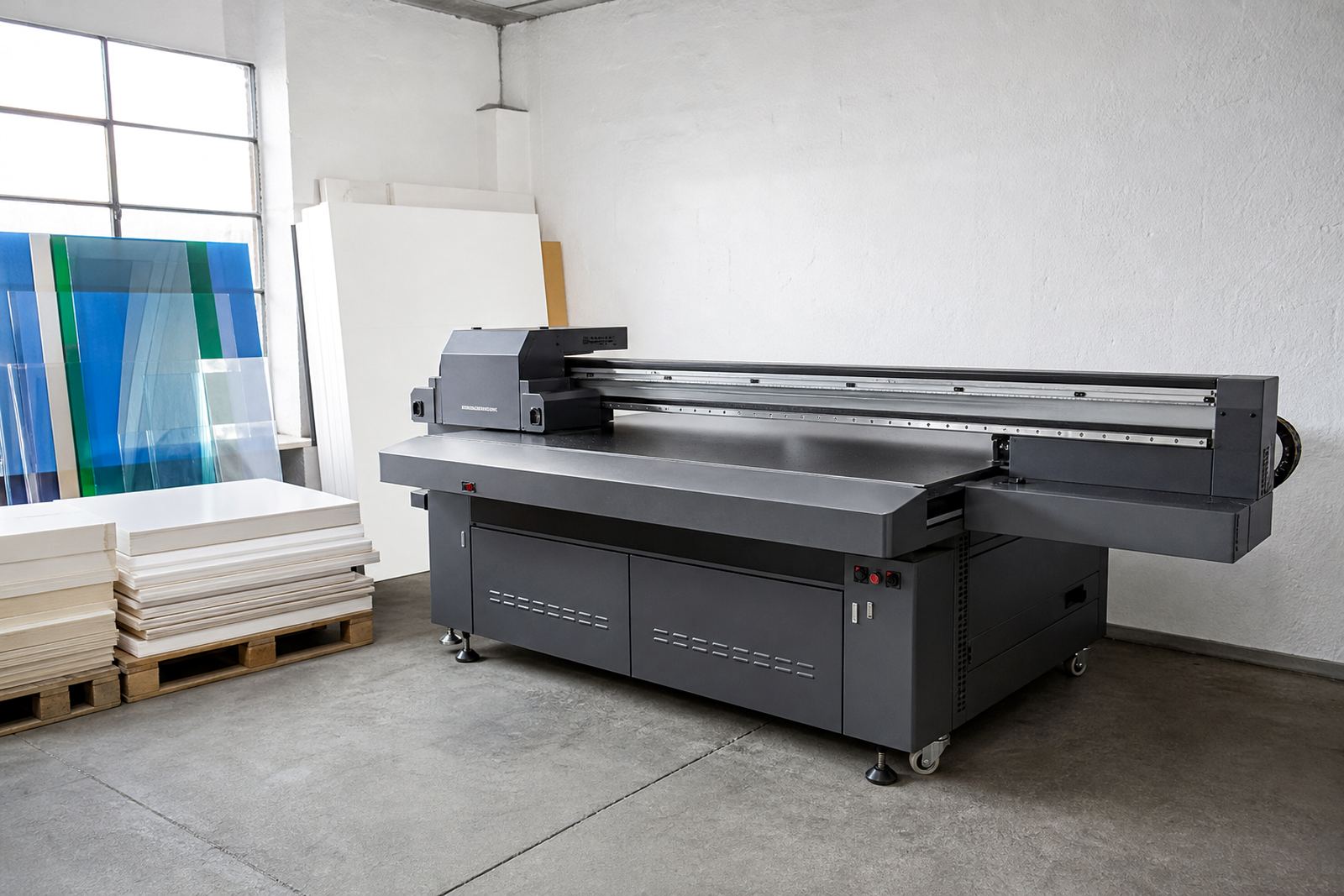
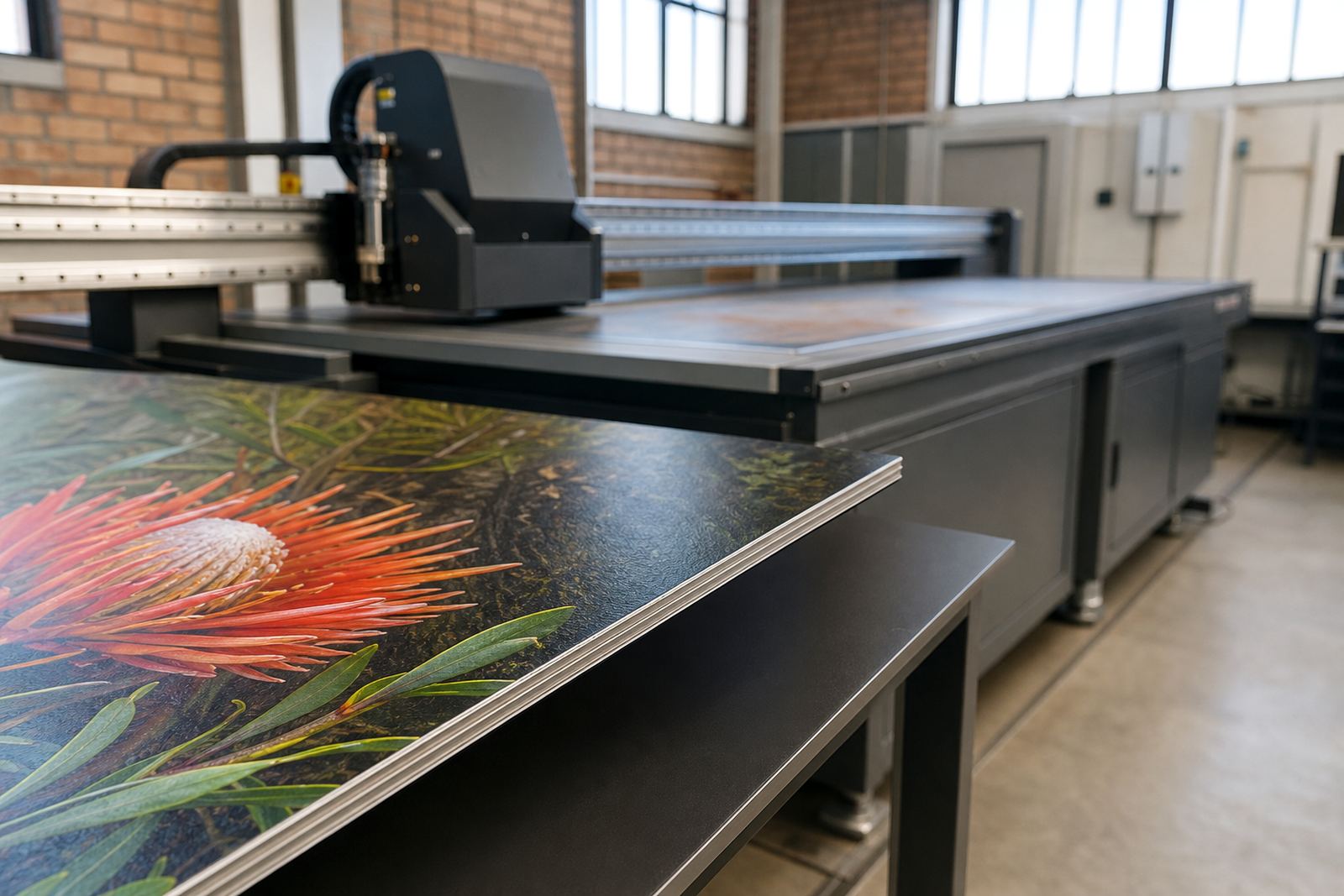
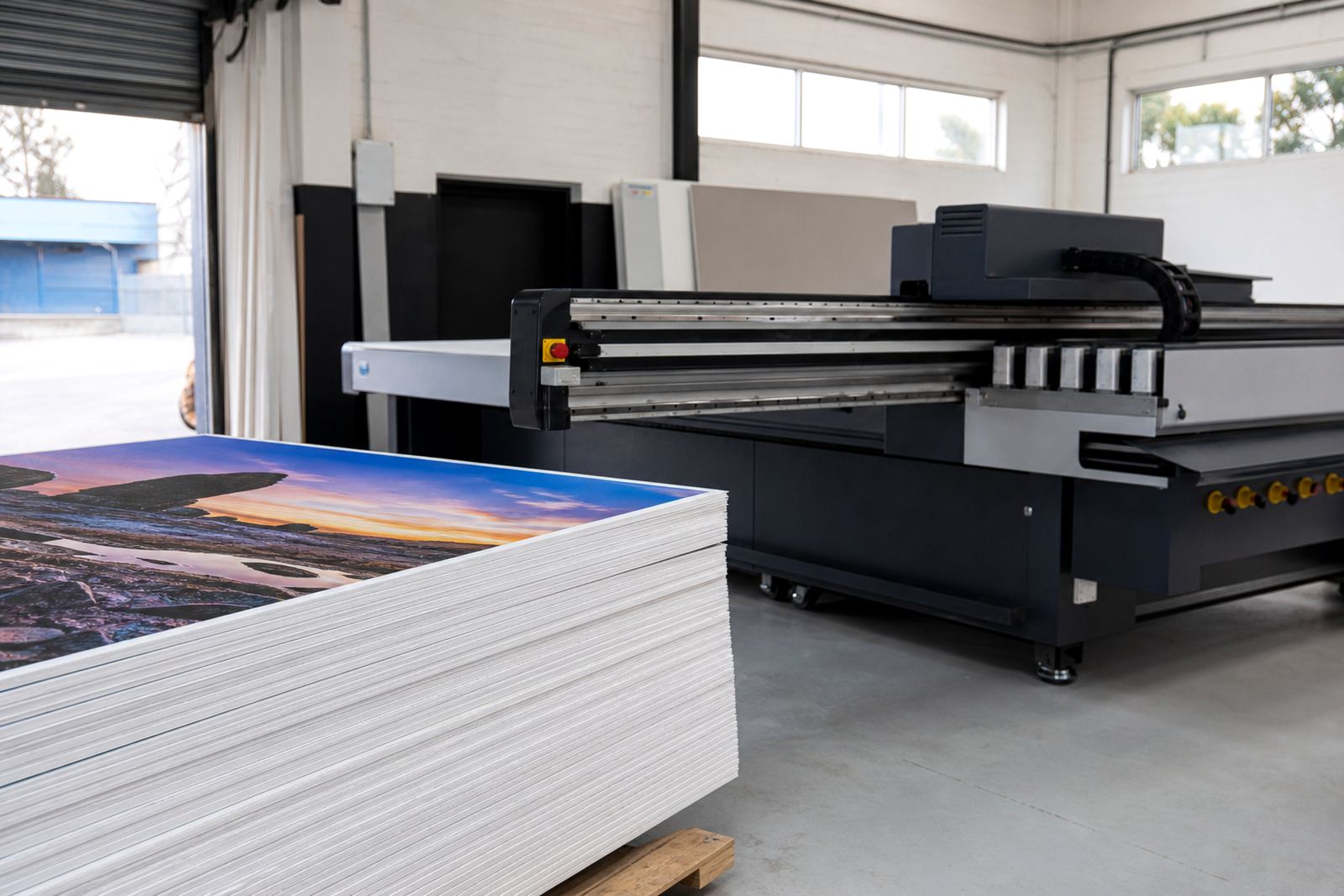
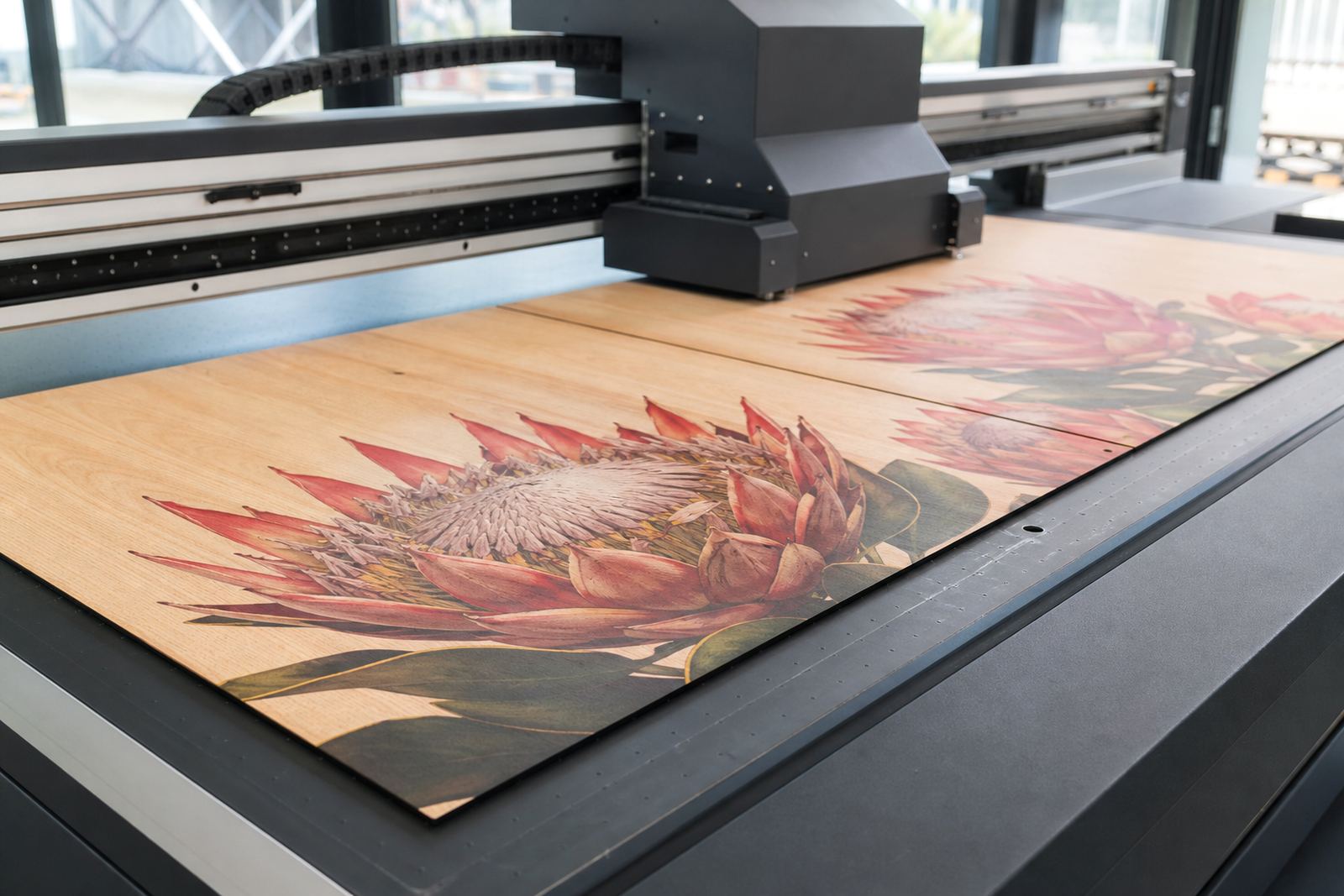
A wood panel printer is a flatbed UV setup that prints directly onto prepared timber panels, laminated boards and other rigid substrates. The ink is cured during printing, so the panel can usually be handled soon after output and moved into trimming, mounting or fitting without waiting for solvent to dry.
This makes it practical for reception walls, retail features, exhibition panels and interior display work where a natural wood base or printed timber finish is required. It suits jobs where the panel is part of the product, not just a backing board, and where colour placement needs to line up with cut-outs, grain direction or join lines.
Flatbed UV printing can be used for full colour graphics, white ink underprint, spot colour work and text on coated or sealed wood. On raw wood, the surface needs checking first because absorbency, grain and knots affect the final result. For some jobs a primer, seal coat or test print is needed before the full run.
Sizes, Board Types And Print Options
Wood panel work comes in many sizes, from small feature boards to large format wall panels and shop fittings. The right flatbed UV setup depends on the panel size, thickness, weight and how often you need to change jobs. If you print a mix of small signs and larger decorative panels, the layout and vacuum hold-down method matter a lot for daily use.
Common options include single boards, joined panels, cut-to-size sheets and made-up display components. A proper workflow should allow for accurate registration, repeat runs and consistent positioning, especially where artwork must match across several panels. In many cases the print workflow is just as important as the printer itself.
- Small feature panels for interior branding and décor
- Medium format boards for retail, hospitality and office fit-outs
- Large rigid panels for walls, partitions and exhibition builds
- Test boards for colour matching before full production
- White ink layers for darker woods or special effect work
Where Wood Panel Printing Works Best
This product suits businesses that need decorative boards with a hard-wearing printed surface. It is commonly used for interior décor, branded wall pieces, directional signage, menu boards, display units and custom features in showrooms. In Gauteng, many customers use it for office spaces in Johannesburg and Pretoria where the finish must look clean under bright lighting.
It also works well for event structures, point-of-sale displays and fitted panels in hospitality spaces. In coastal areas such as Durban and Gqeberha, the base material and storage conditions need extra care because humidity can affect flatness and adhesion if the boards are left unpacked too long. For towns with frequent load-shedding, production planning should allow for backup power or scheduled print runs so panels do not sit half-finished on the bed.
Flatbed UV print on wood is especially useful where local installers want something ready for mounting after edge finishing. It is also suited to projects where a municipal or venue spec calls for neat presentation and low mess on site.
Installation, Power Supply And Site Preparation
Before installation, the site should be checked for floor loading, access for moving panels, ventilation, dust control and stable electrical supply. A flatbed UV printer setup usually needs a level area, enough space for loading boards and a practical workflow for infeed, output and finishing. If the site is tight, the operator ends up working around the machine instead of through a clean production path.
Power needs should be confirmed in advance so the unit can run without nuisance trips or voltage fluctuation. In South Africa, we often see issues linked to unstable power, so the electrical plan should be checked along with backup arrangements if the site is affected by load-shedding. Some customers also need compressed air or other support services depending on the broader production line, but the actual need depends on the system and application.
- Measure doorways, passages and turning space before delivery
- Check power capacity and backup arrangements early
- Confirm the floor is level and can support the equipment
- Plan for dust control around cutting, sanding and loading areas
- Allow space for board storage in a dry area
Care, Cleaning And Ongoing Servicing
Wood panel production depends on clean handling and steady maintenance. Dust from sanding, timber chips and surface residue can affect print quality, so the board should be clean and dry before it goes onto the bed. If boards are stored in a damp area, warping and edge lift can cause print registration problems and waste material.
Routine care includes nozzle checks, cleaning the print area, monitoring ink condition and checking the surface treatment of incoming boards. If the site prints only occasionally, the system still needs regular upkeep so inks do not settle and heads stay in good order. Preventive maintenance is cheaper than stopping a run halfway through a job that has already been signed off.
Our service support from Germiston covers installation, preventive maintenance, breakdown support, remote support, ink handling help and spares coordination. We also assist with production consulting and workflow planning where a customer is moving from sample work into regular board production.
What To Check Before Ordering
Before you choose a wood panel printer setup, start with the type of panel you want to print, the usual board size and the finish expected by your customer. A smooth painted panel behaves differently from raw timber, and laminated board behaves differently again. If the job range includes dark surfaces, ask about white ink use and whether test panels should be run first.
It is also worth checking how many panels must be produced per day, whether the work is mostly one-off or repeated runs, and what finishing steps come after printing. If the panels will be delivered to site in Durban humidity or used in a Cape Town fit-out where salt air is a factor, the storage and sealing method should be part of the order from the start.
- Board size, thickness and total weight
- Surface type and whether it is sealed, painted or raw
- Need for white ink, underprint or spot colour work
- Daily output requirement and turnaround time
- Space available for installation, loading and storage
- Power supply, backup power and site conditions
South African Support From Germiston
Flatbed UV is based in Germiston, Gauteng, with support for Johannesburg, Pretoria, Durban, Cape Town, Gqeberha, East Rand and Centurion. Clients reach us through the enquiry form on our contact page, and we help match the printer setup to the board type, workflow and support level needed on site.
Our team includes Sibusiso Mthembu, Lerato Nkosi, Johan van der Merwe, Ayanda Dlamini, Michael Naidoo and Zanele Khumalo. Since 2011, the focus has been on practical flatbed UV supply and support for rigid boards and signage across South Africa, with training that helps operators work safely and keep production moving.
If you need a wood panel printer for decorative boards, display work or branded features, we can assist with site preparation, installation, operator training and ongoing service. That includes help with media testing, colour guidance and production planning when the job calls for a careful first run.
Key facts
| Print method | Flatbed UV direct-to-rigid-board printing |
|---|---|
| Suitable substrates | Prepared wood panels, laminated boards and other rigid signage media |
| Ink system | UV-curable inks, with white ink options where required |
| Workflow support | Site preparation, operator training, colour guidance and production planning |
| Service coverage | Germiston base with support across South Africa |
| Typical use | Decorative panels, branded features, displays and signage |