What a sample production printer does on a busy print floor
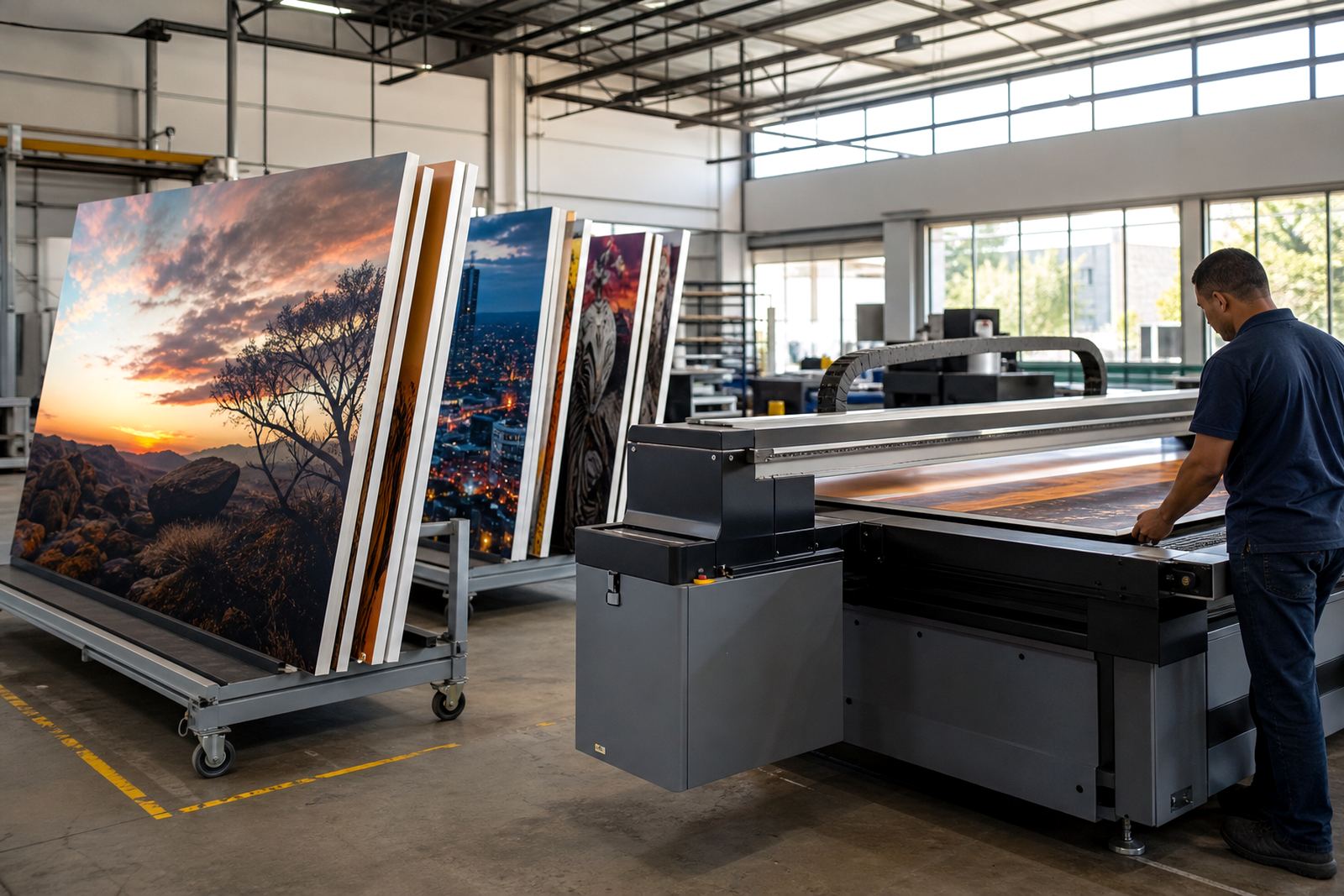
A sample production printer is set up for proofing and trials on rigid media before a larger run goes through the main line. It is used to check image sharpness, dot gain, ink laydown and how a board responds after curing. That matters when a customer wants a clean result on foam board, PVC sheet, corrugated plastic, ACM or timber based panels.
In practice it saves time and material. A team can test a colour match, compare finishes and confirm whether a job needs a lighter pass, stronger adhesion or a different primer. For shops handling retail point of sale, event signage or municipal notices, that early check can avoid costly reprints and awkward delays.
- Useful for client proofs before sign off
- Handy for testing new rigid substrates
- Supports short runs and special finishes
- Helps with repeatability across shifts
Typical formats, media and output choices
Sample production printers are usually chosen for rigid board work rather than roll only work. The exact format depends on the space available, the type of boards being tested and the size of samples needed for approval. Some users need a compact footprint for a smaller production room, while others want a wider table for oversize display pieces and multi panel layouts.
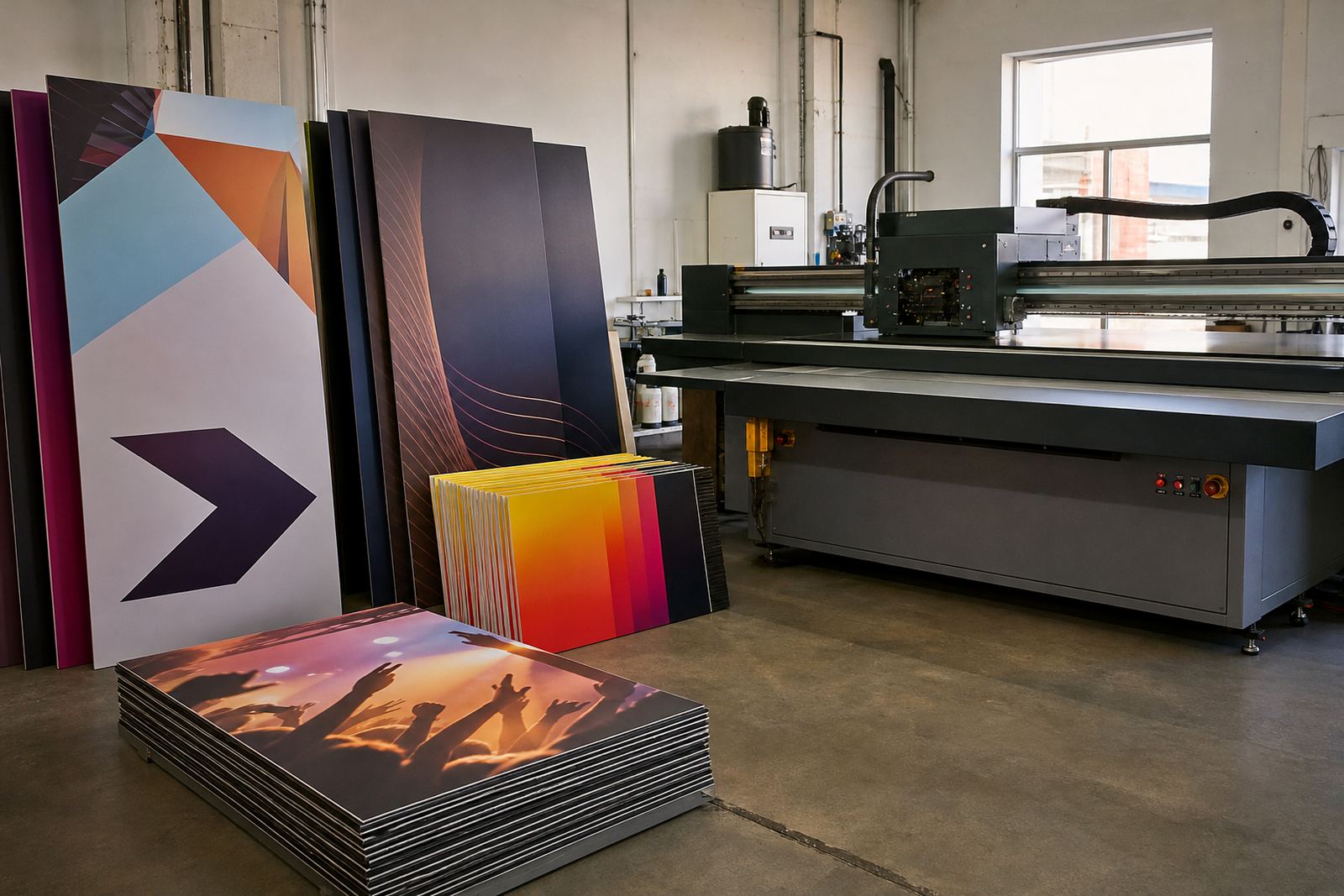
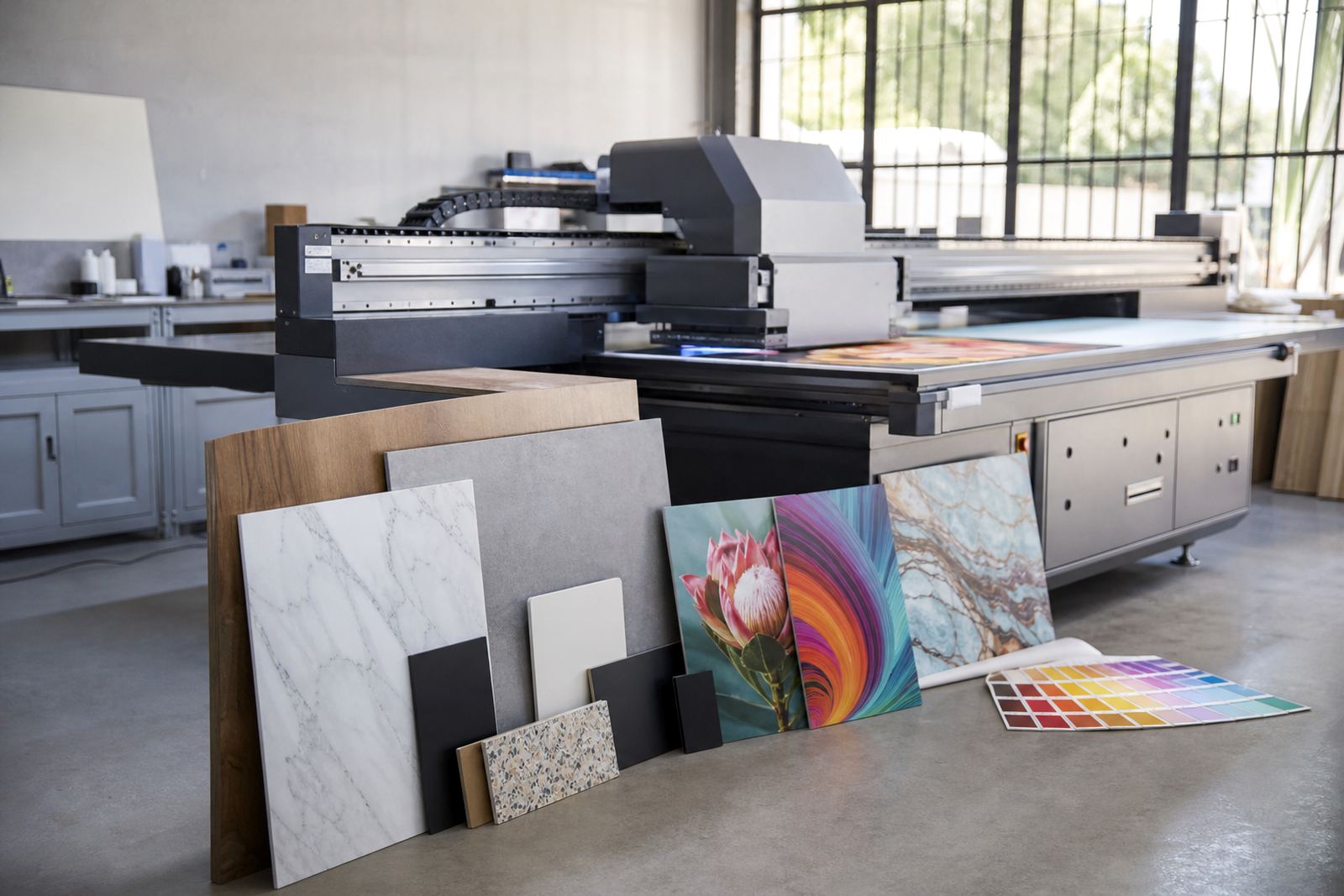
Common media choices include flat boards used for signage, display panels, sample inserts, counter cards and presentation boards. UV curing is suitable for many coated and uncoated surfaces, but a proper media test is always worth doing first. In coastal areas like Durban or Gqeberha, humidity can affect board storage and surface behaviour, so keep samples in the same conditions where the final work will be handled.
- Rigid boards for signage and display
- Sample panels for colour approval
- Short run promotional boards
- Test pieces for special coating or varnish effects
Power, air and site preparation before installation
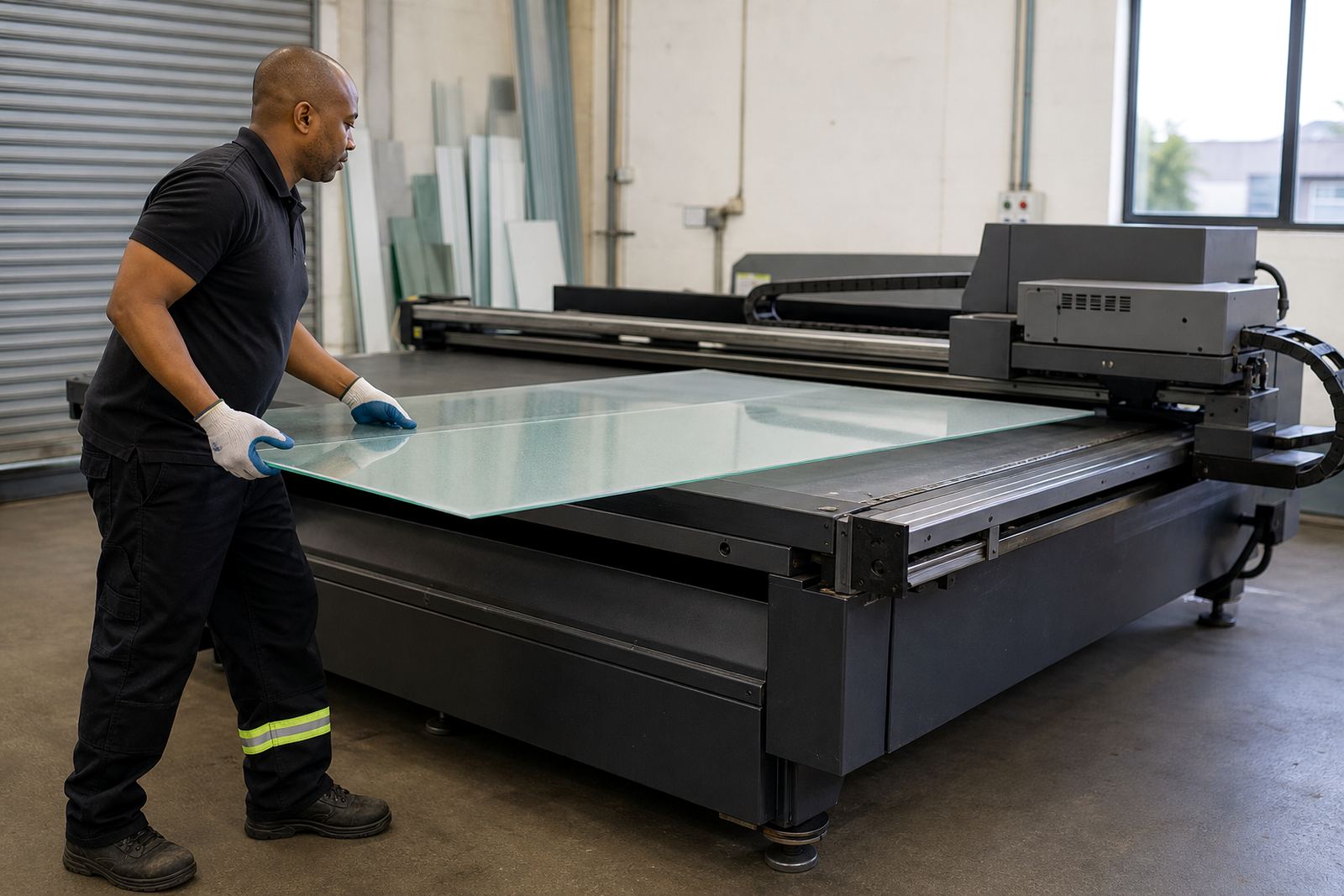
Before installation, check the room for floor space, access and stable power. A sample production printer needs a level surface, enough room for operators to move safely, and a clean environment with controlled dust. If the unit uses auxiliary air or extraction on your chosen setup, those services should be planned before delivery so there are no hold ups.
Load-shedding planning matters too. Shops in Germiston, Johannesburg and Pretoria often keep backup power or generator arrangements ready so the printer can shut down and restart properly. A clean power supply with correct voltage protection helps reduce faults on control boards and curing systems. If the site is cramped or there are tight doorways, measure the path from loading bay to production area first, not after the truck arrives.
- Level floor and clear access route
- Suitable power supply with protection against surges
- Good ventilation and low dust levels
- Space for board loading, inspection and curing
How the inks, curing and workflow should be managed
UV inks are used for direct printing onto rigid media, then cured under UV light so the print can be handled sooner. The workflow usually starts with file preparation, then colour checks, media testing, print setup and final inspection. When the sample unit is used properly, the operator can compare different profiles and see how changes affect skin tones, solids, line work and small text.
Ink handling needs care. Keep containers closed, store them in a stable temperature range and follow the usual safety rules for gloves and ventilation. If a machine is left idle for long periods, regular nozzle checks and flushing routines help avoid blockages. A tidy production room also makes a difference, especially where powder, board dust or humid air can build up around the table. Small things get missed when a team is rushed, and that can affect the proof.
Care, servicing and support after commissioning
Regular servicing keeps a sample production printer useful for proofing and test work. Daily checks should cover heads, curing lamps or curing modules, tables, vacuum paths where fitted, and the condition of the work area. Preventive maintenance also helps the team spot wear before it turns into a breakdown that stops production.
For South African print rooms, support needs to be practical and close to the floor. Flatbed UV works from Germiston and supports Johannesburg, Pretoria, East Rand, Centurion, Durban, Cape Town and Gqeberha. That includes installation, operator training, workflow planning, colour guidance, remote support and breakdown assistance. If a board is lifting, a finish is inconsistent or a setting needs adjustment, the production team should be able to get clear help quickly.
What to check before placing an order
When ordering, start with the kind of samples you need to produce and the board sizes you use most often. Then check the power supply, the room layout, the height needed for loading, and whether your team has enough time for training. A sample printer should fit your actual workflow, not just the available space.
- Largest board size you need to test
- Media types to be approved or compared
- Power availability and backup plan for load-shedding
- Training needs for operators and supervisors
- Maintenance access and service expectations
- Delivery route, door width and lifting needs
If you are planning for retail displays, municipal boards, exhibition pieces or internal proofing, ask how the printer will be used day to day. That makes it easier to match the setup to the job mix, rather than guessing and adjusting later.
Key facts
| Product type | Sample production printer for rigid board proofing and short run testing |
|---|---|
| Media compatibility | Rigid boards, display panels and signage substrates, subject to media testing |
| Workflow use | Prototyping, client proofs, colour checks and surface adhesion trials |
| Power needs | Site specific, with clean power and surge protection recommended |
| Installation support | Site preparation, commissioning and operator handover |
| Service coverage | Germiston, Johannesburg, Pretoria, Durban, Cape Town, Gqeberha and surrounding areas |