What a showroom demo printer is for
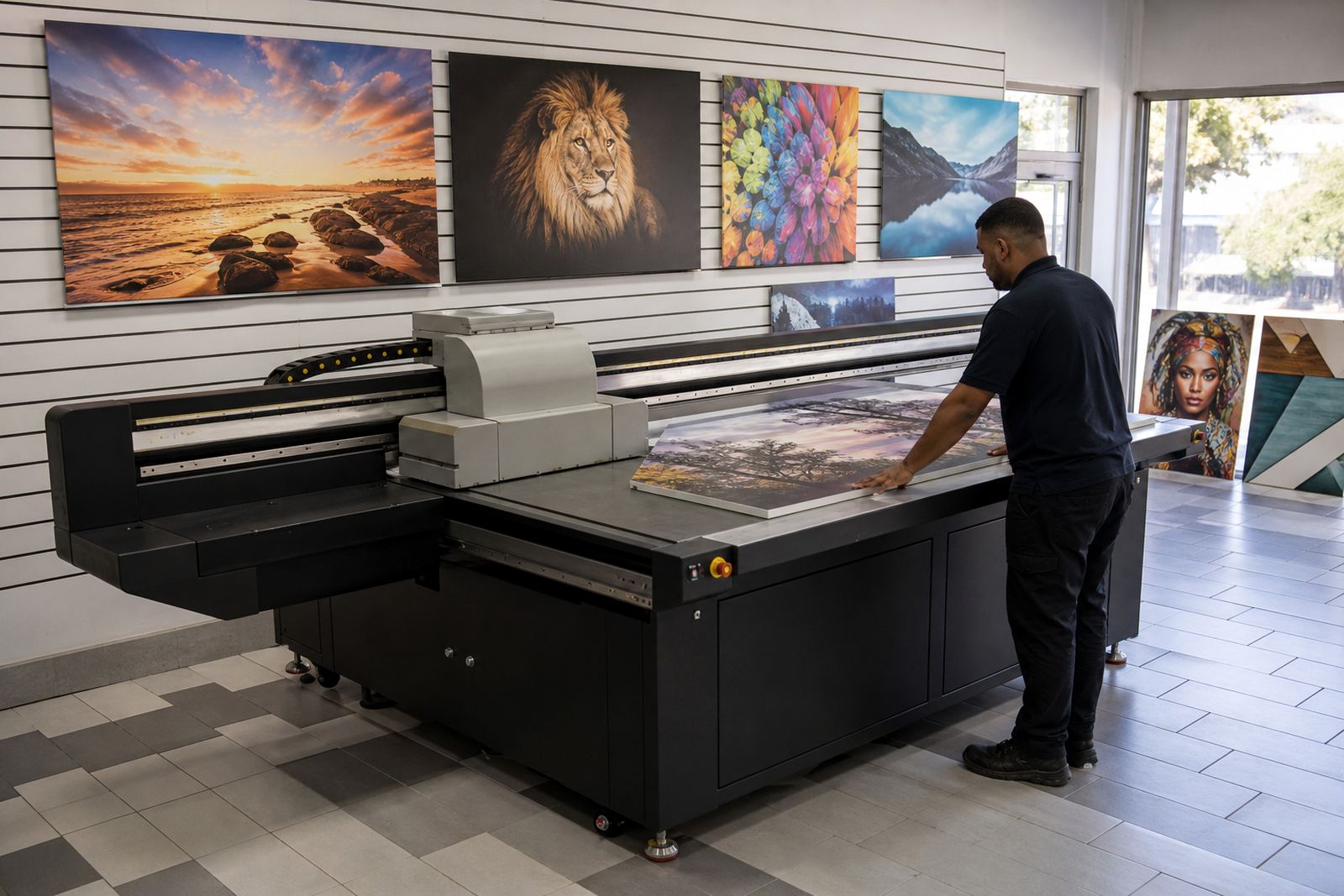
This unit is used to test how flatbed UV printing performs on board, sheet material and other rigid media. It is suited to teams that want to see ink adhesion, edge detail, white ink handling and curing behaviour on actual samples instead of relying on sample images alone. For many print rooms, that hands-on check makes the buying decision much clearer.
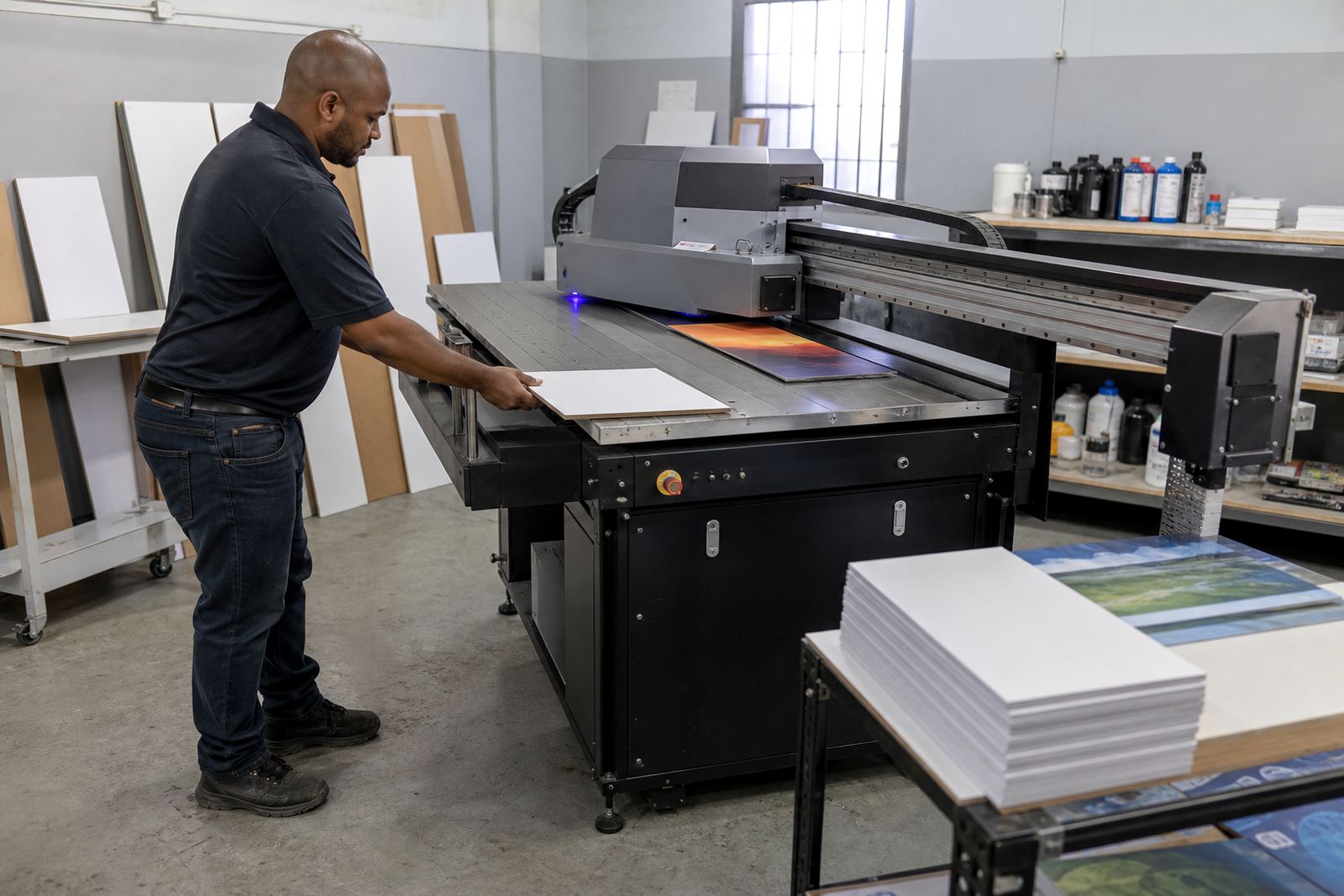
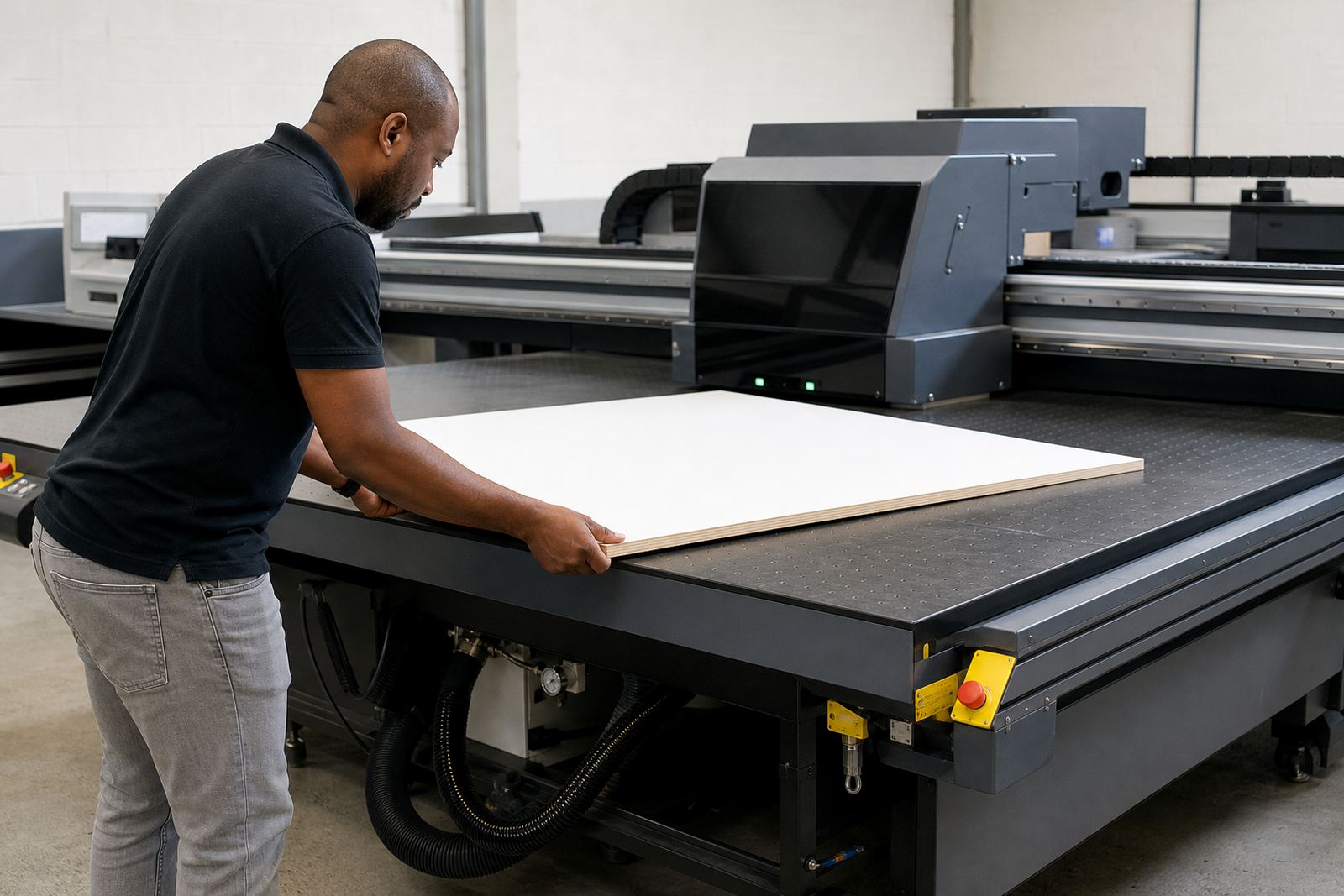
The demo setup also helps with production planning. You can look at loading, alignment, pass count, operator movement and how the print sits after curing. If you work in signage, retail display, exhibitions or short-run industrial graphics, that practical review is often the difference between guessing and knowing. It is useful where floor space is tight, and where power supply or load-shedding planning needs to be factored in early.
Where this unit fits best
The showroom demo printer suits businesses that print on rigid boards and need a clear view of output quality before ordering a production machine. It is also a good fit for distributors, sign shops, franchised print rooms and in-house branding teams that must test materials before a larger rollout. In coastal areas like Durban or Gqeberha, it can help you judge how different substrates and finishes behave in higher humidity as well.
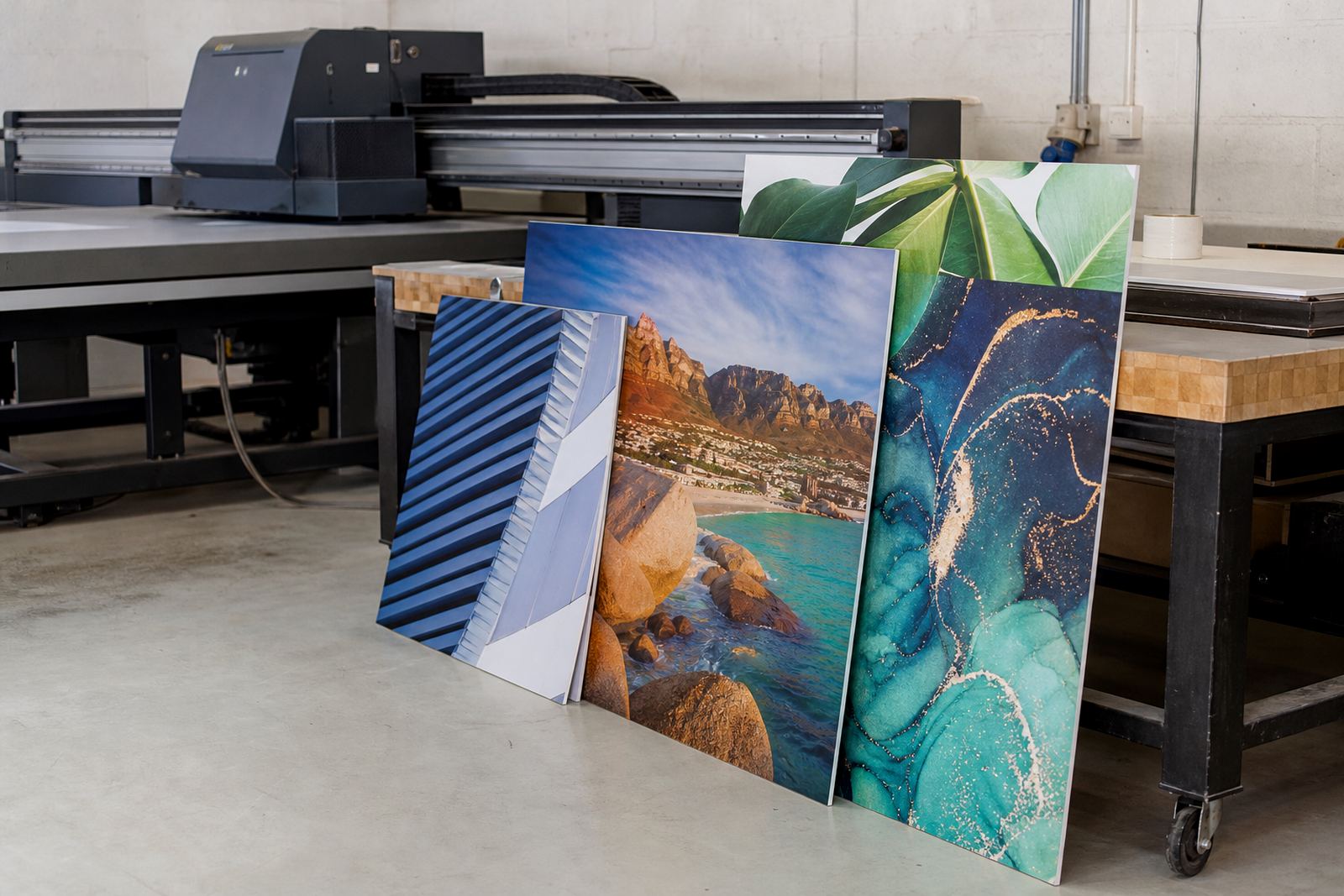
Common uses include signage mock-ups, display panels, point-of-sale boards, decorative panels and sample runs for retail launches. If you need to confirm whether a board lies flat, whether the surface needs priming, or how the print reads under shop lighting, this is the sort of unit to use.
- Rigid boards for signage and display work
- Short-run samples for client sign-off
- Workflow checks before a production purchase
- Material testing for new substrates
Print sizes and setup options
Showroom units are generally supplied in a flatbed format that accepts sheet-fed rigid media, with table size selected to match the sample work you want to test. Size choice depends on board format, handling space and the kind of samples you intend to produce. A larger table gives you more room for standard signage sheets while a smaller setup can suit tighter sites or focused sample testing.
Options can include print heads arranged for different productivity levels, curing arrangements suited to UV inks, and table vacuum or hold-down methods where needed. The exact setup should be matched to your sample work, operator experience and the media you plan to use most. If your team handles a mix of board thicknesses, ask for a setup that allows straightforward changeover and sensible access for cleaning.
- Flatbed table format for rigid sheets
- Multiple size choices depending on board format
- UV curing arrangement for fast handling after print
- Media hold-down options for flatter board control
Installation, power and site needs
Installation should be planned around access, floor strength, power supply and ventilation. A flatbed UV printer needs a level area, enough working space for loading and unloading, and clean conditions for the print zone. In many Germiston and East Rand sites, the first step is checking door widths and whether the unit can be brought in without removing other equipment. That saves time and avoids delays on install day.
Power needs should be checked before delivery. UV systems typically require stable electrical supply and may need attention to surge protection, especially where load-shedding or voltage dips are a concern. If the site uses backup power, make sure the changeover is practical for production use. Curing systems and extraction requirements should also be reviewed, depending on the room layout and the materials being printed.
- Level floor and clear access route
- Stable electrical supply with surge protection
- Space for loading, inspection and maintenance access
- Ventilation and room conditions suited to UV printing
Inks, media and print workflow
Flatbed UV printing uses UV-curable inks that cure under light after jetting onto the substrate. The ink choice and pass setup affect colour density, surface feel and adhesion, so media testing is essential before running a new board. Some materials accept print directly, while others may need surface preparation or primer depending on the finish and the job requirements.
Workflow planning usually starts with file setup, then media inspection, then a test print and final approval. In practical terms, that means checking the board for dust, warp or surface contamination before loading. It also means setting a repeatable routine for colour checks, white ink if required, and curing inspection. A tidy workflow keeps reprints down and makes handover to the operator much smoother.
We can help with ink handling guidance, media testing and colour advice so your team knows what to expect before production starts. Small changes in board type can alter the result quite a bit, so it pays to test properly.
Care, servicing and what to check before you order
A showroom demo printer should be kept clean, powered correctly and serviced on schedule. Daily care usually includes checking the print area, keeping dust away from the bed, and following the correct shutdown routine. If the unit is used only for demonstrations, it still needs regular maintenance to keep heads, capping and curing components in good condition. Preventive maintenance is easier than dealing with a breakdown when the next demo is already booked.
Before ordering, check the media size you want to test, the board thickness range, the power arrangement at your site and whether you need installation, training or support in more than one branch. If your team works across Johannesburg, Pretoria, Durban, Cape Town or Gqeberha, it helps to plan who will use the unit and who will attend training. Sibusiso Mthembu and the Germiston team can help you match the demo unit to your sales and production needs.
- Confirm board size and thickness range
- Check power supply and room access
- Ask about operator training and workflow planning
- Plan service support and spare parts coordination
Key facts
| Printer type | Demonstration flatbed UV printer for rigid boards and signage |
|---|---|
| Media compatibility | Rigid boards, sheet stock and selected display substrates |
| Ink system | UV-curable ink set for direct-to-substrate printing |
| Curing | UV curing for immediate handling after print |
| Typical use | Sample production, workflow checks and colour evaluation |
| Support areas | Germiston, Johannesburg, Pretoria, Durban, Cape Town, Gqeberha and surrounding areas |